How do you choose a kitesurfing and wing pump?
Kitesurfing and wing pump: manual double action or electric? Duotone Pump, Multi Pump, Lazepump, Ride Engine Air Box Mini: pressure, volume, dated prices.
In brief
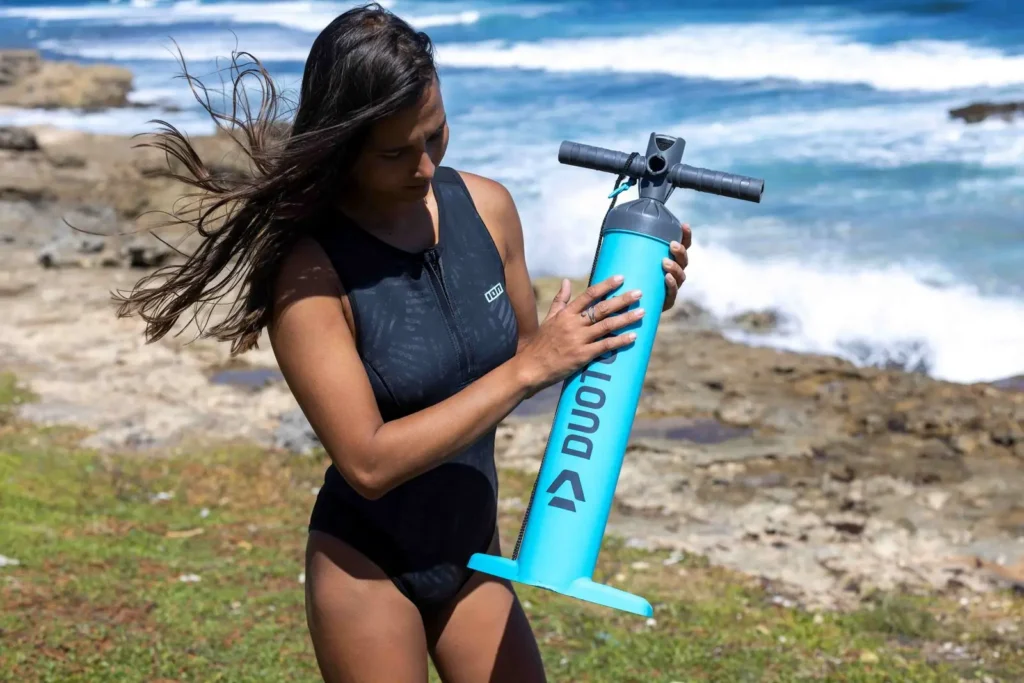
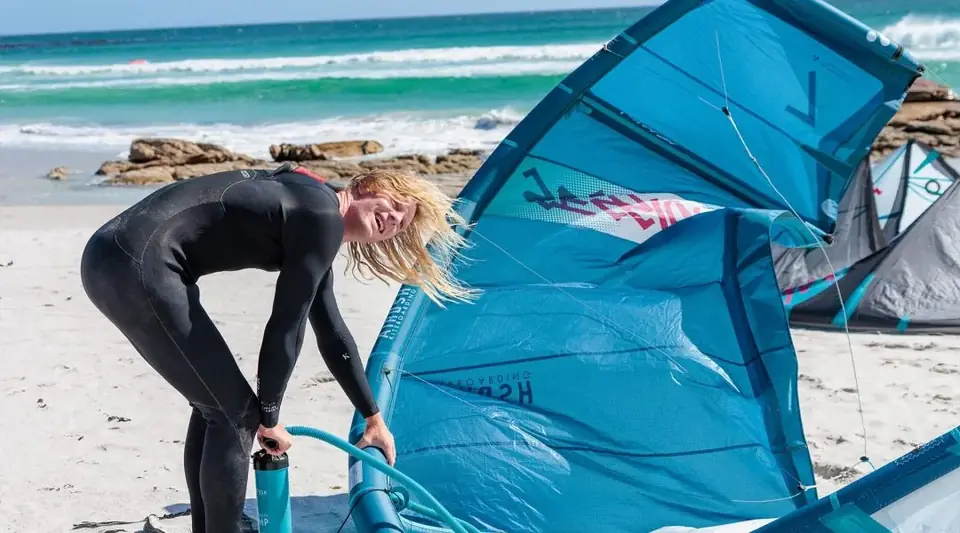
For one or two kites or wings, I’d pick a double-action hand pump. No battery, so no dead battery. GlissEvolution prices them at €48 to €74 (checked on November 12, 2026).
Electric makes sense if you also inflate a SUP or several kites or wings, or if you have a fragile back. The Duotone Lazepump and the Ride Engine Air Box Mini reach 1.4 bar (20 PSI).
Check the maximum pressure, the volume per stroke (or the battery) and the nozzles. A pump that can’t reach enough pressure won’t inflate your wing properly.
Manual or electric?
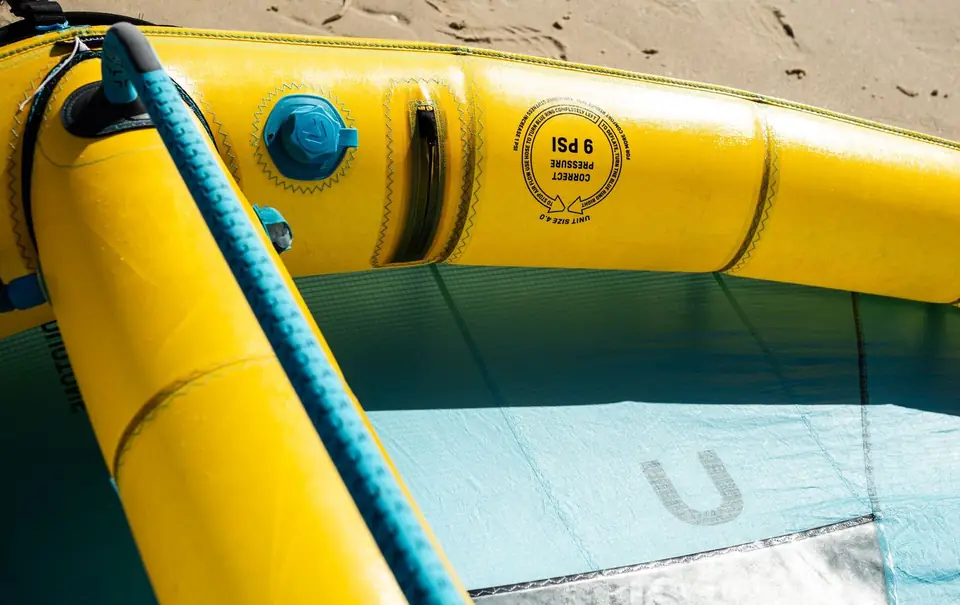
A wing and a kite need little air, but at pressure. A SUP needs a lot of air before reaching its pressure. Duotone gives 6 to 8 PSI for a kite and 12 to 18 PSI for a SUP (Lazepump page). For the wing, I found no pressure from the brand: read the manual of your wing. Your pump choice follows from that.
| Model | Type | Volume or battery | Pressure | Weight | Retail price |
|---|---|---|---|---|---|
| Duotone Pump L | Manual, double or single action | 2.3 L per stroke, 54 cm | 3 to 10 PSI (13 at best) | n/a | From €54.00 |
| Duotone Pump XL | Manual, double or single action | 2.9 L per stroke, 62 cm | 3 to 10 PSI (13 at best) | n/a | n/a |
| Duotone Multi Pump | Manual, double or single action | 2.6 L per stroke, 64 cm | 3 to 19 PSI | n/a | €64.00 (Duotone) |
| Duotone Lazepump | Electric, sand filter | Charging 2 to 3 h; 8 wings of 5 m at 10 PSI per charge (Duotone) | Up to 1.4 bar (20 PSI) | 1.3 kg | €179.00 (pre-order, shipping from December 22, 2026) |
| Ride Engine Air Box Mini | Electric, two brushless motors | 4,500 mAh battery; 139 × 125 × 69 mm | Up to 20 PSI (1.4 bar) | n/a | $249.00 (Ride Engine) |
The GlissEvolution shop calls the two Duotone pumps “4.6 L” and “5.8 L”. I read that as double the brand’s volume per stroke (2 × 2.3 L and 2 × 2.9 L): it’s the same pump, counted on both the push and the pull. Ride Engine gives two figures for the Air Box Mini’s battery life: 4 to 6 wings on its product page, 12 to 14 in its FAQ. I couldn’t settle it.
The criteria that matter
Maximum pressure. It has to cover your needs: 10 PSI for the Duotone hand pump, 19 for the Multi, 20 for the electric ones. Volume. A large volume per stroke inflates faster, at the cost of more effort; Duotone praises the L (54 cm) for its compact size and the XL for large kites. Double action: air moves on both the up and the down stroke, and you switch to single action as the pressure rises to reduce the effort (Duotone page). Pressure gauge and nozzles: Duotone lists several valve adapters. Sand: the Lazepump has a built-in filter; GlissEvolution mentions an anti-sand membrane on the manual pump.
My take as editor
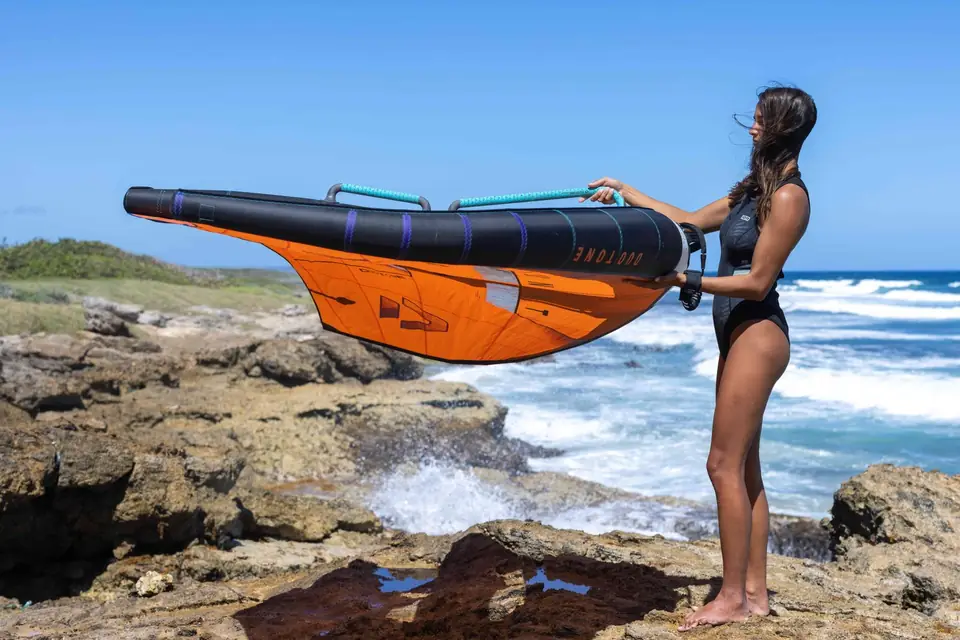
25 years of kiting have taught me to prefer what never breaks down over what is fast. For a recreational rider with one or two wings, I recommend the double-action hand pump: no battery to recharge before you get to the spot. If you also inflate a SUP, or several wings in a day, electric starts to matter. GlissEvolution says so too: an electric pump needs a charged battery and inflates more slowly than a good hand pump on a small wing.
For me, the real flaw of electric pumps is the price and the dependence on the battery. The Lazepump is €179.00 and only ships from December 22, 2026 (pre-order). I found no published test of either electric pump. Only the reviews on the Duotone page describe them (24 reviews, 5 out of 5 as of November 12, 2026): that is feedback from the brand’s customers, not a test.
| Your use | What I’d pick | Why |
|---|---|---|
| 1 or 2 wings, frequent travel | Duotone Pump L | The most compact in the Duotone range listed (54 cm). |
| Large kites | Duotone Pump XL or Multi Pump | More volume per stroke (2.9 or 2.6 L). |
| Wing + inflatable SUP | Multi Pump or an electric one | Pressure up to 19 or 20 PSI, needed for a SUP. |
| Fragile back, several wings | Lazepump or Air Box Mini | The motor inflates on its own up to the set pressure, according to the brands. |
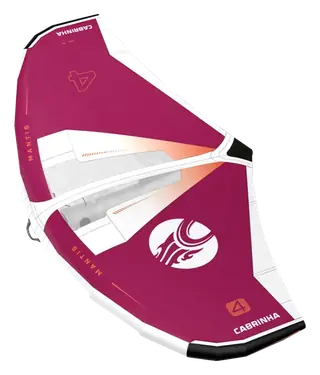
Wings to inflate

Frequently asked questions
Which pump should I use to inflate a wing?
A double-action hand pump is enough. GlissEvolution says a 4.6 L inflates a 4 to 6 m² wing. It can’t run out of battery.
What pressure for a wing?
I didn’t find it from the brands: read the manual of your wing. Duotone pumps cover 3 to 10 PSI (up to 13 at best).
Can a kite pump be used for a SUP?
Only if it reaches 12 to 18 PSI. The Duotone Pump stops at 10 PSI (13 at best); the Multi Pump reaches 19 PSI.
Does an electric pump inflate on its own?
Yes, up to the set pressure, then it stops (Duotone, Ride Engine). It needs a charged battery: 2 to 3 h of charging for the Lazepump.
How much does a pump cost?
Manual: €48 to €74 according to GlissEvolution, from €54.00 for the Duotone Pump. Electric: €179.00 for the Lazepump. Ride Engine Air Box Mini: $249.00 (checked on November 12, 2026).
Sources
Checked on November 12, 2026. Public prices: GlissEvolution shop and brand websites, on the date shown.
- Duotone, official Pump page (L and XL) (EN), checked on November 12, 2026
- Duotone, Multi Pump page (EN), checked on November 12, 2026
- Duotone, Electric Air Pump Lazepump page (EN), checked on November 12, 2026
- Ride Engine, Air Box Mini Electric Pump page (EN), checked on November 12, 2026
- GlissEvolution, Kite, wing, SUP pumps section (shop prices and advice), checked on November 12, 2026
Further reading
- Wing foiling on WindUnity Wings, boards and foils to compare.
- Tested wings Detailed pages, prices and sources.
- What wing size to choose? Weight, wind, level.
- How to choose your kitesurfing kite Inflatable or foil kites, shape and size.
- How to choose your wing leash Wrist, waist or reel leash.
- Which helmet for kitesurfing and wing foiling Hard shell, EN 1385, ears.
- Wing accessories Impact vests and wing harnesses.
Related reading
Guides How to choose a kitesurfing and wing foiling helmet?Kitesurfing and wing foiling helmets: hard shell or soft cap, EN 1385 standard, ears. ION Hardcap Select, Mystic Legacy and Gath Gedi with dated prices.
- Which wing size should you choose?In brief Wind first, then your weight. In the brands’ guides, the size goes down as the wind rises and goes up…
 How to choose the right kite size for your kitesurfing conditions?Wondering which kite size to choose to get the most out of your kitesurfing sessions? With the WindUnity online calculator, no more…