How to choose a kitesurfing kite?
In brief To start out, and for most sessions: an all-round inflatable kite (LEI), in a delta, bow or hybrid shape. It…
In brief
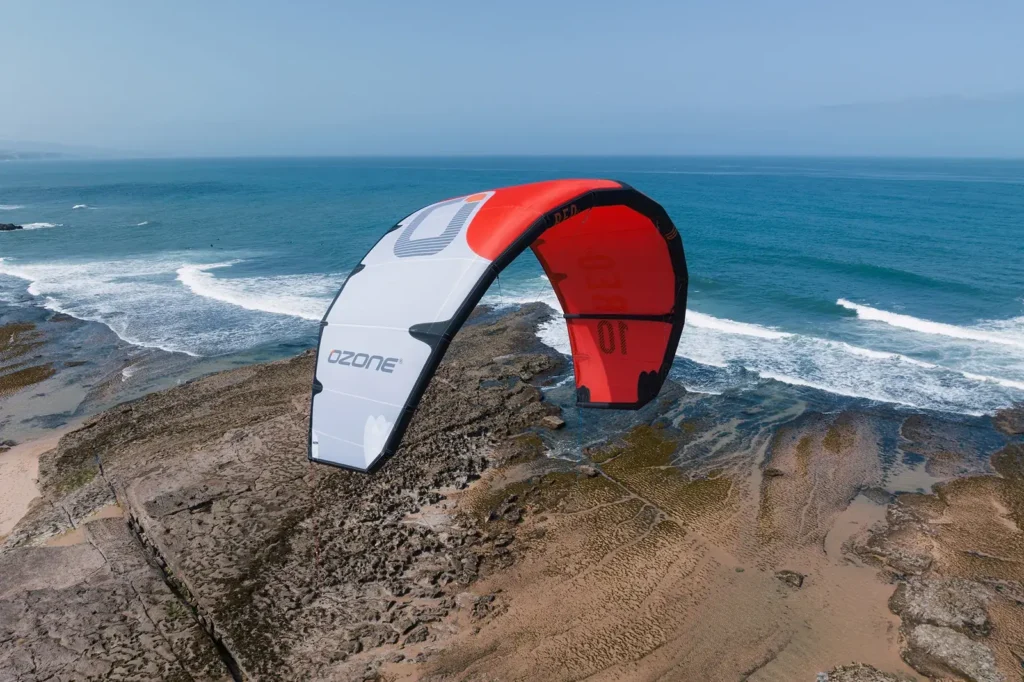
To start out, and for most sessions: an all-round inflatable kite (LEI), in a delta, bow or hybrid shape. It floats, relaunches easily from the water and forgives mistakes.
Size depends first on your weight and the wind at your spot. Duotone reference size: 9 to 11 m² between 65 and 80 kg for 16 to 25 knots of wind. For the wind on your day, use the kitesurfing kite size calculator.
Foil kites are another family: very good in light wind, but harder to relaunch on the water.
Inflatable kite or foil kite?
On a kitesurfing beach, almost all the kites (sometimes called sails) you see keep their shape thanks to an inflatable tube along the leading edge: these are inflatable kites, or LEI (leading edge inflatable). That tube keeps the kite on the surface when it falls in the water, and relaunching is almost automatic. It is the choice of the vast majority of kitesurfers.
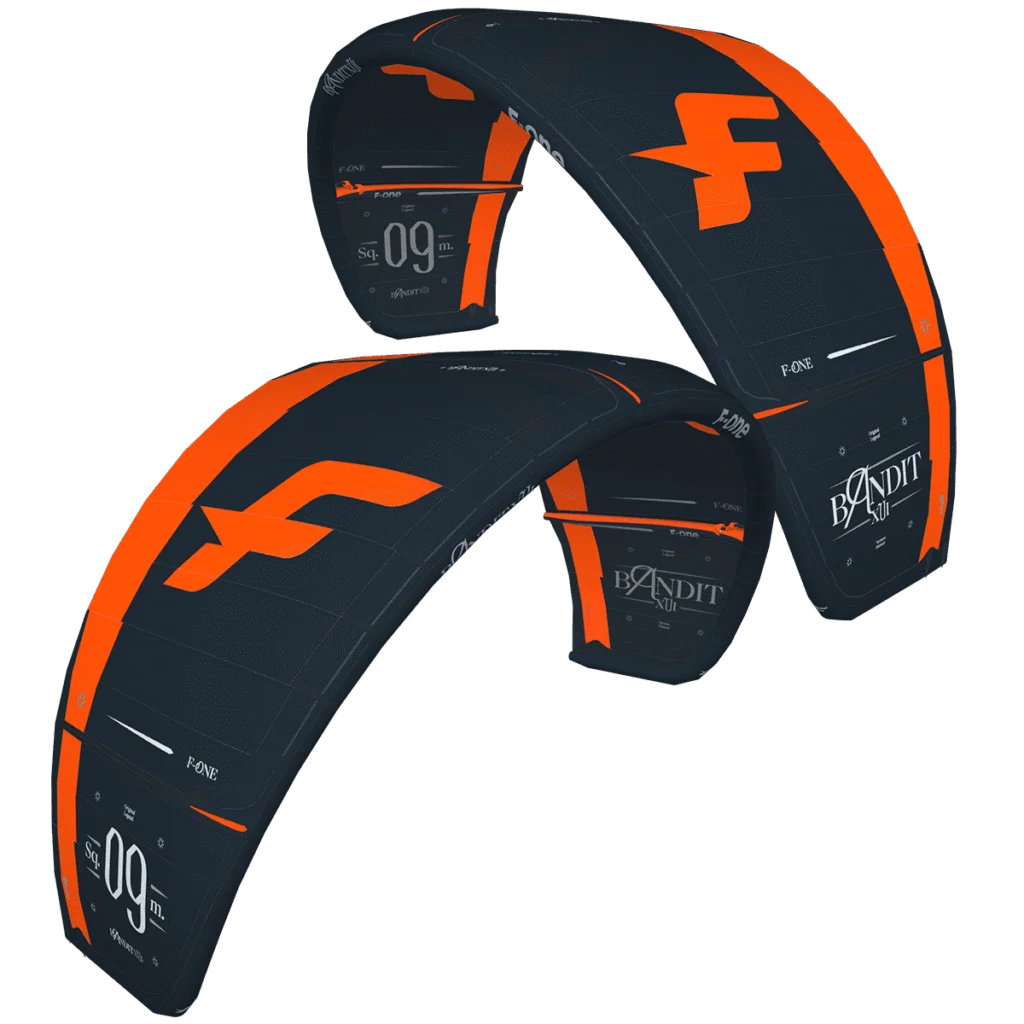
The foil kite has no tube: it inflates through air intakes as it flies, like a paraglider. It performs well in light wind and upwind. When the cells are open, it fills with water if it falls, which is why it is used on snow and on land. When they are closed, valves hold the air in and relaunching from the water becomes possible again: that is what makes it a kitesurfing kite. On WindUnity, you will find Flysurfer’s Soul 3, a closed-cell foil kite, and the Hybrid, a hybrid foil kite that is half single-skin, half double-skin. On the water, relaunching is something you have to learn and stays less easy than with a tube: these kites are chosen mainly for light wind.
Between two sizes, take the smaller one
That is the advice in the F-One kite user guide: “If you hesitate between two kite sizes, always take the smaller size, you will have more fun, and more safely, underpowered than overpowered.” And if you can’t back up on your own, land your kite: it is too big for you that day.
Delta, bow, hybrid, C: the shape of the kite
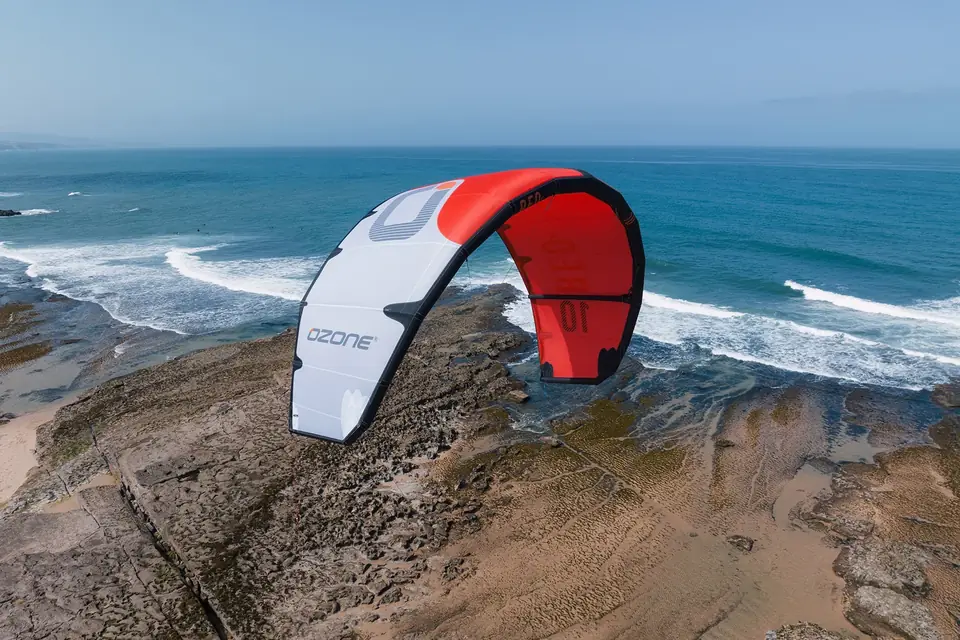
Inflatable kites don’t all behave the same way. Their shape changes the power, the wind range and the way they relaunch. Brands don’t all use the same words, but these main families come up again and again.
| Shape | What it brings | Who it’s for |
|---|---|---|
| C | Direct steering, but often less depower than the other shapes. | Unhooked wakestyle and advanced freestyle. |
| Bow | Depower close to 100%, wide wind range, easy relaunch. Appeared around 2006. | All levels. |
| Delta | Good stability, very easy relaunch, full depower. | Freestyle, waves and racing. |
| Hybrid | Mixes the qualities of the C, the bow and the delta. | Depends on the model. |
To start out, there is no need to settle between bow, delta and hybrid. What counts is the program stated on the kite’s model page (freeride, waves, big air, foil) and what riders say about it.
What kite size should you choose?
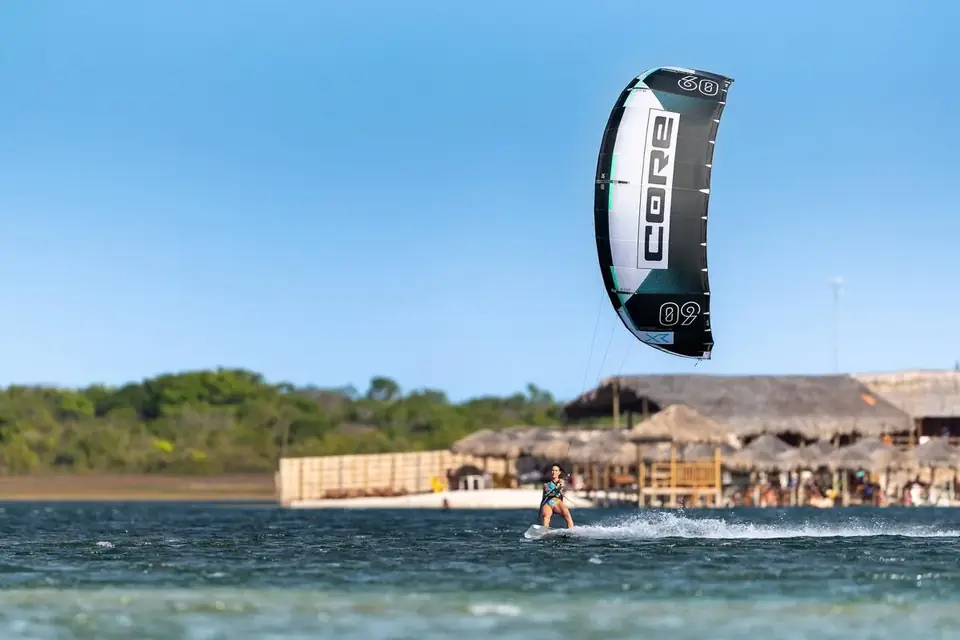
Size is read in square meters. The bigger the kite, the more it pulls: so you need a big one when the wind is light or when you are heavy, and a small one when it blows. The FFVL sums up what counts: your technical skill and your weight, the quality of the air at the spot, the day’s weather, the body of water, the safety available and the type of riding.
| Rider weight | Recommended size | Wind |
|---|---|---|
| Up to 65 kg | 7 to 9 m² | 18 to 28 knots |
| 65 to 80 kg | 9 to 11 m² | 16 to 25 knots |
| 80 to 95 kg | 11 to 13 m² | 14 to 22 knots |
Duotone also offers a slightly different grid for a first all-round kite: 8 to 10 m² up to 70 kg, 10 to 12 m² from 70 to 85 kg, 12 to 14 m² above 85 kg. These reference sizes come from a brand and apply to an all-round kite. Your board, your level and the quality of the wind shift the result. Duotone adds that a beginner can often make do with a single all-round kite, whereas an advanced rider carries two or three, for example 7, 10 and 13 m².
What size for your weight and your wind?
Enter your weight, the forecast wind and your level: the calculator gives you a starting size, for kite as for wing.
Reading a wind range without getting it wrong
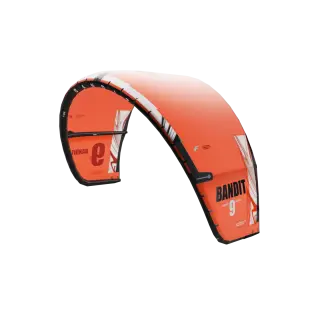
On a kite’s model page, each size has its own wind range, and these ranges overlap. Example with F-One’s Bandit 18, ranges given for a rider of about 75 kg and taken from the brand’s official page.
| Size | 6 m² | 7 m² | 8 m² | 9 m² | 10 m² | 12 m² | 14 m² |
|---|---|---|---|---|---|---|---|
| Wind (knots) | 30+ | 25+ | 25 to 35 | 15 to 30 | 12 to 26 | 11 to 24 | 8 to 18 |
At 20 knots, three sizes (9, 10 and 12 m²) are within their range. Your weight, your board and your level sort it out: the heavier you are, the bigger you go. Our calculator offers no size to a beginner above 25 knots.
Choosing according to your riding style
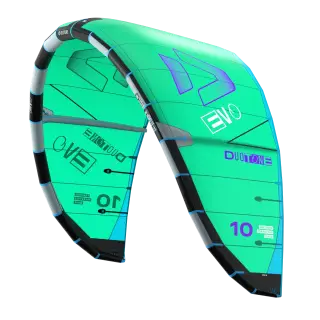
Your style determines the type of kite that suits you before the size does. Duotone sorts its kites into four families: freeride, freestyle (C kites), waves and foil.
| Style | What you’re looking for | What to look at |
|---|---|---|
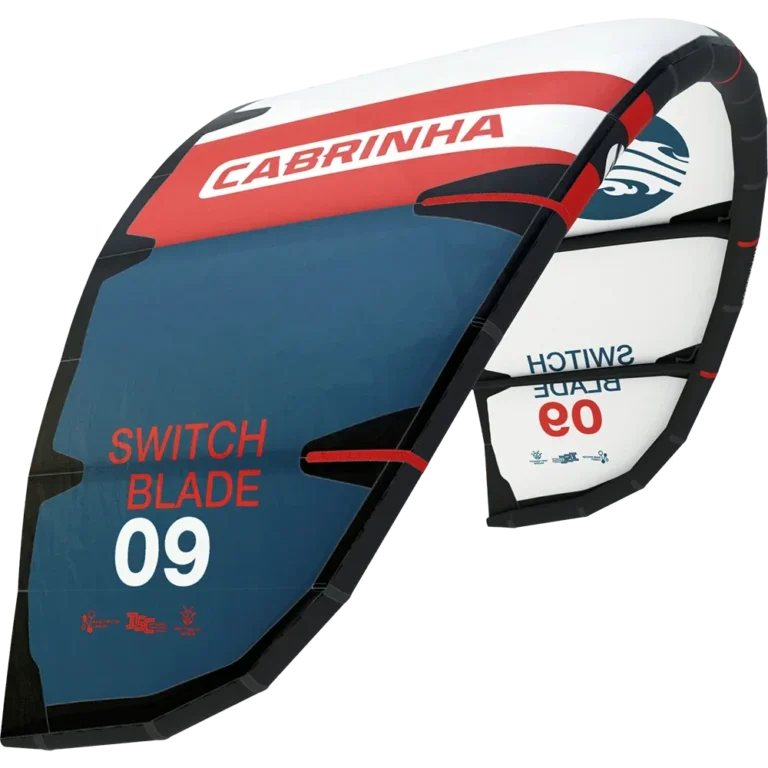
| Freeride | An all-round kite, stable and easy to relaunch. Duotone describes it as ideal for riding and for your first jumps. | Bandit 18, Switchblade 2024 |
| Freestyle and big air | Freestyle: C kites, powerful and responsive, for advanced riders. Big air: a kite built for hangtime and lift. | Rebel SLS 2027 |
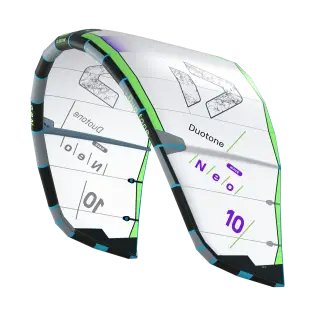
| Waves | A kite designed for surfing waves: light, responsive, drifts well. | Neo 2027 |
| Foil and light wind | Light kites that work well in little wind. | Soul 3, Code Zero |
Materials and price: what changes, what doesn’t
The same kite often comes in several construction levels. At Duotone, the SLS range lightens the kite with high-end materials and the “ultra-premium” D/LAB range uses Aluula. You gain in weight and precision, but the size you need doesn’t change. Weight and price by size are on each model page.
Before you buy
Look at the model year, shown on each model page: an older kite compares very well with a recent one. If you can, try before you buy: a school or a rental shop at your spot will quickly tell you whether the size and the character suit you. And read the rider reviews on the kite’s model page: what counts is the experience of those who have used it, not the sales pitch. All the kitesurfing kites listed are gathered in one place, each with its model page.
No gear yet? The FFVL advises against learning on your own and recommends going through a school. You buy afterwards, once you know what you like. For a child, also read kitesurfing for kids: from what age?
Kites to compare
Frequently asked questions
What is the difference between an inflatable kite and a foil kite?
The inflatable kite is pumped up before you go out and floats on the water, which makes relaunching easier. The foil kite inflates as it flies: it flies in very little wind, but relaunching it from the water is harder.
What kite size for 75 kg?
Duotone recommends 9 to 11 m² between 65 and 80 kg, for 16 to 25 knots of wind. The exact size depends on the wind of the day and your level: the calculator gives you a starting size.
How many kites do you need?
A single all-round kite is often enough to start out. Advanced riders have two or three to cover the whole wind range, for example 7, 10 and 13 m².
Which kite should you choose to start out?
An all-round inflatable kite, freeride type, whose size matches your weight and the wind at your spot. To learn, go through a school first, as the FFVL advises.
Sources
Checked on November 2, 2026. The Bandit 18 wind ranges come from the brand’s official page, the recommended sizes from the Duotone page, and the size-choice advice from the FFVL and the F-One guide.
- Duotone, Kites page (sizes, shapes, SLS and D/LAB ranges), checked on November 2, 2026
- Kitesurfing Handbook, kite types, checked on November 2, 2026
- F-One, official Bandit 18 page (wind ranges), checked on November 2, 2026
- Kitesurfing Handbook, foil kites (open and closed cells), checked on November 2, 2026
- WindUnity model pages (release years of the models), checked on November 2, 2026
- F-One, 2025 kite user guide (choosing the size), checked on November 2, 2026
- FFVL, Advice to practitioners (choosing the kite surface area), checked on November 2, 2026
Going further
- Calculator: what size kite or wing? Your weight, the wind, your level.
- All kitesurfing kites Model pages, sizes, wind ranges and rider reviews.
- How to choose a kiteboard The guide that complements this one.
- Wings If you’re torn between kite and wing.
Related reading
Guides How to choose a kitesurfing and wing foiling helmet?Kitesurfing and wing foiling helmets: hard shell or soft cap, EN 1385 standard, ears. ION Hardcap Select, Mystic Legacy and Gath Gedi with dated prices.
 How to choose a kiteboard?In brief To start out, and for most sessions: a freeride twin-tip. It is symmetrical, you ride both ways without switching feet,…
 How to choose the right kite size for your kitesurfing conditions?Wondering which kite size to choose to get the most out of your kitesurfing sessions? With the WindUnity online calculator, no more…