Skip to content
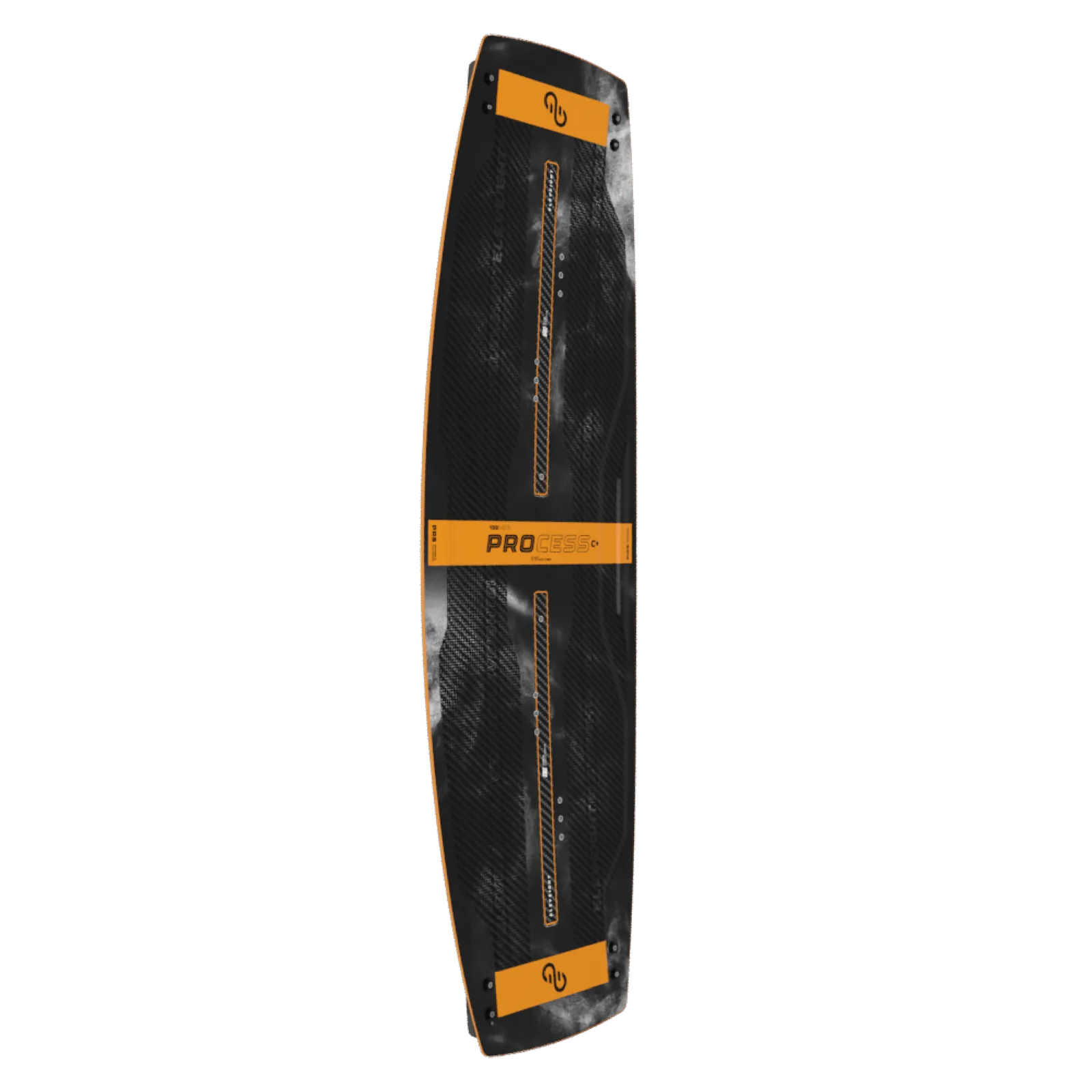
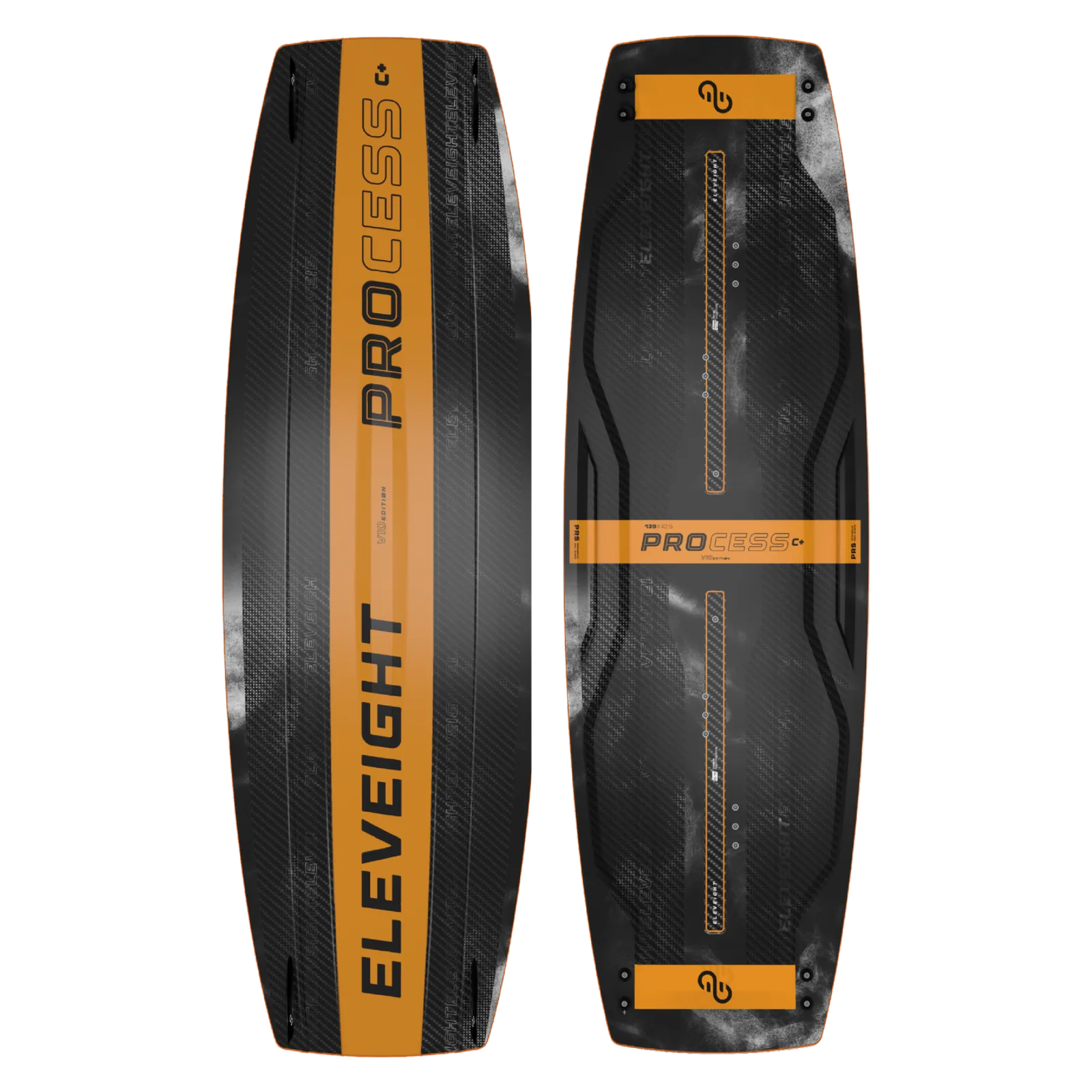
Eleveight Process C+ V7 kiteboard, product render of both sides side by side, black carbon marbled with gray, orange stripes
Process C+ V7, product render · © Eleveight
Eleveight Process C+ V7 kiteboard seen from above: black deck with orange accents, elongated shape
Process C+ V7, view 2 · © Eleveight
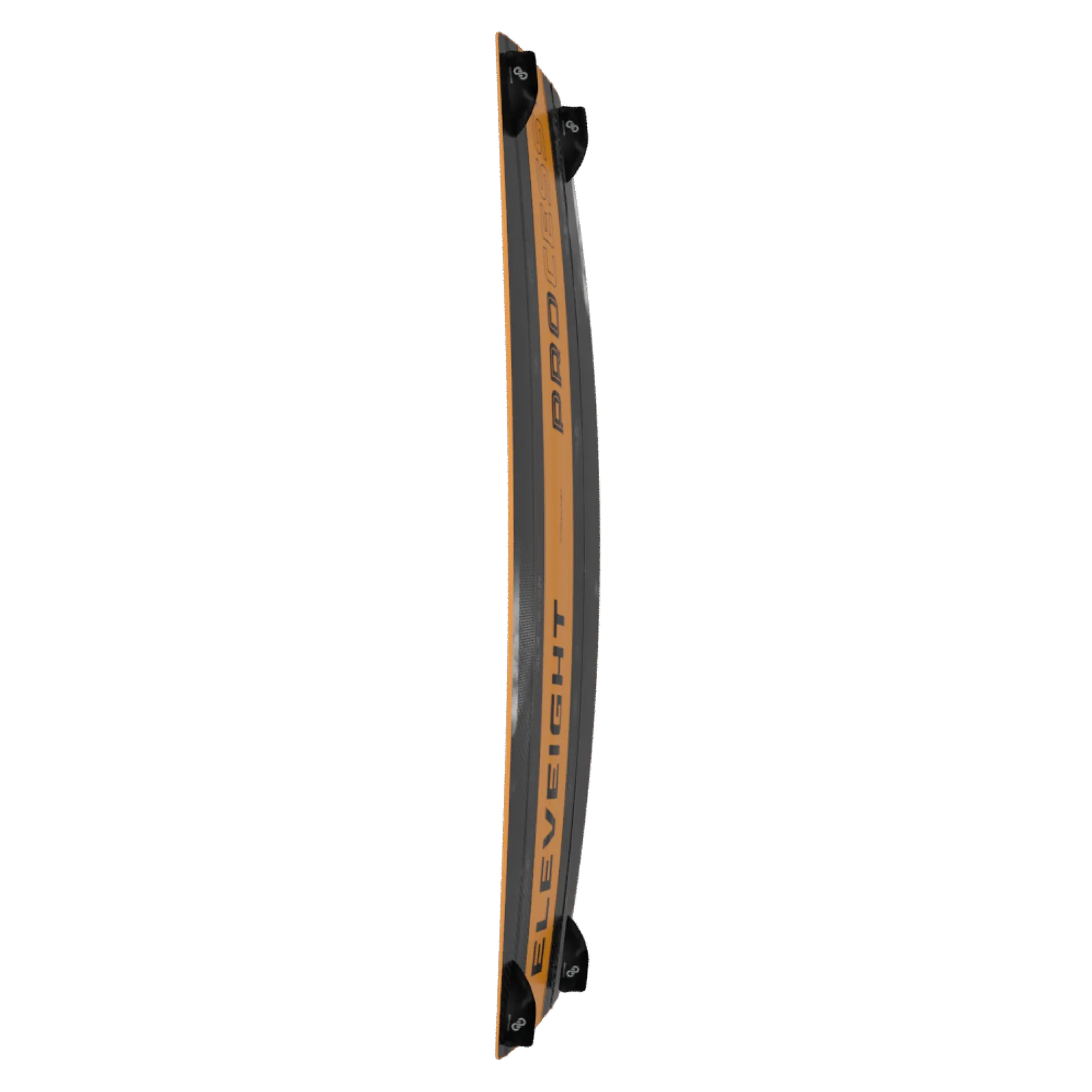
Eleveight Process C+ V7 in oblique view: visible rocker, orange edge, dark gray underside, black fins
Profile of the Process C+ V7, view 3 · © Eleveight
Eleveight

Eleveight Process C+ V7 2026 test

  • Riding stylePerformance freeride, all carbon
  • Sizes135×41 to 149×45 cm
  • Year2026

Verdict in brief

The Process C+ V7 is Eleveight’s all-carbon Process: three sizes, 135, 139 and 149 cm, 2.35 to 2.8 kg. I found no test of this version: my view rests on the brand’s page and two shops. I’d look at the C+ mainly for its 149, the big light-wind size the V10 doesn’t have.

No published test of the V7; no rider feedback found as of November 8, 2026.

For you if

  • You want a light-wind carbon board: the 149×45 weighs 2.8 kg and is meant for riders of 65 kg and up, while the Process V10 stops at 144
  • You’re looking for a freeride board that responds fast: Jan Burgdörfer, an Eleveight team rider, describes a slightly stiffer, livelier flex with plenty of grip (brand opinion, not a test)
  • You weigh 80 kg or more and want carbon: the 139×42.5 is meant for you, at 2.45 kg

Not for you if

  • You want a board under 135 cm: the smallest is the 135×41, the Process V10 goes down to 132
  • You’re a beginner: GlissEvolution files the C+ V7 as intermediate to expert, Kitemana says it’s for advanced riders, and I agree with them

Have you ridden this model? Leave the first review

What we know about this model

Our method

Sizes, volume and weight

Sizes, volume, weight and recommended rider
SizeLength × widthBoard weightRecommended riderFins
135×41135 × 41 cm2.35 kgunder 80 kgG10 45 mm
139×42,5139 × 42.5 cm2.45 kg80 kg and overG10 45 mm
149×45 LW149 × 45 cm2.8 kg65 kg and overG10 45 mm

Dimensions in cm, weight of the board alone (± 5%), 45 mm G10 fins included. Eleveight publishes no thickness, volume or wind range for its boards (page of November 8, 2026).

More details on these figures

Table from the Eleveight page of November 8, 2026. Weight of the board alone, 5% tolerance, 45 mm G10 fins included; grab handle, pads and straps not included. Recommended rider weight: under 80 kg for the 135, 80 kg and up for the 139, 65 kg and up for the 149. Since the V6, sizes and weights have barely moved (149: 2.85 then 2.8 kg).

Strong points, weak points

Strong points

  • Carbon top and bottom: 2.35 kg in the 135, 2.45 kg in the 139, 45 mm G10 fins included
  • The 2.8 kg 149×45 opens up carbon to light wind, from 65 kg
  • V7 novelties announced by Eleveight: deeper grab rails for board-offs and thinner tips
Weak points

  • Not a single published test of the V7 or any rider feedback: all the feel comes from the brand and the shops
  • A bottom announced sometimes as double concave, sometimes as single concave: the Eleveight page contradicts itself
  • No published wind range

The flaw to know about. For me, its real flaw: we don’t yet know what it delivers. No test, no rider, and the Eleveight page says double concave in its text, single concave in its technical table. GlissEvolution writes double concave with a central keel, Kitemana cites both. I couldn’t settle it: ask the retailer before buying.

Model evolution

What changes from the Process C+ V6 to the V7

  • V7: revised shape, deeper grab rails for board-offs, thinner tips with reworked PRS
  • V7: new all-carbon construction top and bottom, 3D deck, double concave bottom and revised channels (the V6 was described with a single concave bottom)
  • Sizes unchanged: 135×41, 139×42.5 and 149×45; weights unchanged in the 135 (2.35 kg) and the 139 (2.45 kg), 149 down from 2.85 to 2.8 kg

Specifications

9 specs, sources at the bottom of the page

Technology
Super Fly 3D paulownia core, CNC-milled top and bottom (wood 250 g lighter); all-carbon construction top and bottom; biaxial laminate; biaxial carbon; 3D deck; PRS rails; medium three-stage rocker; balanced medium-to-hard flex, stiffer reverse flex, flex tuned for each size; elliptical outline with rounded tips; tip channels and rail steps; double concave bottom (presentation text) or single concave (technical table); reinforced plywood inserts; UV-resistant deck; abrasion-resistant base; G10 fins
Program (manufacturer)
Freeride performance: all carbon, progressive flex, for experienced freeriders
Sizes
135×41 cm, 139×42.5 cm, 149×45 cm (LW)
Board weight
2.35 kg (135), 2.45 kg (139) and 2.8 kg (149), 5% tolerance, board delivered with its fins only
Recommended rider weight
Under 80 kg (135), 80 kg and up (139), 65 kg and up (149)
Fins included
45 mm G10 on all three sizes; grab handle, pads and straps not included
Wind range
n/a: Eleveight does not publish a wind range for its boards
Manufacturing
Made in Europe (Eleveight Twin-tips page)
Release date
n/a: Eleveight does not give one. Benchmarks: page images uploaded in 02/2026, GlissEvolution listing updated in 02/2026, product film of April 22, 2026

Riders’ reviews

No reviews

No reviews yet.

Nobody has reviewed this gear yet. Do you use it? Help other riders of your weight — 2 minutes.

Leave your review (2 minutes)

Three screens: you, the gear, your review. Your email will never be published; it is only used to confirm that the review comes from a real person.

1/3 You

Only used to confirm your review and to let you know if it is rejected. Never displayed, never resold.

Your weight *

10 kg ranges only, so that other riders of your build can relate. No exact weight is recorded.

Your level *

Beginner: I’m still taking lessons. Intermediate: I ride on my own. Advanced: transitions and jumps. Expert: freestyle, wave or competition.

Your riding

Optional. If checked, your review stays published with the label “Gear received or tied to a brand” and doesn’t count toward the average rating.

You must be at least 15 to post a review (“Your data” article of the policy).

2/3 Your gear and how you use it
Wind range actually used (knots)
How long you’ve been using it *
Number of sessions (optional)
Rate each criterion (at least 3) *
Comfort / cushioning
Pop & jump
Grip / upwind ability
Maneuverability
Finish & durability

1 = very poor, 5 = excellent. Leave blank any criterion you couldn’t judge.

Do you recommend it? *
3/3 Your review

140 characters minimum — How it behaves in chop and on landing, what disappointed you, who you’d recommend it to.

Rider reviews: confirmed email address, no compensation. “Brand-linked” and “loaned / received” reviews are labeled and excluded from the average. Each review shows its publication date, the date of the experience and, if it was edited, its update date. A review is published or rejected within 7 days at most; if it is rejected, you receive the reason by email and you can correct it. You can complete or delete your review at any time from the email address used to submit it. How do reviews work?

Alternatives to compare

Eleveight Process V10 2026

Eleveight Process V10 2026 (freeride, 2026 model year): 5 sizes from 132×39.5 to 144×44; weight from 2.4 to 2.8 kg. Eleveight Process C+ V7: 3 sizes from 135×41 to 149×45; weight from 2.35 to 2.8 kg. If you don’t need the 149, I’d start with the V10: GlissEvolution files it as the comfort and versatility option, with no test to tell them apart.

Eleveight Master C+ V8 2026

Eleveight Master C+ V8 2026 (freeride and freestyle, all carbon, 2026 model year): 2 sizes from 136×41.5 to 139×42; weight from 2.4 to 2.5 kg. Eleveight Process C+ V7: performance freeride, 3 sizes from 135×41 to 149×45; weight from 2.35 to 2.8 kg. For jumping and freestyle in carbon, look at the Master C+ V8; for freeride and light wind, the Process C+.

Duotone Select SLS 2027

Duotone Select SLS 2027 (performance freeride, upwind, jumping, 2027 model year): 4 sizes from 135x40 to 144x43; weight from 2.36 to 2.62 kg. Eleveight Process C+ V7: 3 sizes from 135×41 to 149×45; weight from 2.35 to 2.8 kg. The Duotone has no big light-wind size (144 at most).

Other versions of this model

Eleveight Process C+ V7

Frequently asked questions

What sizes and weight for the Process C+ V7?

Three sizes: 135×41 (2.35 kg, under 80 kg), 139×42.5 (2.45 kg, 80 kg and up) and 149×45 LW (2.8 kg, 65 kg and up). 5% weight tolerance, 45 mm G10 fins included, grab handle, pads and straps not included.

What is included with the Process C+ V7?

The Process C+ V7 comes in three sizes, as a bare board with its fins. For the price, see the “Where to buy” section of this page.

Process C+ V7 or Process V10: what’s the difference?

The C+ V7 is all carbon: 2.35 to 2.8 kg in three sizes (135 to 149). The V10 is the standard Process: 2.4 to 2.8 kg in five sizes (132 to 144). No test compares the two; GlissEvolution presents the C+ as more responsive and the V10 as more comfortable.

What changes between the Process C+ V6 and the V7?

The sizes don’t change (135, 139, 149) and neither do the weights, except the 149, which goes from 2.85 to 2.8 kg. The V7 revises the shape, with deeper grab rails and thinner tips, adds a 3D deck and describes a double concave bottom where the V6 was single concave. No test compares the two versions.

Is there a test of the Process C+ V7?

No: I found no published test and no rider feedback as of November 8, 2026. The only sources are the Eleveight page and the sales copy from GlissEvolution and Kitemana, two shops.

Is the Process C+ V7’s bottom single or double concave?

The Eleveight page says both: double concave in the presentation text, single concave in the technical table. GlissEvolution talks about double concave with a central keel, Kitemana cites both. I couldn’t settle it: ask the retailer before buying.

Method and limitations of this page

This page brings together the technical specs, tests from the press and blogs, and rider feedback found on the web, without rewriting any of it. When WindUnity has ridden the gear itself, the page says so with the “WindUnity test” badge.

Rider reviews are published as is, with their date. Reviews tied to a brand or based on loaned gear are labeled and excluded from the average.

What’s still missing

  • No published test or rider feedback on the Process C+ V7 (Reddit archives in error on November 8, 2026)
  • Single or double concave bottom: the Eleveight page contradicts itself
  • Wind range, thickness and volume: not published by Eleveight
  • Release date: n/a (page images in 02/2026, product film of April 22, 2026)
  • V6 version: no WindUnity page, its figures come from the copy of the Eleveight page of February 12, 2026
  • Model year: Eleveight names by version and doesn’t date; 2026 according to the GlissEvolution listing “Process C+ V7 2026”
  • Photos: three product renders; the files keep “ProcessC-V6-2025-2026” in their name, their place on the V7 page is certain

Sources

Data collected early November 2026

Eleveight : 2 product pages, brand video

Shops : GlissEvolution, Kitemana
See the details of the 6 sources

Eleveight

  1. Process C+ V6 page
    archived version from 12/02/2026
  2. Eleveight World, Process V10 and Process C+ V7 film

Shops

  1. GlissEvolution, Process C+ V7 2026
  2. Kitemana, Process C+ V7