Skip to content
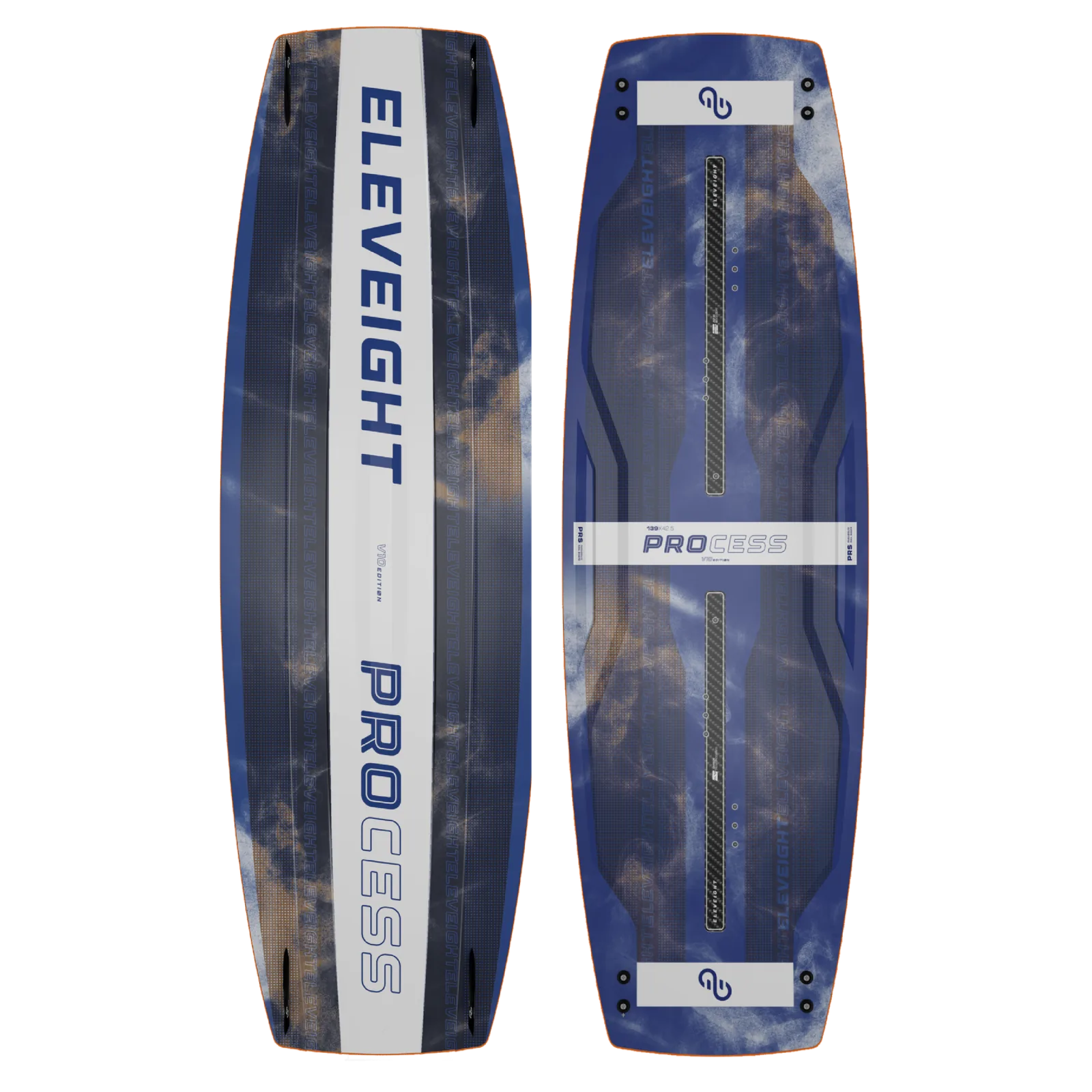
Eleveight Process V10 kiteboard, product render: two boards side by side, gray and blue
Process V10, product render · © Eleveight
Eleveight Process V10 kiteboard, product render of a single board, blue and gray
Process V10, view 2 · © Eleveight
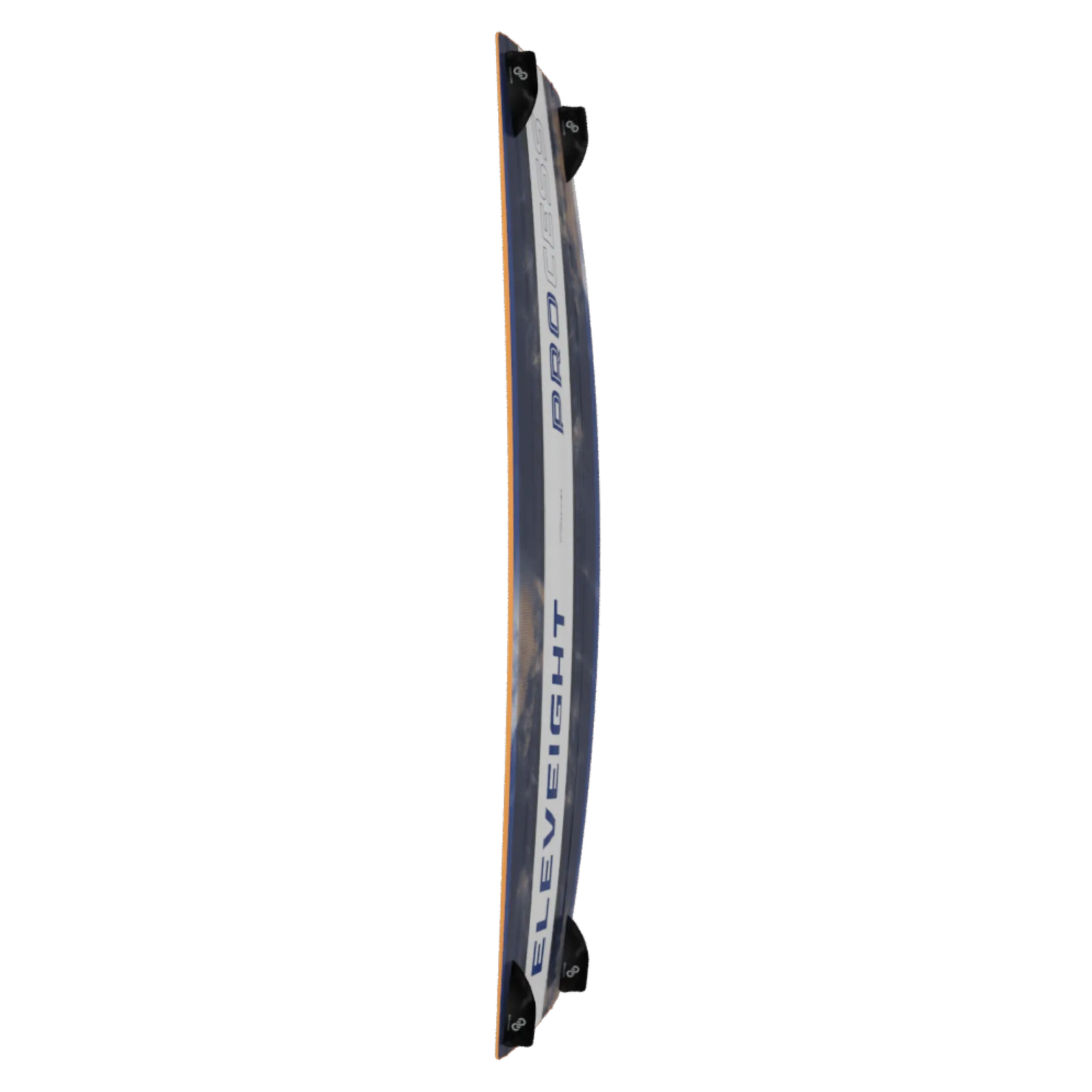
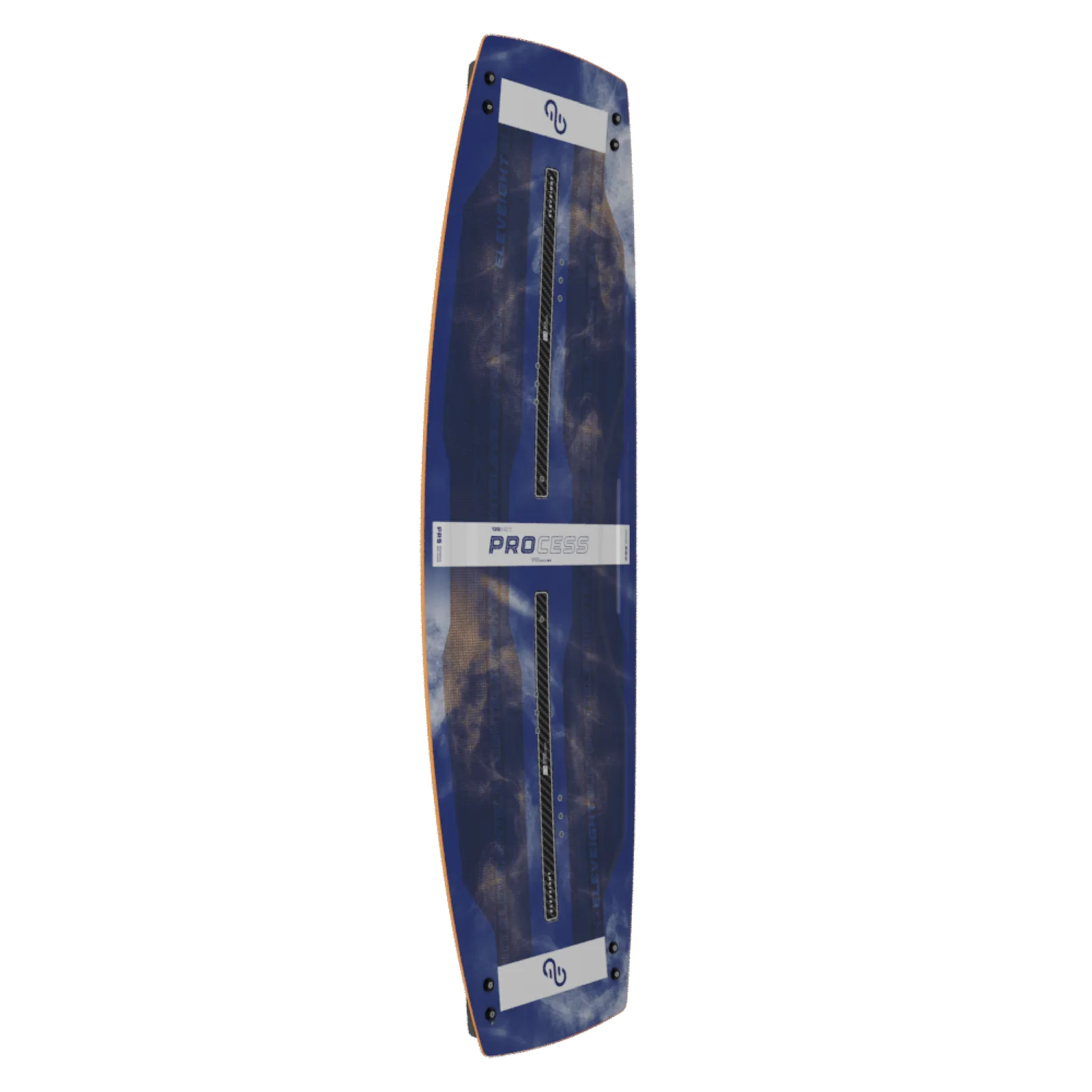
Eleveight Process V10 kiteboard, product render in narrow view, gray, blue and black
Process V10, view 3 · © Eleveight
Eleveight

Eleveight Process V10 2026 test

  • Riding styleFreeride
  • Sizes132×39,5 to 144×44 cm
  • Year2026

Verdict in brief

The Process V10 is Eleveight’s performance freeride twin-tip: five sizes from 132 to 144 cm, from 2.4 to 2.8 kg. Compared with the V7, it gains a size, loses 100 to 150 g on paper and changes shape, stringer and bottom. No test of the V10 has been published.

No independent test of the Process V10 found (checked November 7, 2026). The existing tests cover the V7 (gleiten.tv, 2023) and a Process 139 published in 2021 (TheKiteMag, version not specified).

For you if

  • You want a freeride board that carves and goes upwind: thinner PRS rails, tip channels and rail steps, soft flex tuned for each size
  • You weigh less than 65 kg or more than 95 kg: five sizes, from the 132 (under 65 kg) to the 144 (75 kg and up)

Not for you if

  • You’re aiming at advanced freestyle or big air: the Process is classed as performance freeride, the Master V9 and the Stellar V3 are there for that
  • You want to read a test before buying: no test of the V10 has been published
  • You’re looking for a carbon construction: that’s the role of the Process C+ V7, also classed as performance freeride

Have you ridden this model? Leave the first review

What we know about this model

Our method

Sizes, volume and weight

Sizes, volume, weight and recommended rider
SizeLength × widthBoard weightRecommended riderFins
132×39,5132 × 39.5 cm2.4 kgunder 65 kgG10 45 mm
135×41135 × 41 cm2.5 kg60–75 kgG10 45 mm
137×42137 × 42 cm2.55 kg65–85 kgG10 45 mm
139×42,5139 × 42.5 cm2.6 kg70–95 kg and overG10 45 mm
144×44144 × 44 cm2.8 kg75 kg and overG10 45 mm

Dimensions in cm, weight of the board alone (± 5%), 45 mm G10 fins included. Eleveight publishes no thickness, volume or wind range for its boards (page of November 7, 2026).

More details on these figures

Table from the Eleveight page of November 7, 2026 (132×39.5, 135×41, 137×42, 139×42.5, 144×44). Weight of the board alone, 5% tolerance, 45 mm G10 fins included; straps and pads are not included. The rider weight brackets overlap (the 139 runs from 70 to 95 kg and more, the 137 from 65 to 85 kg). The 137×42 is new in the V10; the other four sizes already existed in the V7, V8 and V9.

Strong points, weak points

Strong points

  • Five sizes, one more than the V7, with a 137×42 for 65 to 85 kg
  • 2.4 to 2.8 kg depending on the size, 45 mm G10 fins included
  • Flex tuned size by size to protect the knees, and ABS rails that take impacts, according to Eleveight
Weak points

  • No test of the V10, and no rider feedback
  • On the Eleveight page, the bottom is double concave in the presentation text and single concave in the technical specifications

The flaw to know about. No production defect is documented for the V10. One point to check with a retailer before buying: the Eleveight page describes a double concave bottom in its presentation text and a single concave bottom in its technical specifications. The V9, for its part, was described as single concave.

Model evolution

What changes from the Process V7 to the V10

  • Two versions come in between: the V8 (new graphics, plant-based GreenPoxy resin, sustainably sourced materials, plastic-free packaging; same four sizes) then the V9 (new graphics, subtle V-shaped tips for more grip, top carbon stringer better placed; same sizes and same weights as the V8)
  • V10: reworked shape, deeper grab rails for board-offs, thinner tips with reworked PRS, new carbon stringer and 3D deck, double concave bottom and reworked channels, lighter layup and optimized tooling
  • A fifth size, the 137×42 (65 to 85 kg), joins the four sizes of the V7 (132×39.5, 135×41, 139×42.5, 144×44)
  • Board weight: from 2.5 / 2.6 / 2.7 / 2.95 kg in the V7 to 2.4 / 2.5 / 2.6 / 2.8 kg in the V10 for the four common sizes (100 to 150 g less, 5% tolerance)

Specifications

9 specs, sources at the bottom of the page

Technology
Fly 3D paulownia core (Super Fly 3D) with carbon stringer and 3D deck; biaxial laminate; 50 mm carbon strip on the stress areas; PRS rails and ABS rails; medium three-stage rocker; very balanced flex, stiffer reverse flex, tuned for each size; elliptical outline with rounded tips; tip channels and rail steps; double concave bottom in the presentation text, single concave in the technical specifications; reinforced plywood inserts inspired by snowboards; UV-resistant deck; abrasion-resistant base
Program (manufacturer)
Performance freeride: carving, going upwind and all-terrain freeride
Sizes
132×39.5 cm, 135×41 cm, 137×42 cm, 139×42.5 cm, 144×44 cm
Board weight
2.4 / 2.5 / 2.55 / 2.6 / 2.8 kg depending on the size (5% tolerance, board supplied with its fins only)
Recommended rider weight
under 65 kg (132), 60 to 75 kg (135), 65 to 85 kg (137), 70 to 95 kg and up (139), 75 kg and up (144)
Fins included
45 mm G10 on all five sizes
Wind range
n/a: Eleveight does not publish a wind range for its boards
Manufacturing
Made in Europe (Eleveight Twin-tips page)
Release date
n/a: Eleveight doesn’t give it. Reference points: first copy of the V10 page in the web archives on April 18, 2026, product video from April 22, 2026, Tech Talk of April 29, 2026

Riders’ reviews

No reviews

No reviews yet.

Nobody has reviewed this gear yet. Do you use it? Help other riders of your weight — 2 minutes.

Leave your review (2 minutes)

Three screens: you, the gear, your review. Your email will never be published; it is only used to confirm that the review comes from a real person.

1/3 You

Only used to confirm your review and to let you know if it is rejected. Never displayed, never resold.

Your weight *

10 kg ranges only, so that other riders of your build can relate. No exact weight is recorded.

Your level *

Beginner: I’m still taking lessons. Intermediate: I ride on my own. Advanced: transitions and jumps. Expert: freestyle, wave or competition.

Your riding

Optional. If checked, your review stays published with the label “Gear received or tied to a brand” and doesn’t count toward the average rating.

You must be at least 15 to post a review (“Your data” article of the policy).

2/3 Your gear and how you use it
Wind range actually used (knots)
How long you’ve been using it *
Number of sessions (optional)
Rate each criterion (at least 3) *
Comfort / cushioning
Pop & jump
Grip / upwind ability
Maneuverability
Finish & durability

1 = very poor, 5 = excellent. Leave blank any criterion you couldn’t judge.

Do you recommend it? *
3/3 Your review

140 characters minimum — How it behaves in chop and on landing, what disappointed you, who you’d recommend it to.

Rider reviews: confirmed email address, no compensation. “Brand-linked” and “loaned / received” reviews are labeled and excluded from the average. Each review shows its publication date, the date of the experience and, if it was edited, its update date. A review is published or rejected within 7 days at most; if it is rejected, you receive the reason by email and you can correct it. You can complete or delete your review at any time from the email address used to submit it. How do reviews work?

Alternatives to compare

Duotone Select Concept Blue 2027

Duotone Select Concept Blue 2027 (freeride, model year 2027): 4 sizes from 135×39 to 144×42; weight from 2.58 to 2.83 kg. Eleveight Process V10: 5 sizes from 132×39.5 to 144×44; weight from 2.4 to 2.8 kg

F-One Trax 2027

F-One Trax 2027 (freeride, first jumps, progression, model year 2027): 4 sizes from 132×37 to 137×42; weight from 2.1 to 2.8 kg (provisional values from the F-One catalog, “TBC” on the product page). Eleveight Process V10: 5 sizes from 132×39.5 to 144×44; weight from 2.4 to 2.8 kg

North Prime 2026

North Prime 2026 (freeride, model year 2026): 6 sizes from 136×40 to 152×45; weight n/a. Eleveight Process V10: 5 sizes from 132×39.5 to 144×44; weight from 2.4 to 2.8 kg

Other versions of this model

Eleveight Process V10

Frequently asked questions

What sizes and what weight for the Process V10?

Five sizes: 132×39.5 (2.4 kg, under 65 kg), 135×41 (2.5 kg, 60 to 75 kg), 137×42 (2.55 kg, 65 to 85 kg), 139×42.5 (2.6 kg, 70 to 95 kg and up) and 144×44 (2.8 kg, 75 kg and up). 5% weight tolerance, 45 mm G10 fins included, pads and straps not included.

Process V10 or Process V7: what changes?

The V8 and V9 come in between. The V10 adds a size (137×42), changes shape (deeper grab rails, thinner tips, reworked PRS), gets a new carbon stringer and a 3D deck, and announces a double concave bottom (the technical table on the page still says single concave). Its weights are 100 to 150 g below those of the V7 for the four common sizes.

What is included with the Process V10?

The Process V10 comes in five sizes, as a bare board with its fins. For the price, see the “Where to buy” section of this page.

Which Process V10 size to choose?

Each size has its own weight band: under 65 kg for the 132, 60 to 75 kg for the 135, 65 to 85 kg for the 137, 70 to 95 kg and up for the 139, 75 kg and up for the 144. These bands overlap (the 139 goes from 70 to 95 kg and up, the 137 from 65 to 85 kg) and Eleveight publishes no wind range for its boards.

Process V10 or Master V9?

Process V10: five sizes from 132 to 144 cm, from 2.4 to 2.8 kg soft flex. Master V9: three sizes from 136 to 142 cm, from 2.55 to 2.8 kg medium-stiff flex. GlissEvolution classes the Process V10 as performance freeride and the Master V9 as freestyle freeride.

Is there a test of the Process V10?

No test found as of November 7, 2026. gleiten.tv tested the Process V7 139×42.5 on video (March 26, 2023) and TheKiteMag a Process 139 in 2021 (version not specified): two tests from well before.

Method and limitations of this page

This page brings together the technical specs, tests from the press and blogs, and rider feedback found on the web, without rewriting any of it. When WindUnity has ridden the gear itself, the page says so with the “WindUnity test” badge.

Rider reviews are published as is, with their date. Reviews tied to a brand or based on loaned gear are labeled and excluded from the average.

What’s still missing

  • No test of the Process V10, no rider feedback on this version found (web search; Reddit archives unavailable on November 7, 2026)
  • Wind range, thickness and volume: not published by Eleveight
  • Bottom: double concave in the presentation text, single concave in the technical specifications of the Eleveight page
  • Release date: n/a (first copy of the V10 page on April 18, 2026, product video from April 22, 2026)
  • V8 and V9 versions: no WindUnity page, their figures come from the Eleveight pages of the time
  • Model year: Eleveight names by version and does not date.
  • Photos: three product renders; the files keep “Process-V9-2025-2026” in their name but are different files from those of the V9 page archived on October 14, 2025 (image comparison)
  • Web archives of April 18, 2026 (V10): existence confirmed by the index (status 200), content not re-read, access to the file having been blocked
  • V7 price: not shown by Eleveight on the archived page

Sources

Data collected early November 2026

Eleveight : product page

Shops : GlissEvolution, Kitemana

Press and specialist sites : TheKiteMag, Gleiten.tv
See the details of the 8 sources

Eleveight

  1. Process V9 page
    archived version from 14/10/2025
  2. Process V8 page
    archived version from 19/01/2025
  3. Process V7 page
    archived version from 26/02/2024

Shops

  1. GlissEvolution, Eleveight brand
  2. Kitemana, Process V10

Press and specialist sites

  1. TheKiteMag, interview on the Eleveight Process C+ V5 and Master C+ V6
  2. gleiten.tv, Eleveight Process V7 139x42.5 test