How to choose a kiteboard?
In brief To start out, and for most sessions: a freeride twin-tip. It is symmetrical, you ride both ways without switching feet,…
In brief
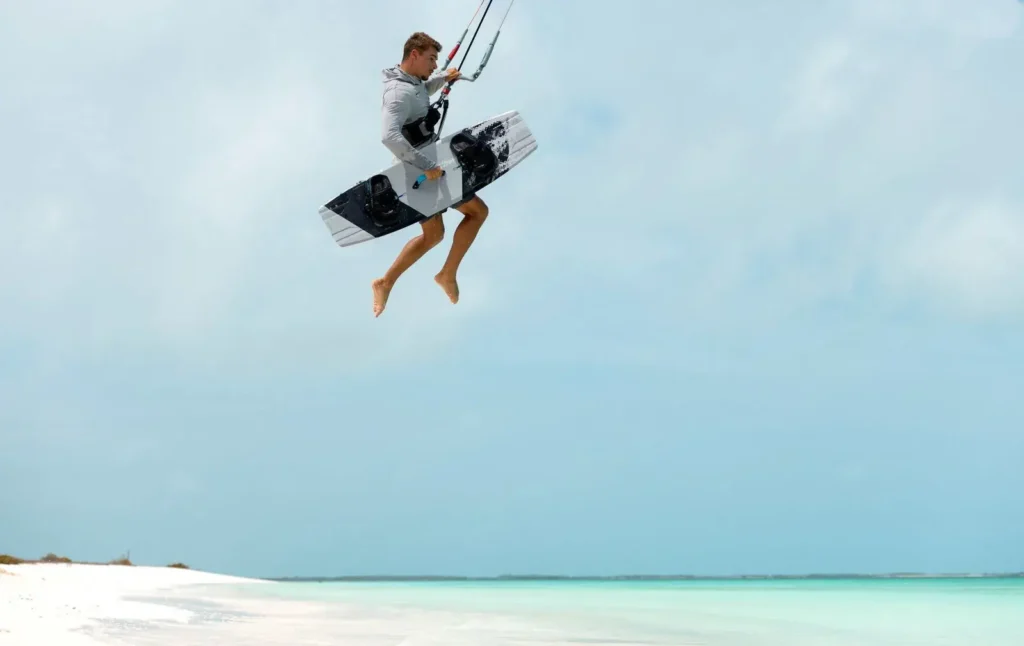
To start out, and for most sessions: a freeride twin-tip. It is symmetrical, you ride both ways without switching feet, and it forgives mistakes.
Size depends first on your weight. Duotone reference size: 128 to 134 cm up to 60 kg, 135 to 139 cm from 60 to 75 kg, 140 to 145 cm from 75 to 90 kg, 145 to 150 cm above 90 kg. Beginner or light wind: aim for the top of the range.
Waves: a directional board (surfboard). Light wind and foil: a foilboard. These are different boards, not bigger twin-tips.
Twin-tip, directional board or foilboard?
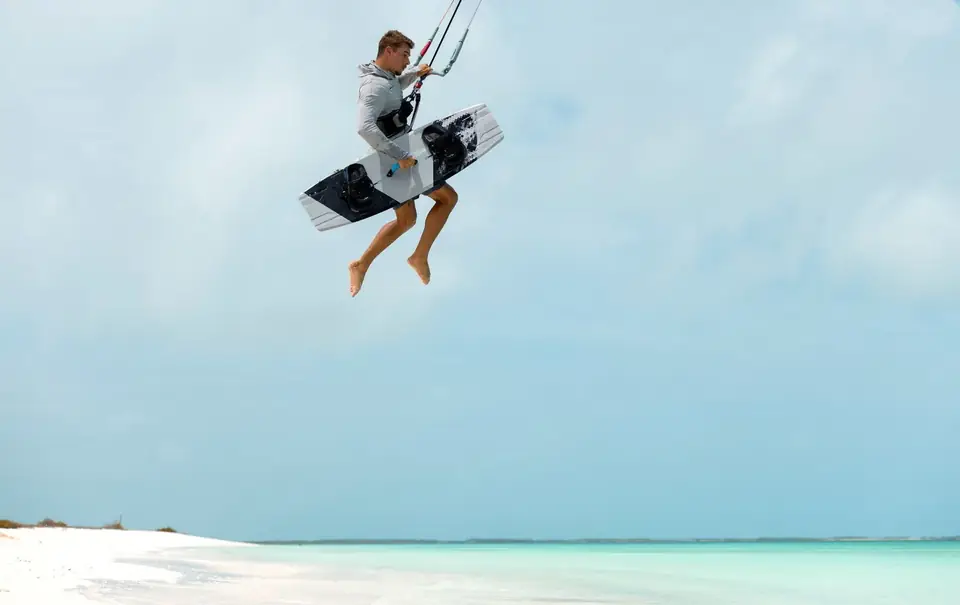
Three families share the water, and the first question to ask yourself is about your playground: flat or choppy water with jumps, waves, or light wind.
| Family | Principle | What it’s for |
|---|---|---|
| Twin-tip | Symmetrical: the nose and the tail are identical, you ride both ways without switching feet. | Freeride, freestyle, big air, flat or choppy water, learning. |
| Directional board (surf) | A distinct nose and tail, like a surfboard: it only rides efficiently one way. | Waves and downwind. |
| Foilboard | A board shaped to carry a foil: light, stiff, with more volume under the front foot. | Effortless gliding in little wind. |
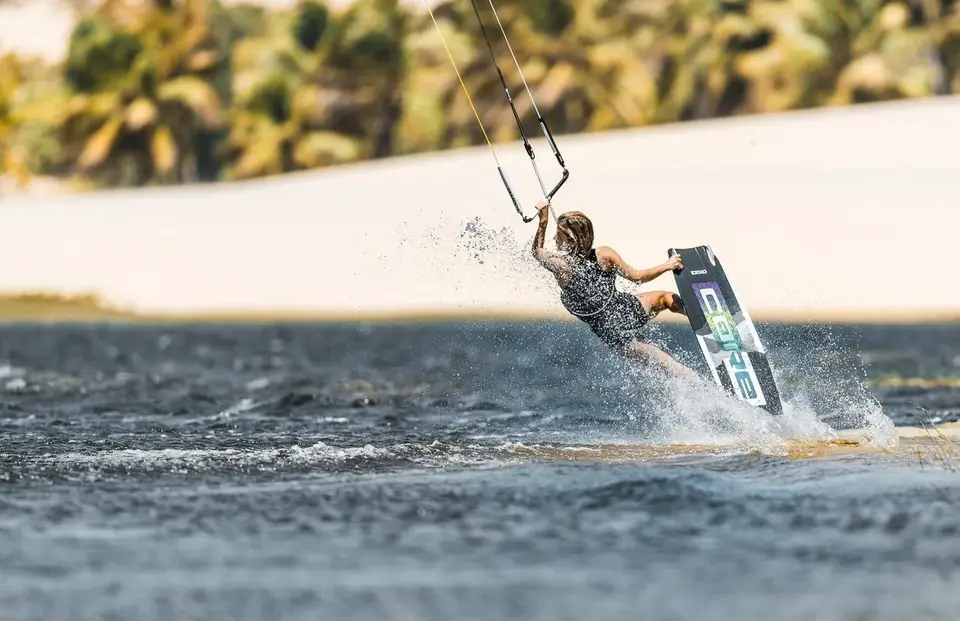
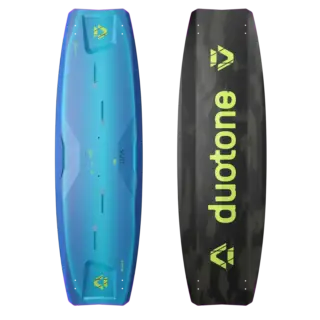
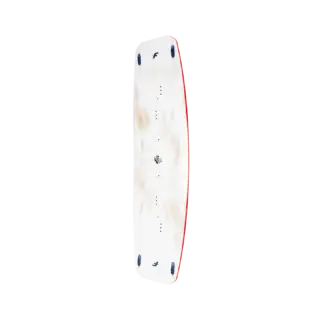
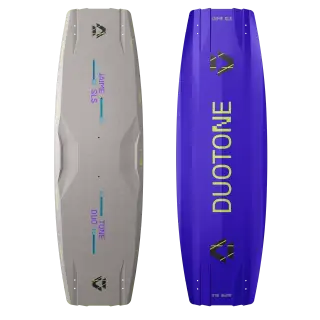
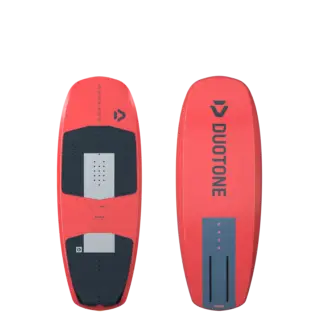
In twin-tips you are spoiled for choice: the Select SLS 2027 and the Trax 2027 are freeride boards, while the Jaime SLS 2027 is aimed at freestyle and big air. On the wave side, the Whip D/Lab 2024 is a surfboard, and the Pace a foilboard for freeride foiling.
What size twin-tip should you choose?
A big board planes earlier, carries more and goes upwind better; a small one is more maneuverable. That is why size is chosen first according to your weight, then according to your level and the wind at your spot.
| Rider weight | Board size |
|---|---|
| Up to 60 kg | 128 to 134 cm |
| 60 to 75 kg | 135 to 139 cm |
| 75 to 90 kg | 140 to 145 cm |
| Over 90 kg | 145 to 150 cm |
Duotone adds a simple rule: beginners and light wind call for a big board, around 140 to 145 cm. Intermediate and advanced riders can go down to about 132 to 138 cm to gain control and agility, especially when the wind picks up. In freestyle, a compact board is preferred so the edges bite faster. When in doubt, it is better to start a little bigger and size down as you progress.
Don’t look at length alone: width carries just as much. On our model pages, freeride twin-tips grow in both directions. The Select SLS 2027 comes in 135 × 40, 138 × 41, 141 × 42 and 144 × 43 cm. Board and kite also work together: a bigger or wider board can let you get going earlier, and sometimes with a slightly smaller kite. For kite size, use the kitesurfing kite size calculator or read the guide to choosing a kite.
Rocker, flex, shape: what they change under your feet
Three settings make the character of a twin-tip. Rocker is the curve of the board: the more pronounced it is, the more smoothly it glides over chop and the more it cushions your landings. Less rocker gives more speed and easier upwind riding. Flex is how soft the board is: a soft board is comfortable and stable, perfect for freeride, while a stiff board gives more pop and precision in freestyle and big air. Finally, the shape of the outline: a rounded outline turns and glides smoothly, while a straighter, squarer outline gains speed and pop for jumps.
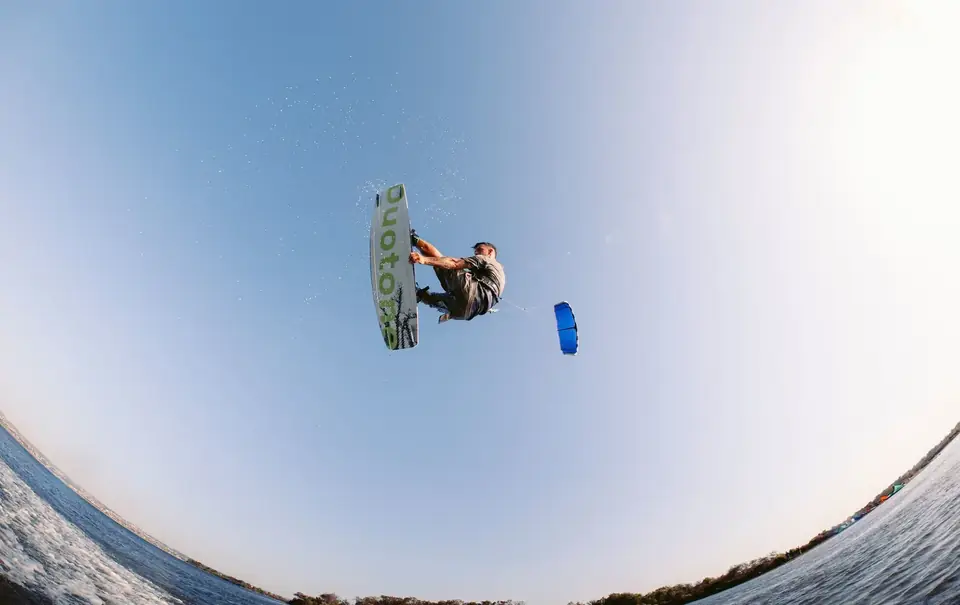
For freeride, aim for a medium rocker and a medium flex. Freestyle riders tend to look for stiff boards with a sharp outline.
Materials and construction
At Duotone, a twin-tip has a wood core along its full length, most often paulownia, for its flexibility and liveliness. Around it, layers of fiberglass or carbon depending on the model add pop, stability and control. In the SLS range, Textreme carbon lightens the board and reduces vibrations. Directional boards rest on an EPS foam core reinforced with bamboo, Technora fibers and cork. Foilboards are full carbon, with more volume under the front foot. Other brands have their own recipes: each board’s model page gives its materials.
Pads, straps, fins and the rest
A board doesn’t come alone: pads, straps, fins, harnesses. All of that is in the accessories. And if you’re torn between kite and wing, wing boards are listed separately: see the wing boards.
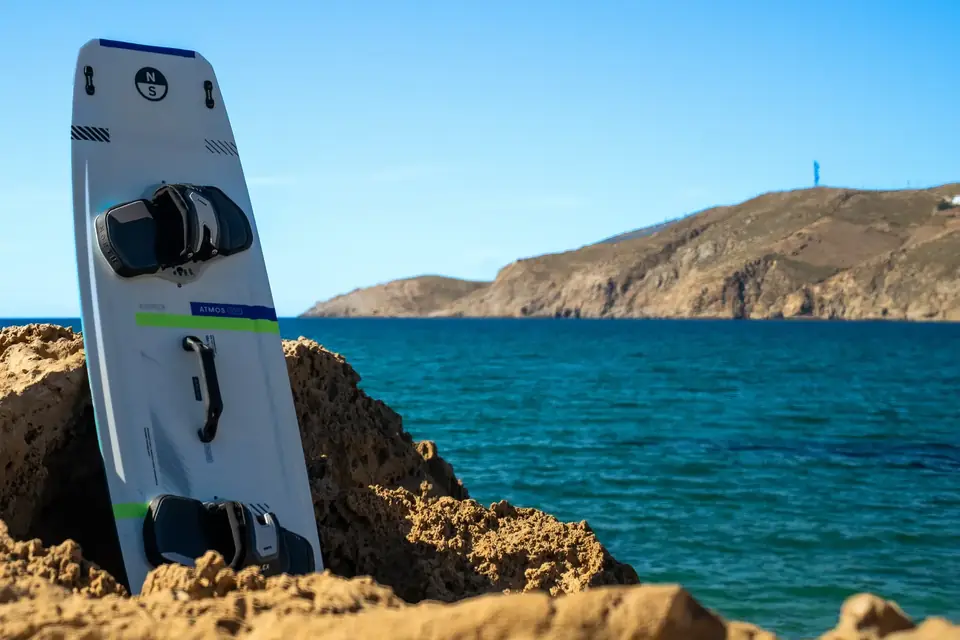
Boards to compare
Frequently asked questions
What size kiteboard for 75 kg?
Duotone gives 135 to 139 cm from 60 to 75 kg and 140 to 145 cm from 75 to 90 kg. At 75 kg, you are between the two: go up toward 140 cm to start out or in little wind, and stay around 135 to 138 cm if you are already comfortable and want more control.
Twin-tip or surfboard to start out?
The twin-tip. Duotone describes it as ideal for learning: it rides both ways, forgives mistakes and stays enjoyable in most conditions. The directional board is made for waves and downwind.
Why go bigger when you’re starting out?
A big board planes earlier and goes upwind more easily. You can size down as you progress and want more maneuverability.
Sources
Checked on November 2, 2026. The sizes by weight come from Duotone’s Boards page, the rules on rocker, flex and construction from its Twintips page.
- Duotone, Boards page (sizes by weight, board families, construction), checked on November 2, 2026
- Duotone, Twintips page (size, rocker, flex, shape), checked on November 2, 2026
- Kitesurfing Official, boards guide (board size and kite size), checked on November 2, 2026
- WindUnity model pages (dimensions of the Select SLS 2027, programs of the models mentioned), checked on November 2, 2026
Going further
- All kiteboards Model pages, dimensions and rider reviews.
- How to choose a kitesurfing kite Inflatable or foil kites, shape and size.
- Calculator: what size kite or wing? Your weight, the wind, your level.
- From what age to kitesurf For equipping younger riders.
Related reading
Guides How to choose a wing leash?Wing and board leashes: coiled wrist, waist or reel? ION, Duotone and Ride Engine models, lengths, dated prices and sizing rule.
- How to choose a kitesurfing kite?In brief To start out, and for most sessions: an all-round inflatable kite (LEI), in a delta, bow or hybrid shape. It…
- How to choose a kitesurfing and wing foiling helmet?Kitesurfing and wing foiling helmets: hard shell or soft cap, EN 1385 standard, ears. ION Hardcap Select, Mystic Legacy and Gath Gedi with dated prices.