Skip to content
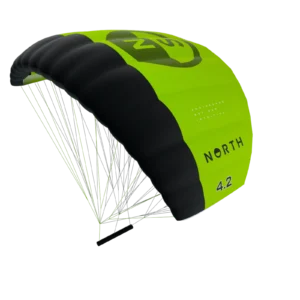
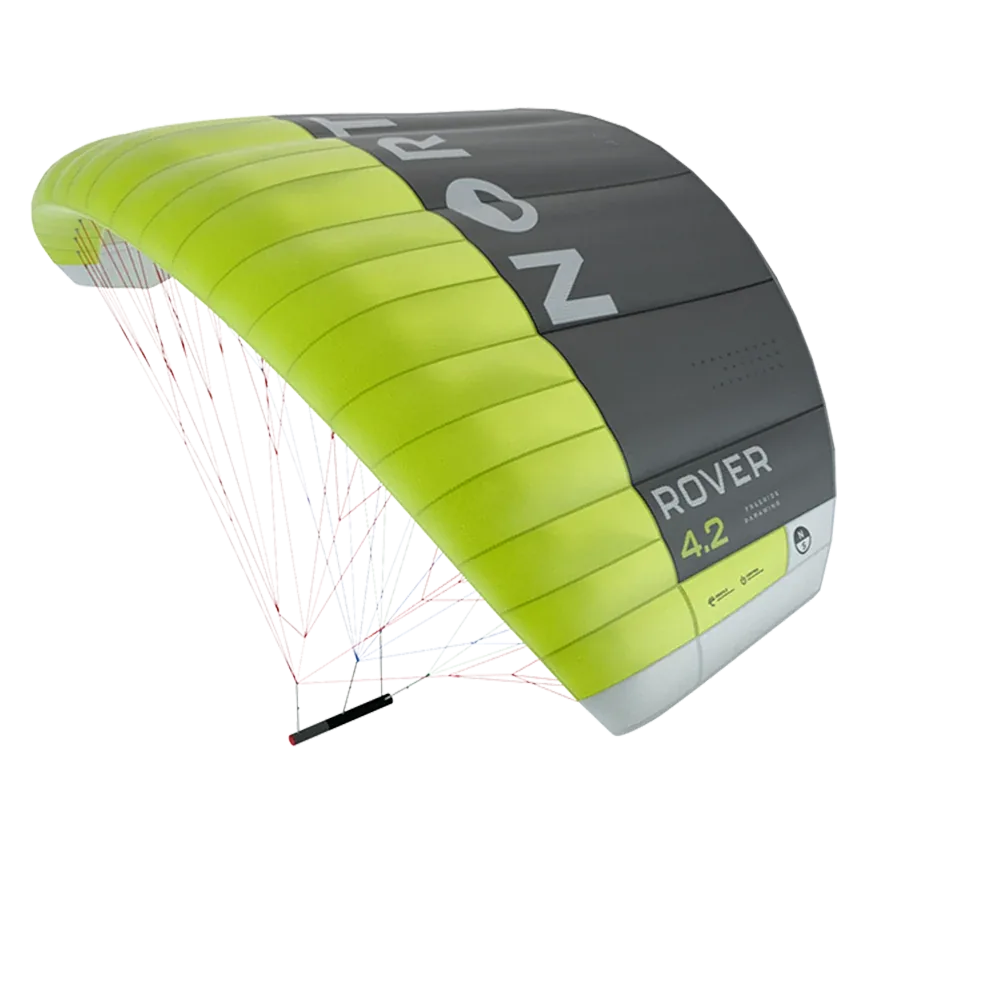
North Rover 4.2 m² parawing in a cut-out render on a white background: lime green leading edge, anthracite gray canopy
The Rover 2026 in 4.2 m², black and lime colorway · © North
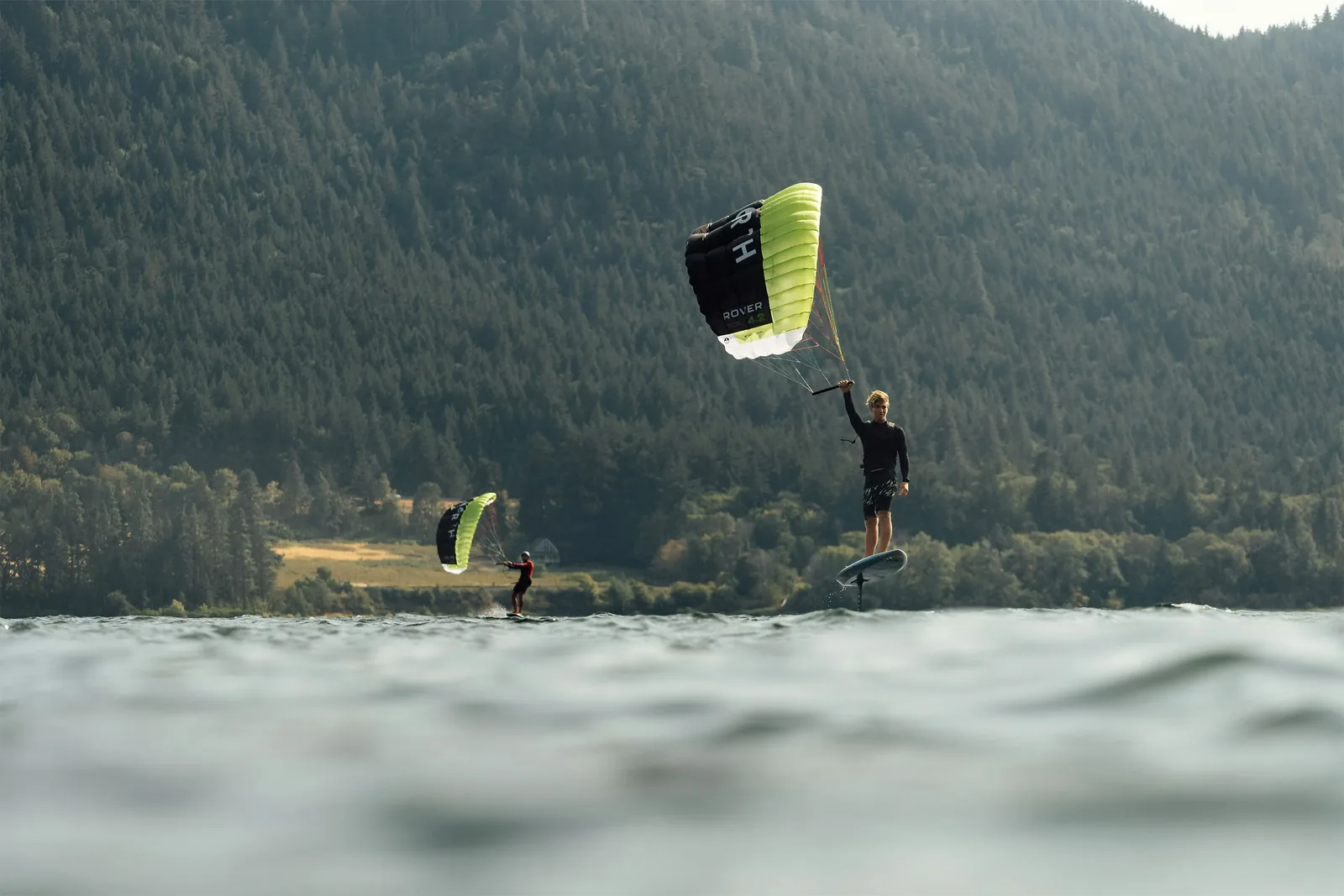
Two riders standing on their foilboards, a black and fluorescent green wing in hand
Two riders with the Rover on a lake · © North
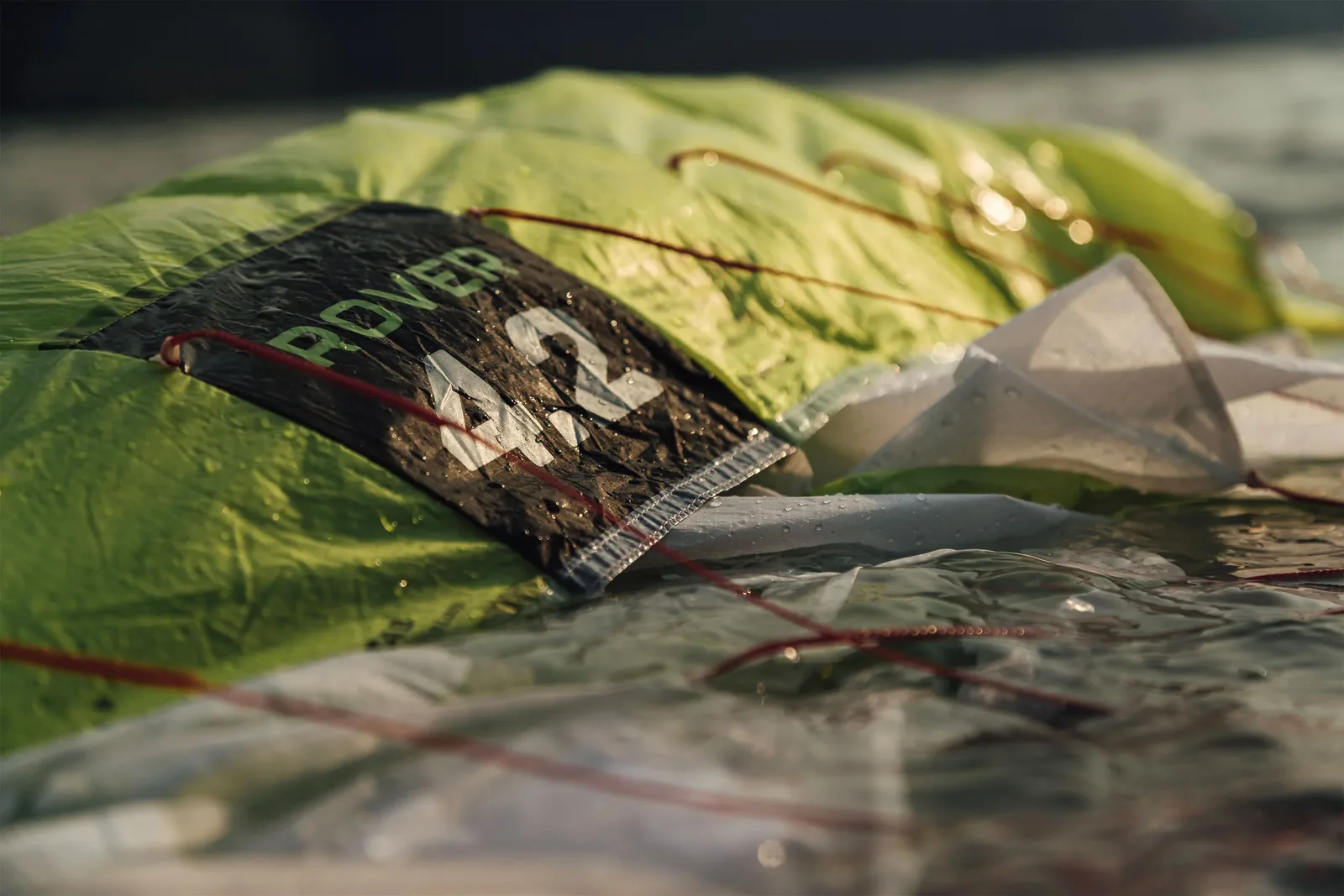
Close-up of a lime green canopy, wrinkled and wet with drops
Detail of the Rover 42 label on the canopy · © North
North

North Rover 2026 parawing test

  • Riding styleParawing, freeride, downwind
  • Sizes2.4 to 6 m²
  • Wind8 to 40 knots
  • YearModel 2026 · released Mar 2026

Verdict in brief

The North parawing I'd put first if you also want to go upwind: stable in the window, good upwind ability according to Foiling Magazine, The Inertia and an equipment renter, six sizes from 2.4 to 6.0 m². The downside comes up in every report: relaunch and packing away that are less easy than on minimalist wings, lines that tangle at the handle, and a limited top end. It fixes what gave the Ranger its bad reputation.

Two independent media tried the Rover in 4.2 m² (Foiling Magazine, The Inertia); I haven't tested it myself. The report from Ride Solutions, an equipment renter, points the same way and isn't counted.

For you if

  • You want to go upwind with a parawing: Foiling Magazine speaks of “really excellent” performance in freeride and upwind, Ride Solutions of upwind ability comparable to a Pocket Rocket
  • You're learning parawing: The Inertia writes that you couldn't ask for better for learning, the wing is so stable in the window, even if experts will want something livelier (the same guide nevertheless ranks the F-One Quest “best for beginners”)
  • You want a single wing for freeride, waves and downwind: Foiling Magazine judges it capable of all that, with a preference for freeride

Not for you if

  • You want a parawing that packs down small: Ride Solutions finds it bulky when folded, and Foiling Magazine advises allowing time to fold it properly before a downwind (an owner of the 5.0 m² finds it compact for its size, however)
  • You're counting on a hassle-free relaunch: The Inertia notes friction from the packing system at relaunch, Foiling Magazine a “difficult” relaunch from the bag, and the lines can tangle at the handle
  • You ride at the top of the range: Ride Solutions regrets too much power at the top end and a lack of depower; an owner on Progression Project finds his 3.5 m² more powerful and harder to control than a 3.0 m² Pocket Rocket, with the top end reached from 26 knots

Have you ridden this model? Leave the first review

What we know about this model

Our method
  • Specificationschecked between October and November 2026
  • 2 tests publishedFoiling Magazine, “North Rover” (page of April 20, 2026): Rover 4.2 m² tested, The Inertia, “The Best Parawings” (October 2026 guide): Rover 4.2 m² tested
  • Rider reviewsgive yours, and it will appear here

Sizes, weight, wingspan and bar length

Sizes, weight, wingspan, wind range and bar length
SizeWind
2.4 m²25 – 40 knots
2.9 m²20 – 35 knots
3.5 m²16 – 26 knots
4.2 m²14 – 22 knots
5 m²10 – 15 knots
6 m²8 – 12 knots

Wind ranges in knots, no reference rider: adjust them to your weight and your foil. Weight not published.

More details on these figures

Wind ranges in knots: table on the North page as of November 9, 2026; the 2.4 m² is given at “25-40+”, with no precise ceiling. North doesn't specify the reference rider's weight. Weight, wingspan and bar length not published. The MACkiteboarding page copies the Ranger's table: don't rely on it.

Strong points, weak points

Strong points

  • Excellent upwind ability: Foiling Magazine judges it “really excellent”, The Inertia speaks of easy upwind movement, Ride Solutions compares it with an Ozone Pocket Rocket
  • Very stable in the window, doesn't pull every which way: The Inertia “as stable as can be”, Ride Solutions notes a profile that keeps its shape despite changes in wind direction
  • Lines longer and stiffer than on minimalist wings: Foiling Magazine sees a bit more power and less nervousness in that, and fewer tangles
  • Colored A, B and C lines to find your bearings at relaunch, and a yellow leading edge that is easy to spot (Foiling Magazine, tested version)
  • Onwater backpack supplied: The Inertia finds it comfortable, able to carry a spare wing, and useful for deploying the wing from the water on a brushy spot

Weak points

  • Bulky packing and a relaunch less consistent than on minimalist wings: Foiling Magazine and Ride Solutions both note it; an owner of the 5.0 m² (Progression Project) nevertheless finds it compact for its size
  • Lines that tend to tangle at the handle, especially when sitting on the board (The Inertia); they can also catch on the end of the bar (Progression Project, May 2026)
  • Limited top end: Ride Solutions notes too much power at the top and a lack of depower; an owner on Progression Project says the same of his 3.5 m² at 26 knots and above
  • No weight, wingspan or line length from North; Foiling Magazine only notes that the lines are “rather long” (4.2 m²)

The flaw to know about. For me, its real flaw: you pay for the upwind ability in bulk and relaunch. Ride Solutions finds the wing bulky once folded, Foiling Magazine notes long lines and a less consistent relaunch, The Inertia a tendency of the lines to tangle at redeployment. If you're heading out for pure downwind and relaunching ten times a session, a smaller parawing that's easier to pack away, like the F-One Quest, will be simpler.

Model evolution

What changes vs the Ranger

  • Aimed at freeride and upwind ability (“unbeatable upwind drive”), with a wider wind range and faster depower
  • Six sizes from 2.4 to 6.0 m², instead of four from 2.2 to 5.2 m²
  • Lightweight, durable hybrid canopy, precision bridle system, carbon bar, instant Depower Tab, depower slider supplied with the backpack

Specifications

12 specs, sources at the bottom of the page

Program (manufacturer)
Freeride parawing “to go where you want, not just where the wind lets you”: upwind ability, wide wind range, intuitive depower, fast response, waves and downwind
Construction
Single skin, lightweight and durable hybrid canopy, precision bridle system, carbon bar; pull reinforced by a defined profile and an instant Depower Tab
Sizes
2.4, 2.9, 3.5, 4.2, 5.0 and 6.0 m²
Wind range (knots)
2.4 m²: 25-40+; 2.9: 20-35; 3.5: 16-26; 4.2: 14-22; 5.0: 10-15; 6.0: 8-12; North doesn't specify the reference rider's weight
Weight (kg)
n/a: North publishes no weight for the Rover
Wingspan
n/a: North doesn't publish it
Bar
Carbon control bar with a thin rod-type handle, no end caps, line tails attached at the middle (Foiling Magazine); length n/a
Line length
n/a: “rather long” according to Foiling Magazine (4.2 m²), no figure
Comes with
Wing, carbon control bar, onwater backpack and depower slider; ParaWing Stuff belt optional (North). MACkiteboarding adds a harness line
Colorways
Black and lime
Model year
North “SS26” label; shop page created on February 24, 2026 and published on March 10, 2026
A table error to know about
The retailer MACkiteboarding's page shows the Ranger's wind table (2.2 to 5.2 m²) for the Rover: I kept North's

What the published tests say

2 tests published, checked early November 2026

Foiling Magazine, “North Rover” (page posted on April 20, 2026)

Rover 4.2 m² tried in yellow and black. Thin rod-handle bar, colored A, B and C lines, long and stiffer lines, slightly structured leading edge, ample bridles that spread the power. Comfort range stated as “mid to upper teens” (unit not specified) with gusts up to a little over 20 mph. “Really excellent” performance in freeride and upwind, stability and control in the window; easy downwind. Limits: the long lines make packing away and relaunch less consistent in waves, folding properly before a downwind takes time, relaunch from the bag sometimes difficult, bar with no orientation marker. Conclusion: a good choice for anyone who wants a wing geared toward freeride and upwind that still works in waves and downwind (translated from English).

Read the test
The Inertia, “The Best Parawings” (guide updated on October 29, 2026)

Rover 4.2 m² tested “flat out”: as stable as can be, stays in the window, helps with going upwind, turning and heading out downwind; “you couldn't ask for better” for learning, even if pros and experts will want more liveliness. The rubber-ring packing system works well for packing away, with some friction at relaunch; the lines tend to tangle at the handle, especially when sitting on the board. Supplied backpack praised as a benchmark. Conclusion: “an excellent product, ideal for a wide range of levels”. The text recalls that the Ranger had been criticized for its instability (translated from English).

Read the test
Articles from shops and schools (2), not counted as tests

These articles come from sites that sell or rent gear: they are cited for information and kept separate from published tests.

Ride Solutions (equipment renter, Martigues), “North Rover review” (July 2, 2026)checked on 09/11/2026

Rover 4.2 m² tried with a North DW900 and a Midifoil 60 L, at Carro, 20-25 knot west wind. Intuitive to pick up, stable profile, good power at the low end, upwind ability comparable to an Ozone Pocket Rocket, friction ring on the front lines that makes folding easier. Limits: a bit short on depower, too much power at the top of the range, bulky when folded (translated from English).

Windance, “Which Parawing Should You Buy? Every Brand We Stock, Compared” (September 3, 2026)checked on 09/11/2026

US retailer guide, no test announced: the Rover offers more upwind ability than the Ranger and suits freeride between lift and surf (translated from English).

Rider feedback collected from the web (3)

Feedback found on the web, reworded. Never published as site reviews. Sample of 3 messages on the Progression Project forum (March 2026 and May 2026), two of them from the same owner; the third is an opinion without a test.

Progression Project, forum, thread “Trash-Bags (Parawing Lounge)”2026-05-15

Member “WindyBear”, owner of a Rover 3.5 and 5.0 m²; about 77 kg, 80-81 kg geared up (message of May 22, 2026)

He compares his 3.5 m² with a 3.0 m² Pocket Rocket on a big wind day: the Rover feels more powerful and harder to control to him, he reaches the limit of the range at 26 knots and above, the top end seems short to him, and he is looking for a small wing as a complement.

Progression Project, forum, thread “Trash-Bags (Parawing Lounge)”2026-05-19

Same member “WindyBear”, 5.0 m²

First flight on the 5.0 m²: compact for its size, canopy lighter than his old Gong V1, stable, very powerful, good upwind. The backpack works very well with the 3.5 m² inside. Flaws: the lines catch on the end of the bar; the depower line collapses the wing all at once but the center of the leading edge folds and takes on water; no redeployment yet.

Progression Project, forum, thread “Fone quest vs North rover”2026-03-16

Member “drc13”, who says he has tested neither

For him, the Quest and the Rover are at opposite ends of the spectrum: the Rover is designed for upwind angles at the cost of compactness. Another member (March 17, 2026) describes it as versatile.

Riders’ reviews

No reviews

No reviews yet.

Nobody has reviewed this gear yet. Do you use it? Help other riders of your weight — 2 minutes.

Leave your review (2 minutes)

Three screens: you, the gear, your review. Your email will never be published; it is only used to confirm that the review comes from a real person.

1/3 You

Only used to confirm your review and to let you know if it is rejected. Never displayed, never resold.

Your weight *

10 kg ranges only, so that other riders of your build can relate. No exact weight is recorded.

Your level *

Beginner: I’m still taking lessons. Intermediate: I ride on my own. Advanced: transitions and jumps. Expert: freestyle, wave or competition.

Your riding

Optional. If checked, your review stays published with the label “Gear received or tied to a brand” and doesn’t count toward the average rating.

You must be at least 15 to post a review (“Your data” article of the policy).

2/3 Your gear and how you use it
Wind range actually used (knots)
How long you’ve been using it *
Number of sessions (optional)
Rate each criterion (at least 3) *
Low-wind power
Stability / gusts
Steering & weight in hand
Handles & lines
Finish & durability

1 = very poor, 5 = excellent. Leave blank any criterion you couldn’t judge.

Do you recommend it? *
3/3 Your review

140 characters minimum — How it handles, its power and stability, what disappointed you, who you’d recommend it to.

Rider reviews: confirmed email address, no compensation. “Brand-linked” and “loaned / received” reviews are labeled and excluded from the average. Each review shows its publication date, the date of the experience and, if it was edited, its update date. A review is published or rejected within 7 days at most; if it is rejected, you receive the reason by email and you can correct it. You can complete or delete your review at any time from the email address used to submit it. How do reviews work?

Alternatives to compare

North Ranger 2026

North's first parawing, geared toward downwind: cheaper, goes upwind poorly, heavier according to Parawingfoil. The Inertia writes that the Rover fixed the stability issue held against the Ranger.

F-One Quest 2026

An easy-to-handle parawing that The Inertia ranks “best for beginners”. Windance recommends it for ease of use and packing away, the Rover for upwind ability; on the forum, a member (without a test) sums it up: Quest for compactness, Rover for upwind angles.

Ozone Pocket Rocket V2

Ride Solutions compares the Rover's angles with those of the Pocket Rocket; a forum owner finds the Pocket Rocket easier to handle in strong wind, with a 3.0 m² against a Rover 3.5 m².

F-One Frigate V2 2027

For Windance, the Frigate targets speed and strong upwind ability and requires more technique; the Rover targets freeride. No cross-test found.

Frequently asked questions

Does the North Rover go upwind well?

Yes, that's its selling point. Foiling Magazine speaks of “really excellent” upwind performance, The Inertia of a wing as stable as can be, and Ride Solutions compares its angles with those of an Ozone Pocket Rocket.

Which size of North Rover should you choose?

North ranges, no reference rider: 2.4 m² from 25 to 40+ knots, 2.9 m² from 20 to 35, 3.5 m² from 16 to 26, 4.2 m² from 14 to 22, 5.0 m² from 10 to 15, 6.0 m² from 8 to 12. Both tests tried the 4.2 m². One owner finds the 3.5 m² too powerful at 26 knots and above.

Rover or Ranger?

Rover if you want to go upwind and stay stable, Ranger if you do pure downwind at the lowest price. The Inertia writes that the Rover is “a world away” from the Ranger, as stable as can be.

What does the North Rover include?

The wing, a carbon control bar, an onwater backpack and a depower slider, with a ParaWing Stuff belt optional.

Is the North Rover bulky once folded?

Ride Solutions says it is: plan for a large belt or a backpack. Foiling Magazine advises taking the time to fold it properly. An owner of the 5.0 m² finds it compact for its size, on the contrary. North publishes neither weight nor folded dimensions.

Method and limitations of this page

This page brings together the technical specs, tests from the press and blogs, and rider feedback found on the web, without rewriting any of it. When WindUnity has ridden the gear itself, the page says so with the “WindUnity test” badge.

Rider reviews are published as is, with their date. Reviews tied to a brand or based on loaned gear are labeled and excluded from the average.

What’s still missing

  • Official weights: North doesn't publish any
  • Wingspan, bar length and line length: not published
  • Reference rider weight for the wind ranges: not specified
  • Exact release date: North gives none; earliest trace, shop page created on February 24, 2026
  • Reviews posted on WindUnity: none

Sources

Data collected between October and November 2026

North : product page

Shops : RideSolutions, Windance

Press and specialist sites : The Foiling Magazine, The Inertia

Forums and riders : Progression Project

Others : Parawingfoil

See the details of the 7 sources

North

Shops

  1. Ride Solutions, North Rover review (July 2, 2026)
    02/07/2026
  2. Windance, Which Parawing Should You Buy?
    03/09/2026

Press and specialist sites

  1. Foiling Magazine, North Rover (test, April 20, 2026)
    20/04/2026
  2. The Inertia, The Best Parawings (2026 guide)

Forums and riders

  1. Progression Project, forum (3 messages)

Others

  1. Parawingfoil, North Ranger Parawing Review (April 7, 2026)
    07/04/2026