Skip to content
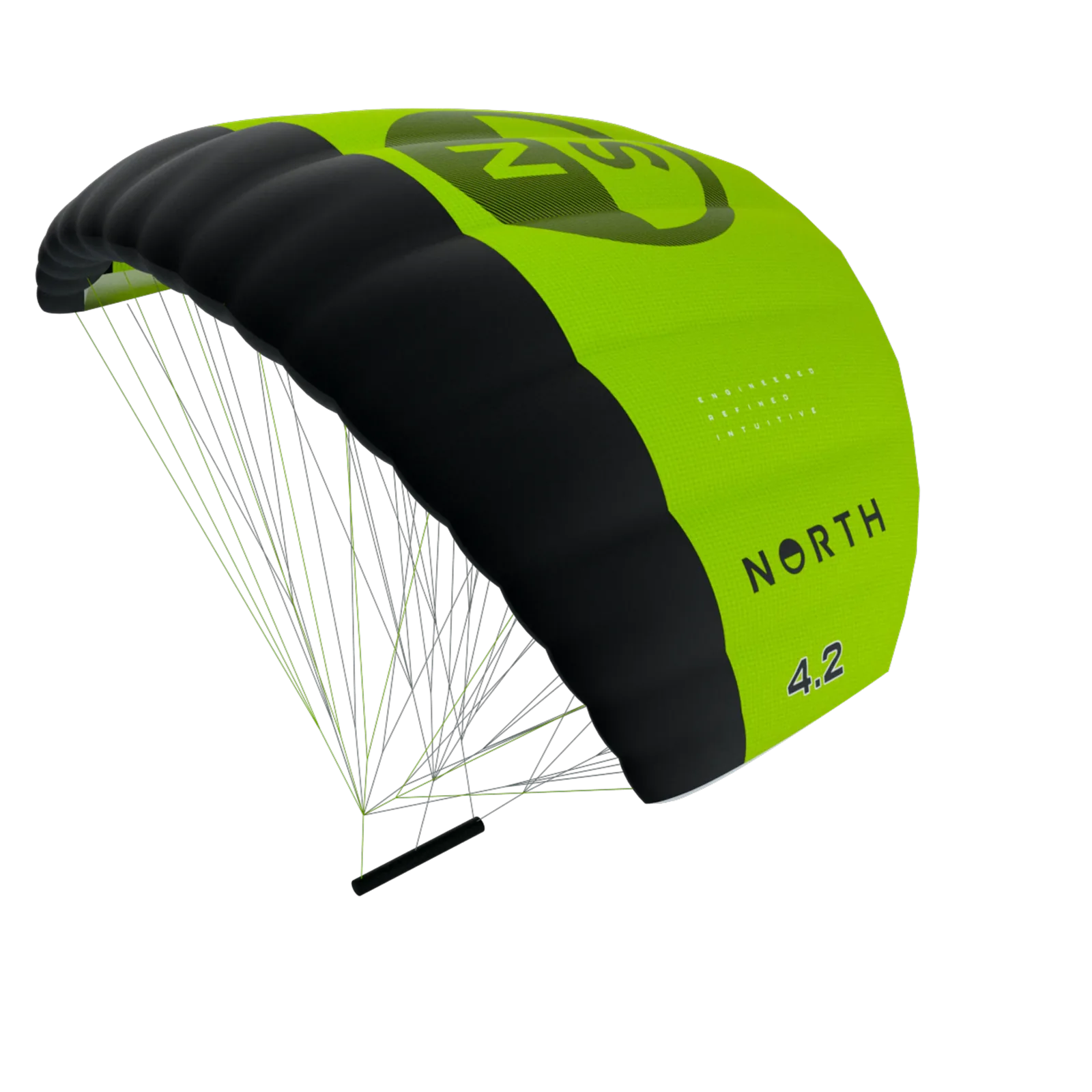
North Ranger 4.2 m² parawing in cutout render on a white background: lime green canopy with black leading edge
The Ranger in 4.2 m², Lime colorway · © North
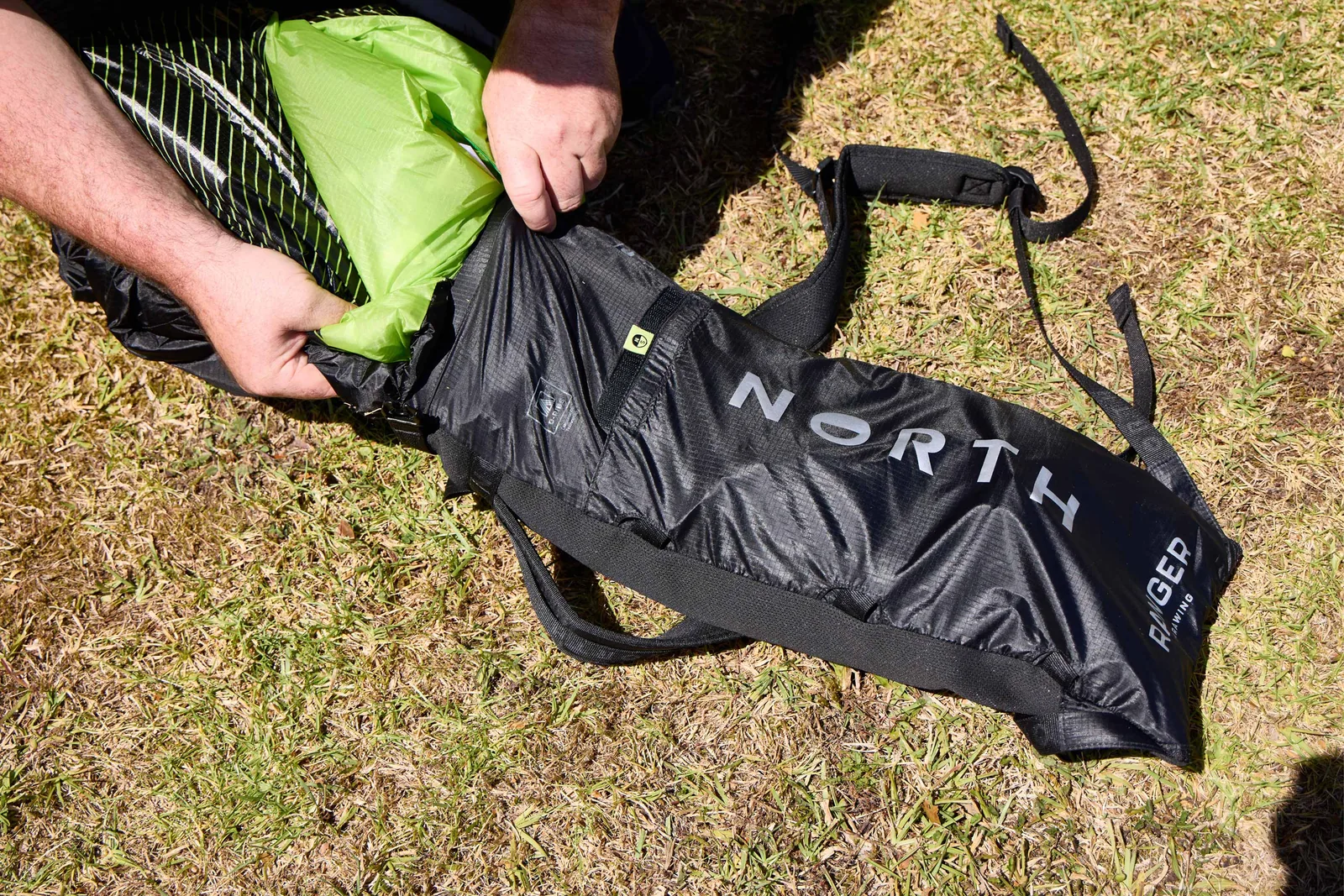
Hands pulling a green North Ranger parawing out of its black onwater bag marked North, lying on dry grass
The Ranger and its onwater backpack, supplied with the wing · © North
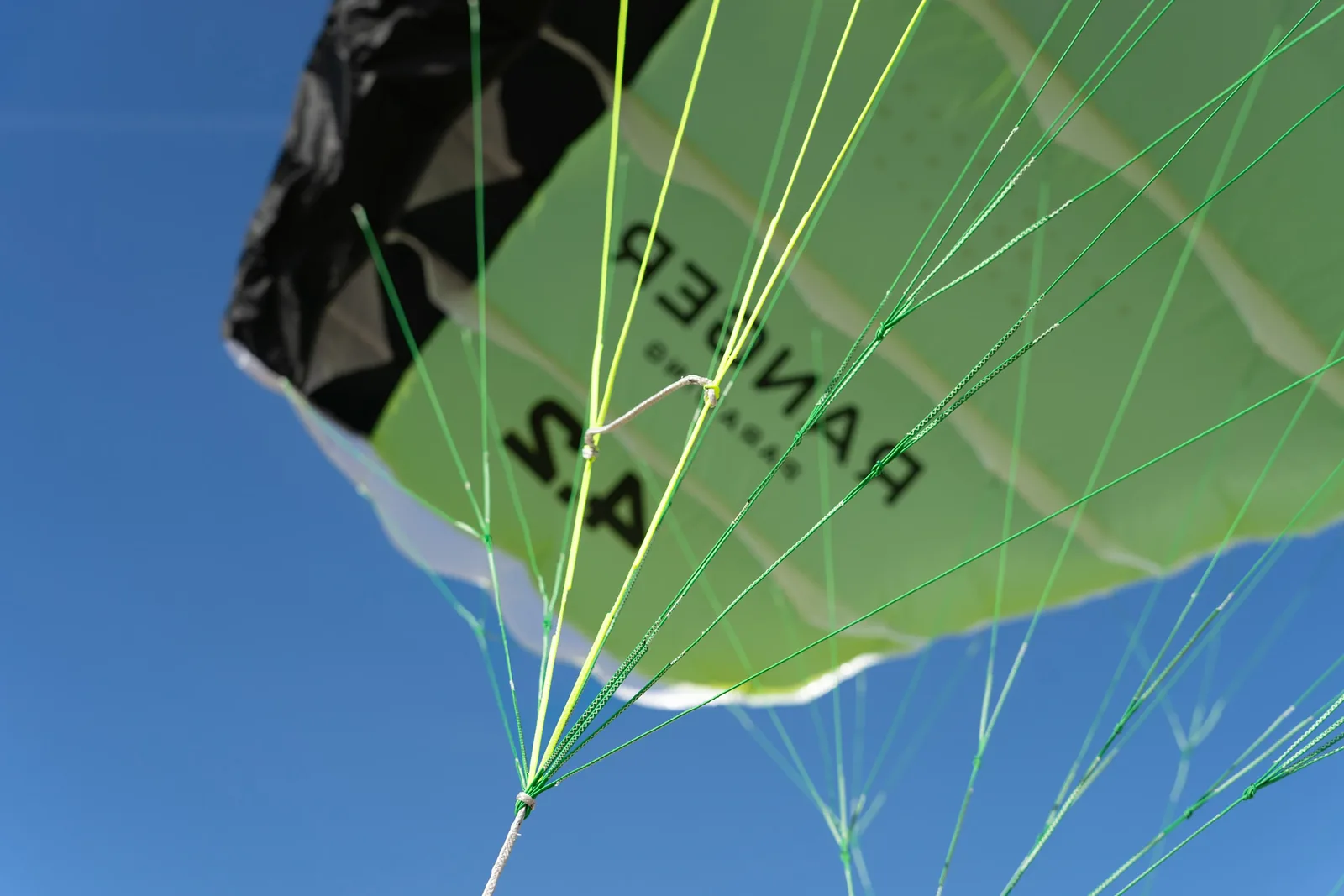
North Ranger 4.2 m² parawing seen from below in flight: lime green canopy
The Ranger in flight, seen from below · © North
North

North Ranger 2026 parawing test

  • Riding styleParawing, downwind
  • Sizes2.2 to 5.2 m²
  • Wind10 to 40 knots
  • YearModel 2025 · released Apr 2025

Verdict in brief

A downwind parawing, not a Swiss Army knife: plenty of power from the low end to get you up on the foil and a backpack supplied (current prices are listed in Where to buy below). The downside, which all the feedback mentions: it doesn’t go upwind well. The Inertia tried it in 4.2 m² and says so, as do two riders on the Progression Project forum. If you want to get back to your starting point, look at the Rover instead, from the same manufacturer.

A single independent test, The Inertia (July 2025, Ranger 4.2 m²); the rest comes from the manufacturer, a retailer, a blog and forums. I haven’t tried it myself.

For you if

  • You mostly do downwind: The Inertia finds it has plenty of power at the low end and judges it convincing for downwinding and waves (Windance also lists it among the downwind tools)
  • You want an inexpensive backup parawing: The Inertia judges it “incredible” for that, given the price and the supplied bag (translated from English)
  • You start from spots where rigging a wing is complicated: North presents it as a way to get up without a wing or kite, on a lake, in a harbor, on the ocean or from land

Not for you if

  • You want to go upwind: The Inertia finds its upwind ability limited, one owner talks about a “dog” upwind (Progression Project, December 2025) and another struggles to point upwind (July 2025)
  • You want a light wing: Parawingfoil measures 1,350 g in 4.2 m², against 520 g for a 4.0 m² Frigate and 640 g for a 4.3 m² Pocket Rocket V1 (North’s weight is the one from its shop listing, with no detail); The Inertia, for its part, puts it among the light wings: these two sources contradict each other
  • You want to make back-and-forth loops in front of the spot: Windance judges it weak upwind and advises choosing it mostly for downwind

Have you ridden this model? Leave the first review

What we know about this model

Our method
  • Specificationschecked early November 2026
  • 1 test publishedThe Inertia, “The Best Parawings of 2025” (July 15, 2025, Bowen Dwelle): Ranger 4.2 m² tested, same product as the one sold in 2026 (North label “MY25.2” on the archived pages of April 2025, July 2025 and March 2026 as on the current page)
  • Rider reviewsgive yours, and it will appear here

Sizes, weight, wingspan and bar length

Sizes, weight, wingspan, wind range and bar length
SizeWing weightWind
2.2 m²1.2 kg25 – 40 knots
3.2 m²1.3 kg18 – 26 knots
4.2 m²1.35 kg14 – 20 knots
5.2 m²1.45 kg10 – 15 knots

Wind ranges in knots, for 85 kg with a DW1100 and a Midi 96 L: shift them according to your weight. Weights taken from North’s shop listing, not guaranteed.

More details on these figures

Wind ranges in knots, for an 85 kg rider with a DW1100 and a Midi 96 L board: table from North’s page on November 9, 2026. Weight: values entered by size in North’s shop listing, picked up by Parawingfoil (April 7, 2026); North shows no weight on its page, with no detail on the bar and the bag. Wingspan and bar length not published.

Strong points, weak points

Strong points

  • Plenty of power at the low end: The Inertia (4.2 m²) as well as a rider on the Progression Project forum (“great low end”, December 2025)
  • D-shaped ribs (D-Rib): they support the canopy diagonally, reduce the number of bridle lines and keep the canopy stable when you depower the bar
  • Depower Tab on the yellow bridle of the leading edge, which acts as a handbrake; you can hook it to the end of the bar to stay depowered
  • Onwater backpack supplied, fitted for diving with it, designed for one wing in hand (4 m²) and two others in the bag (3 and 5 m²); straps made to go over a wetsuit and a vest (North)
  • Clean construction: The Inertia praises solid manufacturing and a very tidy three-line bridle-to-bar link; easy storage with no struts on the leading edge

Weak points

  • Limited upwind ability: according to The Inertia, North acknowledged that going upwind wasn’t in the specifications of this first version
  • Weight debated: 1,350 g in 4.2 m² according to Parawingfoil, which calls it 2.5 times heavier than a Frigate, with a 40 g/m² canopy (Parawingfoil); The Inertia nonetheless judges it light. North puts no weight on its page
  • Reputation for stability: The Inertia writes, in its 2026 guide, that the Ranger took “a lot of criticism” in the community for its instability and the difficulty of controlling it (translated from English); this criticism doesn’t appear in its 2025 test
  • Reduced spec sheet at North: no wingspan, no bar or line length, weight absent from the page

The flaw to know about. For me, its real flaw: it doesn’t go upwind well, and you find that everywhere. The Inertia, two Progression Project riders and Windance say the same thing. For a recreational rider who wants to tack back and forth in front of the spot, it’s not the right parawing; the Rover, from the same manufacturer, goes upwind better according to the tests.

Specifications

13 specs, sources at the bottom of the page

Program (manufacturer)
Single-skin parawing with very short bridles, to get up on the foil with the wind, then stow it and surf the swell without a wing or kite, for downwinding as well as for backup
Construction
Single skin with very short bridles, D-Rib diagonal ribs, no leading-edge battens; color-coded canopy and bridles, black leading edge (North). 40 g/m² canopy according to Parawingfoil
Depower Tab
Handle on the fluorescent yellow bridle of the leading edge, in the middle: acts as a handbrake, can be hooked to the end of the bar
Sizes
2.2, 3.2, 4.2 and 5.2 m²
Wind range (knots)
2.2 m²: 25-40; 3.2: 18-26; 4.2: 14-20; 5.2: 10-15; for an 85 kg rider with a DW1100 and a Midi 96 L board, to shift according to weight, level, foil and board
Weight (kg)
1.20 (2.2 m²), 1.30 (3.2), 1.35 (4.2), 1.45 (5.2): weight entered by size in North’s shop listing (page data) and picked up by Parawingfoil (April 7, 2026) for the 4.2 m². It isn’t a spec sheet: we don’t know whether it’s a shipping weight or whether the bar and the bag are included
Wingspan
n/a: North doesn't publish it
Bar
Light carbon bar, one-handed flying and harness-compatible (Parawingfoil); length n/a
Line length
n/a: North doesn't publish it
Comes with
Wing, carbon control bar and onwater backpack
Colorways
Lime (a single reference)
Price
Price depends on the size (2.2, 3.2, 4.2 and 5.2 m²), see current prices in Where to buy
Model year
North label “MY25.2” (archives of April 2025, July 2025, March 2026 and the current page): the product sold in 2026 is the 2025 one

What the published tests say

1 test published, checked early November 2026

The Inertia, “The Best Parawings of 2025” (Bowen Dwelle, July 15, 2025, archived version); the same outlet’s 2026 guide comes back to the Ranger

Ranger 4.2 m² tried backpack supplied. Strengths noted: plenty of power at the low end, solid construction and a tidy three-line bridle-to-bar link, easy storage thanks to the absence of battens; the summary table also calls it light. Limit: limited upwind ability; North acknowledged that going upwind wasn’t in the specifications of this first version. Tip noted: loop the front lines around the end of the bar to make the wing fly further forward. Conclusion: promising for those who don’t need to go upwind, good for downwind, waves and backup. The same outlet’s 2026 guide: the Ranger is cited there as a lower-aspect-ratio wing, which turns fast and gives power at the low end but goes upwind less well, and it writes that the Ranger took a lot of criticism for its instability (translated from English).

Read the test
Articles from shops and schools (1), not counted as tests

These articles come from sites that sell or rent gear: they are cited for information and kept separate from published tests.

Windance, “Which Parawing Should You Buy? Every Brand We Stock, Compared” (September 3, 2026)checked on 09/11/2026

US retailer guide, no trial announced: the Ranger is classed there as “easy to stow, for downwind”, with short bridles and a Depower Tab, and upwind ability “isn’t its strong point”. The Rover is presented as the option for getting back to the starting point (translated from English).

Rider feedback collected from the web (3)

Feedback found on the web, reworded. Never published as the site’s reviews. Sample of 3 messages on the Progression Project forum (July 2025, December 2025, April 2026), two of them from owners; none contradicts the tests.

Progression Project, forum, thread “Trash-Bags (Parawing Lounge)”2025-07-07

Member “seawing”, owner of a Ranger

The Ranger is good for downwind, but it barely manages to point upwind; he asks for advice to gain angle.

Progression Project, forum, thread “Parawing aspect ratio”2025-12-07

Member “ElGranDan”, Ranger rider, beginner in kite and parawing

He rides a Ranger that he judges “useless” upwind but very good at the low end; he finds it wider than many parawings from other brands.

Progression Project, forum, thread “First Parawing advice”2026-04-14

Member “Gonefoiling”

For downwind in his area, many riders only need to pull themselves up on the foil and even a Ranger would do; to get back to the starting point, you need a wing that goes upwind better.

Riders’ reviews

No reviews

No reviews yet.

Nobody has reviewed this gear yet. Do you use it? Help other riders of your weight — 2 minutes.

Leave your review (2 minutes)

Three screens: you, the gear, your review. Your email will never be published; it is only used to confirm that the review comes from a real person.

1/3 You

Only used to confirm your review and to let you know if it is rejected. Never displayed, never resold.

Your weight *

10 kg ranges only, so that other riders of your build can relate. No exact weight is recorded.

Your level *

Beginner: I’m still taking lessons. Intermediate: I ride on my own. Advanced: transitions and jumps. Expert: freestyle, wave or competition.

Your riding

Optional. If checked, your review stays published with the label “Gear received or tied to a brand” and doesn’t count toward the average rating.

You must be at least 15 to post a review (“Your data” article of the policy).

2/3 Your gear and how you use it
Wind range actually used (knots)
How long you’ve been using it *
Number of sessions (optional)
Rate each criterion (at least 3) *
Low-wind power
Stability / gusts
Steering & weight in hand
Handles & lines
Finish & durability

1 = very poor, 5 = excellent. Leave blank any criterion you couldn’t judge.

Do you recommend it? *
3/3 Your review

140 characters minimum — How it handles, its power and stability, what disappointed you, who you’d recommend it to.

Rider reviews: confirmed email address, no compensation. “Brand-linked” and “loaned / received” reviews are labeled and excluded from the average. Each review shows its publication date, the date of the experience and, if it was edited, its update date. A review is published or rejected within 7 days at most; if it is rejected, you receive the reason by email and you can correct it. You can complete or delete your review at any time from the email address used to submit it. How do reviews work?

Alternatives to compare

North Rover 2026

North’s next parawing, for upwind ability and freeride. The tests find it stable and good upwind, where the Ranger goes upwind poorly; it costs more than the Ranger, and packs bulkier.

F-One Quest 2026

Another entry-level parawing. 0.65 kg in 4.0 m² with bar and harness line, against 1.35 kg for the Ranger 4.2 m² according to Parawingfoil; The Inertia makes it its beginner pick.

Ozone Pocket Rocket V2

Higher-aspect-ratio wing: The Inertia writes that high-aspect-ratio wings, like the Pocket Rocket, go faster and go upwind better, and that the low-aspect-ratio Ranger turns fast and gives power at the low end but goes upwind less well.

Frequently asked questions

Does the North Ranger go upwind?

Poorly. The Inertia says so after trying it (4.2 m²) and North acknowledged that going upwind wasn’t in the specifications of this first version; two owners on Progression Project say the same. Windance recommends it mainly for downwind. To get back to your starting point, look at the Rover.

Which North Ranger size to choose?

North’s ranges, for 85 kg with a DW1100 and a Midi 96 L board: 2.2 m² from 25 to 40 knots, 3.2 m² from 18 to 26, 4.2 m² from 14 to 20 and 5.2 m² from 10 to 15. The 4.2 is the size The Inertia tried. Shift according to your weight.

Is the North Ranger heavy?

Yes, according to Parawingfoil: 1,350 g in 4.2 m², against 520 g for a 4.0 m² Frigate. The same weights appear in North’s shop listing, but not on its page: I don’t know what they include (bar, bag).

What does the North Ranger include?

The wing, a carbon control bar and an onwater backpack, at a price that depends on the size (North’s page); see current prices in Where to buy.

Ranger or Rover?

Ranger if you do downwind and want the cheaper one; Rover if you also want to go upwind. Foiling Magazine and The Inertia find the Rover good upwind and stable, but bulkier once folded.

Method and limitations of this page

This page brings together the technical specs, tests from the press and blogs, and rider feedback found on the web, without rewriting any of it. When WindUnity has ridden the gear itself, the page says so with the “WindUnity test” badge.

Rider reviews are published as is, with their date. Reviews tied to a brand or based on loaned gear are labeled and excluded from the average.

What’s still missing

  • Official weights: North publishes none; the weights come from Parawingfoil and don’t specify bar and bag
  • Wingspan and bar or line length: not published by North
  • Exact release date: North gives none; earliest trace, shop listing created on April 15, 2025
  • A single independent test (The Inertia, July 2025)
  • Reviews posted on WindUnity: none

Sources

Data collected early November 2026

North : product page

Shops : Windance

Press and specialist sites : The Inertia

Forums and riders : Progression Project

Others : Parawingfoil

See the details of the 7 sources

North

  1. Ranger page archived on April 26, 2025 (Wayback)
    26/04/2025 · archived version from 26/04/2025

Shops

  1. Windance, Which Parawing Should You Buy?
    03/09/2026

Press and specialist sites

  1. The Inertia, The Best Parawings of 2025 (archive of July 16, 2025)
    15/07/2025 · archived version from 16/07/2025
  2. The Inertia, The Best Parawings (2026 guide)

Forums and riders

  1. Progression Project, forum (3 messages)

Others

  1. 07/04/2026