Skip to content
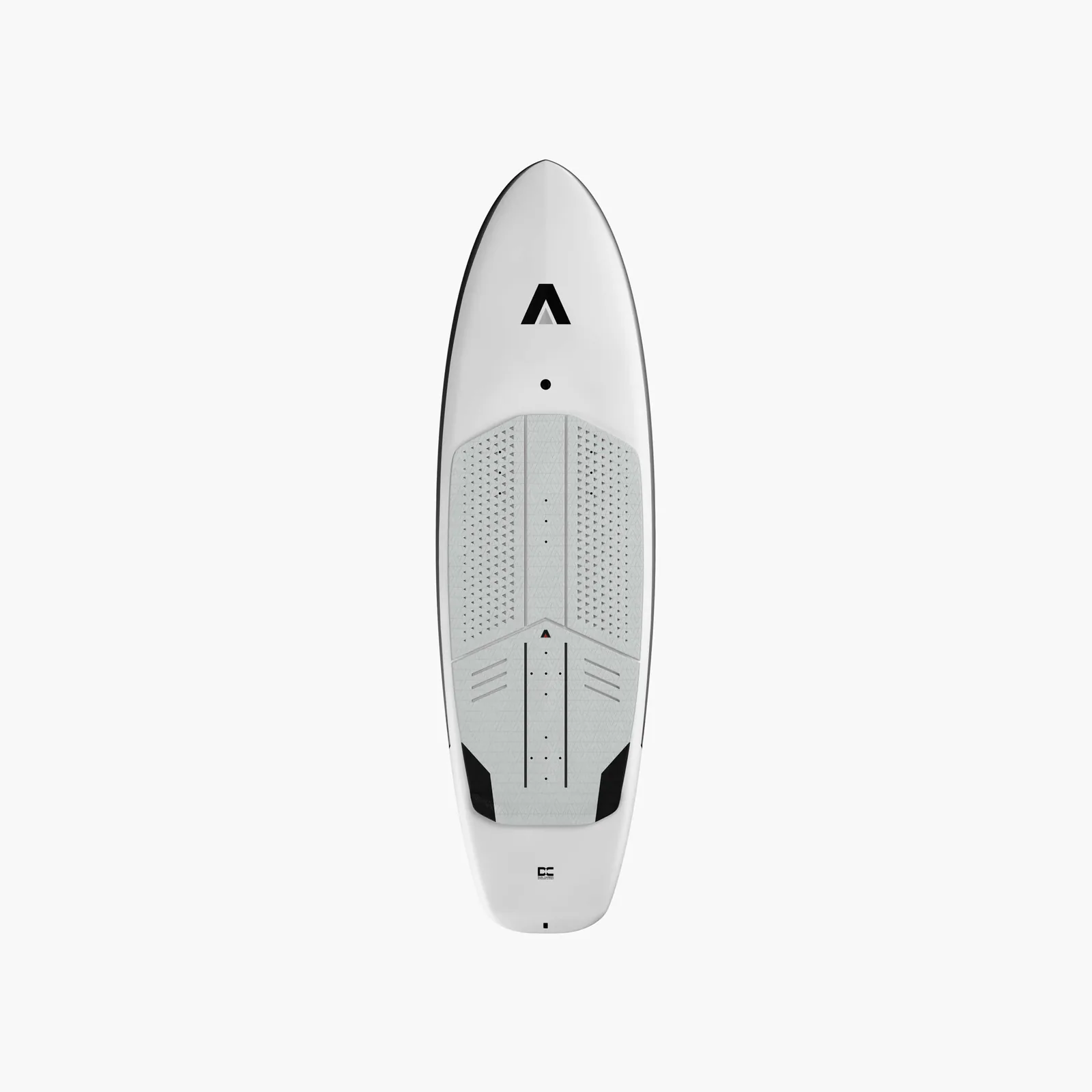
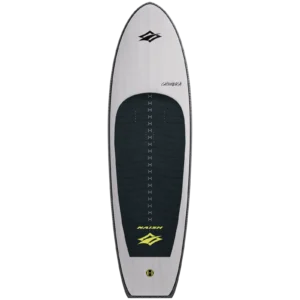
Deck of the Armstrong Midlength Mk II X-Form: white hull, light gray perforated pad with a grooved chevron pattern
Deck of the Midlength Mk II X-Form · © Armstrong
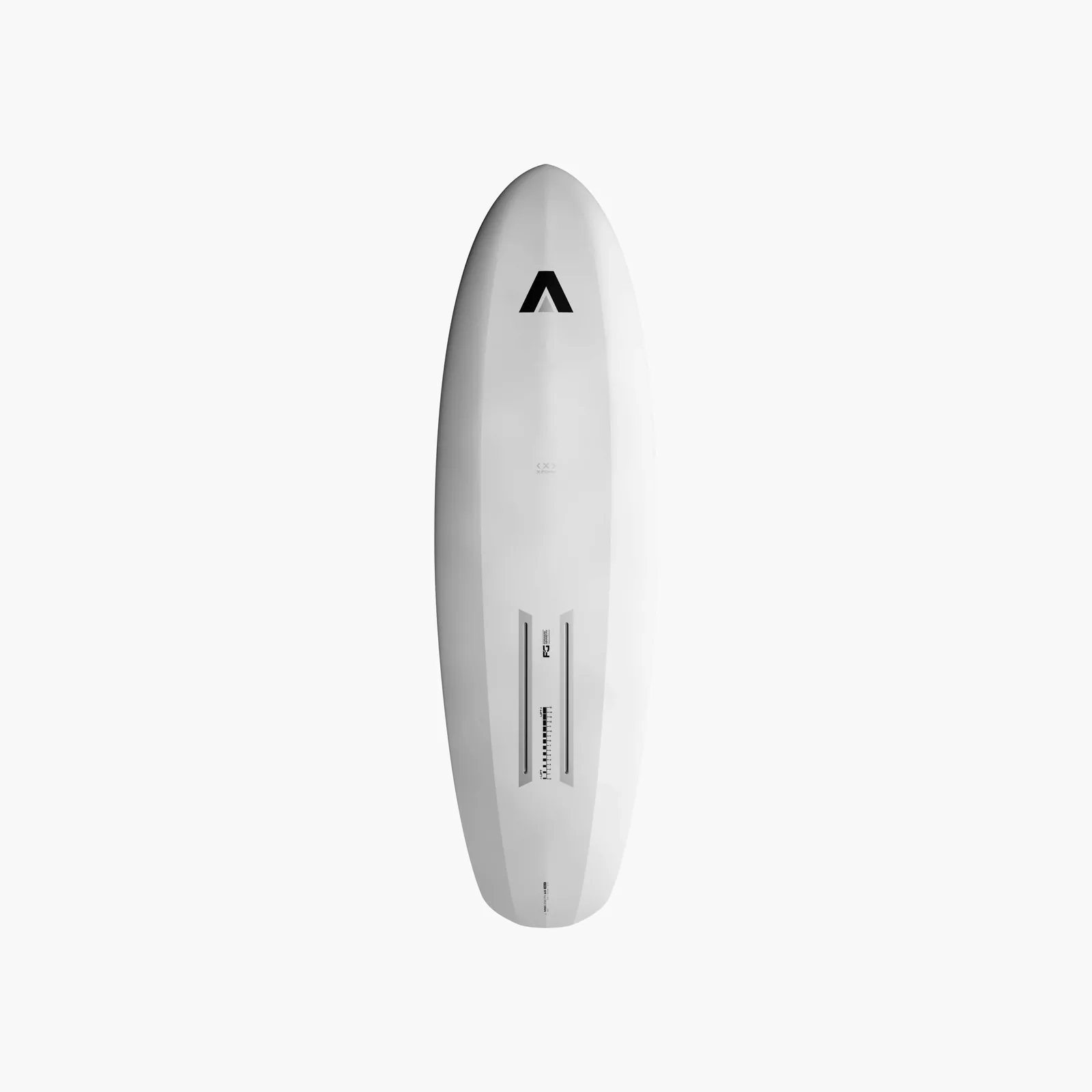
Underside of the Armstrong Midlength Mk II X-Form: white to very light gray hull, black Armstrong logo near the nose
Underside of the Midlength Mk II X-Form with its foil tracks · © Armstrong
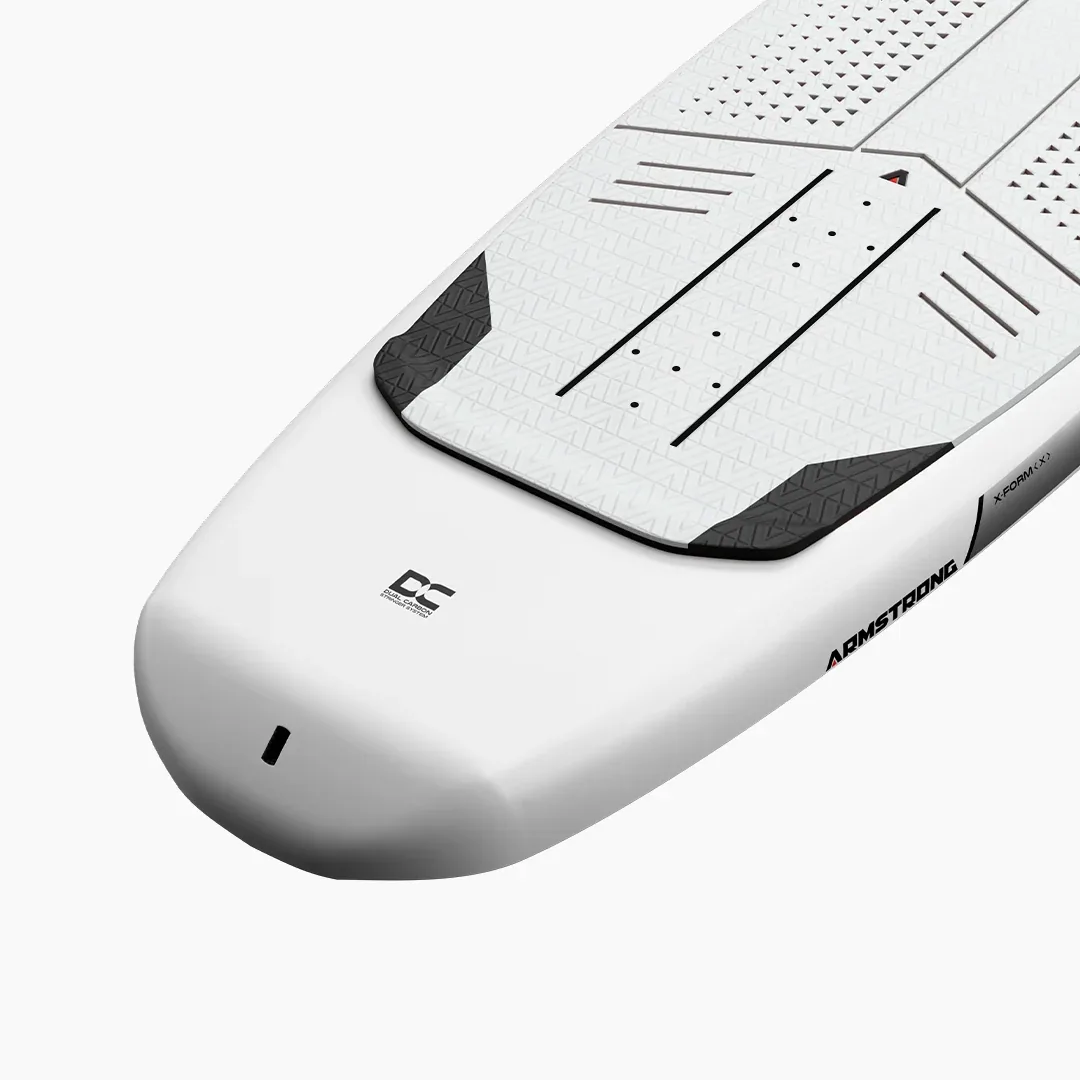
Nose of the Armstrong Midlength Mk II X-Form seen from above: grayish-white pad with a waffle texture in chevrons
Detail of the nose and pad of the Midlength Mk II X-Form · © Armstrong
Armstrong

Armstrong Midlength Mk II X-Form test

  • Riding styleLight wind, parawing, wave
  • Sizes142,2 to 218,4 cm
  • YearReleased Jun 2026

Verdict in brief

A mid-length board in nine sizes, from 38 to 130 L and 3.4 to 6.4 kg, in molded X-Form construction. One published test (Tonic Mag, in 85 L): it takes off early, stays stable at rest, and feels small and light in flight. I recommend it if you wing foil in light wind, parawing or ride waves and want a long board without the boat-like feel. I wouldn’t take it as a sinker for jumping. Its real weak point: the price.

One test (Tonic Mag in 85 L), no feedback from a rider who owns the board, no test of sizes under 85 L or of the large sizes (checked on November 9, 2026).

For you if

  • You wing foil in light wind, parawing or foil assist and want to take off early: the published test points that way, and it’s the case where I recommend it
  • You want a long board that stays lively: Tonic Mag (85 L) finds it smaller than its dimensions
  • You want a single board for several sports: wing, parawing, Foil Drive, SUP foil, and a bit of prone in small waves according to Tonic Mag

Not for you if

  • You’re looking for the smallest, most radical sinker for jumping: Tonic Mag presents it as an in-between board, for riders moving away from ultra-compact sinkers
  • You leave the screws on your mast when you swap foils: the entry for the track nuts is central, and Tonic Mag says it means changing your habits
  • You want to choose your size by your weight: Armstrong gives no rider weight

Have you ridden this model? Leave the first review

What we know about this model

Our method
  • Specificationschecked early November 2026
  • 1 test publishedTonic Mag, test of the Armstrong Midlength Mk II X-Form in 85 L (6'4''), by Rou Chater, an 85 kg rider (published July 21, 2026)
  • Rider reviewsgive yours, and it will appear here

Sizes, volume, weight and foil box

Sizes, volume, weight and recommended rider
SizeLength × widthThicknessVolumeBoard weightRecommended rider
4'8’’142.2 × 46 cm8.3 cm38 L3.4 kgn.c.
5'0’’152.4 × 47.3 cm8.9 cm45 L3.7 kgn.c.
5'4’’162.6 × 48.6 cm10.2 cm55 L3.9 kgn.c.
5'8’’172.7 × 49.8 cm10.8 cm65 L4.4 kgn.c.
6'0’’182.9 × 51.8 cm11.1 cm75 L4.7 kgn.c.
6'4’’193 × 54.3 cm11.4 cm85 L5 kgn.c.
6'8’’203.2 × 56.5 cm12.4 cm100 L5.5 kgn.c.
6'11’’210.8 × 57.8 cm13.3 cm115 L6 kgn.c.
7'2’’218.4 × 59.1 cm14.3 cm130 L6.4 kgn.c.

Dimensions converted from inches to cm by WindUnity; volume and weight (±5%) come from Armstrong. No rider weight published.

More details on these figures

Length in feet and inches, width and thickness in inches, volume in liters and board weight in kilograms: “Specs” table on the Armstrong page, read on November 9, 2026. The centimeters are converted by WindUnity (1 inch = 2.54 cm), rounded to the millimeter. Weight to within ±5%. Armstrong does not publish a rider weight.

Strong points, weak points

Strong points

  • Nine sizes from 38 to 130 L, with length, width, thickness and weight published for each
  • From 3.4 kg (38 L) to 6.4 kg (130 L), to within ± 5%
  • Stable at rest: Tonic Mag (85 L, 85 kg rider, roughly neutral flotation) finds it very stable in both directions, useful when the wind drops
  • Gets back on the foil easily after a touchdown according to Tonic Mag, except sometimes on the toe side (see below)
  • Bag included, rated among the best by Tonic Mag, and foot placement marks under the rear of the pad

Weak points

  • No recommended rider weight per size
  • Tonic Mag: on a toe-side touchdown, with the board well up on its rail, the hull can stick for a moment and kill speed
  • Central entry for the track nuts: less convenient if you change foils with the screws on the mast

The flaw to know about. For me board only, no foil. And Armstrong gives no size guidance: only Tonic Mag gives a rider weight (85 kg on the 85 L).

Model evolution

Checked on 09/11/2026

  • Previous version Armstrong Midlength, first generation

What changes vs the first Midlength

  • X-Form construction: precision molding, carbon exterior, high-density PVC shell over the whole inner surface and the rails, ultralight EPS core, double carbon I-stringer
  • Thinner profile to bring the feet closer to the foil, better-distributed volume, an underside that lifts away from the water more clearly, surf-style squash tail
  • Lighter, grippier pad, raised arch and wedge for foot placement, foil position mark, footstrap inserts, window optimized for the Foil Assist signal

Specifications

10 specs, sources at the bottom of the page

Program (manufacturer)
Second-generation mid-length board in molded X-Form construction, lighter, stronger and more connected to the foil; designed for foil assist and e-foil as well as for progression
Sizes and volumes
38, 45, 55, 65, 75, 85, 100, 115 and 130 L (4'8'' to 7'2'')
Dimensions (length × width × thickness)
38 L: 142.2 × 46.0 × 8.3 cm; 85 L: 193.0 × 54.3 × 11.4 cm; 130 L: 218.4 × 59.1 × 14.3 cm (all nine sizes in the table)
Board weight
From 3.4 kg (38 L) to 6.4 kg (130 L), to within ± 5%
Recommended rider weight
n/a: not published by Armstrong
Foil and mast
Carbon foil tracks in Forward Geometry (foil closer to the center to reduce inertia), compatible with any foil; central entry for the track nuts
Construction
X-Form: carbon exterior, high-density PVC shell over the whole interior and the rails, ultralight EPS core, double PVC layer in the foot area, double carbon I-stringer from deck to bottom
Shape
Thinner profile, volume distributed for stability, an underside that lifts away from the water, surf-style squash tail, raised arch and wedge under the rear foot, foil position mark, footstrap inserts, window optimized for the Foil Assist signal, new lighter pad
Package contents
Bag mentioned by Tonic Mag; footstraps and hardware: n/a on the Armstrong page
Release date
June 2026 (Armstrong page published on June 2, 2026); Armstrong shows no release date

What the published tests say

1 test published, checked early November 2026

Tonic Mag, test of the Armstrong Midlength Mk II X-Form in 85 L (6'4''), by Rou Chater (published on July 21, 2026)

Test of the 85 L by an 85 kg rider, with a wing, a parawing, Foil Drive and even a paddle in small waves. About 1 in shorter and 1 in wider than the previous one, thinner, with a flatter hull. One of the most stable mid-lengths the tester has ridden: at 85 kg, roughly neutral flotation, stable fore-aft as well as side to side. Very efficient takeoff: a few pumps are enough. In flight, a light, stiff board with no deck flex, direct connection to the foil, feels smaller than its dimensions, easy carves, nose never in the way. Touchdown: it comes back up on the foil, except sometimes on the toe side, well up on the rail, where it can stick for a moment. Central entry for the track nuts: worth noting if you change foils with the screws on the mast. After harness use, water starts and falls, almost no marks. Bag among the best seen. Verdict: the tester’s everyday board, one to put on your shopping list.

Read the test

Riders’ reviews

No reviews

No reviews yet.

Nobody has reviewed this gear yet. Do you use it? Help other riders of your weight — 2 minutes.

Leave your review (2 minutes)

Three screens: you, the gear, your review. Your email will never be published; it is only used to confirm that the review comes from a real person.

1/3 You

Only used to confirm your review and to let you know if it is rejected. Never displayed, never resold.

Your weight *

10 kg ranges only, so that other riders of your build can relate. No exact weight is recorded.

Your level *

Beginner: I’m still taking lessons. Intermediate: I ride on my own. Advanced: transitions and jumps. Expert: freestyle, wave or competition.

Your riding

Optional. If checked, your review stays published with the label “Gear received or tied to a brand” and doesn’t count toward the average rating.

You must be at least 15 to post a review (“Your data” article of the policy).

2/3 Your gear and how you use it
Wind range actually used (knots)
How long you’ve been using it *
Number of sessions (optional)
Rate each criterion (at least 3) *
Takeoff / low-speed stability
Weight & maneuverability
Stiffness
Foot comfort
Finish & durability

1 = very poor, 5 = excellent. Leave blank any criterion you couldn’t judge.

Do you recommend it? *
3/3 Your review

140 characters minimum — Takeoff, low-speed stability, what disappointed you, who you’d recommend it to.

Rider reviews: confirmed email address, no compensation. “Brand-linked” and “loaned / received” reviews are labeled and excluded from the average. Each review shows its publication date, the date of the experience and, if it was edited, its update date. A review is published or rejected within 7 days at most; if it is rejected, you receive the reason by email and you can correct it. You can complete or delete your review at any time from the email address used to submit it. How do reviews work?

Alternatives to compare

Appletree Midlength V2

Appletree: 8 sizes from 37 to 107 L weight n/a. At 87 L: 195.6 × 49.8 cm. Armstrong: 85 L, 193.0 × 54.3 cm, 5.0 kg. The Midlength V2 is narrower and cheaper; the Mk II is wider, so more stable at rest, and goes up to 130 L.

Naish Chimera 2027

Naish: 8 sizes from 40 to 130 L, 3.81 to 6.7 kg. At 80 L: 177.8 × 52.1 cm, 5.01 kg versus 85 L, 193.0 × 54.3 cm, 5.0 kg for the Mk II. The Chimera is shorter and cheaper; the Mk II is longer for the same weight, with a thin profile and a higher price.

Frequently asked questions

What sizes does the Midlength Mk II X-Form come in?

Nine sizes: 38 L (4'8'', 3.4 kg), 45 L (5'0'', 3.7 kg), 55 L (5'4'', 3.9 kg), 65 L (5'8'', 4.4 kg), 75 L (6'0'', 4.7 kg), 85 L (6'4'', 5.0 kg), 100 L (6'8'', 5.5 kg), 115 L (6'11'', 6.0 kg) and 130 L (7'2'', 6.4 kg). All nine are out of stock on the Armstrong shop as of November 9, 2026, with a return announced for mid-November.

Which Midlength Mk II size should you choose for your weight?

Armstrong publishes no rider weight. Tonic Mag rode the 85 L at 85 kg: roughly neutral flotation, the board sinks gently without wind and comes back up at the first puff. For the rest, ask a shop that has the board as a demo.

What is included with Armstrong’s Midlength Mk II?

The board only, from 38 L to 130 L, including an 85 L. For the price, see the “Where to buy” section of this page.

Does the Midlength Mk II work with parawing, foil assist and Foil Drive?

Yes for all three according to the tests: Tonic Mag rode it with a wing, a parawing and Foil Drive; The Inertia (product presentation, June 9, 2026) calls it fully compatible with Foil Drive. Armstrong also announces a window optimized for the Foil Assist signal.

What changes between the Midlength Mk II and the first Midlength?

Tonic Mag (July 21, 2026) counts about 1 in (2.5 cm) less in length and 1 in more in width, with a thinner profile, a flatter hull and softer chines: more stable, without losing the ease of takeoff. Armstrong moves to molded X-Form construction.

Method and limitations of this page

This page brings together the technical specs, tests from the press and blogs, and rider feedback found on the web, without rewriting any of it. When WindUnity has ridden the gear itself, the page says so with the “WindUnity test” badge.

Rider reviews are published as is, with their date. Reviews tied to a brand or based on loaned gear are labeled and excluded from the average.

What’s still missing

  • Recommended rider weight per size: not published by Armstrong
  • Sizes tested: 85 L at Tonic Mag; nothing on the other sizes or the large ones
  • No feedback from a rider who owns the board
  • First Midlength figures: not found
  • Model year: not published by Armstrong
  • Rider reviews on WindUnity (N2): none

Sources

Data collected early November 2026

Shops : GlissEvolution

Press and specialist sites : Tonic Mag, The Inertia

Others : Armstrong, Foilsurfing.nl

See the details of the 6 sources

Shops

  1. GlissEvolution, Midlength Mk II price (retailer page)

Press and specialist sites

  1. Tonic Mag, Midlength Mk II X-Form test 2026
  2. The Inertia, three new Armstrong releases for 2026
  3. Tonic Mag, Midlength Mk II test video

Others

  1. Foilsurfing.nl, Midlength Mk II X-Form