Skip to content
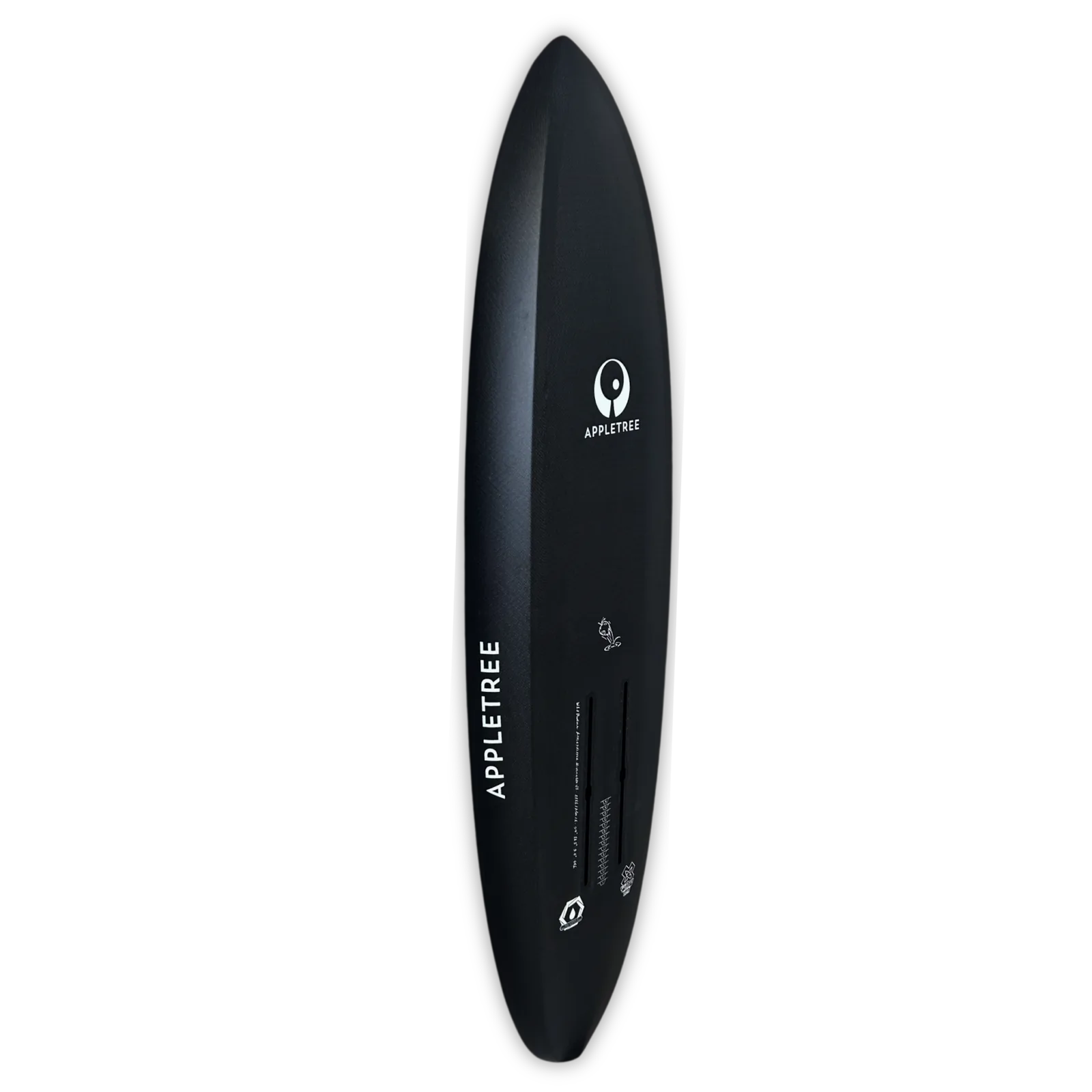
Appletree Midlength V2 seen from below in perspective on a black background: matte black carbon hull, elongated foil box
The hull of the Midlength V2 · © Appletree
Appletree

Appletree Midlength V2 test

  • Riding styleParawing, wing, downwind
  • Sizes157,5 to 215,9 cm
  • YearModel 2026 · released Jun 2026

Verdict in brief

A board designed for parawing and light-wind wing, eight sizes from 37 to 107 L, from 5'2'' to 7'1''. The V2 is narrower and longer than the Skipper Midlength, with the volume moved forward and a displaced foil box. Foiling Magazine, which tested it in 87 L with a 92 kg rider, finds it very successful: it accelerates fast, hides its volume in flight and holds up well on weight shifts. For me, it is the board to look at if parawing is your real focus; to start out or do everything, Appletree points to the Appleslice V4.

One published test (Foiling Magazine, 87 L) and one shop review (MACkiteboarding, 77 L Hollow), no weight published. Glisse Evolution price as of November 8, 2026, Appletree shows none.

For you if

  • You parawing and want a board that takes off early with little power: that is its territory, and Foiling Magazine and MACkiteboarding confirm it
  • You wing in light wind and want a hull that drags little: Appletree says you can fly with a much smaller wing than expected
  • You want a single board for travel: Jon Mann (7'0'' x 20'', in the brand’s video) says he would pick it 100% for that, with a foil, two parawings and a paddle

Not for you if

  • You are starting in wing: MACkiteboarding finds it a little narrow, with sharp, vertical chines that are less reassuring when stationary, and the brand sends beginners to the Appleslice V4
  • You want to ride with a foil drive: MACkiteboarding notes that the amount of carbon may block the signal, unless you use an antenna
  • You want a weight before buying: Appletree publishes none, neither the brand page nor Glisse Evolution, and I found none in the test or in the shop review

Have you ridden this model? Leave the first review

What we know about this model

Our method

Sizes, volume, weight and foil box

Sizes, volume, weight and recommended rider
SizeLength × widthThicknessVolumeFoil box
5'2’’157.5 × 45.5 cm7.6 cm37 LBoîtiers FUTURES oneshot allongés
5'4’’162.6 × 46.2 cm9.1 cm47 LBoîtiers FUTURES oneshot allongés
5'7’’170.2 × 47.2 cm10.4 cm57 LBoîtiers FUTURES oneshot allongés
5'10’’177.8 × 48.3 cm11.4 cm67 LBoîtiers FUTURES oneshot allongés
6'1’’185.4 × 49 cm12.4 cm77 LBoîtiers FUTURES oneshot allongés
6'5’’195.6 × 49.8 cm13.2 cm87 LBoîtiers FUTURES oneshot allongés
6'9’’205.7 × 50.3 cm13.7 cm97 LBoîtiers FUTURES oneshot allongés
7'1’’215.9 × 50.8 cm14.2 cm107 LBoîtiers FUTURES oneshot allongés

Dimensions read on Appletree, converted to cm by WindUnity; weight and rider weight not published.

More details on these figures

Width, thickness and volume read on the Appletree page, lengths deduced from the size (5'2'' to 7'1''); everything is converted to centimeters by WindUnity (1 inch = 2.54 cm) and rounded to the tenth. Glisse Evolution gives 18.9 in for the 5'2'' where Appletree gives 17.9 in: the table uses Appletree’s. Appletree publishes neither board weight nor recommended rider weight.

Strong points, weak points

Strong points

  • Eight sizes from 37 to 107 L, with width, thickness and volume for each
  • 100% carbon construction with 50K closed-cell foam, which does not take on water
  • “Coat 25” varnish, which lightens the board by 8 to 10% (Foiling Magazine) and resists scratches better
  • Volume moved forward and higher nose: better chance of keeping the nose out of the water when pumping or paddling hard (Foiling Magazine, Jon Mann)
  • Long box placed to fit as many foil brands as possible, NFC chip near the leash point to register your board (Foiling Magazine)

Weak points

  • No weight published, neither by Appletree nor by Glisse Evolution nor in the Foiling Magazine test nor in the MACkiteboarding review
  • Width of the 5'2'': 17.9 in at Appletree, 18.9 in at Glisse Evolution
  • Hollow version described by MACkiteboarding but absent from the Appletree and Glisse Evolution pages: no price, no range, no weight
  • A specialized board: narrow with sharp chines, it is not made for learning

The flaw to know about. The biggest point to know: MACkiteboarding finds it a little narrow for a beginner, and the magazine reports no flaw. What is mostly missing is the weight, which nobody publishes. If you plan to use it with a foil drive, the amount of carbon may block the signal.

Model evolution

Checked on 08/11/2026

  • Previous version Appletree Skipper Midlength

What changes vs the Skipper Midlength

  • Longer and narrower outline: about 1 in less in width, underside rail line pulled in by 1 in on each side
  • Continuous rocker, with a less pronounced nose lift
  • Foil box moved and volume moved forward: naturally nose-up attitude
  • Rounded V that blends into a flat area near the boxes, to recover better after a touchdown
  • Very pronounced underside chamfers: stable platform when stationary, narrowness as soon as the board picks up speed

Specifications

11 specs, sources at the bottom of the page

Program (manufacturer)
Parawing and light-wind wing board, intermediate to advanced, with an opening toward downwind in the large size
Sizes and volumes
5'2'' (37 L), 5'4'' (47 L), 5'7'' (57 L), 5'10'' (67 L), 6'1'' (77 L), 6'5'' (87 L), 6'9'' (97 L) and 7'1'' (107 L)
Dimensions (width × thickness)
From 17.9 × 3.0 in (37 L) to 20 × 5.6 in (107 L), i.e. from 45.5 × 7.6 cm to 50.8 × 14.2 cm
Construction
100% carbon, vacuum infusion, 50K closed-cell foam, made in Appletree’s factory in Portugal; a Hollow version exists according to MACkiteboarding (not on the Appletree and Glisse Evolution pages)
Foil box
Elongated FUTURES oneshot boxes, in a PET honeycomb panel between two layers of carbon
Deck
Pronounced concave, domed nose, 3 mm EVA pad with ribbed grain from nose to tail (Foiling Magazine)
Strap inserts
Y layout, optional; on the Hollow version, M6 machine-thread screws only, no self-tapping screws (MACkiteboarding)
Finish
“Coat 25” varnish instead of hot coat, 8 to 10% less weight (Foiling Magazine)
Comes with
Board with built-in pad and FUTURES boxes; foil, straps and bag not included (dedicated Appletree bag optional)
Weight
Not published by Appletree or by Glisse Evolution
Presentation date
Appletree presentation post dated June 4, 2026; Appletree shows no release date on the product page

What the published tests say

1 test published, checked early November 2026

Foiling Magazine (Appletree Midlength V2 test, June 15, 2026)

87 L board, judged suited to a 92 kg rider who alternates wing and intermediate parawing. It sinks enough not to float like a cork, while leaving material if the rider lacks power. Starting from the knees, it takes off fast like a small canoe; once in flight, it hides its volume thanks to its narrow width and forward box, and looks much smaller than it is. The nose sits a little higher in the water than on the V1: less risk of sinking it when pumping with the legs. The magazine finds it very balanced on weight shifts and stable in pitch when the foil is well placed. Verdict: a successful update, which widens its use across several disciplines.

Read the test
Articles from shops and schools (1), not counted as tests

These articles come from sites that sell or rent gear: they are cited for information and kept separate from published tests.

MACkite (US shop), “2026 Appletree Mid Length V2 Review” (page viewed on November 8, 2026, no publication date shown)checked on 08/11/2026

77 L board (6'1'') in Hollow construction. The hull is frank and forgiving at take-off, with no suction effect, and the board gets back on the foil after a touchdown. The sharp, vertical chines give the deck width and strong directional stability. The tester sees it as a crossover between wing and parawing and a good choice for a one-board quiver. He notes that it is narrow for a beginner, that the amount of carbon gets in the way of a foil drive, and that the Hollow version is a budget bonus, which lets you go down 3 to 5 L for equivalent buoyancy (77 L Hollow close to an 80 to 82 L in classic construction).

Riders’ reviews

No reviews

No reviews yet.

Nobody has reviewed this gear yet. Do you use it? Help other riders of your weight — 2 minutes.

Leave your review (2 minutes)

Three screens: you, the gear, your review. Your email will never be published; it is only used to confirm that the review comes from a real person.

1/3 You

Only used to confirm your review and to let you know if it is rejected. Never displayed, never resold.

Your weight *

10 kg ranges only, so that other riders of your build can relate. No exact weight is recorded.

Your level *

Beginner: I’m still taking lessons. Intermediate: I ride on my own. Advanced: transitions and jumps. Expert: freestyle, wave or competition.

Your riding

Optional. If checked, your review stays published with the label “Gear received or tied to a brand” and doesn’t count toward the average rating.

You must be at least 15 to post a review (“Your data” article of the policy).

2/3 Your gear and how you use it
Wind range actually used (knots)
How long you’ve been using it *
Number of sessions (optional)
Rate each criterion (at least 3) *
Takeoff / low-speed stability
Weight & maneuverability
Stiffness
Foot comfort
Finish & durability

1 = very poor, 5 = excellent. Leave blank any criterion you couldn’t judge.

Do you recommend it? *
3/3 Your review

140 characters minimum — Takeoff, low-speed stability, what disappointed you, who you’d recommend it to.

Rider reviews: confirmed email address, no compensation. “Brand-linked” and “loaned / received” reviews are labeled and excluded from the average. Each review shows its publication date, the date of the experience and, if it was edited, its update date. A review is published or rejected within 7 days at most; if it is rejected, you receive the reason by email and you can correct it. You can complete or delete your review at any time from the email address used to submit it. How do reviews work?

Alternatives to compare

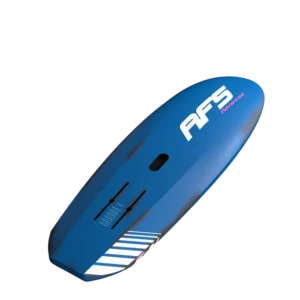
AFS Blackbird Mid-Length Carbon

AFS wing and parawing mid-length from 50 to 100 L, from 48.3 to 57 cm wide. The Midlength V2 goes down to 37 L and up to 107 L, from 45.5 to 50.8 cm wide.

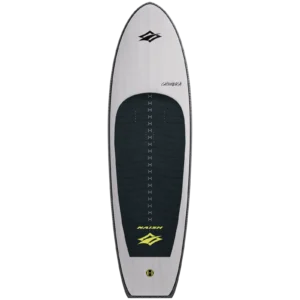
Naish Chimera 2027

Naish wing board from 40 to 130 L, from 47.8 to 59.7 cm wide. The Midlength V2 is narrower, from 45.5 to 50.8 cm.

Appletree Skipper Downwind V2

Appletree’s downwind board, from 94 to 118 L, from 45.7 to 49.5 cm wide. The Midlength V2 is shorter, from 37 to 107 L, and aims at parawing and light-wind wing.

Frequently asked questions

Midlength V2 or Appleslice V4: which one should you choose?

The Appleslice V4 is the versatile progression board, with large stable sizes to start and high-performance small sizes. The Midlength V2 is a more specialized tool, cut for parawing and light wind, which I would keep for intermediate to advanced riders. MACkiteboarding and the brand follow the same reasoning.

Midlength V2 or Skipper Midlength: what changes?

The V2 is about 1 in narrower, with more pronounced chamfers, a continuous rocker, a displaced box and the volume moved forward. The brand says it redid the shape entirely rather than touching it up. Jon Mann, who rode the V1, says he no longer plants the nose when pumping.

Which size of Midlength V2 should you choose?

Appletree gives no recommended rider weight. The small sizes (37 and 47 L) aim at high-performance parawing, the medium ones (57 to 77 L) at parawing and dynamic wing, the large ones (87 to 107 L) at light-wind wing, intermediate parawing and downwind. Foiling Magazine tested the 87 L with a 92 kg rider. If you hesitate, ask the retailer.

What is included with the Midlength V2?

Foil, straps and bag are not included. Sizes run from 5'2'' (37 L) to 7'1'' (107 L), and there is also a Hollow version. For the price, see the “Where to buy” section of this page.

Can you use the Midlength V2 with a foil drive?

It is not intended for that. MACkiteboarding estimates there is probably too much carbon for a foil drive, whose signal would be blocked unless you use an antenna. Appletree has another board planned for that, the Zapple.

Method and limitations of this page

This page brings together the technical specs, tests from the press and blogs, and rider feedback found on the web, without rewriting any of it. When WindUnity has ridden the gear itself, the page says so with the “WindUnity test” badge.

Rider reviews are published as is, with their date. Reviews tied to a brand or based on loaned gear are labeled and excluded from the average.

What’s still missing

  • Board weight: neither Appletree, nor Glisse Evolution, nor Foiling Magazine, nor MACkiteboarding publishes it
  • Price at Appletree: the page shows none, only the Glisse Evolution shop is cited
  • Recommended rider weight: not published
  • Hollow version: described by MACkiteboarding, absent from the Appletree and Glisse Evolution pages; no price, no range, no weight
  • Width of the 5'2'': 17.9 in at Appletree, 18.9 in at Glisse Evolution
  • Publication date of the MACkiteboarding test: not shown
  • Independent rider feedback on the V2: none retained
  • Exact release date: Appletree shows none, only the June 4, 2026 post is dated
  • Rider reviews on WindUnity (N2): none

Sources

Data collected early November 2026

Shops : MACkite, GlissEvolution

Press and specialist sites : The Foiling Magazine

Others : Appletree

See the details of the 9 sources

Shops

  1. MACkiteboarding, 2026 Appletree Mid Length V2 test

Press and specialist sites

  1. Foiling Magazine, Appletree Midlength V2 test
  2. Foiling Magazine, Appletree interview (Inbound)

Others

  1. Appletree, Tech Talk Midlength V2 vs Skipper Midlength
  2. Appletree, Midlength V2 vs Appleslice V4
  3. Appletree, Midlength V2: three riders