Strong points
- Five closely spaced sizes, from 135×39 to 139×43.5
- RRD aims for early planing and a steady upwind course thanks to the multi-channel hull and the “efficiency” rocker
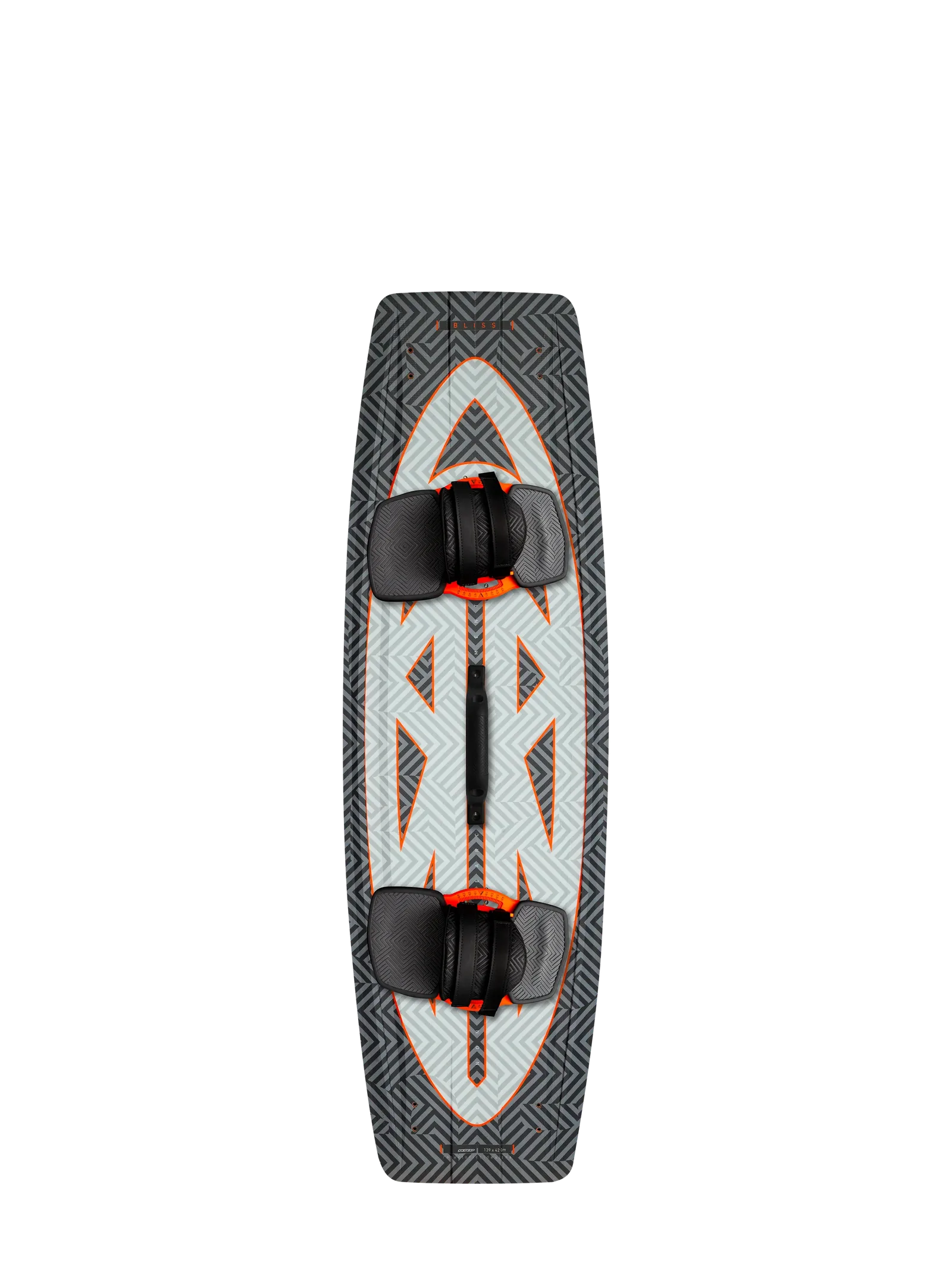
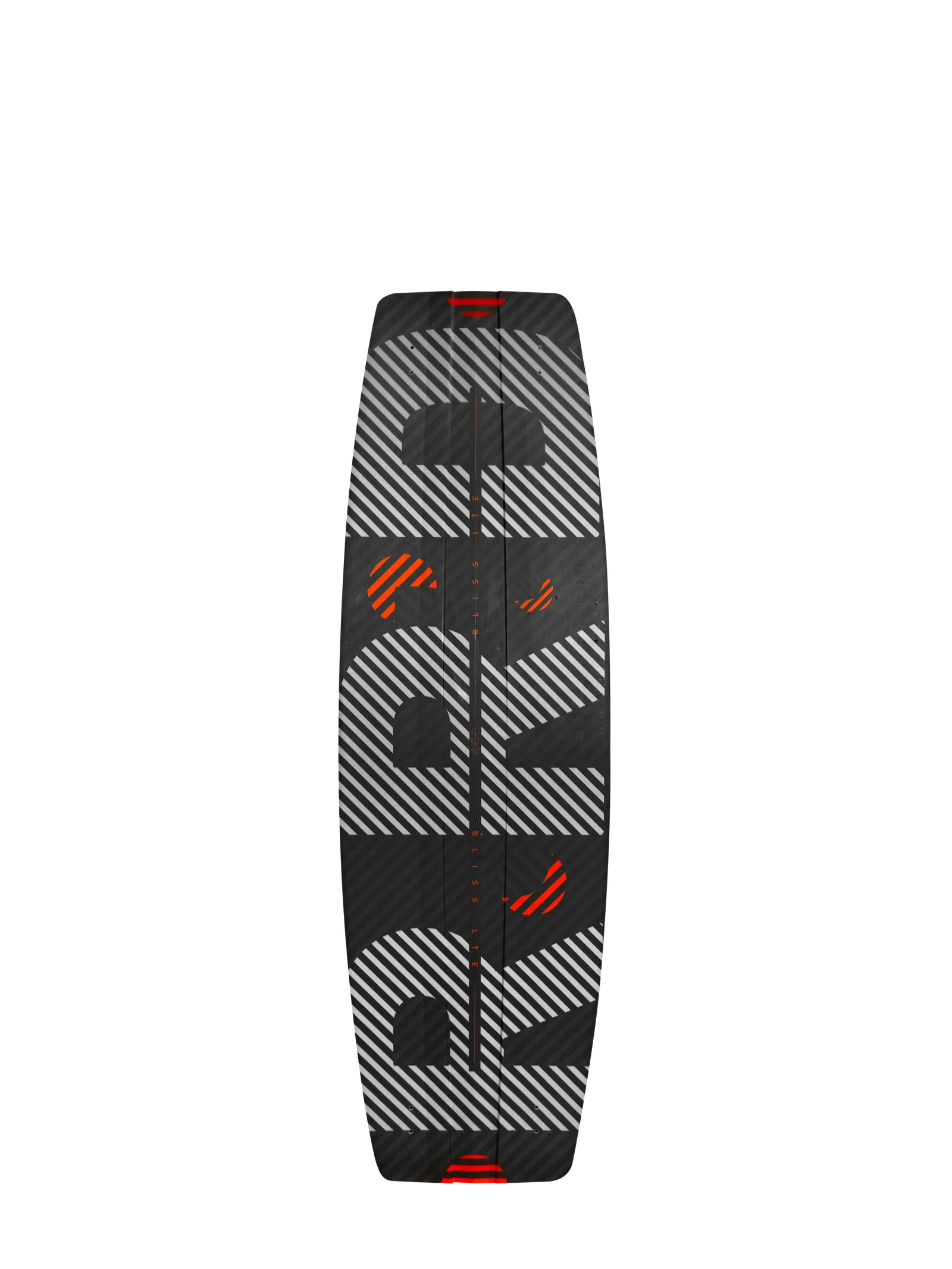
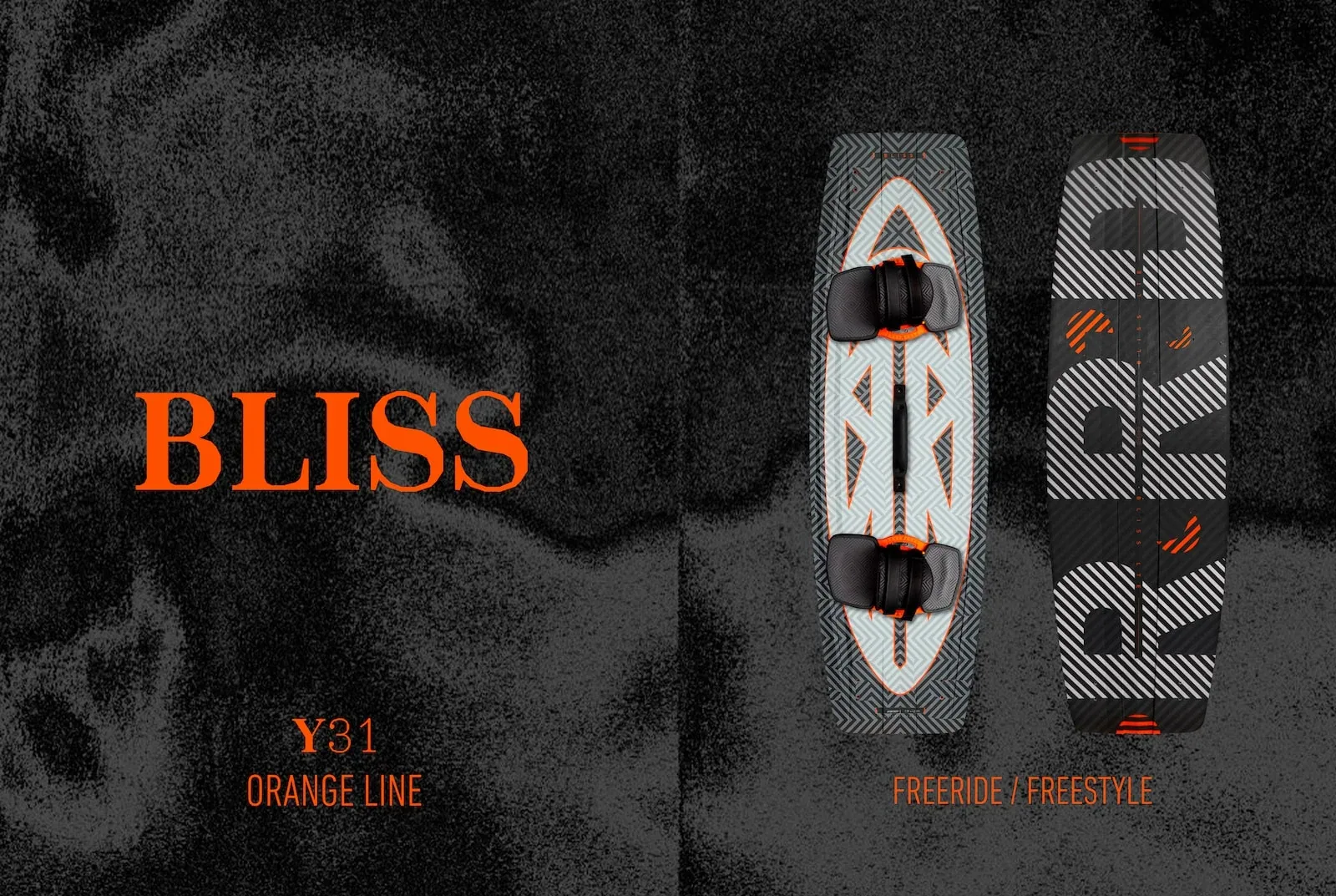
The Bliss LTE Y31 is RRD’s freeride and freestyle twin-tip: five sizes from 135×39 to 139×43.5 cm four Flow fins included, no weight published. It sits between the Crank and the Poison in the range. No test of this version is published. 25 years of kitesurfing have taught me that a board of this level is judged on its comfort in chop and its forgiveness, not on its promises of pop, and on that I only have RRD’s text. I recommend it to a recreational rider who wants a real freeride board with small jumps; I wouldn’t take it if you want a weight or a test before buying.
No test of the Bliss LTE Y31 found (checked on November 11, 2026). The only TheKiteMag test covers the 2017 Bliss V5.
| Size | Length × width | Fins |
|---|---|---|
| 135×39 | 135 × 39 cm | Flow 5 Y25, set of 4 fins |
| 136×40 | 136 × 40 cm | Flow 5 Y25, set of 4 fins |
| 137×41 | 137 × 41 cm | Flow 5 Y25, set of 4 fins |
| 138×42 | 138 × 42 cm | Flow 5 Y25, set of 4 fins |
| 139×43,5 | 139 × 43.5 cm | Flow 5 Y25, set of 4 fins |
Dimensions in cm. Board and rider weight, volume, wind range: not published by RRD (page of November 11, 2026). Four Flow fins included, pads and handle extra.
Table from the RRD page of November 11, 2026: 135×39, 136×40, 137×41, 138×42 and 139×43.5 cm, freeride / freestyle program. The code of the last size is “43” in the table and “43.5” in the shop’s selector. Four Flow 5 Y25 fins included; pads and handle (RAD PAD & TT HANDLE SET Y31) sold separately.
The flaw to know about. For me, its real flaw: you know almost nothing about what’s inside. The Y27 stated a paulownia core, carbon stringers and ABS sidewalls; the Y31 page talks about a “reinforced core construction” without any detail, and gives no weight. I couldn’t settle it: ask the retailer for the composition and the weight of the size you’re interested in before buying.
What changes from the Bliss LTE Y27 to the Y31
9 specs, sources at the bottom of the page
No reviews
No reviews yet.
Nobody has reviewed this gear yet. Do you use it? Help other riders of your weight — 2 minutes.
Three screens: you, the gear, your review. Your email will never be published; it is only used to confirm that the review comes from a real person.
Rider reviews: confirmed email address, no compensation. “Brand-linked” and “loaned / received” reviews are labeled and excluded from the average. Each review shows its publication date, the date of the experience and, if it was edited, its update date. A review is published or rejected within 7 days at most; if it is rejected, you receive the reason by email and you can correct it. You can complete or delete your review at any time from the email address used to submit it. How do reviews work?
Same brand, more affordable: six sizes from 132×39 to 146×45 cm, freeride program, weight n/a. If you’re still progressing, I look at that one first; if you want to jump, I take the Bliss.
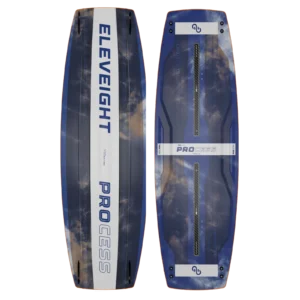
Performance freeride, 2026 model year: 5 sizes from 132×39.5 to 144×44; weights from 2.4 to 2.8 kg. Eleveight publishes the weights, RRD doesn’t
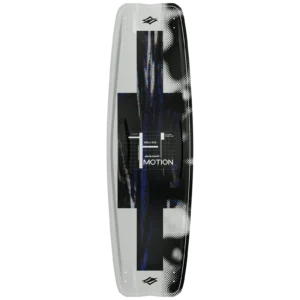
All-terrain freeride, 2026 model year: 3 sizes from 134×41 to 142×42; weights from 2.7 to 2.8 kg.
Still torn between several boards? Read the guide: choosing your kiteboard: type, size and level.
Five sizes: 135×39, 136×40, 137×41, 138×42 and 139×43.5 cm. RRD publishes neither the board weight nor a rider weight per size (page of November 11, 2026). Four Flow 5 Y25 fins are included, not the pads or the handle.
It comes in five sizes, as a bare board with its fins. For the price, see the “Where to buy” section of this page.
Almost nothing on paper: the first four sizes are the same, the largest goes from 140×43.5 to 139×43.5. The text changes (multi-channel hull, progressive flex, “efficiency” rocker, tuned rails), but the Y31 page no longer details the materials that the Y27 stated (paulownia, carbon stringers, ABS sidewalls). No test compares the two.
RRD gives neither rider weight nor wind range. The five sizes only go from 135 to 139 cm long and from 39 to 43.5 cm wide: I think the two large ones suit heavier riders or light-wind days, but RRD doesn’t say so. Ask the retailer for advice based on your weight.
The Crank LTE Y31 is the entry-level board (freeride program, 132×39 to 146×45 cm), the Bliss LTE Y31 goes up a notch (freeride / freestyle, 135×39 to 139×43.5 cm). No weight is published for either.
No test found as of November 11, 2026. TheKiteMag tested the Bliss V5 (published on November 17, 2017): a board that’s very soft in chop, with enough pop for first tricks. It’s a much older version than the Y31.
This page brings together the technical specs, tests from the press and blogs, and rider feedback found on the web, without rewriting any of it. When WindUnity has ridden the gear itself, the page says so with the “WindUnity test” badge.
Rider reviews are published as is, with their date. Reviews tied to a brand or based on loaned gear are labeled and excluded from the average.
Data collected mid-November 2026
RRD : 3 product pages
Shops : Kiteshop.fr
Press and specialist sites : TheKiteMag