Skip to content
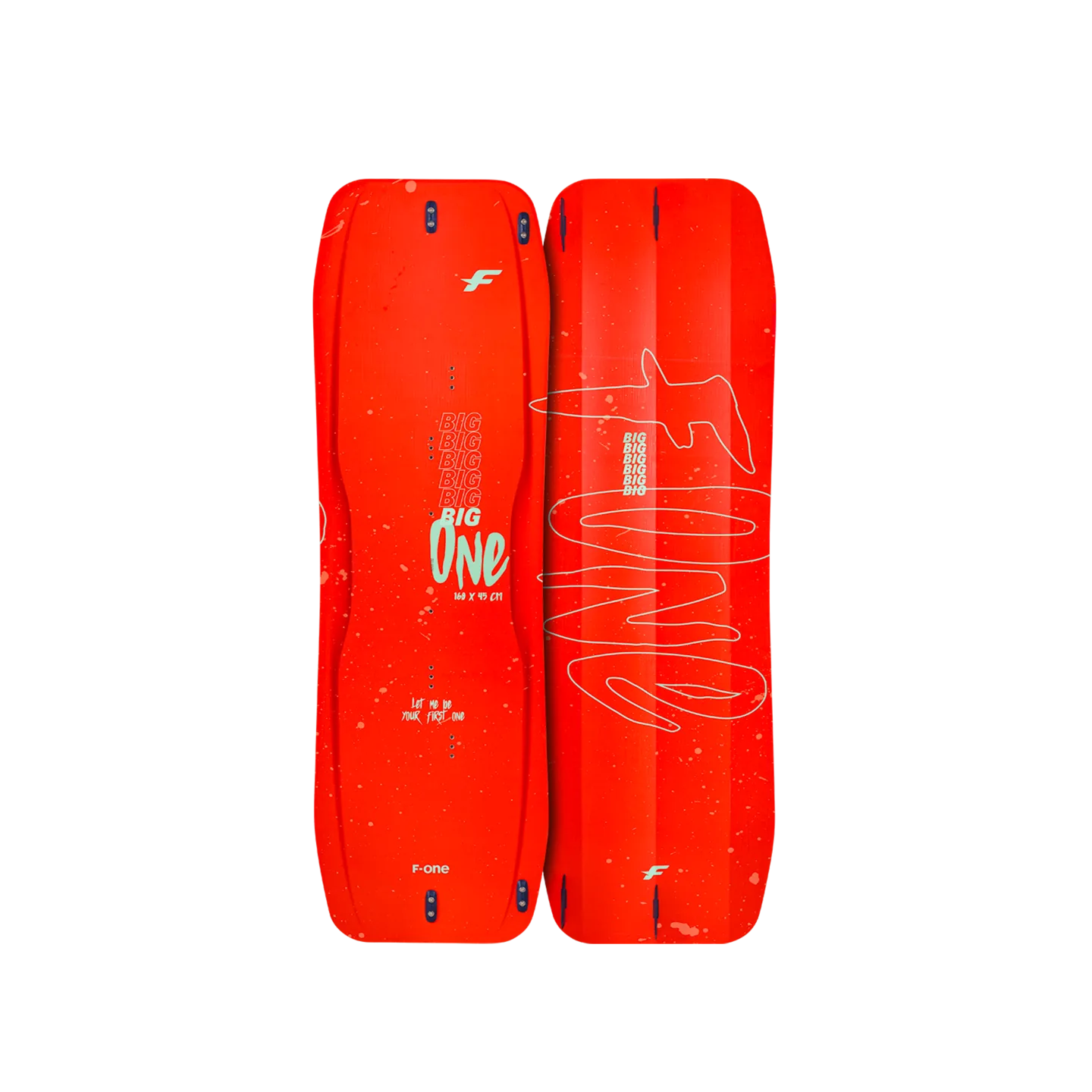
F-One Big One, deck and underside side by side: speckled orange-red, mint “BIG ONE” on the deck, “F-ONE” on the back
Deck and underside of the Big One, orange-red colorway · © F-One
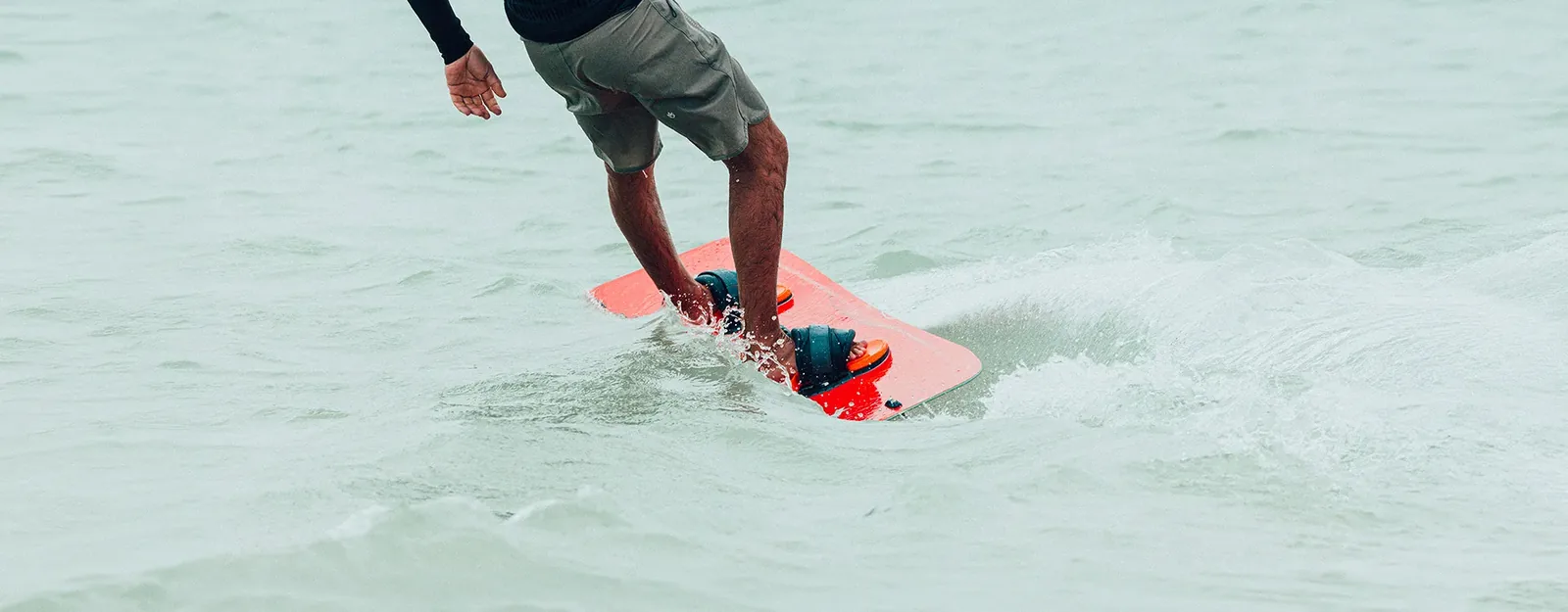
Legs of a rider on an orange-red F-One Big One twin-tip, feet in turquoise straps, choppy gray water
The Big One in action, orange-red colorway · © F-One
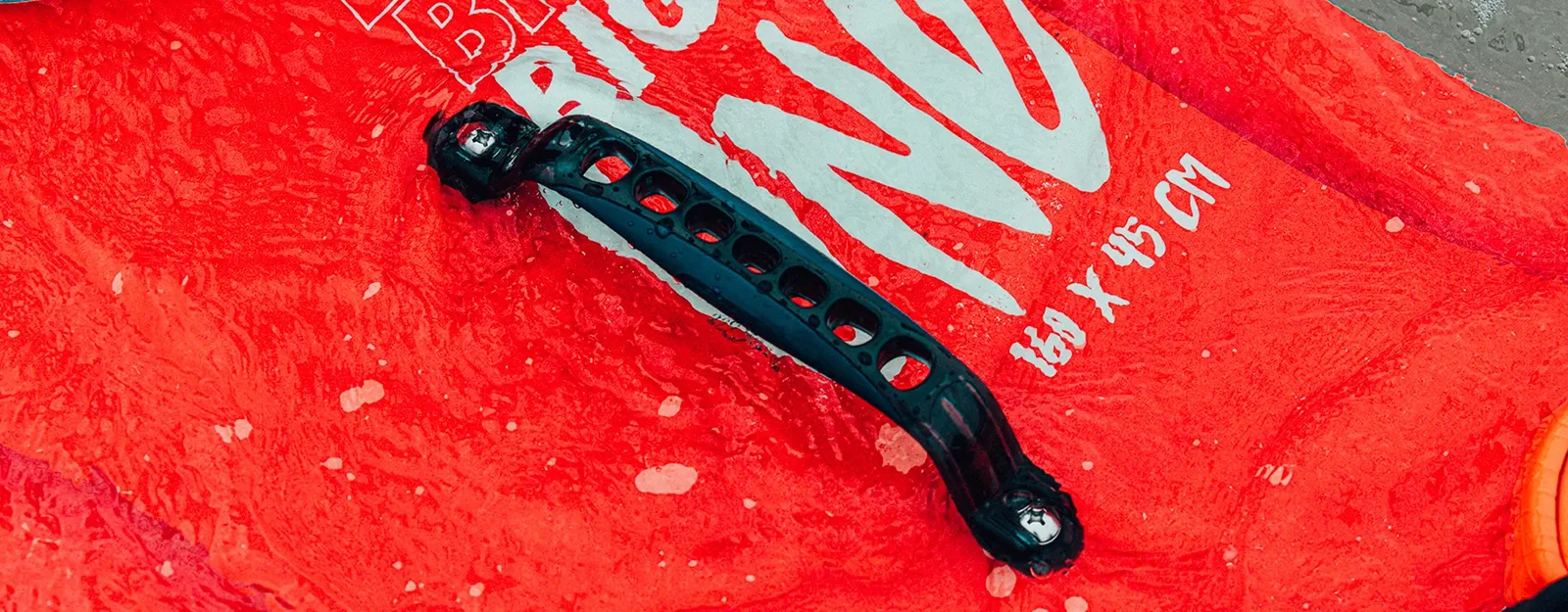
Black cutout handle on the wet red deck of the F-One Big One, cream “BIG ONE” lettering and “160 x 45 CM” marking
Detail of the Big One 160×45 deck with its handle · © F-One
F-One

F-One Big One test

  • Riding styleVery light wind twin-tip, stable
  • Sizes160×45 to 164×48 cm
  • Year

Verdict in brief

The Big One is F-One’s very light wind board: 160×45 and 164×48 cm, 3.6 and 4.1 kg, deep double concave. The Kiteboarder Magazine tested it in 2020 and recommends it for beginners and heavier riders. 25 years of kitesurfing have taught me that these big boards save the days with no wind, but get put away fast once the wind comes back. I recommend it for a heavy rider, or one who often rides in very light wind. I wouldn’t take it as a single board.

One published test, from 2020 (checked on November 9, 2026), on a board with the same dimensions as today.

For you if

  • You’re heavy or you almost always ride in very light wind: I recommend it, that’s what it’s for. Very early planing at 100% on F-One’s in-house scale (a brand rating, not a test)
  • You want stability and grip: The Kiteboarder Magazine test (2020) sees a rail that bites upwind and a very steady heading, a very stable ride
  • You’re starting out in light wind and want to concentrate on your kite: the test recommends it for beginners and heavier riders

Not for you if

  • You want to jump or do sharp carves: pop and landing at 50% on the F-One scale, and the 2020 test says it takes more work for jumps and carves
  • You want a light board: 3.6 kg in 160×45 and 4.1 kg in 164×48 on the November 9, 2026 page
  • You want a single board for all winds: it’s specialized, and F-One’s ONE covers more ground

Have you ridden this model? Leave the first review

What we know about this model

Our method
  • Specificationschecked early November 2026
  • 1 test publishedThe Kiteboarder Magazine, Big One test (April 28, 2020, republished by Bay Area Kitesurf on April 29, 2020)
  • Rider reviewsgive yours, and it will appear here

Sizes, volume and weight

Sizes, volume, weight and recommended rider
SizeLength × widthBoard weightRecommended riderFins
160×45160 × 45 cm3.6 kgn.c.4 Unibox fins of 50 mm
164×48164 × 48 cm4.1 kgn.c.4 Unibox fins of 50 mm

Lengths and widths in cm; indicative board weights. Rider weight and wind range: n/a, F-One doesn’t publish them.

More details on these figures

Lengths and widths in cm, indicative weights from the F-One page of November 9, 2026 (3.5 and 3.9 kg on the old product page, archive of April 18, 2026). F-One publishes neither a rider weight nor a wind range.

Strong points, weak points

Strong points

  • Two very light wind sizes, 160×45 and 164×48 cm, with four 50 mm Unibox fins offset for grip
  • One published test, The Kiteboarder Magazine (2020): stability, grip and heading hold, recommends it for beginners and heavier riders
  • Deep double concave and parabolic outline: planing from low speeds
  • Moderate flex and pronounced rocker for comfort in chop

Weak points

  • High weight: 3.6 kg in 160×45, 4.1 kg in 164×48, and two F-One pages that don’t give the same weight
  • Less speed and liveliness than freeride boards, by the 2020 test’s own admission
  • No wind range or recommended rider weight by size
  • A single test, six years old, and no rider feedback found on the web

The flaw to know about. For me, the real flaw: the weight, and the fuzziness around it. F-One’s old product page (archive of April 18, 2026, still titled “Twin Tips 2020”) gives 3.5 and 3.9 kg, the current page of November 9, 2026 gives 3.6 and 4.1 kg, with the note “indicative value”. And the 2020 test describes a bottom with four concaves and three ridges, whereas the F-One page talks about a deep double concave. I couldn’t settle it: ask the retailer for the exact weight before buying.

Specifications

10 specs, sources at the bottom of the page

Program (manufacturer)
Very light wind twin-tip, for beginners, heavier riders and easy sessions in light wind; large surface area, grip and control for a very stable ride
Bottom and outline
Deep double concave (the 2020 The Kiteboarder Magazine test describes a four-concave bottom, with three ridges along the length); parabolic outline, rounded corners, thin, tight rails
Technology
Paulownia wood core, 3D Deck Structure, Unibox fins
Flex and rocker
Moderate flex that bends a little under load; extra rocker and tucked-in tips to get through rough water
Sizes
160×45 and 164×48 cm
Board weight
3.6 kg (160×45) and 4.1 kg (164×48) on November 9, 2026; 3.5 and 3.9 kg on the old F-One product page (archive of April 18, 2026); indicative values, F-One notes variations due to made-to-order production
Recommended rider weight
n/a: F-One doesn’t publish rider weight (page of November 9, 2026)
Fins
Four 50 mm Unibox fins, offset for grip and for going upwind
F-One profile (scale in %)
Early planing 100%, edge grip 70%, landing 50%, pop 50%, comfort 70%, lightness 30%, speed 60%: in-house scale on the F-One page, not a measurement. Level targeted by the page’s gauge: beginner to intermediate
Reference
77233-0302

What the published tests say

1 test published, checked early November 2026

The Kiteboarder Magazine, TKB Light Wind Review: 2020 F-ONE BIG ONE (reposted by Bay Area Kitesurf)

Test of the Big One in a comparison of light wind boards, the largest in the test. The magazine sees a rail that bites upwind, a very steady heading and the largest surface area for extreme wind. The board doesn’t go as fast as the others: it gives grip and control, but takes more work for jumps and carves. On the beach it looks very curved, on the water it’s effective. The 50 mm Unibox fins are offset toward the heel-side rail. The magazine recommends it for beginners, heavier riders and those who want a reliable light wind board. The test mentions three insert options for stance width and a plastic handle, and was run with F-One’s Platinum3 bindings.

Read the test

Riders’ reviews

No reviews

No reviews yet.

Nobody has reviewed this gear yet. Do you use it? Help other riders of your weight — 2 minutes.

Leave your review (2 minutes)

Three screens: you, the gear, your review. Your email will never be published; it is only used to confirm that the review comes from a real person.

1/3 You

Only used to confirm your review and to let you know if it is rejected. Never displayed, never resold.

Your weight *

10 kg ranges only, so that other riders of your build can relate. No exact weight is recorded.

Your level *

Beginner: I’m still taking lessons. Intermediate: I ride on my own. Advanced: transitions and jumps. Expert: freestyle, wave or competition.

Your riding

Optional. If checked, your review stays published with the label “Gear received or tied to a brand” and doesn’t count toward the average rating.

You must be at least 15 to post a review (“Your data” article of the policy).

2/3 Your gear and how you use it
Wind range actually used (knots)
How long you’ve been using it *
Number of sessions (optional)
Rate each criterion (at least 3) *
Comfort / cushioning
Pop & jump
Grip / upwind ability
Maneuverability
Finish & durability

1 = very poor, 5 = excellent. Leave blank any criterion you couldn’t judge.

Do you recommend it? *
3/3 Your review

140 characters minimum — How it behaves in chop and on landing, what disappointed you, who you’d recommend it to.

Rider reviews: confirmed email address, no compensation. “Brand-linked” and “loaned / received” reviews are labeled and excluded from the average. Each review shows its publication date, the date of the experience and, if it was edited, its update date. A review is published or rejected within 7 days at most; if it is rejected, you receive the reason by email and you can correct it. You can complete or delete your review at any time from the email address used to submit it. How do reviews work?

Alternatives to compare

F-One ONE

Same brand, more versatile: four sizes from 138×40 to 150×48 cm, 2.8 to 3.5 kg, single concave. Early planing too, but pop and landing at 60% against 50% on F-One’s in-house scale. If you aren’t a heavy rider and want a single board, I look at that one first.

Duotone Spike Concept Blue 2026

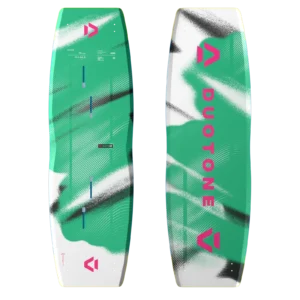
Same territory, light wind: 153×46.5 and 164×47.5 cm, 3.55 and 3.77 kg, flax and basalt. Lighter than the Big One 164×48 (4.1 kg).

North Trace 2025

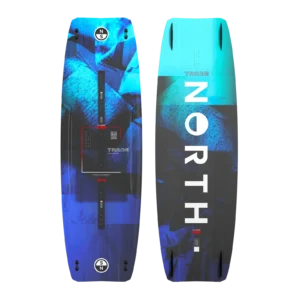
North’s light wind twin-tip: 145×45 for under 80 kg and 155×46 from 80 to 120 kg no board weight. Shorter than the Big One, with the rider weights that F-One doesn’t give.

Frequently asked questions

Which size of F-One Big One should you choose?

F-One gives neither rider weight nor wind range. There are two sizes: 160×45 (3.6 kg) and 164×48 (4.1 kg), as of November 9, 2026. The 2020 The Kiteboarder Magazine test covered the 160 and recommends it for heavy riders. I think the 164×48 should be kept for the heaviest riders or days with almost no wind; ask the retailer.

Is there a test of the F-One Big One?

Yes, just one: The Kiteboarder Magazine tested it in 2020 (Bay Area Kitesurf page of April 29, 2020). It recommends it for beginners and heavier riders. The board has the same dimensions today, but the two F-One pages don’t give the same weight. I found no more recent test as of November 9, 2026.

What is the difference between the Big One and F-One’s ONE?

The Big One is specialized for very light wind: 160×45 and 164×48 cm, deep double concave. The ONE is more versatile: 138×40 to 150×48 cm, single concave. Both plane very early (100% on F-One’s in-house scale); the ONE comes out ahead in pop and landing (60% against 50%). See one-by-f-one.

What is included with the F-One Big One?

The four 50 mm Unibox fins are included; F-One mentions neither a handle nor screws. For the price, see the “Where to buy” section of this page.

Is the F-One Big One made for a beginner?

Yes if you’re heavy or learning in light wind: I recommend it for that. The 2020 test recommends it for beginners and heavier riders, and F-One calls it stable with very early planing. If you’re light or often ride in normal wind, F-One’s ONE is more versatile.

Is a used F-One Big One a good idea?

If the price is low and the condition good, yes: a big light wind board often sits at the back of a garage. Check the deck and the rails around the inserts, the strap inserts, the bottom (deep scratches, delamination) and the fins. F-One hasn’t dated the Big One and its two pages don’t give the same weight: ask for the size and the year of purchase. I found no used price.

Method and limitations of this page

This page brings together the technical specs, tests from the press and blogs, and rider feedback found on the web, without rewriting any of it. When WindUnity has ridden the gear itself, the page says so with the “WindUnity test” badge.

Rider reviews are published as is, with their date. Reviews tied to a brand or based on loaned gear are labeled and excluded from the average.

What’s still missing

  • Neither recommended rider weight nor wind range: F-One doesn’t publish them
  • Only one test, from 2020; no rider feedback found on the web
  • Thickness and volume: F-One doesn’t state them
  • Release year: F-One doesn’t date the Big One (page archived as early as August 18, 2019)
  • Handle, screws and fittings: F-One’s page doesn’t say whether they are supplied

Sources

Data collected early November 2026

F-One : product page

Press and specialist sites : Bay Area Kitesurf

Others : a video YouTube

See the details of the 4 sources

F-One

  1. Big One page (2019)
    18/08/2019 · archived version from 18/08/2019

Press and specialist sites

  1. Bay Area Kitesurf, TKB Light Wind Review 2020 F-ONE BIG ONE

Others

  1. YouTube, F-ONE / BIG ONE