From what age can children start kitesurfing?
In brief The federation sets no minimum age. The FFVL writes: “No age restriction for flying kites, including traction kites or kitesurfing.”…
In brief
The federation sets no minimum age. The FFVL writes: “No age restriction for flying kites, including traction kites or kitesurfing.”
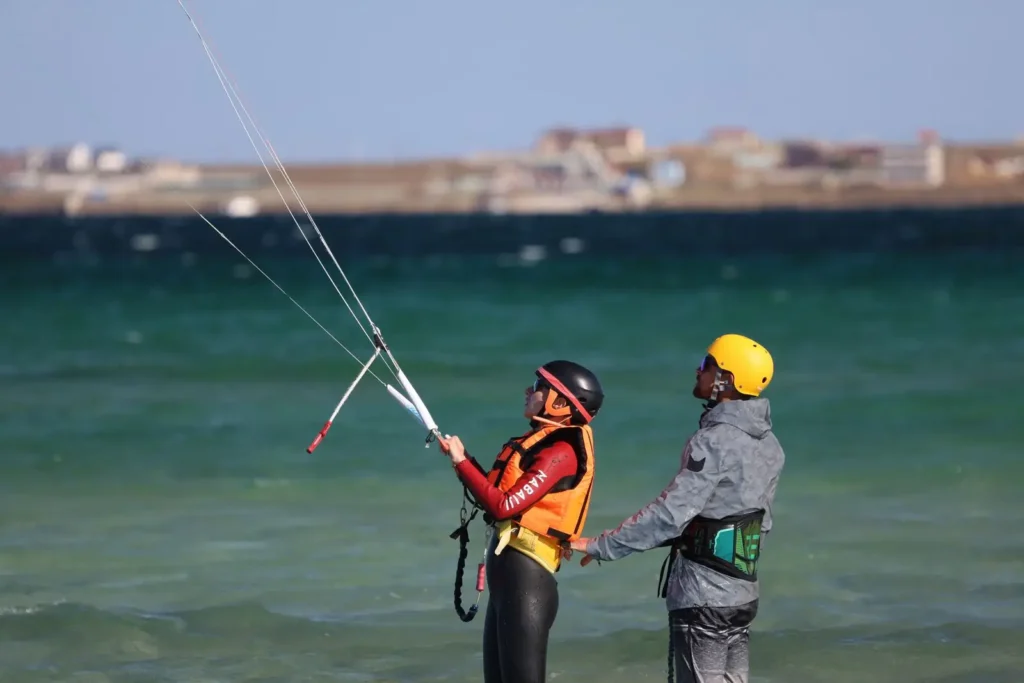
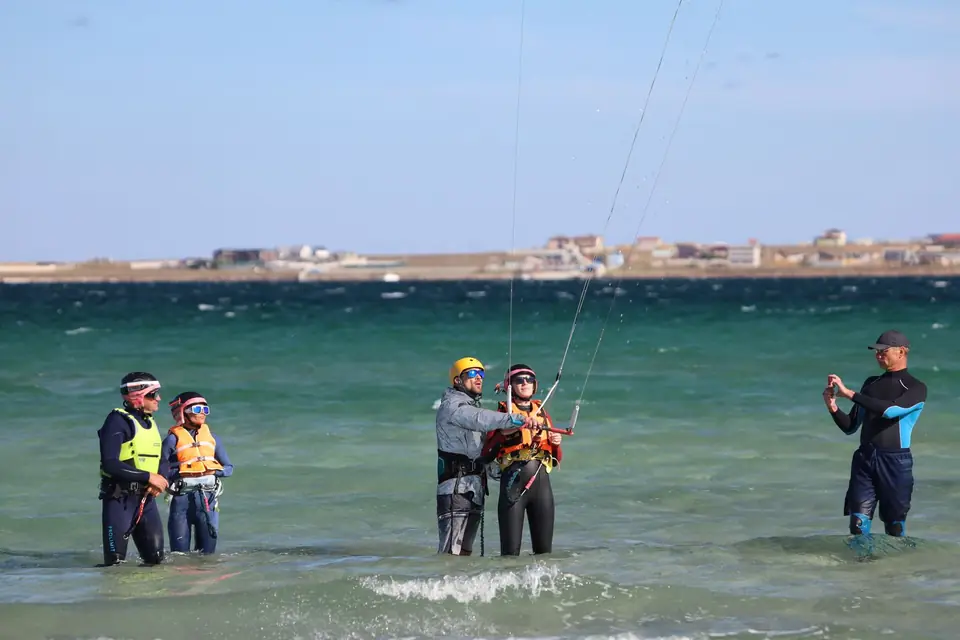
In practice, it’s the schools that decide. Some take children from age 8, others from age 12. IKO, the instructor training body, sets 12 for its courses and requires specific training for instructors who teach younger children.
What to plan for: being able to submerge and swim at least 50 meters, written parental consent, a qualified instructor, a helmet (mandatory for under-18s) and gear that the instructor adapts to the child’s weight.
What the FFVL says
The French Free Flight Federation (FFVL), which oversees kitesurfing in France, sets no minimum age. It does, however, issue specific recommendations for minors, in a practice framework written on December 17, 2015. It distinguishes under-10s, under-14s and under-18s, and calls for a qualified instructor for the youngest, advising pairs or small groups of children of the same age. At a school, the instructor adapts the gear to weight, level and conditions.
This framework also asks for parental consent and a medical certificate. Since then, the federation has clarified that a medical certificate is no longer required to take out a license. So ask the school what it requires for your child: it will tell you what to provide.
The age schools accept
| Who | Age accepted | Details |
|---|---|---|
| IKO (instructor certification) | 12 years | Minimum age shown on the Kiteboarder courses. For younger children, the instructor must have completed the online “Teaching to Children” training. |
| A school in Hyères (MF Kite) | 8 years | Kids’ and teens’ course from age 8. |
| A school in Palavas-les-Flots (L’effet Kiteschool) | 12 years and 35 kg | 4-day courses, lessons à la carte, supervised sessions on the water. |
The range runs from 8 to 12, and some schools add a minimum weight. No surprise: a kite pulls hard, and it’s the school that decides what it can supervise safely. Contact the school at your spot before booking.
What a child needs to get started
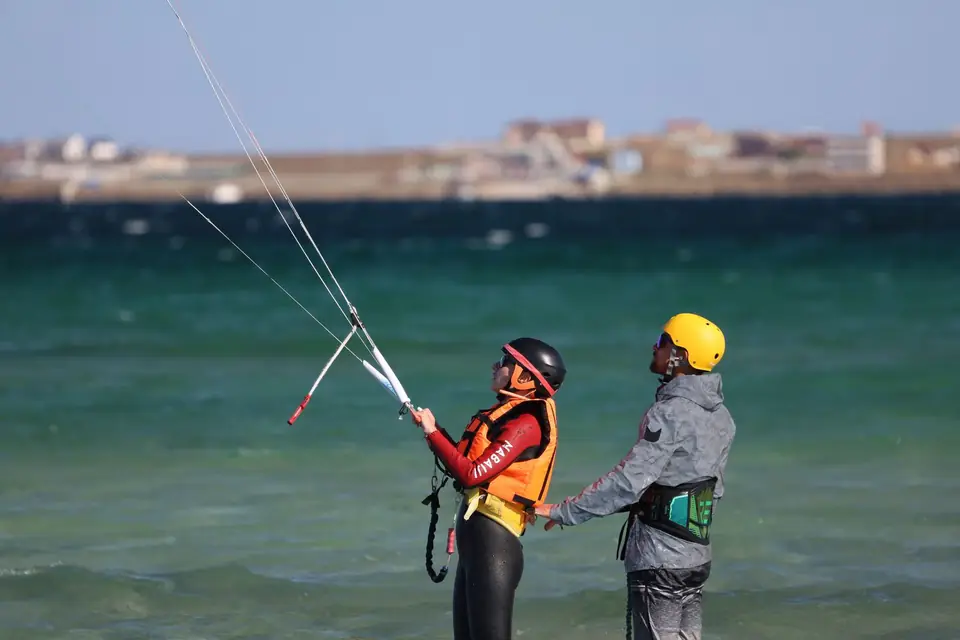
First, the water. In kitesurfing as in wing foiling, the FFVL school requires being able to submerge and swim at least 50 meters. Second, parental consent, for which the federation provides a template. Third, the license: if you don’t have one, the school issues you one, or a temporary one-day participation pass, which covers civil liability and personal accident insurance.
Beyond age, three things matter: a child who is comfortable in the water, able to follow precise instructions, and strong enough to hold a kite without being dragged off. The instructor judges this on site, which is why small groups are worth it.
Gear for a child
On a course, the instructor adapts the gear to the child’s weight, level and the wind of the day. On the equipment side, the federal framework requires a helmet for under-18s, and a buoyancy aid or a protective wetsuit for all water-learning phases. Within 300 meters of the coast, the person in charge of the activity decides, depending on the activity, the level and the conditions.
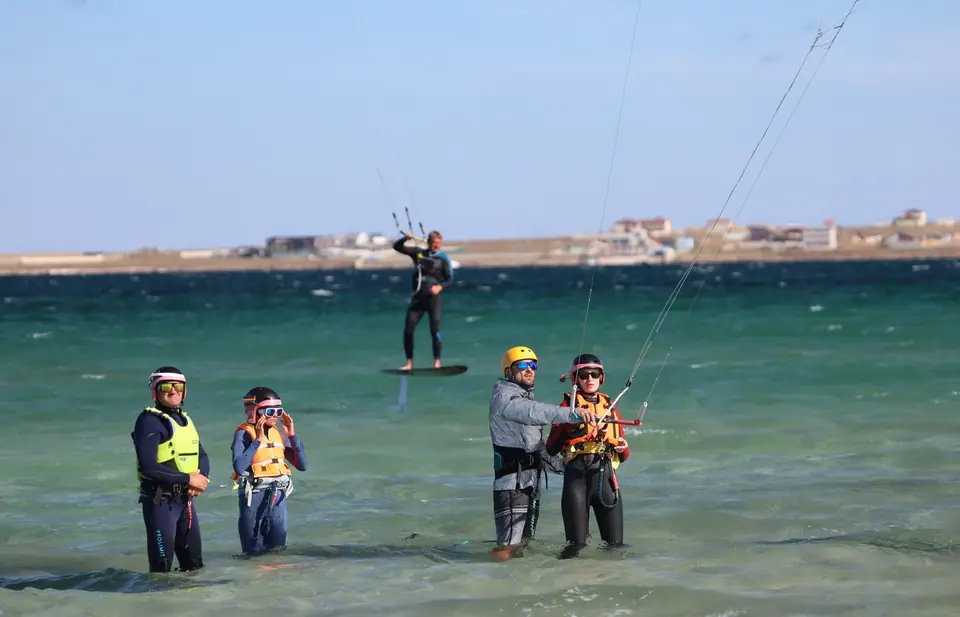
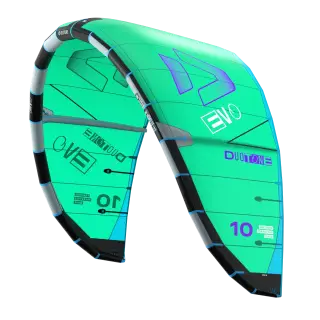
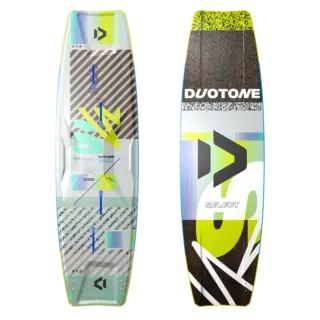
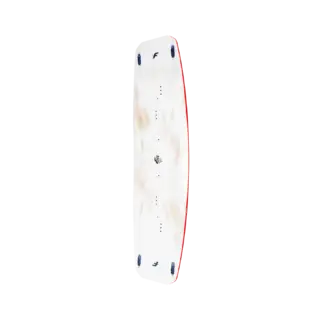
When a young rider moves on to their own gear, the same rules as for an adult apply: kite size according to weight and wind, board according to weight. Our kite guide and our board guide help you lay the groundwork, and a few freeride model pages let you compare.
Du matériel freeride à comparer
Before kitesurfing age
Children who aren’t ready yet can already get used to the wind. In its school framework, the FFVL cites small, suitable land kites and traditional kites as a way to progress on their own. A way to get familiar with traction and wind before moving onto the water.
Choosing a school
The FFVL recommends not learning on your own and going to a kitesurfing school. You can look for a school in the federal network on the EFK school map. Once you’ve picked your school, ask it for the age it accepts, the minimum weight if any, and the documents to provide.
Frequently asked questions
Can you go kitesurfing at age 6?
The FFVL sets no minimum age, but the three players noted in this guide set their starting age between 8 and 12. For under-10s, the FFVL framework calls for a qualified instructor. Ask the school.
Does a child need to be able to swim to kitesurf?
Yes. The FFVL school requires being able to submerge and swim at least 50 meters, in kitesurfing as in wing foiling.
Is a license needed for a kids’ course?
No need to buy it in advance: the school issues an FFVL license, or a temporary one-day participation pass, which covers civil liability and personal accident insurance.
What is the best kitesurfing gear for a child?
There is no universal gear: the instructor chooses the kite and the board according to the child’s weight, level and the wind of the day. On a course, it’s the school that chooses and adjusts the gear.
Sources
Checked on November 2, 2026. The federal framework for under-18s dates from December 2015.
- FFVL, practice framework for air-towed gliding sports for under-18s, written on December 17, 2015
- FFVL, EFK, preparing for your school course (50 m swim, parental consent, license), checked on November 2, 2026
- IKO, Kiteboarder Discovery course (minimum age 12), checked on November 2, 2026
- FFVL, frequently asked questions (no age restriction for kitesurfing), checked on November 2, 2026
- FFVL, advice to practitioners (don’t learn on your own, go through a school), checked on November 2, 2026
- MF Kite, Hyères, Provence Méditerranée page (courses from age 8), checked on November 2, 2026
- L’effet Kiteschool, Palavas-les-Flots, Kiteloopers page (12 years and 35 kg), checked on November 2, 2026
Further reading
- How to choose your kitesurfing kite Inflatable or foil kites, shape and size.
- How to choose your kitesurfing board Twin-tip, directional board or foilboard.
- Calculator: what size kite or wing? Your weight, the wind, your level.
- Bars and accessories Harnesses, wetsuits, bars.
Related reading
Guides How to choose a kitesurfing kite?In brief To start out, and for most sessions: an all-round inflatable kite (LEI), in a delta, bow or hybrid shape. It…
 How to choose the right kite size for your kitesurfing conditions?Wondering which kite size to choose to get the most out of your kitesurfing sessions? With the WindUnity online calculator, no more…
 How to choose a kiteboard?In brief To start out, and for most sessions: a freeride twin-tip. It is symmetrical, you ride both ways without switching feet,…