
Skip to content
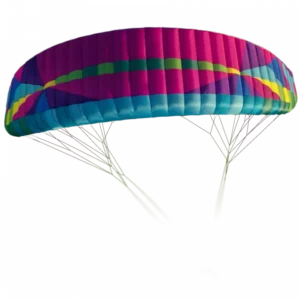
Airwave Vida kite cut out on a transparent background, bright red, pink, black and white canopy with light blue on the edge
Vida, product view · © Airwave
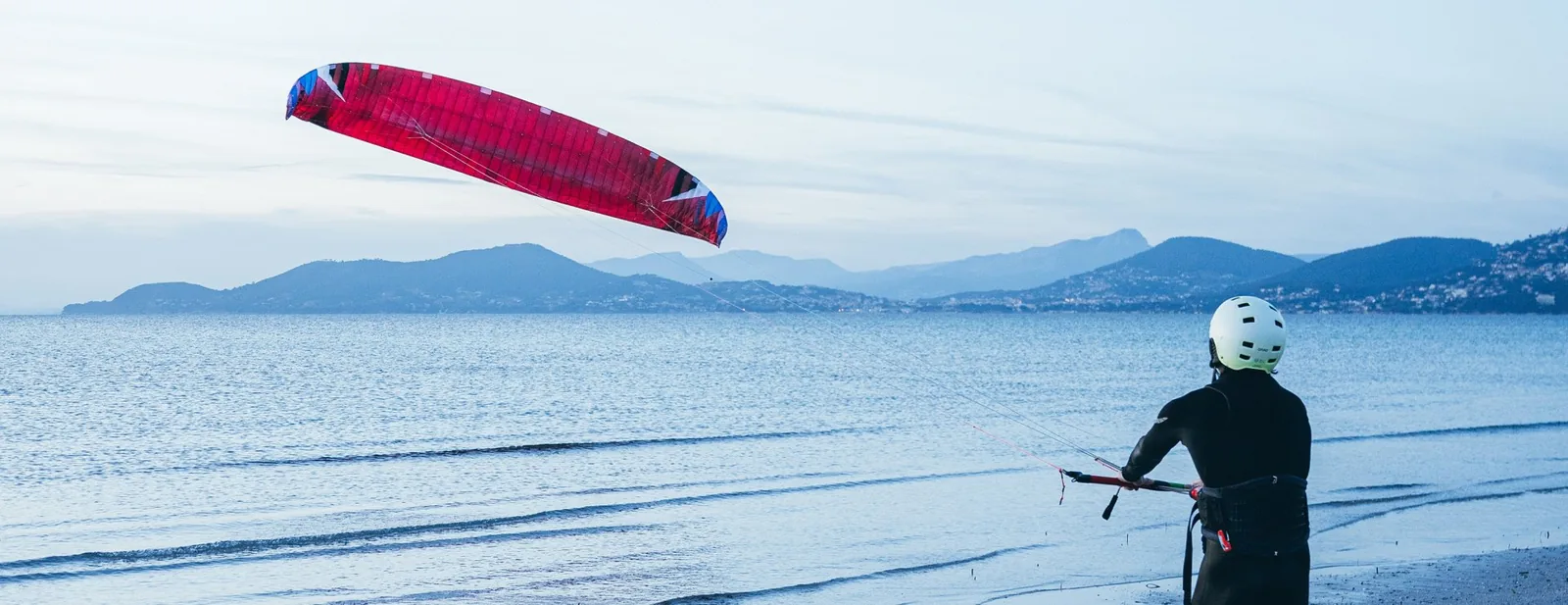
Rider seen from behind in a black wetsuit and white helmet on a beach, red kite flying, calm sea and coastal mountains
On the beach · © Airwave
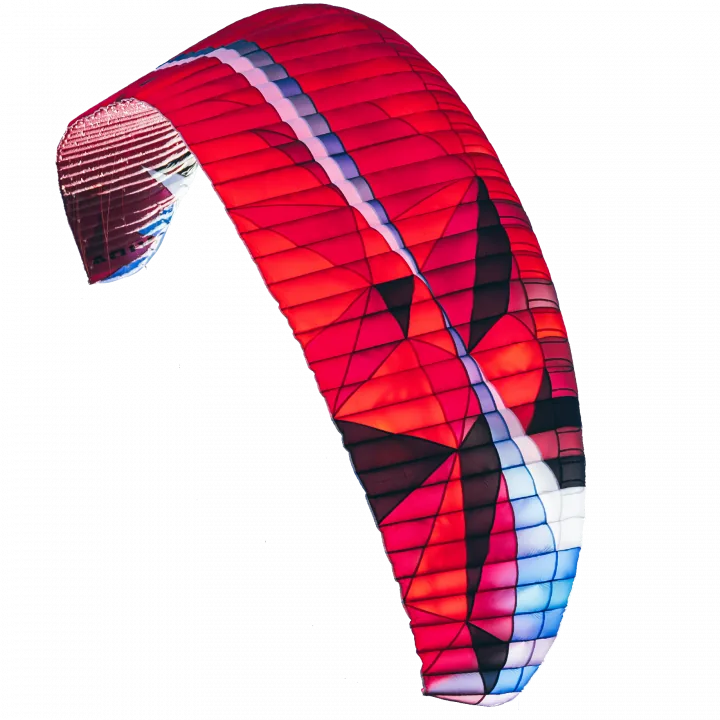
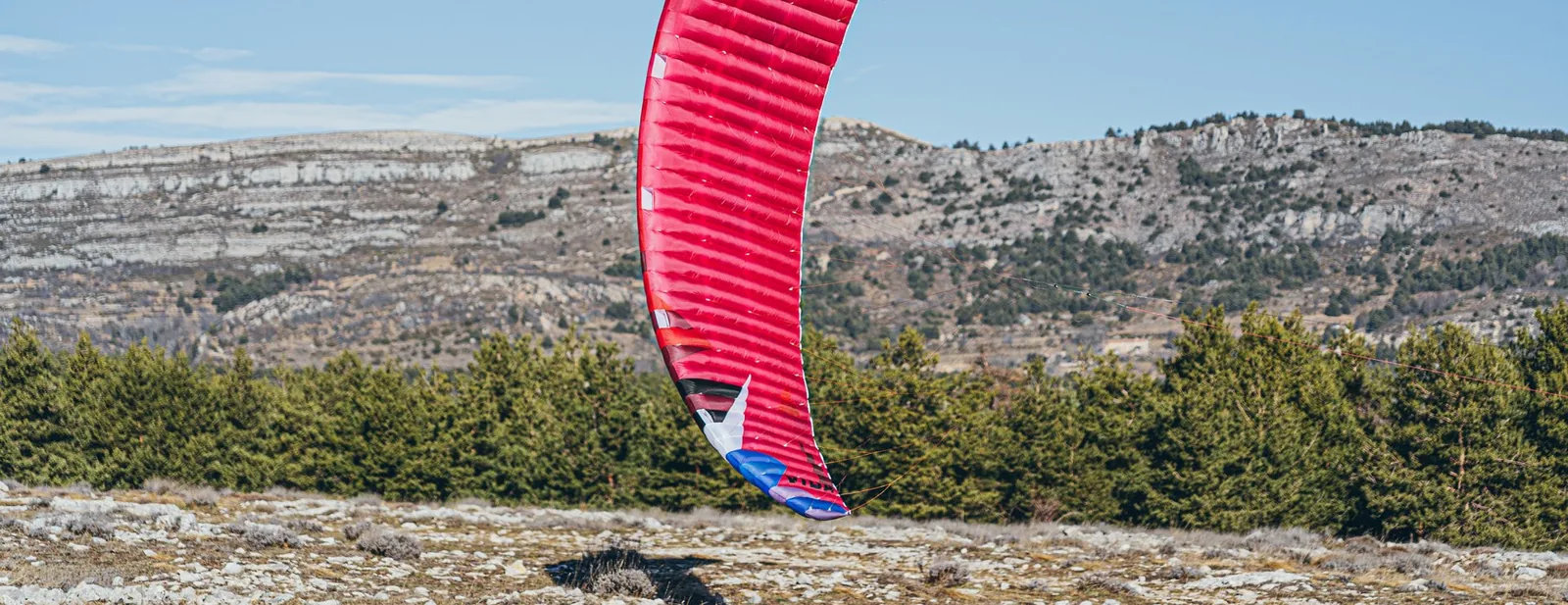
Red kite standing in front of a rocky hill and a row of pine trees, small white logo at the tip of the kite
Vida on the ground on rocky terrain · © Airwave
Tiny rider on a rough gray sea under a large vertical red kite, pale hazy sky
On a rough sea · © Airwave
Airwave

Airwave Vida test

  • Riding styleKitefoil racing, Kitefoil airstyle
  • Sizes10 to 15 m²
  • Year
  • Wind12 to 32 knots

Verdict in brief

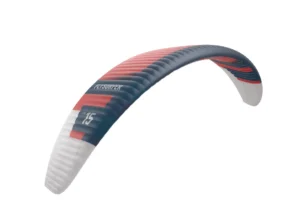
The Vida is Airwave’s high-aspect-ratio foil kite for racing and airstyle, in 10 and 15 (2 and 2.5 kg), closed-cell, with no fiberglass rod, part 3-line, part 2-line. IKSURFMAG’s test of the 15 m calls it easy to launch, strong in light wind and in transitions, with a lot of depower, but less forgiving when the lines go slack. Airwave states that it isn’t IKA registered. In my eyes, it’s an accessible racing kite for a foil rider who also wants to jump.

For you if

  • You race on foil or ride a fast kitefoil and want a less technical kite than a rod-based racing foil: IKSURFMAG judges it probably the easiest to launch of the high-aspect-ratio closed-cell foil kites it has tried, and I recommend it with that in mind
  • You want to extend the wind range of your twin-tip or your airstyle board: the same test finds a lot of depower and a long hangtime in jumps
  • You’re looking for light-wind performance on foil: IKSURFMAG notes great ease at the low end of the range as long as you get going fast and lean on the kite

Not for you if

  • You want to race in Formula Kite: Airwave states that the Vida isn’t IKA registered, I’d look at Flysurfer’s VMG 3
  • You often get caught out with no tension in the lines: IKSURFMAG had the kite in the water several times, it doesn’t come back into the window like an inflatable kite, even if it relaunches with a few pulls
  • You’re looking for a trouble-free first foil kite: I wouldn’t take it as a very first kite, high-aspect-ratio foils demand attention on a twin-tip

Have you ridden this model? Leave the first review

What we know about this model

Our method

Sizes and wind ranges

Your size on this model

Nothing stated for now.

Enter your weight and wind: your size is highlighted in the table.

choosing your kite size: weight, wind, level

To find your size, open the calculator: your weight, the wind, your level. kitesurfing kite size calculator

Sizes, weight and wind ranges
SizeKite weightWindValues in knotsAspect ratio
10 m²2.0 kg15–32 knots6.6
15 m²2.5 kg12–22 knots6.9

Two wind ranges in knots: racing or freestyle on one side, freeride foil on the other, with no reference rider. Shift them according to your weight and level.

More details on these figures

Weight (kite alone), wind ranges in knots, flat aspect ratio, cells, chord and flat span given by Airwave on the Vida page; the reference rider isn’t specified. In the table: “wind range” = foil racing / twin-tip freestyle, “foil range” = freeride foil. Sizes are flat areas. Projected area not published. Lines: 17-18 m in freeride, 10-12 m in racing.

Strong points, weak points

Strong points

  • Easy launch: minimal bridle, fast inflation, the kite reaches the top of the window before it’s fully inflated (IKSURFMAG, 15 m)
  • A lot of depower on the bar, even at full speed, which makes the kite comfortable in gusts (IKSURFMAG): for me, that’s its first selling point
  • No fiberglass rod, so easier to relaunch and fold than a rod-based racing foil according to Airwave
Weak points

  • Less forgiving when tension disappears: it comes back into the window more slowly than an inflatable kite (IKSURFMAG)
  • Only one price found, with no size specified, and the shop lists the Vida as temporarily unavailable; only the 15 m is tested by a magazine
  • Not IKA registered, so not usable as is in Formula Kite (Airwave)

The flaw to know about. The point to watch, for me: if a gust catches you stopped, the Vida doesn’t come back into the window like an inflatable kite, and IKSURFMAG ended up with the kite in the water several times. Relaunching, though, is no problem (a few pulls on the lines first). The test covers the 15 m.

Specifications

9 specs, sources at the bottom of the page

Technology
High-aspect-ratio closed-cell foil kite, 3-line / 2-line hybrid with no fiberglass rod; “morphing” profile (cambered in power, reflex in depower); Chord Cut Billow; minimalist bridle; three diagonal bands; designed with ALULA software
Cells
51 (10) and 59 (15)
Program (manufacturer)
Foil racing and airstyle; freeride foil; twin-tip freestyle; “Not IKA registered”
Sizes
10 and 15 (flat area in m²)
Weight
2 kg (10) and 2.5 kg (15); “glider weight”, so the kite alone
Flat aspect ratio
6.6 (10) and 6.9 (15)
Root chord and flat span
1.6 m and 8 m (10); 1.9 m and 10 m (15)
Wind range
Foil racing / twin-tip freestyle: 15-32 knots (10) and 12-22 (15); freeride foil: 8-22 (10) and 7-15 (15); reference rider not specified
Recommended lines
Freeride: 17-18 m; racing: 10-12 m

What the published tests say

1 test published, checked mid-November 2026

IKSURFMAG, Airwave Kiteboarding Vida 15m 2024 (issue 105)

Test of the 15 m on foil and twin-tip. The magazine judges it probably the easiest to launch of the high-aspect-ratio closed-cell foil kites it has tested: simple bridle, fast inflation, top of the window reached before it’s full. Soft and slow with little bar input, turning with more input, then livelier and more progressive as soon as tension builds. Very good in light wind on foil, more demanding on a twin-tip, where you have to hold a good angle. Flies far forward in the window, goes upwind very well, lots of lift in transitions and in jumps, with a long hangtime and soft landings. A lot of depower, comfortable in gusts. Less forgiving without tension: it comes back into the window slowly and ended up in the water several times, but it relaunches with a few pulls. Conclusion: an accessible kite that isn’t limited to a single use.

Read the test

Riders’ reviews

No reviews

No reviews yet.

Nobody has reviewed this gear yet. Do you use it? Help other riders of your weight — 2 minutes.

Leave your review (2 minutes)

Three screens: you, the gear, your review. Your email will never be published; it is only used to confirm that the review comes from a real person.

1/3 You

Only used to confirm your review and to let you know if it is rejected. Never displayed, never resold.

Your weight *

10 kg ranges only, so that other riders of your build can relate. No exact weight is recorded.

Your level *

Beginner: I’m still taking lessons. Intermediate: I ride on my own. Advanced: transitions and jumps. Expert: freestyle, wave or competition.

Your riding

Optional. If checked, your review stays published with the label “Gear received or tied to a brand” and doesn’t count toward the average rating.

You must be at least 15 to post a review (“Your data” article of the policy).

2/3 Your gear and how you use it
Wind range actually used (knots)
How long you’ve been using it *
Number of sessions (optional)
Rate each criterion (at least 3) *
Low wind
High wind / control
Steering & rotation
Relaunch & depower
Finish & durability

1 = very poor, 5 = excellent. Leave blank any criterion you couldn’t judge.

Do you recommend it? *
3/3 Your review

140 characters minimum — How it behaves in your wind, what disappointed you, who you’d recommend it to.

Rider reviews: confirmed email address, no compensation. “Brand-linked” and “loaned / received” reviews are labeled and excluded from the average. Each review shows its publication date, the date of the experience and, if it was edited, its update date. A review is published or rejected within 7 days at most; if it is rejected, you receive the reason by email and you can correct it. You can complete or delete your review at any time from the email address used to submit it. How do reviews work?

Alternatives to compare

Flysurfer VMG 3

Racing foil kite licensed for Formula Kite, so usable in official racing, which the Vida (“Not IKA registered”) is not.

Flysurfer Sonic 5

Big air foil kite, for the twin-tip as well as the hydrofoil. The Vida aims at racing and airstyle, the Sonic at big air.

Airwave Koala

Same brand: the Koala is the all-round three-line foil kite, heavier in 10 (2.2 kg against 2 kg) and made to replace a quiver of inflatables, whereas the Vida is high aspect ratio (6.6 against 5.8 in 10) and aims at racing and airstyle.

Frequently asked questions

What’s the wind range of an Airwave Vida?

Airwave doesn’t specify the reference rider, so shift it according to your weight. In foil racing and twin-tip freestyle: 15-32 knots in 10 and 12-22 in 15. In freeride foil: 8-22 and 7-15 knots.

How much does the Vida weigh?

Airwave publishes 2 kg for the 10 and 2.5 kg for the 15 (kite alone).

Is the Vida IKA registered for Formula Kite?

No: the Airwave page carries the “Not IKA registered” mention. Airwave describes it as a “free-racing” kite for accessible racing and airstyle, not as an Olympic-class kite.

Where can I check the current price?

See the current prices in the “Where to buy” section of this page.

Is the Vida a good kite for a beginner?

No, I wouldn’t take it as a very first kite. IKSURFMAG’s test says it’s easy to launch for its category, but it’s a high-aspect-ratio foil that demands attention when there’s no tension in the lines. To learn, an all-round foil kite like the Koala seems better suited to me.

What about used?

The Vida is still in Airwave’s catalog (November 12, 2026): a used one doesn’t come from a discontinued model. I found no sourced used price, so I give none. Check the whole canopy against the light, the closed cells (inflate the kite and leave it for 24 hours), the attachment points, the thin lines and the bridles, and the condition of the lines. The 10 has only existed since late 2024, the 15 since 2024, which helps you date the kite.

Method and limitations of this page

This page brings together the technical specs, tests from the press and blogs, and rider feedback found on the web, without rewriting any of it. When WindUnity has ridden the gear itself, the page says so with the “WindUnity test” badge.

Rider reviews are published as is, with their date. Reviews tied to a brand or based on loaned gear are labeled and excluded from the average.

What’s still missing

  • Airwave doesn’t date its models: no commercial model year; release date inferred from the IKSURFMAG interview of April 22, 2024, not from a brand announcement
  • Only the 15 m is tested (IKSURFMAG, issue 105, exact publication date not found); no test of the 10 m
  • Projected area not published by Airwave for the Vida; reference rider for the wind range not specified
  • No video kept: the videos on the Airwave page are hosted on Vimeo
  • No rider feedback found (Reddit r/Kiteboarding on November 12, 2026)

Sources

Data collected mid-November 2026

Airwave : product page

Press and specialist sites : IKSURFMAG

Others : BGD

See the details of the 5 sources

Airwave

Press and specialist sites

  1. IKSURFMAG, Airwave Kiteboarding Vida 15m 2024
  2. IKSURFMAG, Tech Focus Vida (interview with Tom Lolies, issue 104)
  3. IKSURFMAG, news “NEW VIDA 10” (December 21, 2024)

Others

  1. BGD, Vida online shop (price)