Skip to content
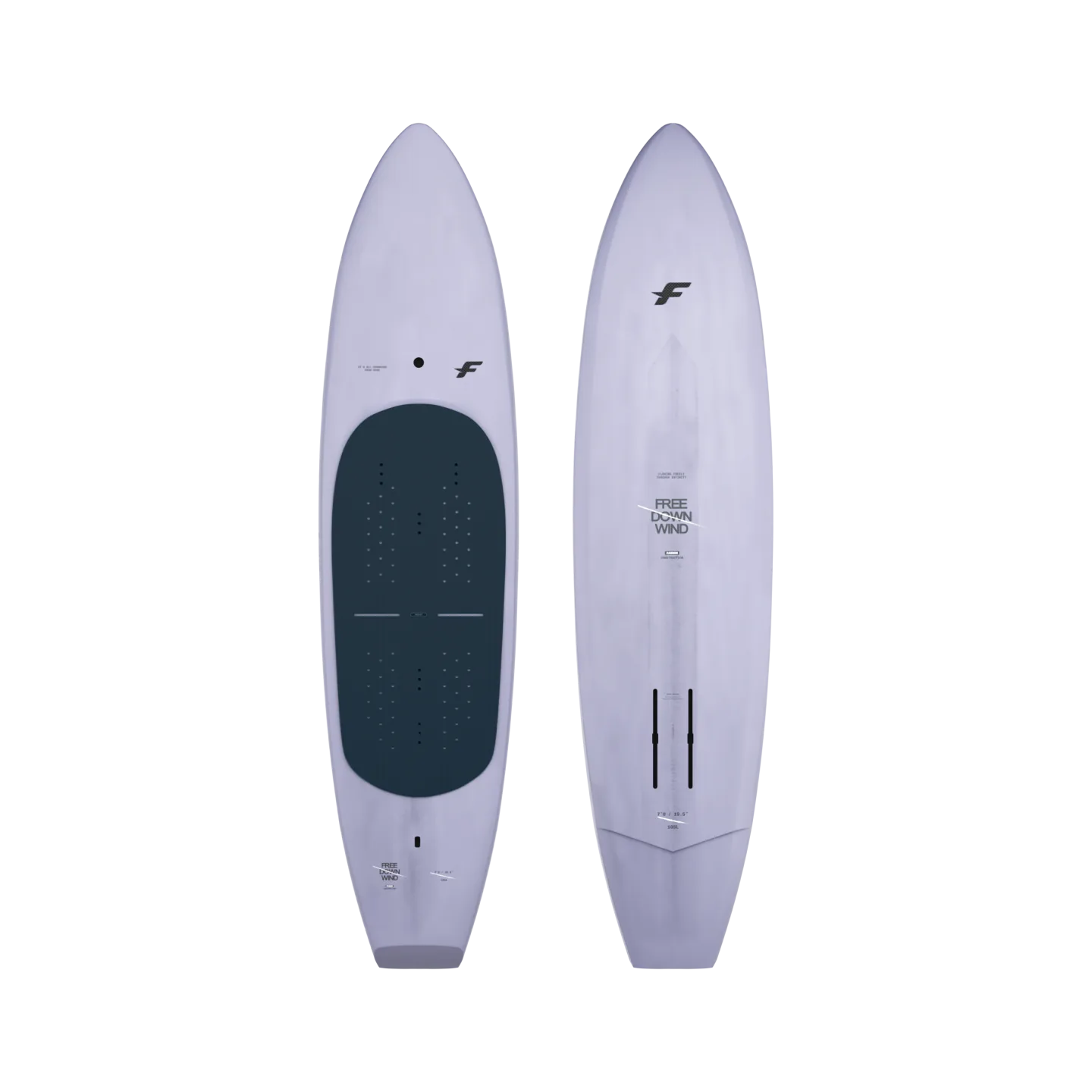
F-One Rocket Free Downwind Carbon, deck with dark pad on the left and lavender hull with two foil rails on the right
Deck and hull of the Rocket Free Downwind Carbon, product photo from the F-One page · © F-One
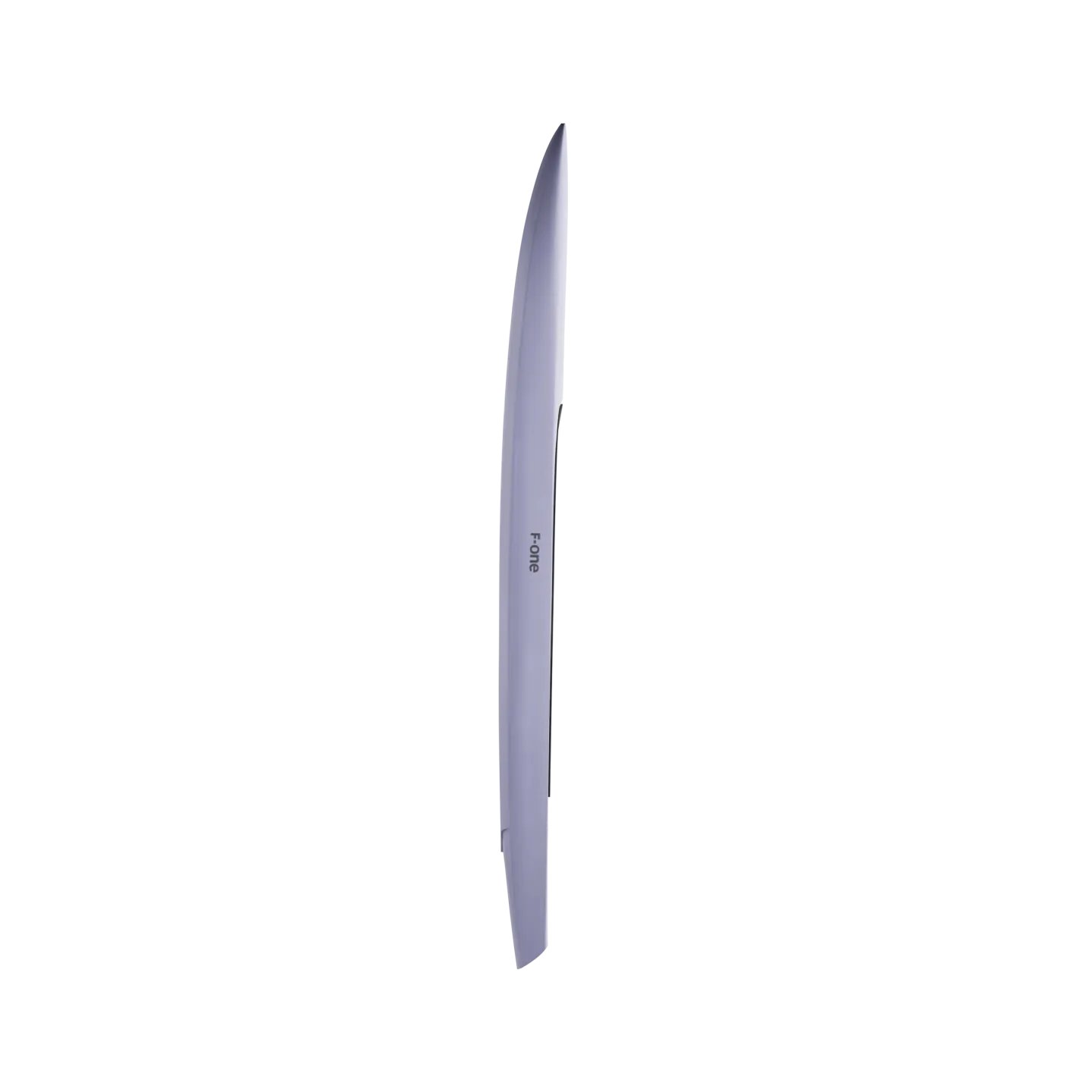
F-One Rocket Free Downwind Carbon seen in profile, upright on a black background, pointed nose and F-one logo on the edge
Profile of the Rocket Free Downwind Carbon, product photo from the F-One page · © F-One
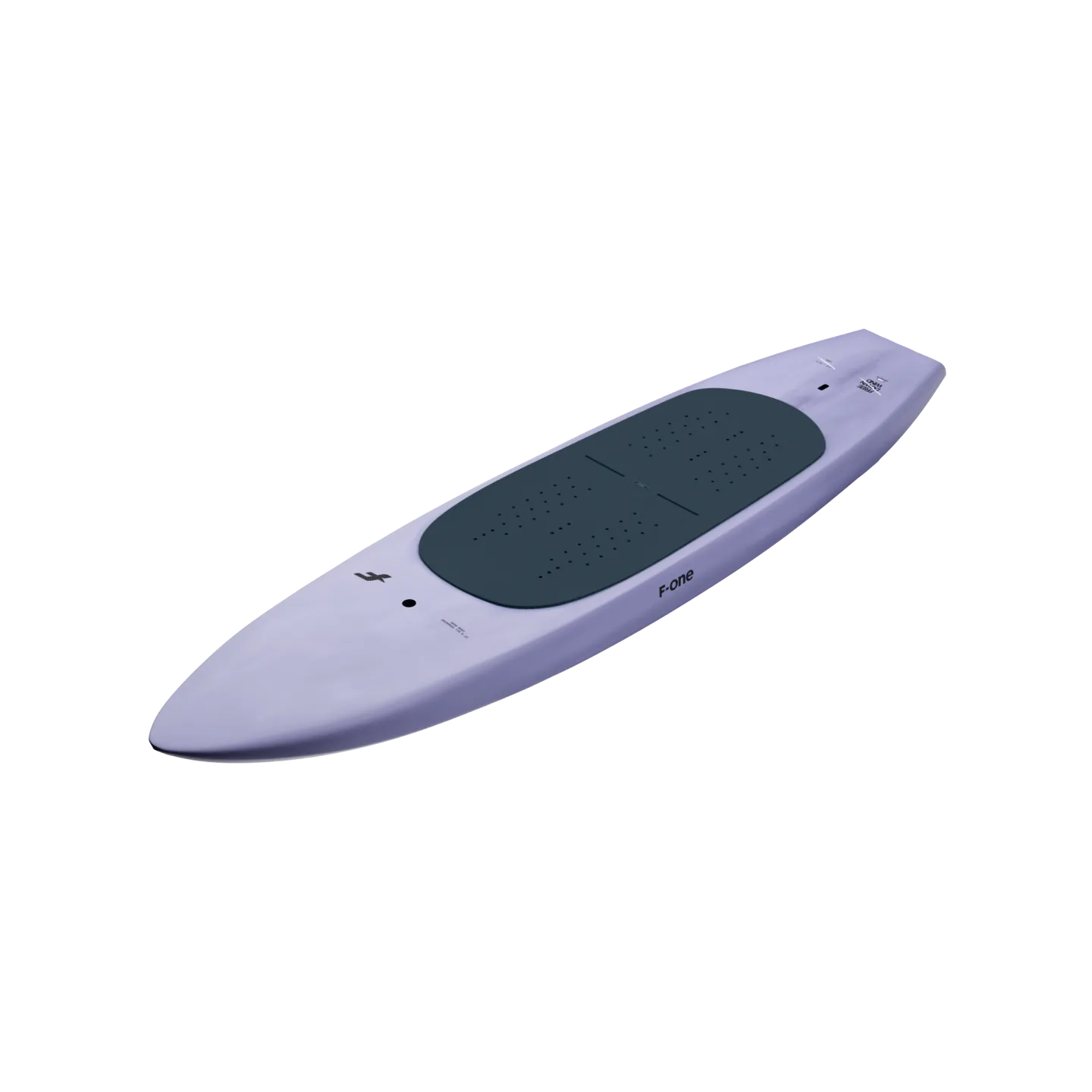
F-One Rocket Free Downwind Carbon seen diagonally on a black background, dark pad in four panels
Rocket Free Downwind Carbon in diagonal view, product photo from the F-One page · © F-One
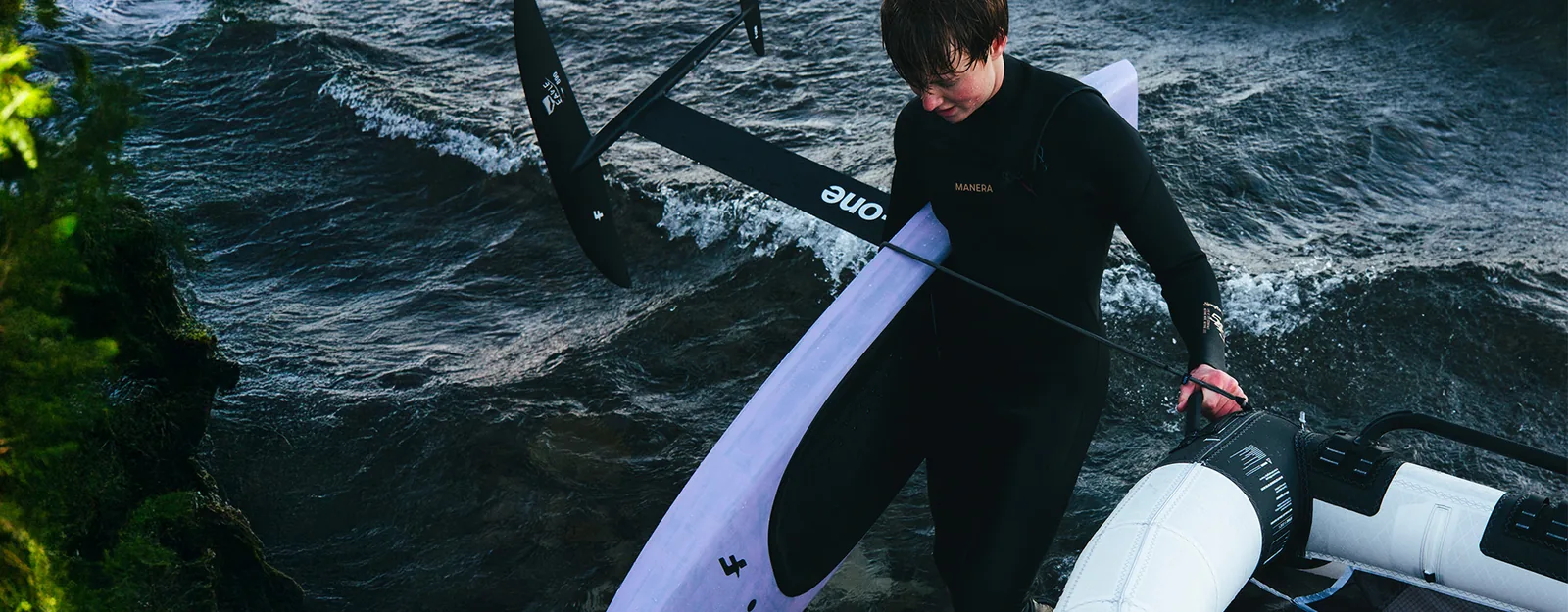
Rider in a black wetsuit standing at the water's edge, lavender board and foil under the arm
Rocket Free Downwind Carbon, visual from the F-One gallery · © F-One
F-One

F-One Rocket Free Downwind Carbon 2026 test

  • Riding styleDownwind, parawing
  • Sizes193 to 233,7 cm
  • YearModel 2026 · released Mar 2026

Verdict in brief

The Rocket Free Downwind Carbon is the carbon version of F-One's long board for downwind, pocket wing, K-Wing and SUP foil: same shape as the bamboo, 85 to 124 L, 5.1 to 6.3 kg. I found no test, of either the carbon or the bamboo. For me, it's only worth that price if you pump a lot: otherwise take the bamboo, it's the same board.

Nothing tested here: everything comes from the F-One and GlissEvolution pages read on November 11, 2026. F-One doesn't publish rider weight by size.

For you if

  • You do downwind or pocket wing and you pump a lot: F-One says the carbon is more responsive to pumping than the bamboo
  • You want the lightest board in the Free Downwind range: 5.1 kg in 85 L, 6.3 kg in 124 L
  • You do SUP foil or K-Wing: F-One cites both of these activities among its uses

Not for you if

  • You surf waves: on F-One's in-house scale, wave is at 60% and the brand offers the Rocket Free Surf for that
  • You're starting from zero on a wing: beginner takeoff is at 70% on F-One's in-house scale (90% for an experienced rider) and GlissEvolution writes “intermediate to experienced”
  • You carry your board on a small roof: 2.34 m in the 7'8, 1.93 m in the 6'4

Have you ridden this model? Leave the first review

What we know about this model

Our method

Sizes, volume, weight and foil box

Sizes, volume, weight and recommended rider
SizeLength × widthThicknessVolumeBoard weightRecommended riderFoil boxFootstraps
6'4193 × 48.3 cm14 cm85 L5.1 kgn.c.Carbon Twin-Tracks, entraxe 90 mmfootstrap inserts (straps not supplied)
6'8203.2 × 49.5 cm14.2 cm95 L5.4 kgn.c.Carbon Twin-Tracks, entraxe 90 mmfootstrap inserts (straps not supplied)
7'0213.4 × 50.8 cm14.7 cm104 L5.7 kgn.c.Carbon Twin-Tracks, entraxe 90 mmfootstrap inserts (straps not supplied)
7'4223.5 × 52.1 cm15 cm114 L6 kgn.c.Carbon Twin-Tracks, entraxe 90 mmfootstrap inserts (straps not supplied)
7'8233.7 × 53.3 cm15.2 cm124 L6.3 kgn.c.Carbon Twin-Tracks, entraxe 90 mmfootstrap inserts (straps not supplied)

Dimensions in cm, volumes in L, weights in kg (F-One, November 11, 2026). Rider weight: n/a.

More details on these figures

Dimensions (length × width × thickness) in centimeters, volumes in liters and weights in kilos as published by F-One on the page of November 11, 2026; these are the same dimensions as the bamboo version. F-One doesn’t give a rider weight per size. At equal size, the bamboo weighs 5.4 / 5.8 / 6.1 / 6.3 / 6.5 kg according to F-One: the carbon saves 0.3 / 0.4 / 0.4 / 0.3 / 0.2 kg. GlissEvolution’s parawing guide (updated on October 15, 2026) suggests, for midlength and downwind boards, a volume between the rider’s weight and that weight + 15 L: this is shop advice, not F-One data.

Strong points, weak points

Strong points

  • Same shape as the bamboo, elongated, with a rear step and kicktail for glide
  • Five sizes from 6'4 to 7'8, from 85 to 124 L, from 5.1 to 6.3 kg
  • 0.2 to 0.4 kg lighter than the bamboo at equal size, calculated from the F-One tables
  • 90 mm Carbon Twin-Tracks plate, compatible with masts with a four-screw plate
  • Breathable valve that regulates internal pressure
  • A carry handle on each of the five sizes

Weak points

  • No recommended rider weight published by F-One
  • No published test, of either the carbon or the bamboo
  • Long: up to 2.34 m in 7'8, so bulky to carry

The flaw to know about. Its real flaw: the price.

Specifications

7 specs, sources at the bottom of the page

Category
Wing foil board (“wingfoil board”), downwind / freeride program, five sizes
Program (manufacturer)
Downwind and freeride, for pocket winging, K-Wing and SUP foil. F-One in-house scale: beginner takeoff 70%, experienced takeoff 90%, pitch stability 90%, maneuverability 80%, wave 60%, downwind 100%, freeride 90%.
Construction
HD Foam Carbon Composite: high-density foam between fiberglass and carbon fiber
Foil plate
Carbon Twin-Tracks, 90 mm spacing, compatible with all masts with a four-screw plate
Valve
Breathable Valve, which regulates internal pressure
Shape
Same shape as the bamboo version, based on the Rocket Wing Midlength but more elongated; rear step and kicktail; thicker than the Free Surf, with a wider nose and bottom and squarer rails; foot placement slightly forward
Reference
77268-1403C

Riders’ reviews

No reviews

No reviews yet.

Nobody has reviewed this gear yet. Do you use it? Help other riders of your weight — 2 minutes.

Leave your review (2 minutes)

Three screens: you, the gear, your review. Your email will never be published; it is only used to confirm that the review comes from a real person.

1/3 You

Only used to confirm your review and to let you know if it is rejected. Never displayed, never resold.

Your weight *

10 kg ranges only, so that other riders of your build can relate. No exact weight is recorded.

Your level *

Beginner: I’m still taking lessons. Intermediate: I ride on my own. Advanced: transitions and jumps. Expert: freestyle, wave or competition.

Your riding

Optional. If checked, your review stays published with the label “Gear received or tied to a brand” and doesn’t count toward the average rating.

You must be at least 15 to post a review (“Your data” article of the policy).

2/3 Your gear and how you use it
Wind range actually used (knots)
How long you’ve been using it *
Number of sessions (optional)
Rate each criterion (at least 3) *
Takeoff / low-speed stability
Weight & maneuverability
Stiffness
Foot comfort
Finish & durability

1 = very poor, 5 = excellent. Leave blank any criterion you couldn’t judge.

Do you recommend it? *
3/3 Your review

140 characters minimum — Takeoff, low-speed stability, what disappointed you, who you’d recommend it to.

Rider reviews: confirmed email address, no compensation. “Brand-linked” and “loaned / received” reviews are labeled and excluded from the average. Each review shows its publication date, the date of the experience and, if it was edited, its update date. A review is published or rejected within 7 days at most; if it is rejected, you receive the reason by email and you can correct it. You can complete or delete your review at any time from the email address used to submit it. How do reviews work?

Alternatives to compare

Duotone Paradox SLS 2026

Lightweight parawing board from 45 to 105 L (3.5 to 5.6 kg). The 90 L is 188 cm long and 5.1 kg, like the 85 L Free Downwind Carbon (193 cm, 5.1 kg).

Slingshot Project Drag Board 2027

Parawing and downwind board from 50 to 114 L (4.2 to 6.2 kg). Shorter at equal volume: the 95 L is 193 cm, versus 203 cm for the 95 L Free Downwind Carbon.

Other versions of this model

F-One Rocket Free Downwind Carbon

Frequently asked questions

What's the difference between the Rocket Free Downwind Carbon and the bamboo?

Same shape and same dimensions. The carbon moves to HD Foam Carbon Composite with a Carbon Twin-Tracks plate. F-One says it is more responsive in pumping; no test measures it.

Which size of F-One Rocket Free Downwind Carbon should you choose?

F-One doesn't publish rider weight by size. GlissEvolution's guide advises a volume between your weight and your weight + 15 L, leaning toward the top if you're new to parawing or if the wind is often light. This is shop advice, not brand data.

What is included with the F-One Rocket Free Downwind Carbon 2026?

The board is supplied alone, in sizes from 85 L to 124 L. A bamboo version also exists. For the price, see the “Where to buy” section of this page.

Is the Rocket Free Downwind Carbon compatible with my foil?

Yes if your mast has a four-screw plate: the Carbon Twin-Tracks have the standard 90 mm spacing.

Is the Rocket Free Downwind Carbon a beginner board?

No, not for starting from zero. On F-One's in-house scale, beginner takeoff is at 70% versus 90% for an experienced rider. GlissEvolution writes “intermediate to experienced”. No test settles it.

Method and limitations of this page

This page brings together the technical specs, tests from the press and blogs, and rider feedback found on the web, without rewriting any of it. When WindUnity has ridden the gear itself, the page says so with the “WindUnity test” badge.

Rider reviews are published as is, with their date. Reviews tied to a brand or based on loaned gear are labeled and excluded from the average.

What’s still missing

  • Recommended rider weight by size not published by F-One
  • No published test of the board, carbon or bamboo

Sources

Data collected mid-November 2026

F-One : 2 product pages, brand video, other page

Shops : GlissEvolution

See the details of the 6 sources

F-One

  1. Rocket Free Downwind
  2. Wing foil board range
  3. Rocket Free Downwind film (YouTube)

Shops

  1. GlissEvolution, Rocket Free Downwind Carbon 2026 page
  2. GlissEvolution, parawing board guide