Strong points
- Easy jumps, with lots of lift and hangtime (Duotone, TheKiteMag, Reddit)
- Depowers fast and linearly when you sheet out the bar (TheKiteMag, Duotone)
- Stiff in gusts: the kite keeps its shape (TheKiteMag)
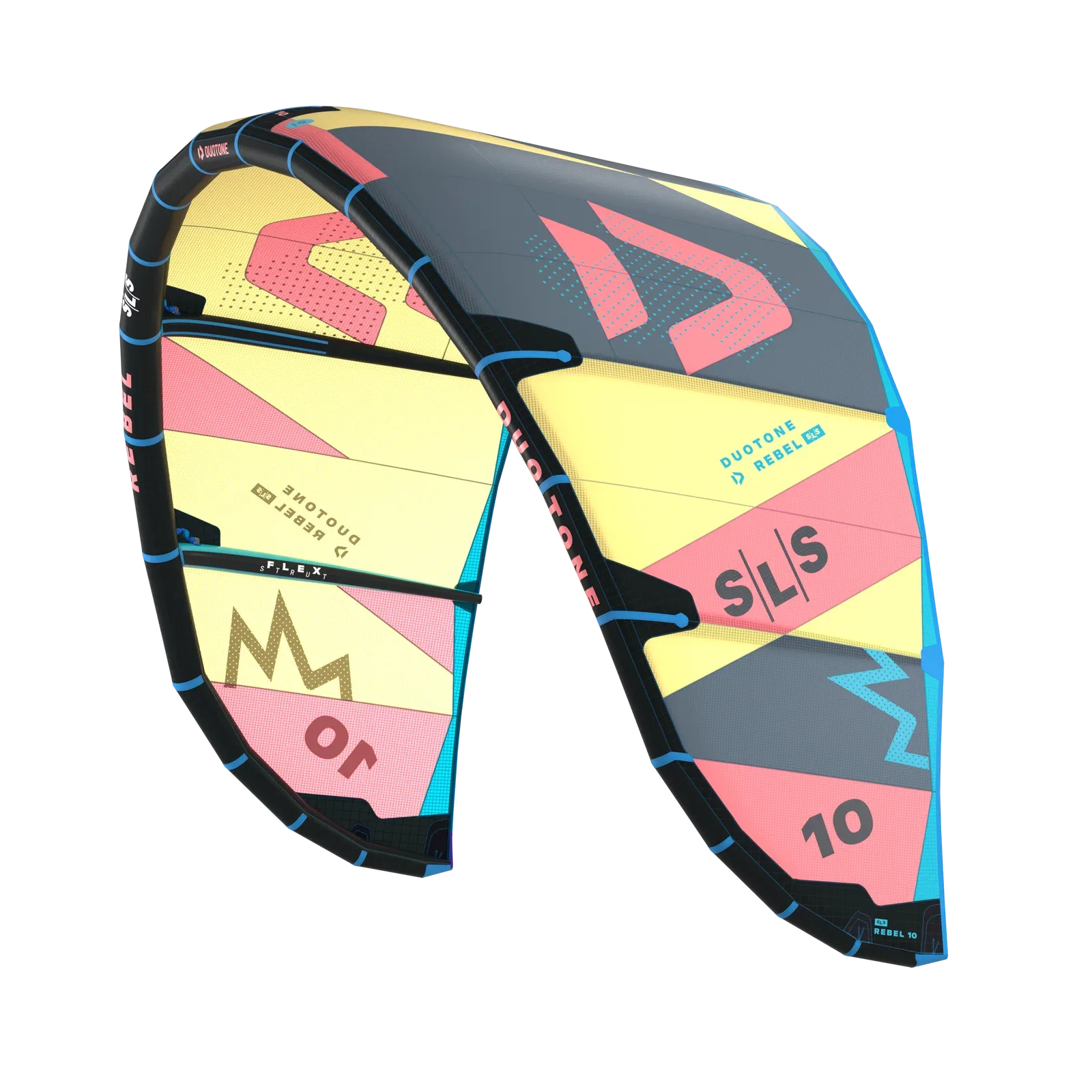
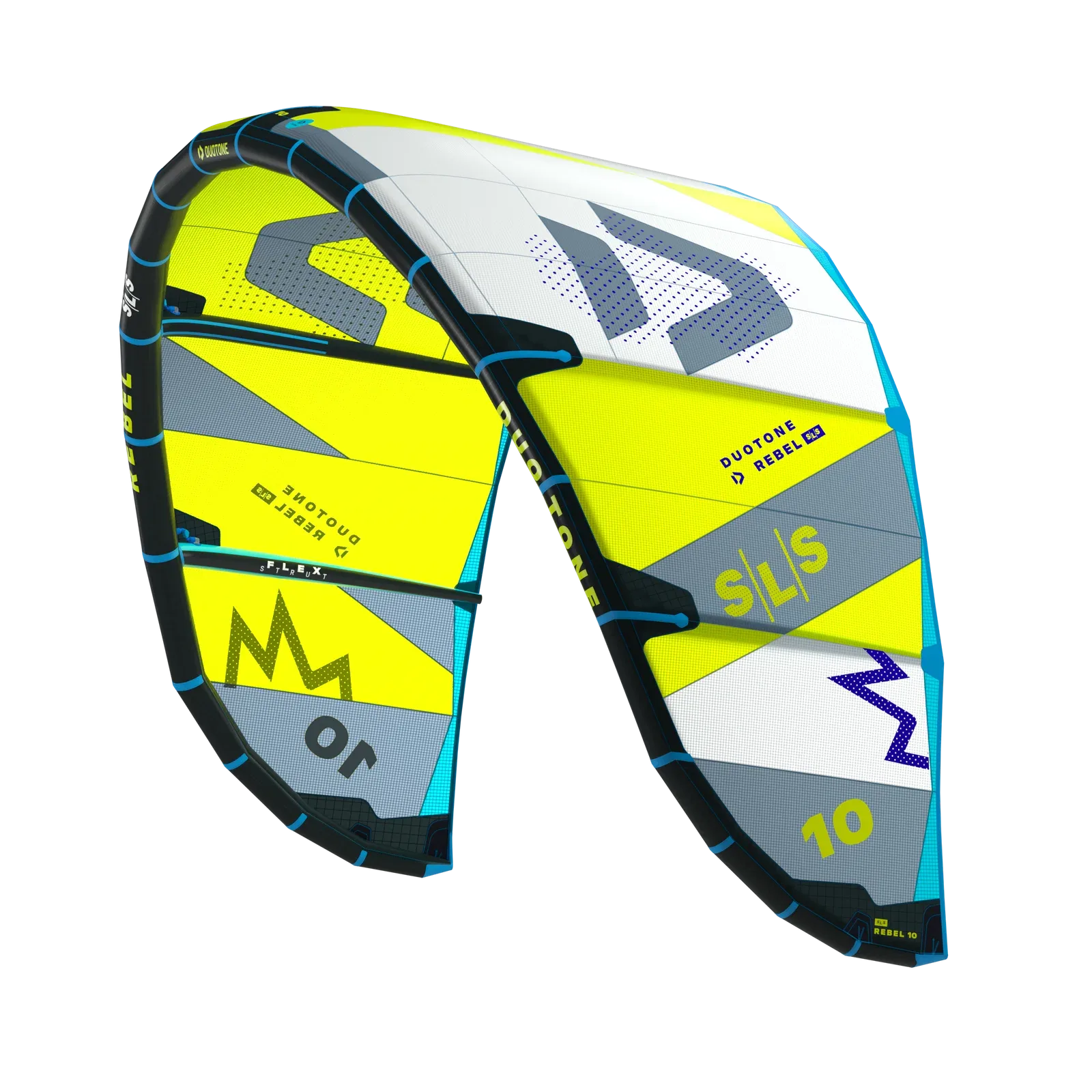
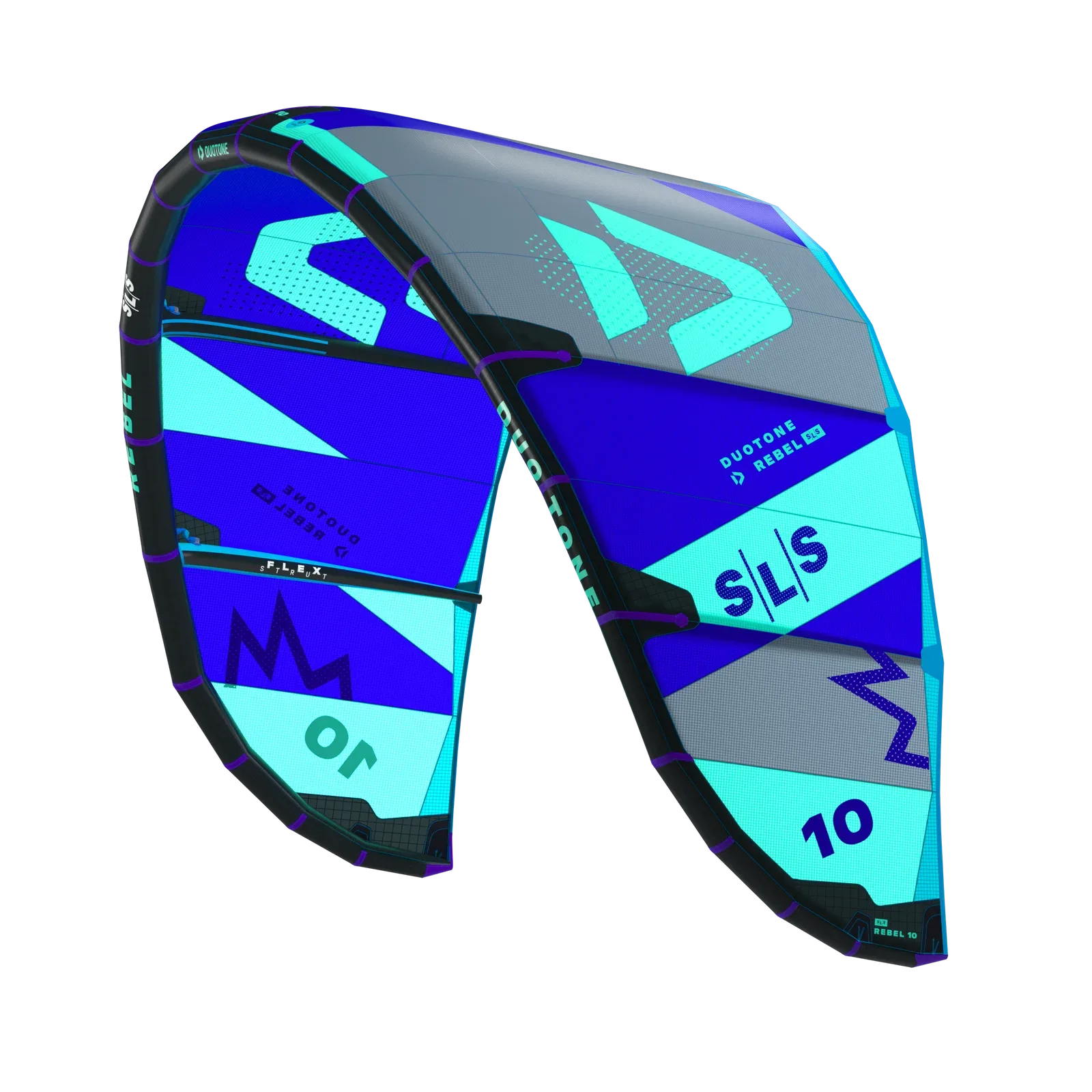
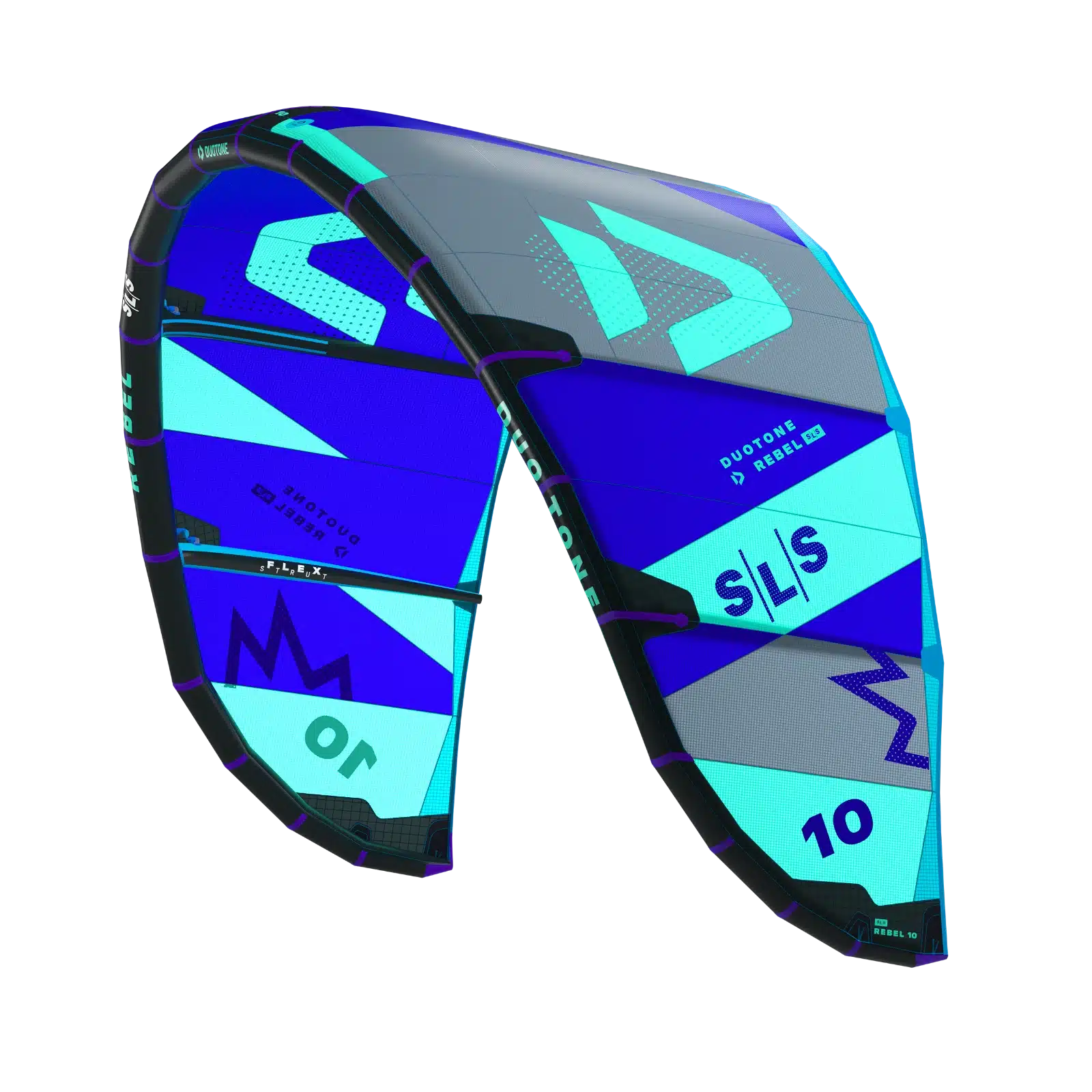
A big air and freeride kite, from 6 to 14 m². TheKiteMag credits it with great ease of jumping, hangtime and fast depower, and Duotone ranks it as its easiest kite to jump. Several more recent model years exist, including the 2026 with a pulley-free bridle.
Nothing stated for now.
Enter your weight and wind: your size is highlighted in the table.
kitesurfing kite size calculatorSee my size in the table
To find your size, open the calculator: your weight, the wind, your level. choosing your kite size: weight, wind, level
| Size | Kite weight | Wind | Values in knots |
|---|---|---|---|
| 6 m² | 2.5 kg | 21–40 knots | |
| 7 m² | 2.6 kg | 19–38 knots | |
| 8 m² | 2.84 kg | 17–36 knots | |
| 9 m² | 2.9 kg | 15–34 knots | |
| 10 m² | 3.1 kg | 13–32 knots | |
| 11 m² | 3.38 kg | 12–29 knots | |
| 12 m² | 3.63 kg | 11–26 knots | |
| 13 m² | 3.75 kg | 10–23 knots | |
| 14 m² | 3.96 kg | 9–21 knots |
No reference rider specified for the wind ranges, weights without bag: shift the ranges according to your weight, board and level.
Wind ranges and weights without bag given by Duotone on the Rebel SLS 2024 product page; the brand does not specify the reference rider.
The flaw to know about. Riders who own a Rebel SLS 2024 cite high bar pressure, which tires the forearms after several days in a row. Duotone removes the front bridle pulleys on the Rebel SLS 2026, for a bar that is meant to be more direct.
Checked on 27/10/2026
What changes vs the Rebel SLS 2023
7 specs, sources at the bottom of the page
1 test published, checked late October 2026
The magazine says that on the SLS, Dacron is replaced by Penta TX, 15% lighter and 50% stiffer in its words. Verdict: easy jumps with lift and hangtime, linear depower, tighter loops than on the old Rebel, kite that keeps its shape in gusts (good for heavy riders). It judges it usable as soon as you’re out of lessons, for intermediates and advanced riders alike. S/M bar up to 9 m, L from 10 m.
Read the testFeedback found on the web and reworded, never published as site reviews. Likely bias: a single discussion thread.
Has flown the Rebel SLS 2022 and 2023 and owns the 2024; compares with a borrowed Evo SLS 2023
Lots of grunt at the low end, very good hangtime, turns decently, he learned heliloops on it; the bar gives a lot of feedback. Only complaint: high bar pressure, which gives him forearm inflammation after several days.
Owner of an Evo and a Rebel
The Rebel is more forgiving and slower, so stable for learning first tricks, but it doesn’t flag technique mistakes; past intermediate level, the Evo becomes better for kiteloops, then the Rebel takes back the advantage at advanced level.
Rider who repairs kites; level not specified
For a rider at that level, he recommends the Evo, more tolerant and faster than the 3-strut Rebel; he suggests moving to the Rebel as you progress.
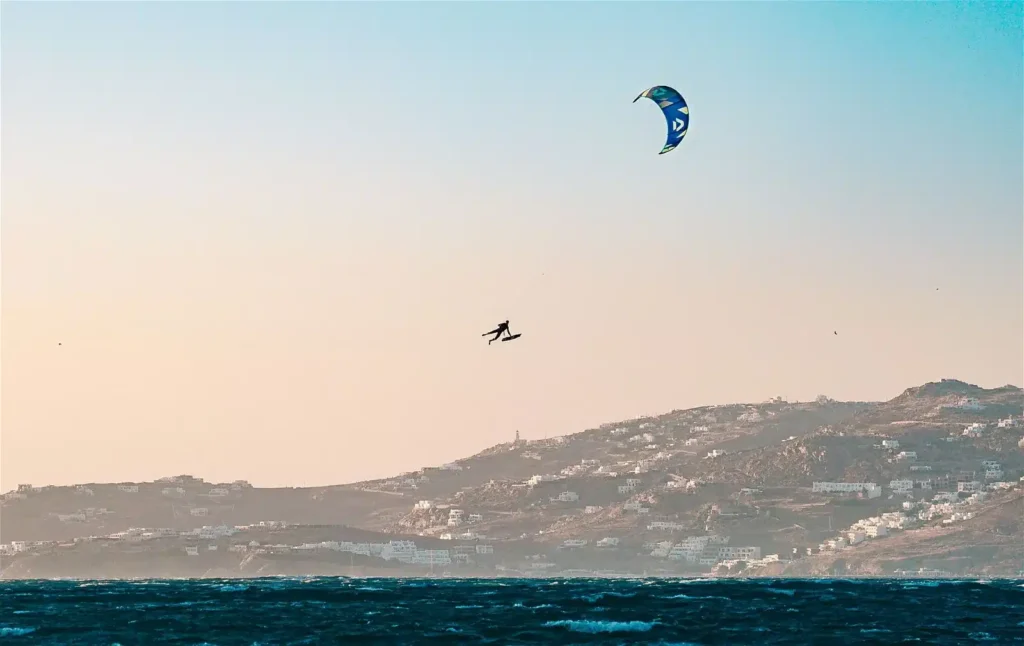
Original images from the page
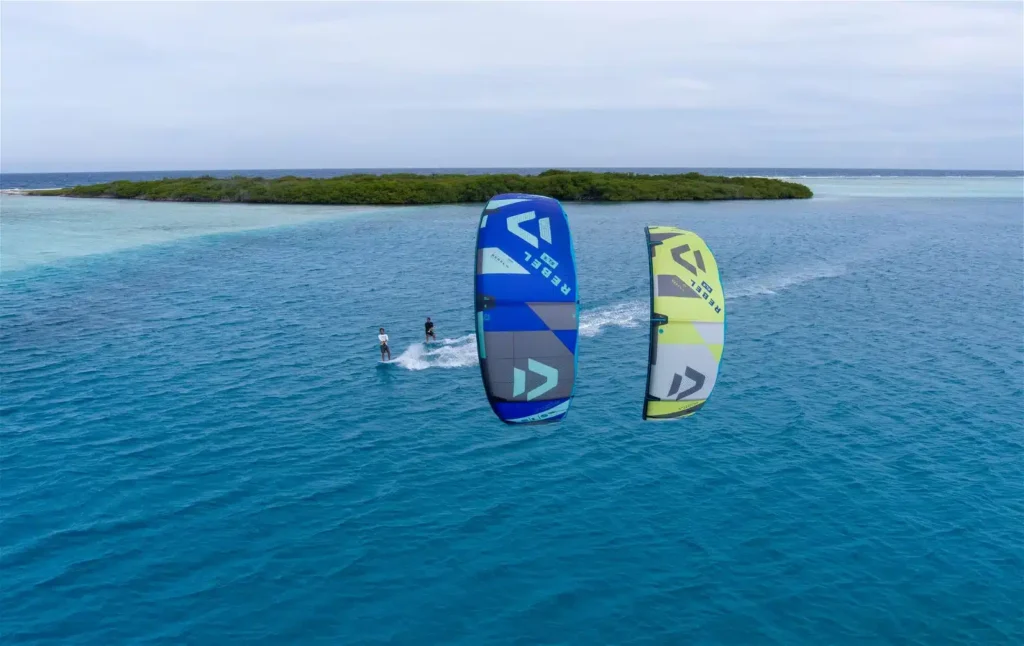
No reviews
No reviews yet.
Nobody has reviewed this gear yet. Do you use it? Help other riders of your weight — 2 minutes.
Three screens: you, the gear, your review. Your email will never be published; it is only used to confirm that the review comes from a real person.
Rider reviews: confirmed email address, no compensation. “Brand-linked” and “loaned / received” reviews are labeled and excluded from the average. Each review shows its publication date, the date of the experience and, if it was edited, its update date. A review is published or rejected within 7 days at most; if it is rejected, you receive the reason by email and you can correct it. You can complete or delete your review at any time from the email address used to submit it. How do reviews work?
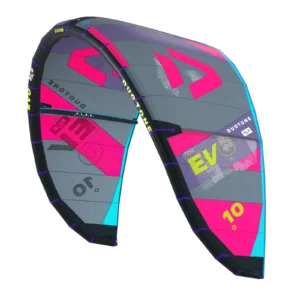
Same brand, more versatile: 7 to 13 m² and 2.30 to 3.50 kg, versus 6 to 14 m² and 2.50 to 3.96 kg for the Rebel. A rider who has flown both finds that the Evo turns faster, with less hangtime and lower bar pressure.
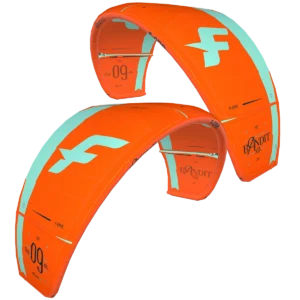
F-One inflatable kite. According to a Reddit tip (September 2025), it requires active piloting to land jumps and to find power in light wind, whereas the Rebel leans more toward big air.
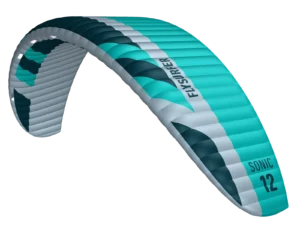
Closed-cell foil kite for big air, with no inflation pump: 6 to 18 m², 1.22 to 2.98 kg. Reserved for riders already comfortable with a closed-cell foil kite (Riftboards).
Duotone Rebel SLS
Still torn between several kites or wings? Read the guide: how to choose your kitesurfing kite.
9 m²: 15 to 34 knots; 12 m²: 11 to 26 knots (Duotone table). Other sizes: 6 m² 21-40, 7 m² 19-38, 8 m² 17-36, 10 m² 13-32, 11 m² 12-29, 13 m² 10-23, 14 m² 9-21 knots.
Duotone’s presentation talks about a redesign, with clearly improved hangtime, a weight of 2.44 to 3.91 kg and the M bar across the whole range. The page does not detail any independent test of the change.
Duotone positions the Rebel SLS as the easiest kite to jump in the range. On Reddit (September 2025), owners find the Evo friendlier for learning kiteloops in 9 m and smaller, and the Rebel more forgiving for first jumps.
Duotone offers Rebel SLS 2025, 2026 and 2027. The 2026 shortens the chord and removes the front bridle pulleys; the 2027 keeps the same table of sizes, weights and wind.
No review has been posted on WindUnity yet. We found 3 pieces of rider feedback on Reddit, summarized above and never published as site reviews.
WindUnity has not tested the Rebel SLS 2024. The page cites a TheKiteMag test and flags two videos without text (IKSURFMAG, gleiten.tv), which are not counted.
I wouldn’t pick it for a very first day: no test I found puts it among learning kites. I recommend it once you’ve had your first lessons and want to jump: Duotone positions it as the easiest kite to jump in its range, TheKiteMag credits it with great ease of jumping, and owners find it more forgiving than the Evo for first jumps (Reddit, September 2025). Keep in mind the high bar pressure cited by an owner of the 2022 to 2024 models (Reddit, September 2025): it tires the forearms after several days in a row. Duotone does not specify the reference rider for its wind ranges (21-40 knots in 6 m², 9-21 in 14 m²): shift them according to your weight and level.
I haven’t found any sourced used price, so I’m not giving one. Ask for the model year and size first: the 2024 exists from 6 to 14 m², Duotone sells Rebel SLS 2025, 2026 and 2027, and its nine 2024 sizes are shown as SOLD OUT on November 9, 2026, so used remains a way to find one. The 2026 removes the front bridle pulleys: don’t mix up the model years. Check the frame and the Flex Struts, the bladders and the valves, then the whole canopy against the light (tears, seams). Check the lines (22 m up to 10 m², 24 m in 11 to 14 m²) and the bridle. Inflate the kite and leave it for 24 hours to see whether it holds pressure. Ask for its age and the number of sessions, then compare with new before you decide.
Duotone public prices were checked on November 9, 2026 on the product page, with no crossed-out or sale price, in 6 m², 7 m², 8 m², 9 m², 10 m², 11 m², 12 m², 13 m² and 14 m² (see current prices in Where to buy). All nine sizes are shown as SOLD OUT the same day: for a new kite, look at the Rebel SLS 2025 to 2027 in the Duotone catalog. VAT not specified by Duotone.
This page brings together the technical specs, tests from the press and blogs, and rider feedback found on the web, without rewriting any of it. When WindUnity has ridden the gear itself, the page says so with the “WindUnity test” badge.
Rider reviews are published as is, with their date. Reviews tied to a brand or based on loaned gear are labeled and excluded from the average.
Data collected between October and November 2026
Duotone : 6 product pages
Press and specialist sites : TheKiteMag