Strong points
- Light: 2.40 to 2.65 kg depending on the size
- Medium-low rocker and soft flex, on a paulownia core and Triax glass
- Made in Poland, from start to finish
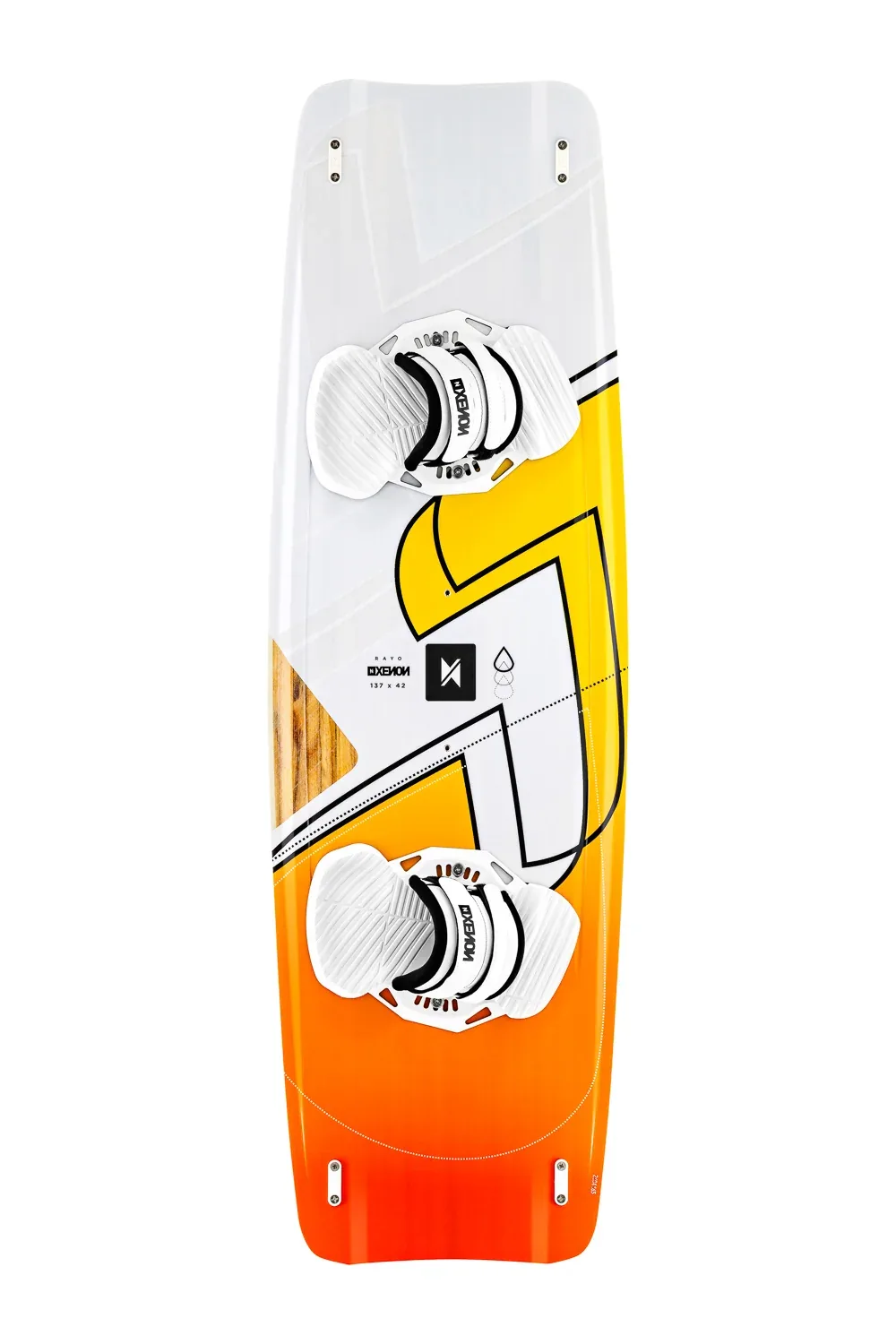
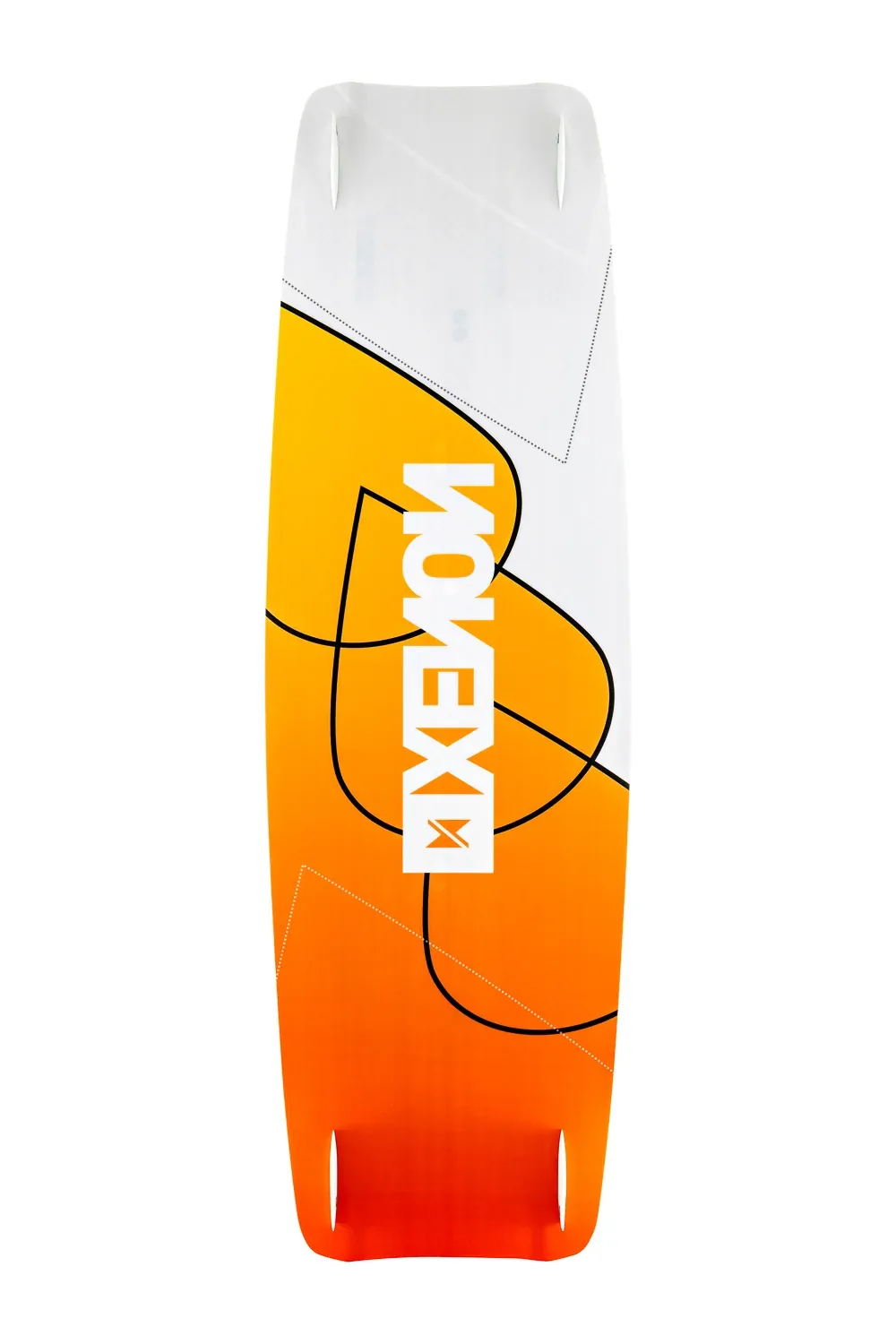
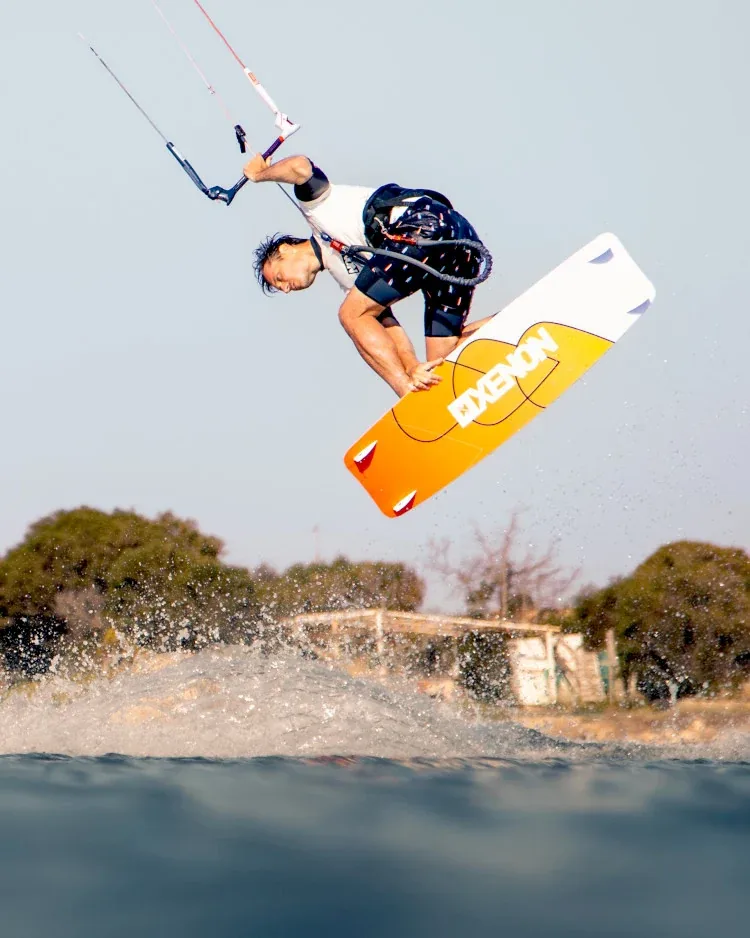
The Rayo is Xenon’s progression twin-tip: medium-low rocker, soft flex, paulownia core, made in Poland. Three sizes from 134×41 to 145×44, 2.40 to 2.65 kg. I recommend it if you’re learning your first reaches or want an easy board for recreational riding: everything on the page is built to get on the plane early and forgive. I wouldn’t take it for powered-up tricks or big air: Xenon has the Laluz and the Infra for that. I found no test of this Rayo: my opinion rests on Xenon’s page.
Official Xenon page checked on November 11, 2026; no test of the current Rayo, one IKSURFMAG test from 2010 on a different generation.
| Size | Length × width | Board weight | Recommended rider | Fins |
|---|---|---|---|---|
| 134×41 | 134 × 41 cm | 2.4 kg | n.c. | White G10 fins: 50 mm freeride (recommended) or 40 mm freestyle, with soft washers |
| 137×42 | 137 × 42 cm | 2.5 kg | n.c. | White G10 fins: 50 mm freeride (recommended) or 40 mm freestyle, with soft washers |
| 145×44 | 145 × 44 cm | 2.65 kg | n.c. | White G10 fins: 50 mm freeride (recommended) or 40 mm freestyle, with soft washers |
Board weight 2.40 to 2.65 kg. Rider weight and wind range: n/a.
Three sizes, length × width in cm, with the approximate weight of the board only, taken from the Xenon Rayo pages on November 11, 2026. Xenon publishes no recommended rider weight, no wind range, no thickness and no volume: n/a. All three sizes were in stock that day.
The flaw to know about. For me, its real flaw: we only have Xenon’s word. Everything I tell you about how easy it is (early planing, comfort, forgiveness) comes from the brand’s page, with no independent trial behind it. Another point: Xenon doesn’t say which size to take for your weight. If you’re between the 134×41 and the 137×42, ask the retailer.
What changes vs Rayo (24/25)
12 specs, sources at the bottom of the page
No reviews
No reviews yet.
Nobody has reviewed this gear yet. Do you use it? Help other riders of your weight — 2 minutes.
Three screens: you, the gear, your review. Your email will never be published; it is only used to confirm that the review comes from a real person.
Rider reviews: confirmed email address, no compensation. “Brand-linked” and “loaned / received” reviews are labeled and excluded from the average. Each review shows its publication date, the date of the experience and, if it was edited, its update date. A review is published or rejected within 7 days at most; if it is rejected, you receive the reason by email and you can correct it. You can complete or delete your review at any time from the email address used to submit it. How do reviews work?
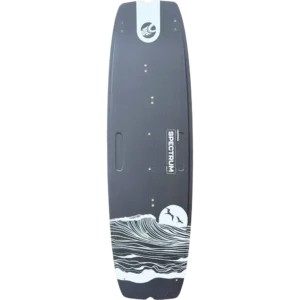
Cabrinha Spectrum 2026: 5 sizes from 136×41 to 152×44; no published weight. Xenon Rayo: 3 sizes from 134×41 to 145×44; 2.40 to 2.65 kg; so the same price. The Cabrinha goes bigger in size (152 cm), the Xenon publishes its weight.
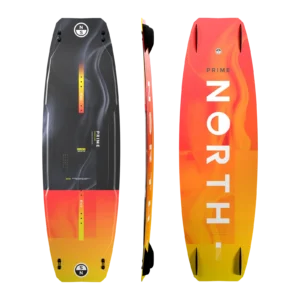
North Prime 2026: 6 sizes from 136×40 to 152×45; no published weight. Xenon Rayo: 3 sizes from 134×41 to 145×44; 2.40 to 2.65 kg
Lieuwe Awesome: 3 sizes from 134×40 to 145×43; 2.30 to 2.90 kg. Xenon Rayo: 3 sizes from 134×41 to 145×44; 2.40 to 2.65 kg. In the large size, the Rayo is lighter (2.65 kg versus 2.90 kg).
Still torn between several boards? Read the guide: choosing your kiteboard: type, size and level.
Three sizes: 134×41 (2.40 kg), 137×42 (2.50 kg) and 145×44 (2.65 kg), approximate weights of the board only. Xenon gives neither a recommended rider weight nor a wind range.
The board comes with G10 fins, washers, screws and a handle. SUPREME pads and straps and a recycled bag are available as options. It comes in three sizes. For the price, see the “Where to buy” section of this page.
That’s its calling: Xenon presents it as its most accessible board, with a medium-low rocker and a soft flex. No test of the current Rayo confirms it.
If you’re learning, the Rayo: lower rocker, softer flex. If you already ride and want more pop and a bit of freestyle, the Laluz: medium rocker, moderate flex, Basalt construction.
Xenon keeps its “RAYO (24/25)” page online on November 11, 2026, with two sizes: 137×42 and 145×45. The current Rayo adds a 134×41 and brings the large size down to 145×44.
This page brings together the technical specs, tests from the press and blogs, and rider feedback found on the web, without rewriting any of it. When WindUnity has ridden the gear itself, the page says so with the “WindUnity test” badge.
Rider reviews are published as is, with their date. Reviews tied to a brand or based on loaned gear are labeled and excluded from the average.
Data collected mid-November 2026
Press and specialist sites : IKSURFMAG
Others : Xenon