Skip to content
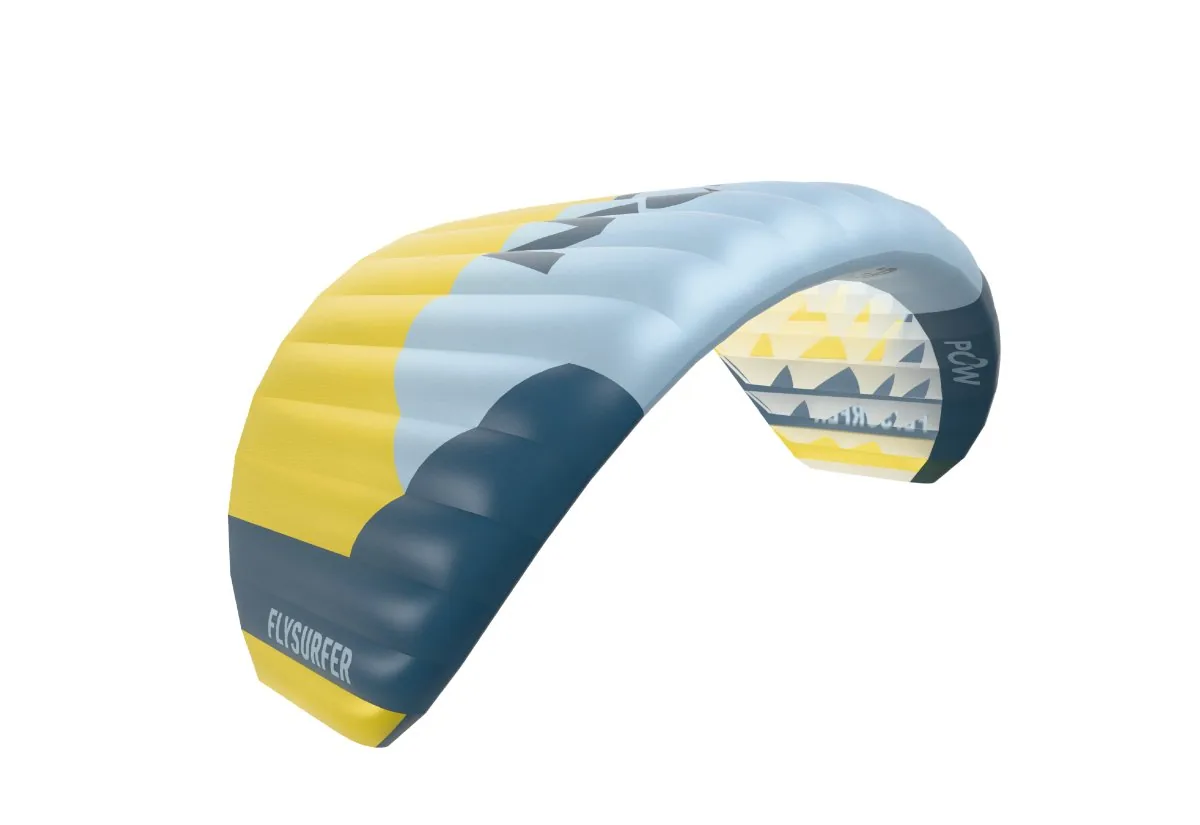
Flysurfer POW 2 (parawing) 2026 wing foil wing, product only on a plain background
Flysurfer POW 2 (parawing) 2026, manufacturer visual · © Flysurfer
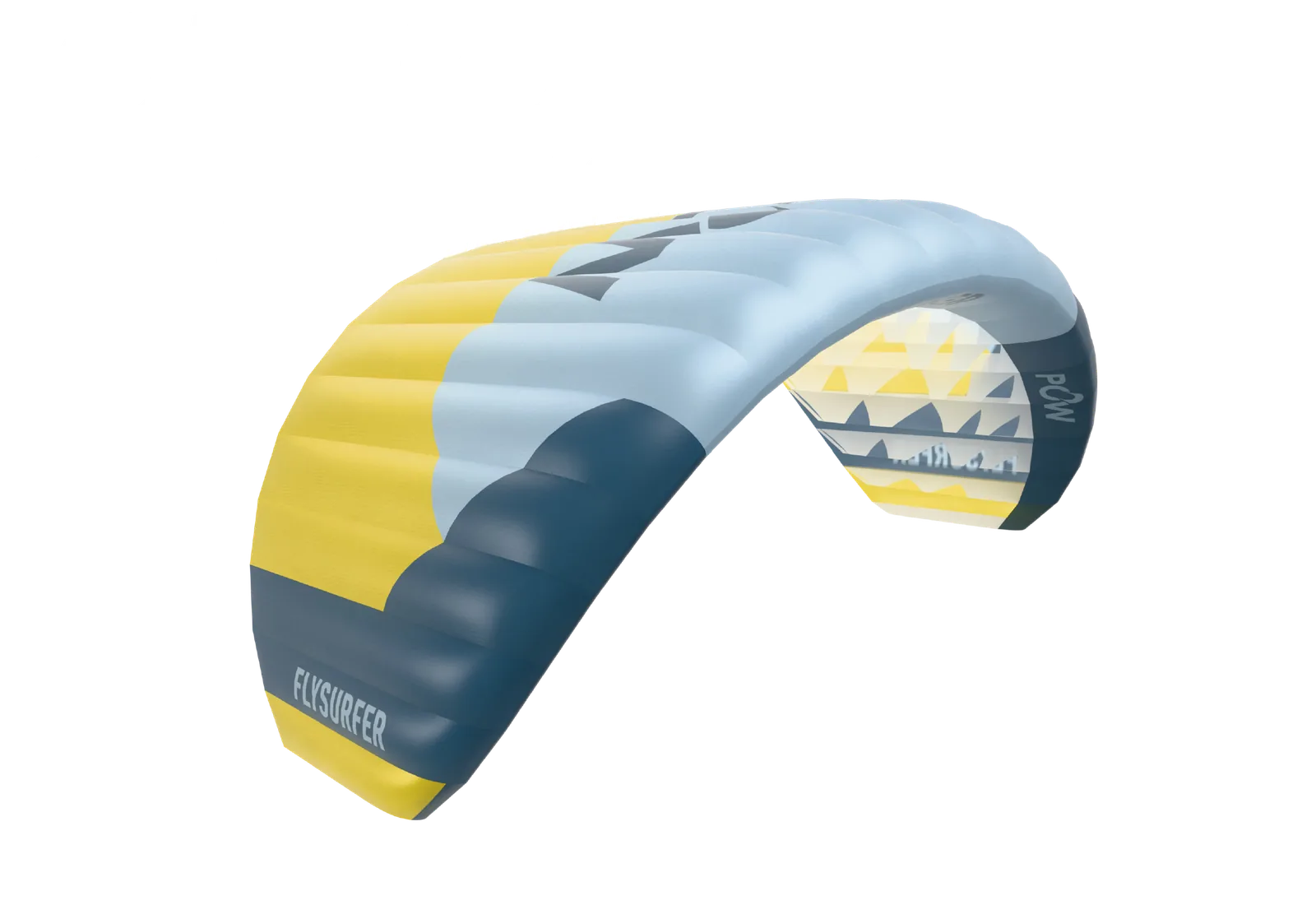
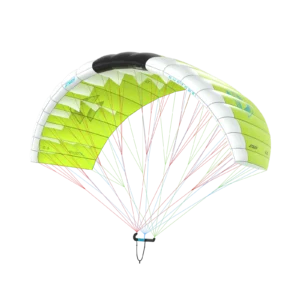
Flysurfer POW² parawing seen from three-quarters on a white background, yellow, light blue and teal canopy, with no lines or bar
The POW² in a studio render, without lines or bar · © Flysurfer
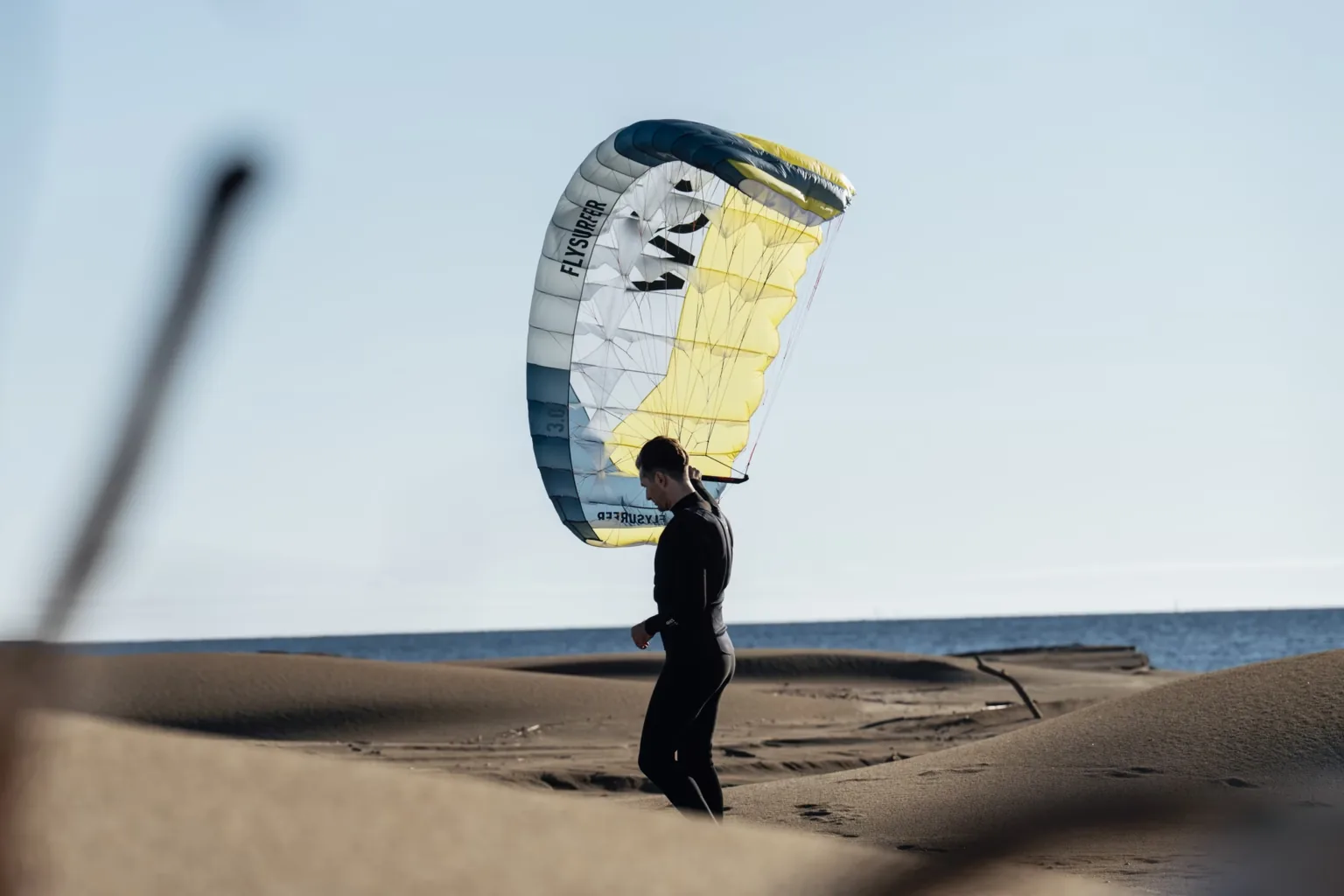
Rider in a black wetsuit walking on a beach facing the sea, a white, yellow and teal Flysurfer parawing behind him
The POW² on the beach, before launching · © Flysurfer
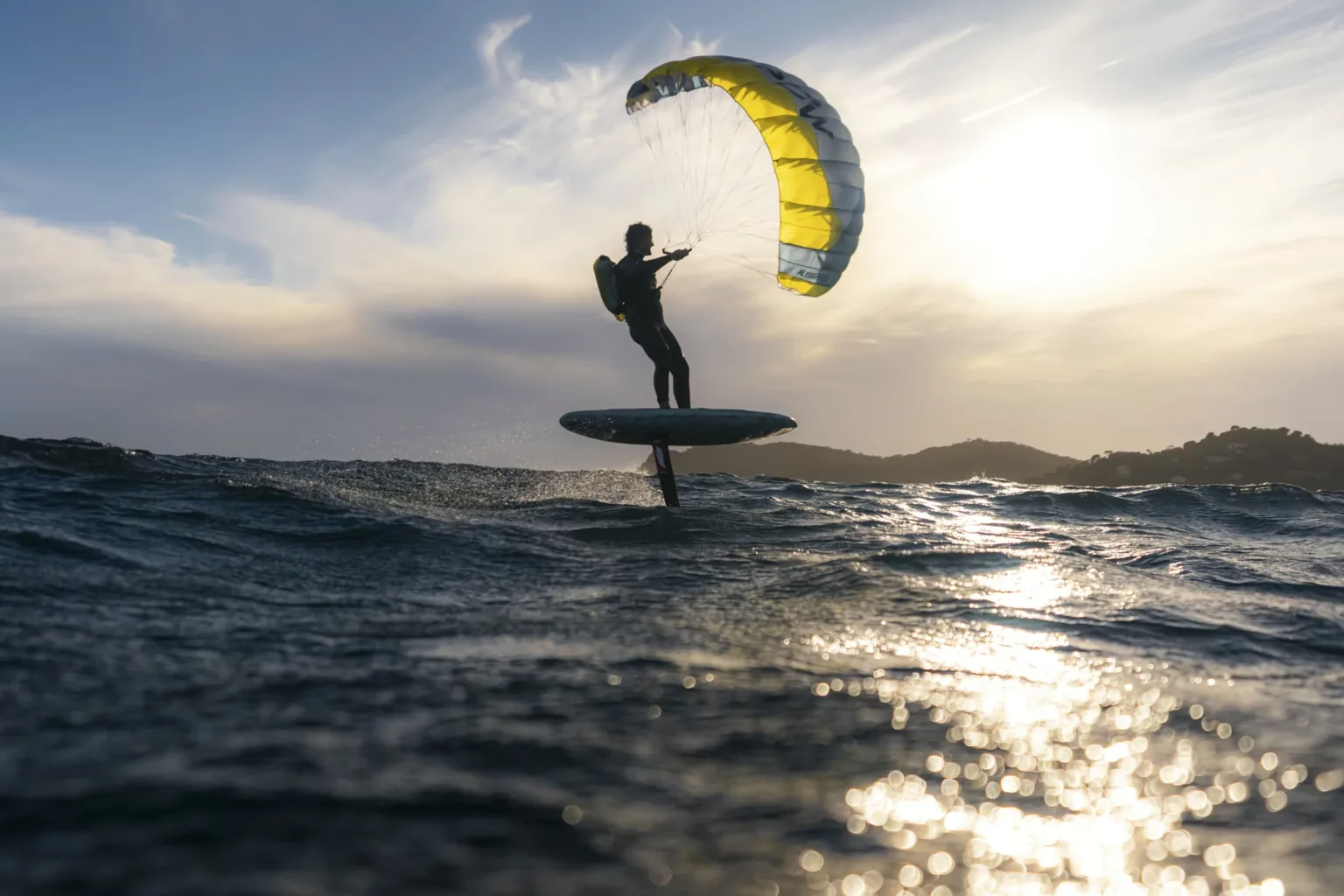
Rider on a foil against the light, holding a yellow and gray Flysurfer parawing at the end of his lines, hilly coast in the background
The POW² in flight, against the light · © Flysurfer
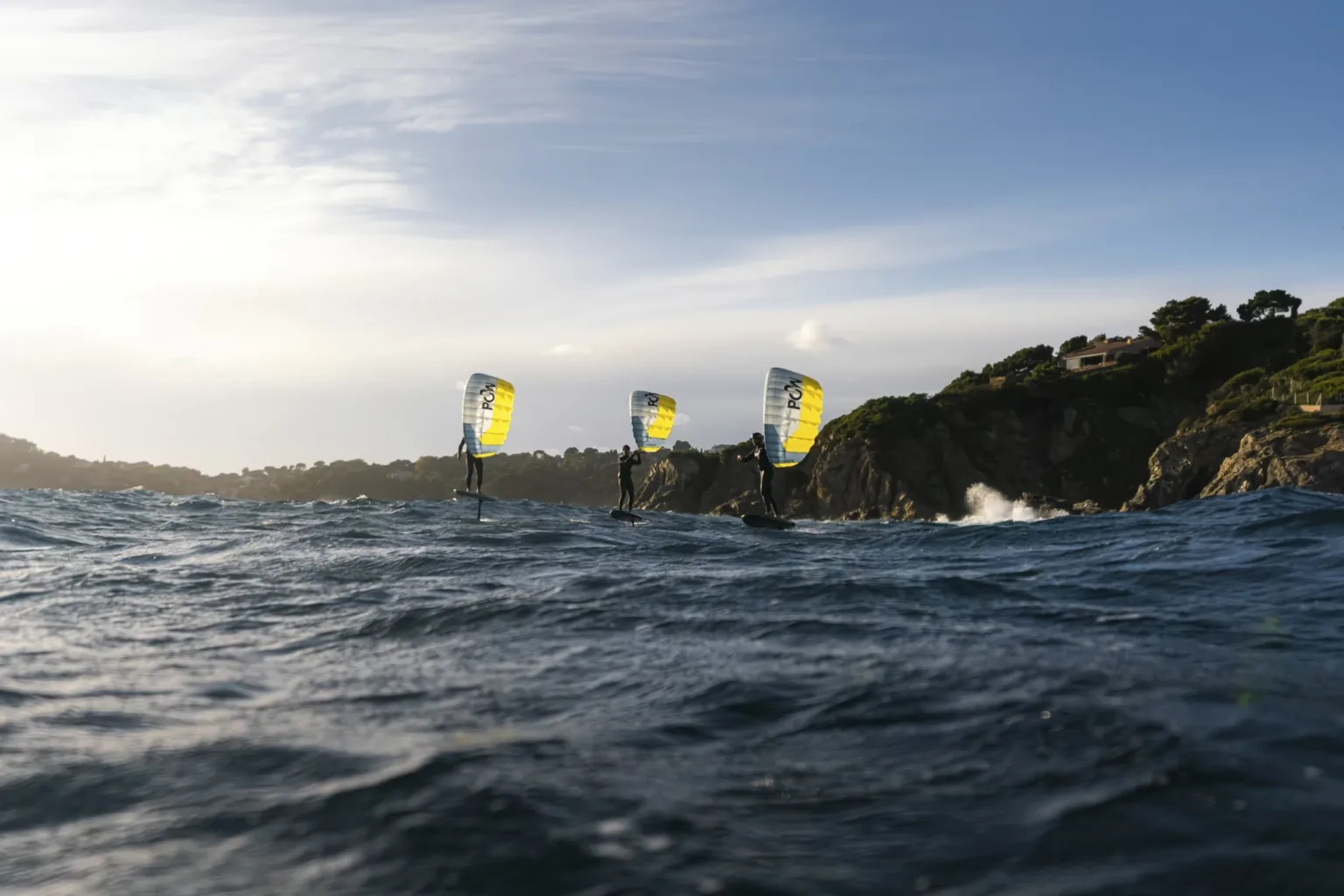
Three riders on foils in a row on a choppy sea along a rocky coast, each under a yellow Flysurfer parawing
A session with three riders on the POW², along a coast · © Flysurfer
Flysurfer

Flysurfer POW 2 2026 parawing test

  • Riding styleParawing, downwind, wave
  • Sizes1.7 to 5.5 m²
  • Wind10 to 35 knots
  • Year2026

Verdict in brief

Flysurfer’s single-skin parawing, second generation of the POW: plenty of grunt in the low end of the wind range, short bridles that fold up in one armful and a backpack in the box. The point to watch is the depower at the high end of the wind range, noted by The Inertia and by Hadou Brunner. Five sizes from 1.7 to 5.5 m².

One published test (The Inertia, October 29, 2026), one retailer review (MACkite) and two videos known only through summaries (Hadou Brunner, Freeride Attitude); neither the bar length nor the wingspan is published.

For you if

  • You already know how to foil and want a wing that gets you out of the water when the wind is soft: The Inertia ranks its low end among the best of the 2026 generation, and Tucker (MACkite) got up easily on the 4 m² on a day when he would otherwise have ridden 5.0 and 5.6 m² wings
  • You fold your wing constantly when downwinding: bridles from 105 cm (1.7 m²) to 189 cm (5.5 m²), an 18 L backpack included, and Hadou Brunner notes lines that bundle up in one armful up to the 4 m²
  • You were coming from the POW and missed some sizes: the 2.3 and 3.0 m² fill the gap between the 1.7, the 2.5 and the 4 m² of the V1

Not for you if

  • You often ride in strong, gusty wind and don’t want to touch the bridle setup: The Inertia ends up hanging off the front of the J, Hadou Brunner can no longer hold on in the 4 m², and his fix (the C lines on a small pulley) departs from the original setup
  • You’ve never ridden a foil: GlissEvolution (October 15, 2026) points to the inflatable wing for learning, with the parawing coming afterwards
  • You want a performance wing to go far upwind: GlissEvolution points to the Zap, Flysurfer’s double-skin, which points higher but folds more slowly

Have you ridden this model? Leave the first review

What we know about this model

Our method
  • Specificationschecked early November 2026
  • 1 test publishedThe Inertia, “The Best Parawings for Foiling / The Inertia Tested” (October 29, 2026): section on the POW2 read in full on November 6, 2026 (size tested not specified)
  • Rider reviewsgive yours, and it will appear here

Sizes, weight, wingspan and bar length

Sizes, weight, wingspan, wind range and bar length
SizeWing weightWind
1.7 m²0.44 kg22 – 35 knots
2.3 m²0.51 kg20 – 32 knots
3 m²0.58 kg17 – 28 knots
4 m²0.7 kg14 – 23 knots
5.5 m²0.84 kg10 – 20 knots

Wind ranges in knots, with no reference rider: shift them according to your weight, your foil and your level. MACkite advises going down 0.5 to 1 m² from your other parawings.

More details on these figures

Wind ranges in knots read from the chart on the Flysurfer page (checked November 6, 2026); the chart extends the 1.7 m² with a dotted line past 35 knots and does not specify a rider weight. Weight and bridle length (105 to 189 cm, in the specs) given by Flysurfer for each size; Flysurfer does not say what the weight includes. Bar length and wingspan not published.

Strong points, weak points

Strong points

  • Strong low end: MACkite compares the 4 m² to some 5 m² on the market, The Inertia ranks it among the best grunts of 2026
  • Five sizes from 0.44 to 0.84 kg, with the 2.3 and 3.0 m² on top of the V1’s sizes
  • Short bridles, marked with three colors: few knots when folding, and a wing that falls can be relaunched with an arm movement (Hadou Brunner)
  • A complete package: 18 L backpack, carbon J-handle, soft harness line, repair kit

Weak points

  • The depower first: The Inertia ends up hanging off the front of the J when overpowered, and Hadou Brunner finds it a step back from the V1
  • High end held back for a 4 m²: MACkite judges it weaker up there than faster 4 m² wings and advises treating it like a 5 m²
  • Neither bar length nor wingspan published; the wind range exists only as a chart, with no reference rider
  • The supplied backpack has its flaws for MACkite: it isn’t waterproof, it fills with water if you lose your board, and the harness line is limp

The flaw to know about. The depower at the high end of the range. Flysurfer advertises soft depower and excellent stability in gusts, but The Inertia had to hang on to the front of the J when overpowered, and Hadou Brunner, in a 4 m² in strong, gusty wind, could no longer keep his hands on the front of the bar. He finds the depower a step back from the V1 and gets it back by moving the C lines onto a small pulley (four to five minutes); GlissEvolution has not tested this modification and points out that a modified wing departs from the original setup, warranty included. Freeride Attitude, on the contrary, describes easy depower, by sliding the harness line along the bar.

Model evolution

What changes vs the POW (V1)

  • Color-coded bridle lines
  • Shorter bridles and a more compact J-handle
  • Reduced weight
  • Finer size steps: 1.7 / 2.3 / 3.0 / 4.0 / 5.5 m²
  • New “mixer line”

Specifications

13 specs, sources at the bottom of the page

Program (manufacturer)
Single-skin parawing (“pop out wing”) for downwind, surf and drifting, “Entry - Professional” level on the Flysurfer page
Construction
Ultra-light single-skin fabric, short color-coded bridles, new “mixer line”, compact carbon J-handle. Aspect ratio of 2.9 on all sizes
Sizes
1.7, 2.3, 3.0, 4.0 and 5.5 m²
Wind range (knots)
1.7 m²: 22-35 (extended with a dotted line past 35); 2.3: 20-32; 3.0: 17-28; 4.0: 14-23; 5.5: 10-20. Flysurfer does not specify the reference rider weight
Weight (kg)
0.44 (1.7 m²), 0.51 (2.3), 0.58 (3.0), 0.70 (4.0), 0.84 (5.5); Flysurfer does not say what this weight includes
Bridle length
105 cm (1.7 m²), 122 (2.3), 139 (3.0), 161 (4.0), 189 (5.5)
Bar
Carbon J-handle, soft harness line included; handle length: n/a (Flysurfer does not publish it)
Supplied with
POW² wing, Parawing Backpack, carbon J-handle, soft harness line, safety guide, repair kit
Backpack
18 L, fits parawings up to size 6.5, roll-top closure, mesh drainage, hydration-bladder-compatible compartment, smartphone and line-cutter pockets
Colorways
Mellow Yellow and Dark Turquoise
Flysurfer reference
FKPW2
Wingspan
n/a: Flysurfer does not publish the wingspan by size (checked November 6, 2026)
Release date
May 29, 2026 (“Out now: POW² and ZAP” on the Flysurfer site, film dated May 28, 2026)

What the published tests say

1 test published, checked early November 2026

The Inertia, “The Best Parawings for Foiling / The Inertia Tested” (Bowen Dwelle and Will Sileo, October 29, 2026)

Parawing comparison guide. The POW2 is ranked in “Best of the Rest”. For The Inertia, it’s “a solid performer” with plenty of grunt in the low end, one of the best of the new generation, and “a rocket upwind” when it’s well within its range. Against: the depower is hard to meter with the handle, The Inertia ends up hanging off the front of the J when overpowered and thinks a center of pull slightly further back on the bar would be more pleasant at the high end. The V1 was one of the best of the 2025 edition; the POW2 shortens the lines, removes the pulley and shortens the handle. The supplied backpack is cited among the best they’ve seen. The Zap, double-skin, has not been tested yet (translated from English).

Read the test
Articles from shops and schools (3), not counted as tests

These articles come from sites that sell or rent gear: they are cited for information and kept separate from published tests.

MACkite (US retailer), “Flysurfer POW 2 Parawing Review” (Tucker Vantol, July 3, 2026)checked on 06/11/2026

Retailer review, 4 m². Powerful wing, easy to fly and stable; bridles among the shortest on the market. The 4 m² has as much grunt as some 5 m²: choose one 0.5 to 1 m² smaller than on your other parawings. Decent high end if you treat it as a 5 m², but behind faster 4 m² wings. Good for riders starting out in parawing and for downwind; the supplied backpack isn’t waterproof and fills with water, the harness line is limp (translated from English).

Hadou Brunner (YouTube), “FLYSURFER POW V2 - LA PARAWING MONOPEAU (PRESQUE) PARFAITE !” (September 25, 2026, 22 min): written account published by GlissEvolution on October 8, 2026checked on 06/11/2026

Video: everything below comes from GlissEvolution’s account. He rode the 2.3, 3 and 4 m² (not the 1.7). Short lines up to the 4 m², which bundle up in one armful, hand sensitivity almost gone, a 4 m² that takes off from 12 to 13 knots with light-wind gear. Weak point: the depower at the high end of the range has gone back compared with the V1; he corrects it with the C lines on a small pulley. GlissEvolution states that it has not ridden the POW 2 (translated from French).

Freeride Attitude (YouTube), “Test de la Flysurfer POW 2 ! Simple mise à jour ou vraie évolution” (August 23, 2026, 2 min 59)checked on 06/11/2026

Video: description and a few lines of transcript only. The channel notes the quick folding, the J-handle with no wrist fatigue and easy depower by sliding the harness line. He tried the 5.5 m² in very light wind and the 4 m² between 15 and 25 knots; he finds it powerful and accessible, “not the highest-performing wing on the market today” but suited to those starting out in parawing (translated from English).

Rider feedback collected from the web (1)

Feedback found on the web, reworded. Never published as site reviews. Sample of 1 seller’s message on the Progression Project forum (July 28, 2026). Reddit and forum searches on November 6, 2026: nothing else usable on the V2.

Progression Project, forum, listing “Flysurfer POW V2 4.02026-07-28

Member “bbqdsunfish” (Oahu), selling his 4 m² after about five sessions; he liked the POW V1s but now prefers the D-handle of his BRM S3

In his listing he writes that it’s “possibly the easiest parawing to tack” and that tacks are very easy too (seller’s message).

Riders’ reviews

No reviews

No reviews yet.

Nobody has reviewed this gear yet. Do you use it? Help other riders of your weight — 2 minutes.

Leave your review (2 minutes)

Three screens: you, the gear, your review. Your email will never be published; it is only used to confirm that the review comes from a real person.

1/3 You

Only used to confirm your review and to let you know if it is rejected. Never displayed, never resold.

Your weight *

10 kg ranges only, so that other riders of your build can relate. No exact weight is recorded.

Your level *

Beginner: I’m still taking lessons. Intermediate: I ride on my own. Advanced: transitions and jumps. Expert: freestyle, wave or competition.

Your riding

Optional. If checked, your review stays published with the label “Gear received or tied to a brand” and doesn’t count toward the average rating.

You must be at least 15 to post a review (“Your data” article of the policy).

2/3 Your gear and how you use it
Wind range actually used (knots)
How long you’ve been using it *
Number of sessions (optional)
Rate each criterion (at least 3) *
Low-wind power
Stability / gusts
Steering & weight in hand
Handles & lines
Finish & durability

1 = very poor, 5 = excellent. Leave blank any criterion you couldn’t judge.

Do you recommend it? *
3/3 Your review

140 characters minimum — How it handles, its power and stability, what disappointed you, who you’d recommend it to.

Rider reviews: confirmed email address, no compensation. “Brand-linked” and “loaned / received” reviews are labeled and excluded from the average. Each review shows its publication date, the date of the experience and, if it was edited, its update date. A review is published or rejected within 7 days at most; if it is rejected, you receive the reason by email and you can correct it. You can complete or delete your review at any time from the email address used to submit it. How do reviews work?

Alternatives to compare

F-One Frigate V2 2027

F-One performance parawing: nine sizes from 2 to 6.5 m² bar length published by size. The Inertia ranks the Frigate V2 among the best single-skins for VMG and the POW2 in “Best of the Rest”. In 4 m², the Frigate V2 gives 16 to 32 knots and the POW 2 14 to 23 knots.

Duotone Stash 2026

Duotone single-skin parawing: six sizes from 2.2 to 5.6 m² hook bar. In 4 m², the Stash weighs 0.693 kg with its handle. The Inertia finds the Stash solid with no standout strength, and the POW2 very strong in the low end but hard to meter in depower.

F-One Quest 2026

F-One’s other parawing, designed for the low end and easy access: 2 to 6 m² 17 to 28 knots in 4 m² versus 14 to 23 for the POW 2. The Inertia cites the Quest and the POW2 among the best grunts tested; GlissEvolution reminds readers that any parawing assumes you already know how to foil.

Flysurfer Zap

Flysurfer’s double-skin parawing, released with the POW 2: GlissEvolution suggests it for going very far upwind before a long downwind, pointing higher but folding more slowly than the POW 2. The Inertia has not tested it yet. Sizes and prices: n/a (not checked).

Frequently asked questions

Flysurfer POW or POW 2: what changes?

The POW 2 has shorter, color-coded bridles, a more compact J-handle, reduced weight, closer size steps (1.7, 2.3, 3.0, 4.0 and 5.5 m²) and a new “mixer line”. The Inertia also notes the removed pulley. Hadou Brunner finds the wing more forgiving of hand placement, but its depower at the high end of the range has gone back compared with the V1 (checked November 6, 2026).

Is the POW 2 suitable for a parawing beginner?

You already need to know how to foil. Flysurfer places it from “Entry” to “Professional”, MACkite finds it very good for those starting out in parawing, but GlissEvolution points to the inflatable wing for learning to foil. The high end of the range needs attention: The Inertia and Hadou Brunner both note depower set back there.

Which POW 2 size should you choose?

Flysurfer gives the wind range by size: 1.7 m² from 22 to 35 knots, 2.3 from 20 to 32, 3.0 from 17 to 28, 4.0 from 14 to 23 and 5.5 from 10 to 20, with no reference rider weight. MACkite advises going down 0.5 to 1 m² from your other parawings: its 4 m² has as much grunt as some 5 m². Hadou Brunner gets the 4 m² going from 12 to 13 knots with light-wind gear.

Which sizes does the POW 2 come in, and what comes with it?

It comes in five sizes: 1.7, 2.3, 3.0, 4.0 and 5.5 m². The wing comes with the handle, the 18 L backpack and the harness line; the ESCAPE Harness waist harness is optional. For the price, see the “Where to buy” section of this page.

POW 2 or Zap?

The POW 2 for surf, freefly and quick folds; the Zap, in double skin, for going far upwind before a long downwind, with higher pointing but slower folding, according to GlissEvolution. Flysurfer presents the two as distinct concepts. The Inertia has not tested the Zap yet.

Is there a test of the POW 2?

Yes, one: The Inertia’s guide of October 29, 2026, which ranks it in “Best of the Rest”. MACkite published a retailer review (July 3, 2026). Two videos exist (Hadou Brunner on September 25, 2026, Freeride Attitude on August 23, 2026), known here through an account or a description and not counted. No review has yet been posted on WindUnity.

Method and limitations of this page

This page brings together the technical specs, tests from the press and blogs, and rider feedback found on the web, without rewriting any of it. When WindUnity has ridden the gear itself, the page says so with the “WindUnity test” badge.

Rider reviews are published as is, with their date. Reviews tied to a brand or based on loaned gear are labeled and excluded from the average.

What’s still missing

  • Bar length and wingspan by size: not published by Flysurfer
  • Reference rider weight for the wind ranges: not specified by Flysurfer
  • What the displayed weight includes (wing alone or with handle): not specified
  • Size tested by The Inertia: not specified
  • Range and price of the POW (V1): not checked at Flysurfer, the page no longer exists
  • Rider reviews on WindUnity (N2): none

Sources

Data collected early November 2026

Flysurfer : 2 product pages, 2 videos from the brand

Shops : MACkite, GlissEvolution

Press and specialist sites : The Inertia

Forums and riders : Progression Project

Others : F-One, a video YouTube

See the details of the 11 sources

Flysurfer

  1. YouTube, FLYSURFER Kiteboarding, POW² - Pop it out
  2. YouTube, Hadou Brunner, Flysurfer POW V2

Shops

  1. MACkite, Flysurfer POW 2 Parawing Review
  2. GlissEvolution, Flysurfer POW 2 2026 test (FR)
  3. GlissEvolution, Wing or parawing (EN)

Press and specialist sites

  1. The Inertia, The Best Parawings for Foiling

Forums and riders

  1. Progression Project, Flysurfer POW V2 4.0

Others

  1. YouTube, Freeride Attitude, Test de la Flysurfer POW 2
  2. F-One, official Quest page (EN)