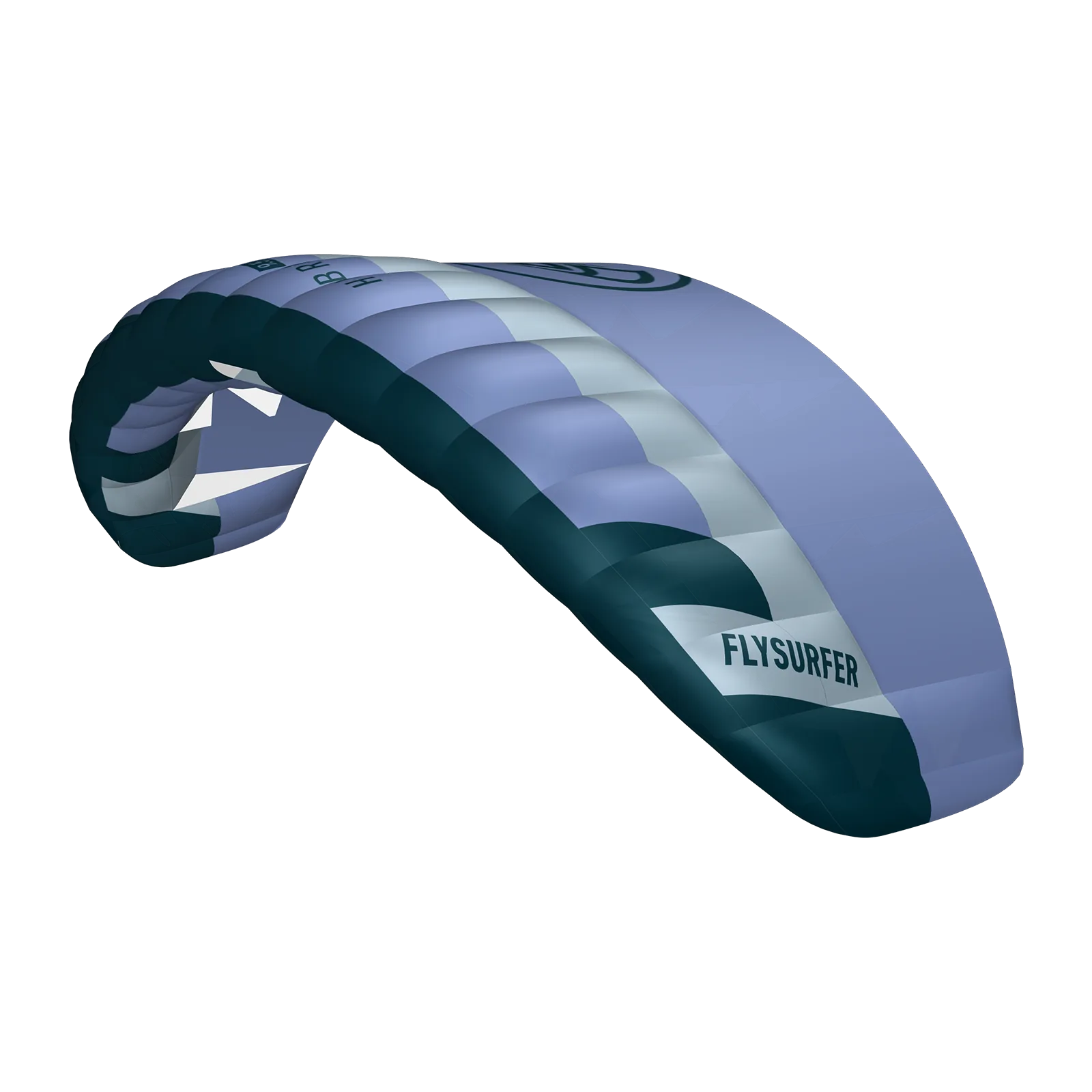
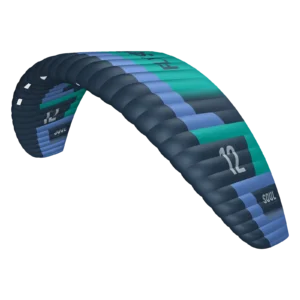
The Hybrid² (V2) is in the Flysurfer catalog; the Hybrid (V1) is no longer listed there (as of October 27, 2026). The data below does describe this model.
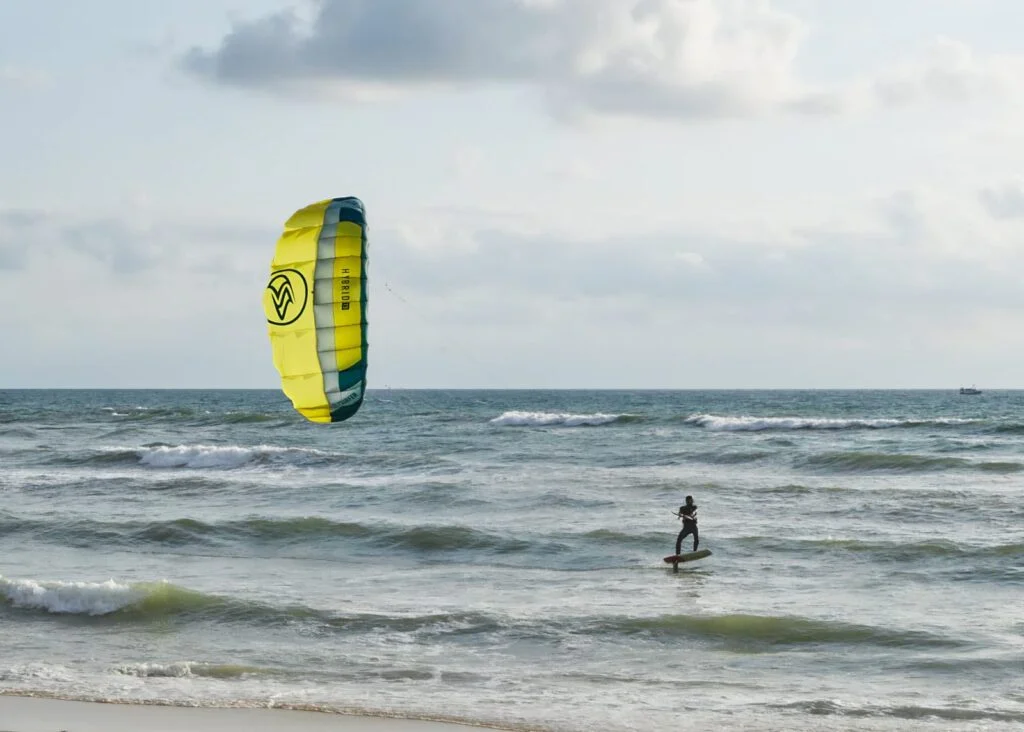
I recommend it for kitefoiling in light wind and drift: it’s a hybrid foil kite (half single-skin, half double-skin), light, that doesn’t collapse and relaunches easily. One press test and several riders describe it as a light-wind and drift kite, not one for jumping, and I wouldn’t pick it for that. It is no longer in the Flysurfer catalog: the Hybrid² has taken its place.
You want a compact kite for traveling and foiling in light wind: I recommend it, Flysurfer presents it as a progression and travel tool, and the Ridersguide test says it’s usable from 5 knots
You foil in waves or downwind and want a kite that drifts: for a Seabreeze rider (January 2026), the V1 “floats like a helium balloon”
You ride on a lake where the wind is uneven: a Tubeless Kite rider (January 2026) judges it “glued to the ceiling”, stable in wind shadows
Not for you if
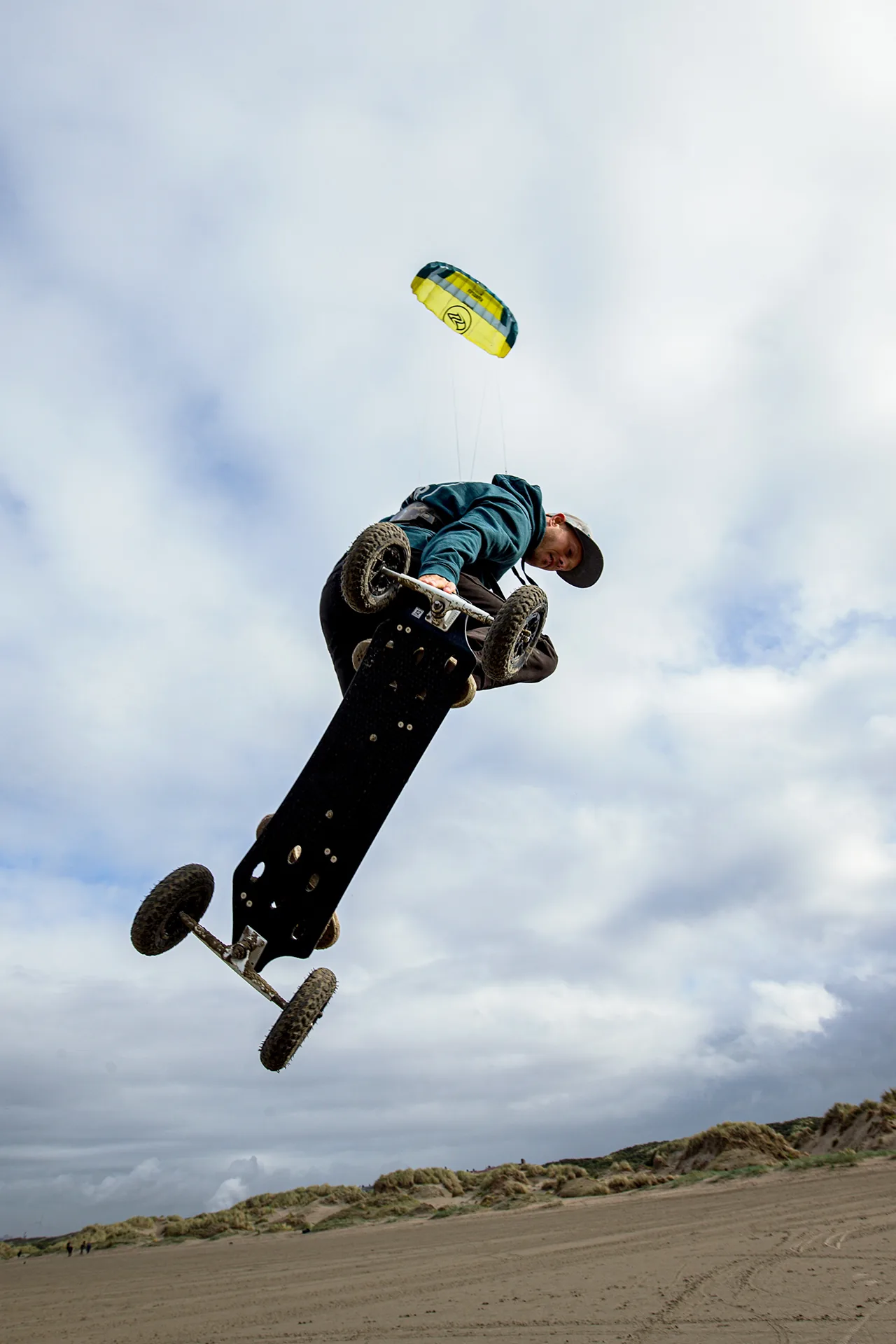
You want hangtime and jumps: forget it, for Ridersguide “it’s not a jumping and hangtime monster”, and it points to the brand’s Soul and Sonic
You want maximum upwind performance: I wouldn’t pick it, one rider finds it less efficient upwind than a Peak (Seabreeze), and the V2 points higher
You want the latest model: get the Hybrid², which comes in 3 to 12 m²
Wind ranges read from the chart, where only the main ranges are quantified. Kite-only weight, without bar. Lines: maximum length (14 to 21 m when a range is given).
More details on these figures
Wind ranges read from the official Flysurfer chart (Wayback archive, “KTS” bars from 0 to 40): only the main ranges are quantified; the extensions shown in a lighter shade are not. Projected area, flat wingspan, aspect ratio, number of cells, bar and line lengths (the line length is the maximum length; when Flysurfer gives a range, it runs from 14 to 21 m): official Flysurfer technical table for the HYBRID V1 (Wayback archive of December 12, 2025). Kite-only weight (without bar): “weight kite only” table reproduced by the retailer Varuste.net in its Hybrid presentation (Flysurfer text “Is the HYBRID or PEAK lighter?”, not found on flysurfer.com), checked on October 31, 2026. Ridersguide cites 920 g for the 7.5 m², versus 0.94 kg in this table (a 20 g difference): the value from the full table is used. Hybrid² weight for comparison: 0.56 to 1.56 kg (official page).
Strong points, weak points
+ Strong points
The 7.5 m² weighs 920 g, less than half the weight of an inflatable kite: very light (Ridersguide)
It has a reputation for relaunching very simply and flying stable, without a pump (Ridersguide, Oaseforum, Seabreeze): for a recreational rider, that’s what I look for first
Very pronounced drift in foil, made for small waves (Flysurfer, Seabreeze)
− Weak points
It points less upwind than a Peak or the Hybrid² (Seabreeze)
It needs wind in 2.5 and 3.5 m²: 65 kg riders only take them out above 8 to 12 knots (Seabreeze)
A V1 rider (Tubeless Kite, January 2026) says the trailing edge flaps and the seams can delaminate if the kite is overpowered
The flaw to know about. In my view, its real flaw: the V1 is not made for jumping, Ridersguide says it has no hangtime. A V1 rider adds that it flaps and can delaminate at the trailing-edge seams when overpowered (Tubeless Kite, January 2026).
Specifications
10 specs, sources at the bottom of the page
Technology
Hybrid foil kite: about 50% of the surface in single-skin, the rest in double-skin, first wingtip cells closed (manufacturer, IKSURFMAG interview)
0.92 kg for the 7.5 m² (only value recorded); manufacturer table not found for the other sizes
Canopy
TX-Light and DLX+ canopies (manufacturer interview); anti-UV fabrics with an airtight, hydrophobic coating (official page)
Adjustment
Performance tuner: knot scale on the C pulley to change camber, bar pressure and power at the low end of the range
Safety
Front line safety system: the kite flags out on a single front line; two crossed lines mandatory on the bridle
Wind range
8 to 32 knots across the range depending on size (read from the official chart; reference rider not specified on this chart)
Retail price
Brand: not recorded, the V1 is no longer in the official catalog. Varuste.net shop (Finland, displayed sizes unavailable): from 2.5 m to 11.5 m, VAT included, kite only, checked on November 8, 2026
What the published tests say
1 test published, checked late October 2026
Ridersguide.nl (Access magazine #1, 2023)
Test of a light-wind kite for kitefoil: the 7.5 m² weighs 920 g, flies from 5 knots, drifts very well and turns slightly tighter than a Peak. Not a jumping or hangtime kite, but transitions, frontrolls and backrolls go through without a problem. The magazine states 60% single-skin, Flysurfer 50%.
I found this feedback on the web and reworded it; it is never published as site reviews. Likely bias: forums of enthusiast foilers, and one of the authors sells Flysurfer equipment.
Oaseforum (German forum)2022-11
“Heavyweight” rider; Hybrid 7.5 m²; compares it to a 13 m² from another manufacturer
The kite lifts off from about 10 knots, develops a lot of force on the starting loop, then gives what he needs; he finds it almost fades into the background.
Oaseforum (German forum)2022-11
Hybrid 7.5 m² tested side by side with an 8 m² Peak 5; foil
Power equal to the Peak, even greater, more stable at the zenith and a rounder turn; in foil, it gets going just under 10 knots.
Seabreeze (AU forum)2026-01
65 kg, 840 cm² foil, Hybrid V1 2.5 and 3.5 m² then V2 3 and 4.5 m²; also sells Flysurfer kites
With the V1 he uses the 2.5 m² from 12 to 30 knots and the 3.5 m² from 8 to 15 knots; less force than a Peak to get out of the water, less efficient upwind, but unmatched drift, easy relaunch. The V2 points higher, with a slightly more loaded bar near the edge of the window.
Tubeless Kite (French forum)2026-01
Rides 90% on lakes, owns V1s and V2s; profile weight 68-70 kg
The V1 is “glued to the ceiling” and stable even in big wind shadows, useful near trees; in return it flaps and can delaminate at the trailing-edge seams if overpowered. The V2 fixed the V1’s flaws without changing the power, with about 50 cm² more per size.
On video
HYBRIDfoilingChannel : FLYSURFER Kiteboarding · posted on 22 May 2023
Photos
Original images from the page
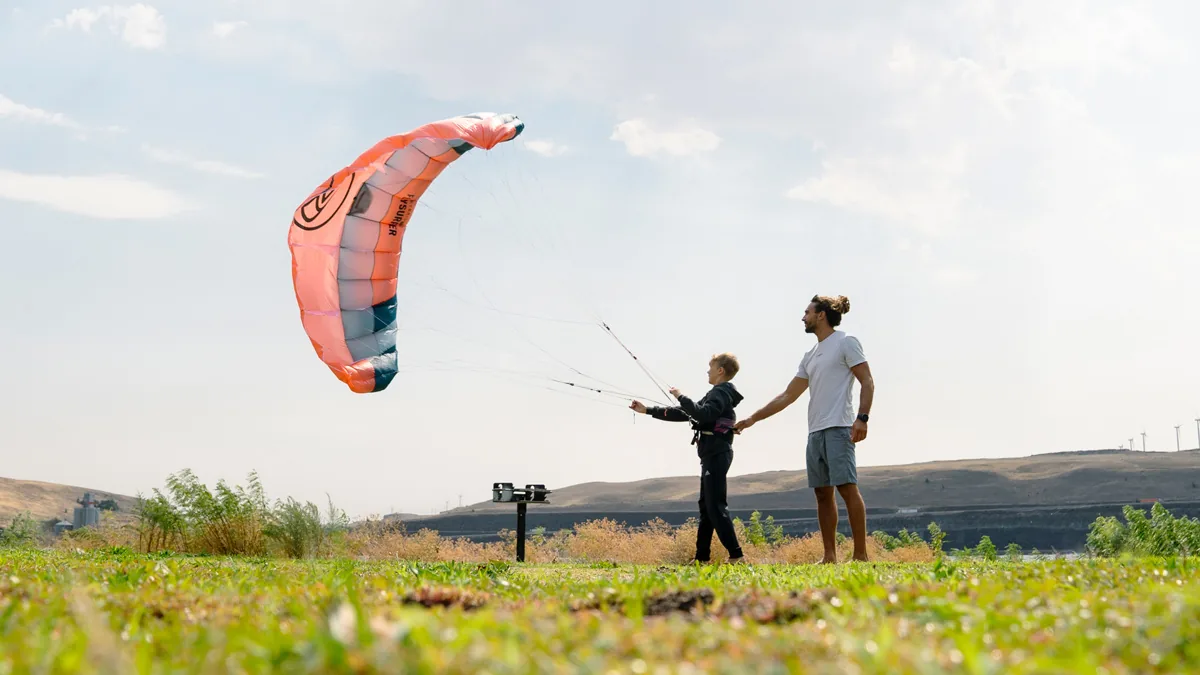
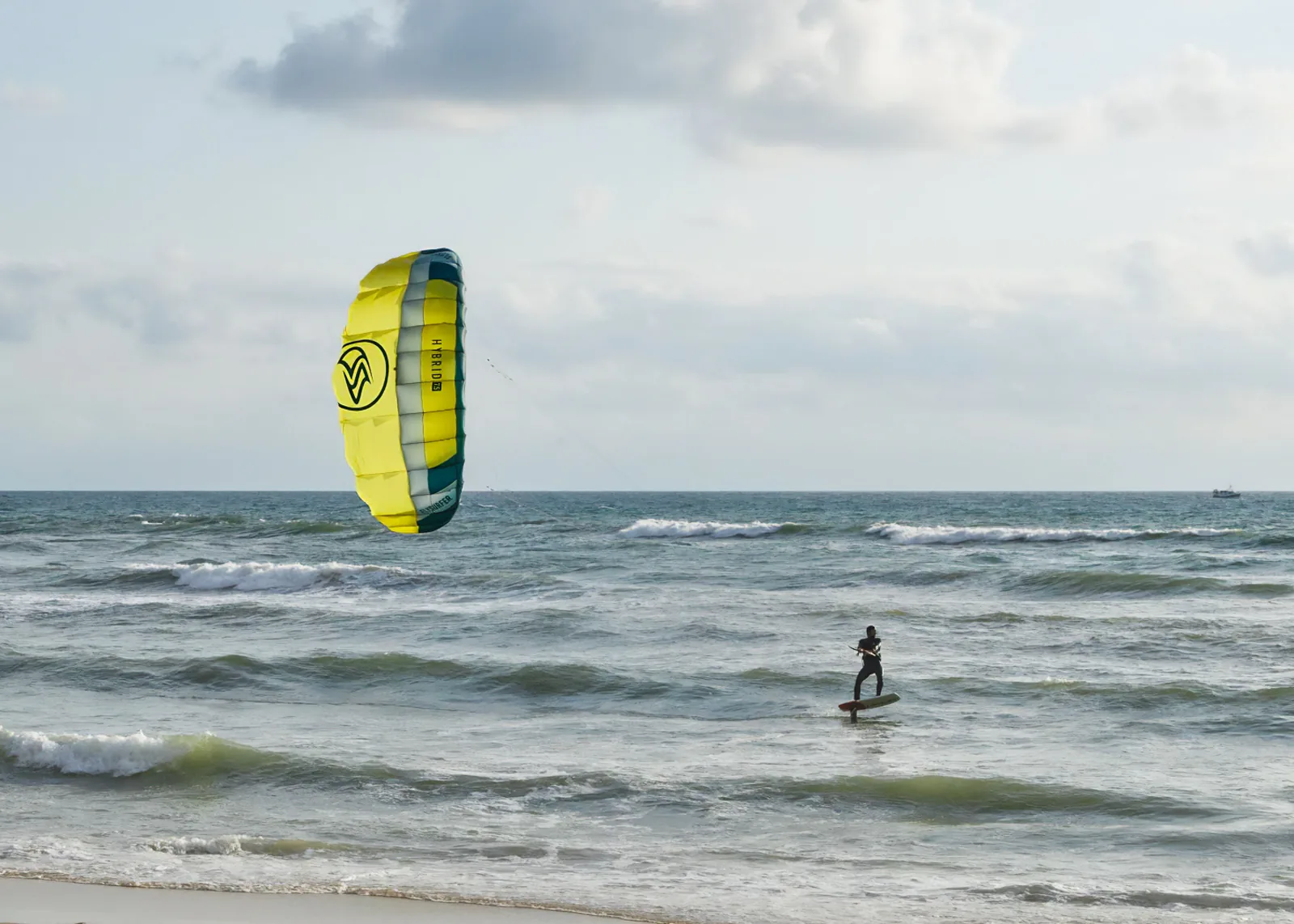
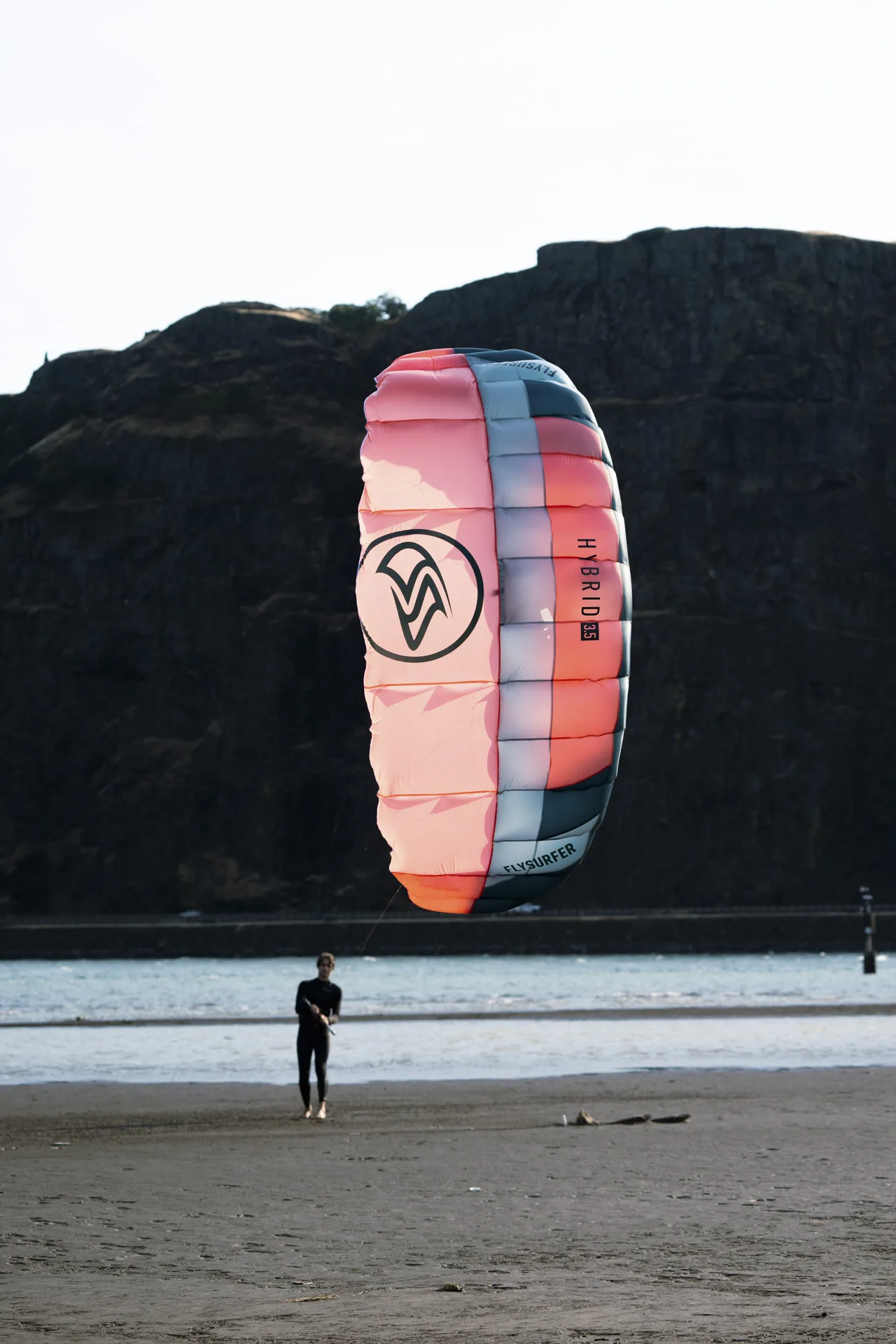
Hybrid de Flysurfer, ambiance de session.Hybrid de Flysurfer, ambiance de session.
Riders’ reviews
No reviews
No reviews yet.
Nobody has reviewed this gear yet. Do you use it? Help other riders of your weight — 2 minutes.
Leave your review (2 minutes)
Three screens: you, the gear, your review. Your email will never be published; it is only used to confirm that the review comes from a real person.
Rider reviews: confirmed email address, no compensation. “Brand-linked” and “loaned / received” reviews are labeled and excluded from the average. Each review shows its publication date, the date of the experience and, if it was edited, its update date. A review is published or rejected within 7 days at most; if it is rejected, you receive the reason by email and you can correct it. You can complete or delete your review at any time from the email address used to submit it. How do reviews work?
Its direct successor: 3 to 12 m², aspect ratio 3.1, 0.56 to 1.56 kg, beginner to intermediate level on the Flysurfer page, at Flysurfer (checked October 27, 2026). According to riders, it performs better upwind, with a deflation velcro on the air intake. For a shop purchase, I’d go for this one.
Fully double-skin, 6 to 18 m², 1.49 to 3.08 kg, aspect ratio of 4.9 to 5.8 versus 3.1 for the Hybrid². Riders find it has more power and jump, but it is heavier and less stable on land than the Hybrid. For jumping, I look at the Soul.
Flysurfer Peak
Flysurfer single-skin kite for snowkite and kitefoil: it goes further upwind, riders say, but it is very hard to relaunch from the water, which prompted the Hybrid (Ridersguide).
The V2 moves to 3, 4.5, 6, 8, 10 and 12 m², with an aspect ratio of 3.1 and a weight of 0.56 to 1.56 kg (Flysurfer). Riders who have both find it better upwind and less flappy, with about 50 cm² more per size (Tubeless Kite, January 2026). For a shop purchase, I’d go for the V2, the only Hybrid in the catalog.
What wind range for a Hybrid 7.5 m²?
On the official Flysurfer chart, the 7.5 m² covers 10 to 18 knots. The other sizes: 2.5 m² 18-32, 3.5 m² 15-28, 5.5 m² 12-22, 9.5 m² 8-15 and 11.5 m² 8-13 knots. Your weight, board and level shift these benchmarks.
What sizes of Hybrid exist?
For the V1: 2.5, 3.5, 5.5, 7.5, 9.5 and 11.5 m². For the V2: 3, 4.5, 6, 8, 10 and 12 m².
Is the Flysurfer Hybrid a kite for beginners?
On the Flysurfer page, it ranges from beginner to expert level, works as a school tool, relaunches easily and depowers fast. One rider notes that overpowered kites flap; the small sizes need more wind. I recommend it for starting out in kitefoil in light wind, not for learning to jump.
Are there any rider reviews of the Hybrid?
No reviews have been posted on WindUnity yet. I found 4 pieces of rider feedback (Oaseforum, Seabreeze, Tubeless Kite), summarized above and never published as site reviews.
Is there a real test of the Hybrid?
Only one published test: Ridersguide (2023). WindUnity has not tested the Hybrid, and my opinion is based on this test, the brand’s page and rider feedback. I set aside retailer pages and a manufacturer interview.
What about used?
The Hybrid V1 is no longer in the Flysurfer catalog (checked October 27, 2026); the Hybrid² has replaced it. If you’re looking for a used one, I haven’t found any sourced used price, so I’m not giving one. Check the canopy and especially the trailing edge: a V1 rider (Tubeless Kite, January 2026) says it flaps and the seams can delaminate. Also look at the condition of the lines and bar, ask the age of the kite, and fly it before you pay.
How much does a Hybrid cost?
Public price of the Hybrid V1, kite only, at Varuste.net (Finland, 25.5% VAT included), checked on November 8, 2026, for the 2.5, 3.5, 5.5, 7.5, 9.5 and 11.5 m. The shop lists these sizes as unavailable, as the V1 has left the Flysurfer catalog. The Hybrid² is listed at Flysurfer (checked October 27, 2026); see current prices in Where to buy.
Method and limitations of this page
This page brings together the technical specs, tests from the press and blogs, and rider feedback found on the web, without rewriting any of it. When WindUnity has ridden the gear itself, the page says so with the “WindUnity test” badge.
Rider reviews are published as is, with their date. Reviews tied to a brand or based on loaned gear are labeled and excluded from the average.
What’s still missing
Flysurfer technical table for the V1 (projected area, weight of each size) not found: the archive only keeps the wind chart
Reference rider (weight) for the V1 wind chart not specified on the image: values read visually, to be cross-checked
Model year: Flysurfer does not date its models, so no year is shown; released in October 2022 (Oaseforum, Flysurfer article).
Only one press test of the V1: look for other sources before going live
WindUnity trial (N3): none
Merchant offers: none recorded
Sources
Data collected between October and November 2026
Flysurfer : product page, other page
Shops : Varuste
Press and specialist sites : Ridersguide, IKSURFMAG