Skip to content
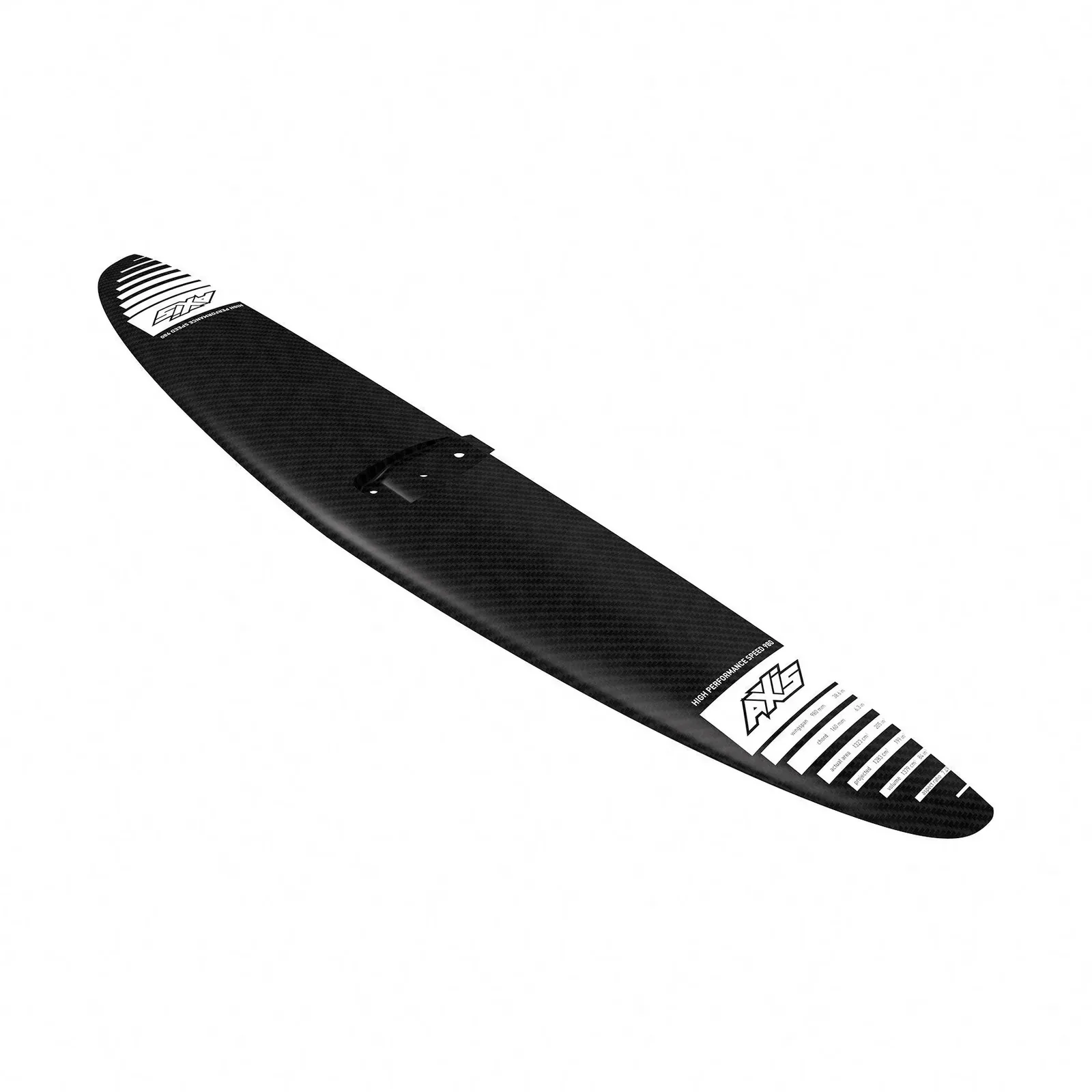
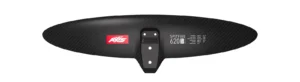
Axis HPS 980 front wing in black carbon seen in perspective, white stripes at both tips, on a white background
The HPS 980 in perspective · © Axis
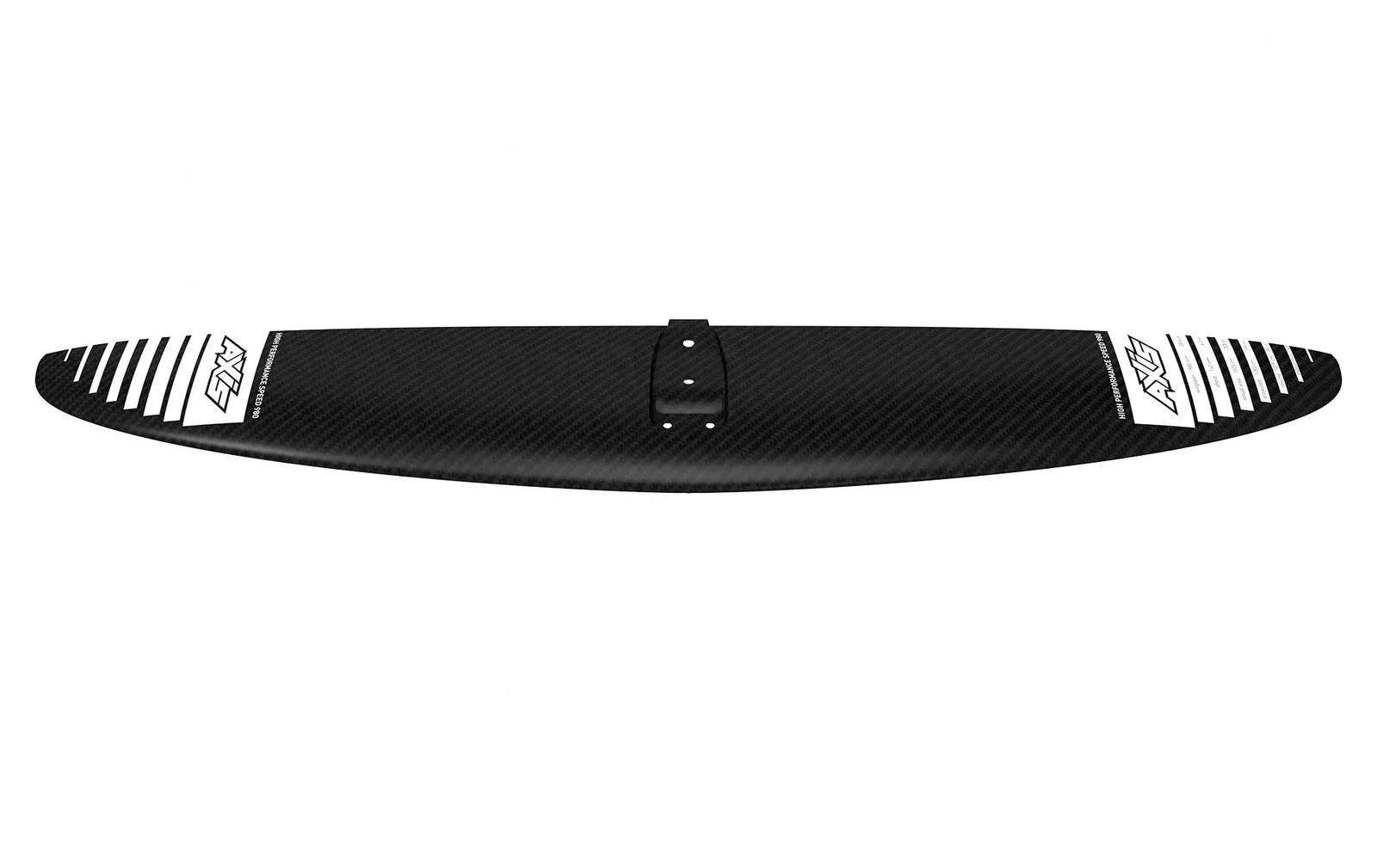
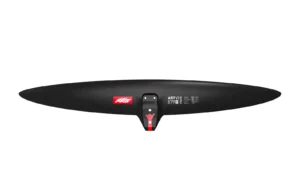
Axis HPS 980 front wing in black carbon seen from above, plate in the center, white striped blocks near the tips
The HPS 980 seen from above: thin, elongated wingspan · © Axis
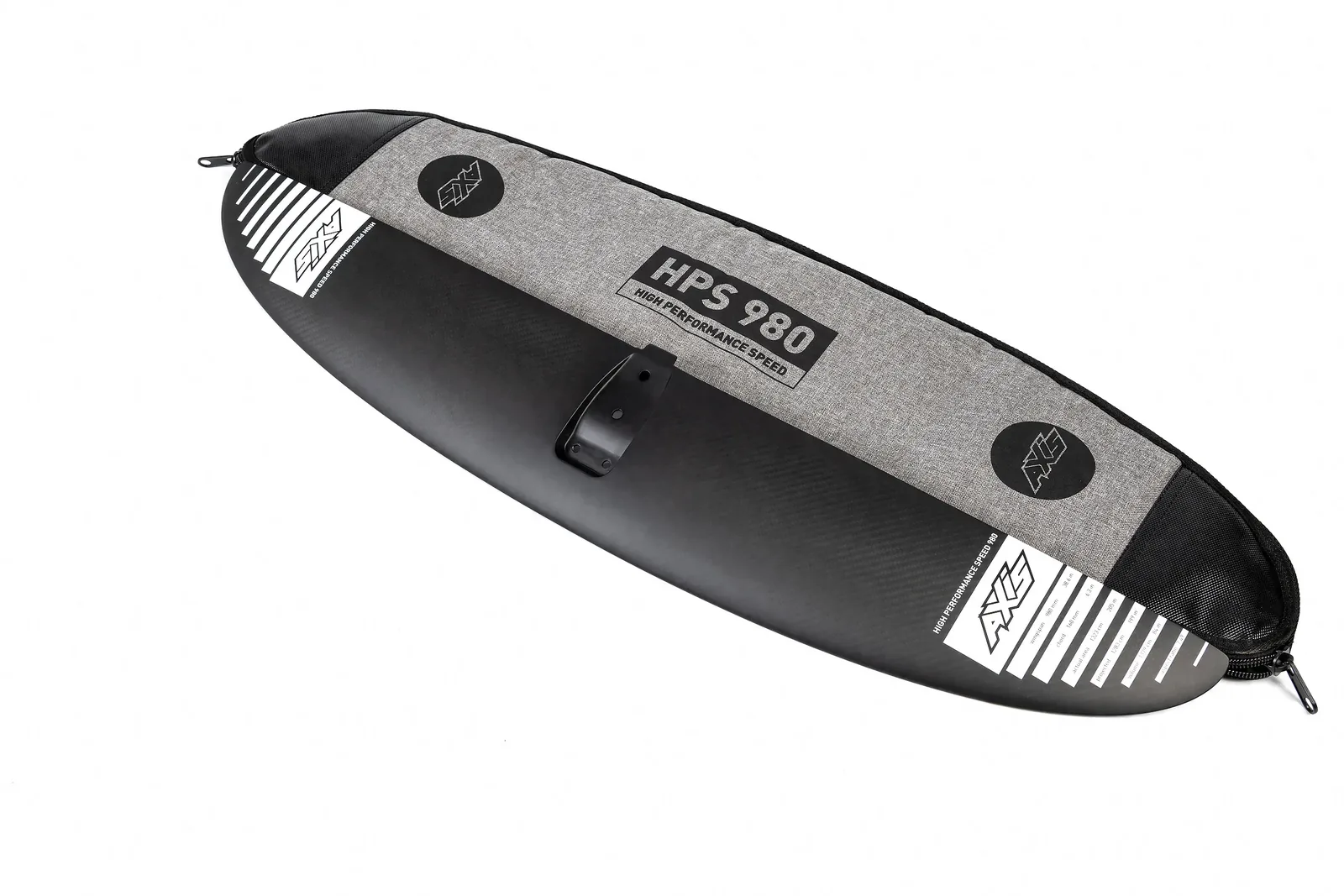
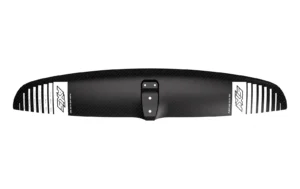
Gray and black zippered bag supplied with the Axis HPS 980, “HPS 980” label in the center, on a white background
The zippered bag supplied with the HPS 980 · © Axis
Axis

Axis HPS test

  • Riding styleElongated speed and glide front wing: wing, downwind, prone, SUP, windsurf, kite
  • Front wings650 (769 cm²) to 1050 (1 502 cm²) cm²
  • Wingspan65 to 105 cm
  • YearModel 2026 · released Jan 2021

Verdict in brief

Axis’s High Performance Speed range: seven elongated front wings from 650 to 1050 mm. The Foiling Magazine and SURF Magazin tested the 980: long glide, good control at high speed, turns that need pressure. After 25 years of kiting, I’m wary of “speed” front wings sold to everyone: this one is for a rider who already has the basics in wing and wants glide. For beginners, Axis’s BSC is the easier sister. Seabreeze riders mostly like the 1050, which they keep for light wind. I found no published test of the 650, 700, 830, 930 and 1050.

For you if

  • You have the basics in wing and want glide: the 980 keeps flying almost without losing speed even when you stop pulling on the wing (SURF Magazin), and The Foiling Magazine sees it as an excellent step forward from the S-Series 1010
  • You’re heavy or you ride in light wind: two 95 and 100 kg riders on Seabreeze use the 1050 for light wind, and the Real Watersports tester sees it for light wind or heavy riders
  • You ride chop or small swells: SURF Magazin notes that knee-high waves are enough for the 980 to make long flights, and a Seabreeze rider calls the 1050 well-behaved in chop

Not for you if

  • You’re starting out on a foil: the 980 needs a bit more pumping at takeoff than a BSC 970 according to SURF Magazin, and a Seabreeze rider warns that the first session on the 1050 will be tricky
  • You want to turn tight: SURF Magazin finds that the 980 doesn’t like tight turns, on waves or in maneuvers, and the Real Watersports tester calls the 1050 slower in turns than his Armstrong HS1550v2
  • You’re after pure ease: the BSC takes off earlier according to SURF Magazin and is more forgiving, at the cost of less glide and speed according to Seabreeze riders

Have you ridden this model? Leave the first review

What we know about this model

Our method
  • Specificationschecked early November 2026
  • 2 tests publishedThe Foiling Magazine (HPS 980, March 29, 2021), SURF Magazin (HPS 980, September 1, 2021)
  • Rider reviewsgive yours, and it will appear here

Front wings: sizes and mounting

Front wings: area, span, aspect ratio, stabilizer and mounting
SizeWingspanAspect ratioRecommended stabilizerWing attachment
650 (769 cm²) cm² (119,2 in²)65 cm (25,6 in)5,68n.c.M6x14 (front) + M8x16 (middle) + M8x20 (rear)
700 (890 cm²) cm² (138 in²)70 cm (27,6 in)5,63n.c.M6x14 (front) + M8x16 (middle) + M8x20 (rear)
830 (1 014 cm²) cm² (157,2 in²)83 cm (32,7 in)7n.c.M6x14 (front) + M8x16 (middle) + M8x20 (rear)
880 (1 112 cm²) cm² (172,4 in²)88 cm (34,6 in)7,17400 (Real Watersports)M6x14 (front) + M8x20 (middle, rear)
930 (1 214 cm²) cm² (188,2 in²)93 cm (36,6 in)7,34n.c.M6x14 (front) + M8x16 (middle) + M8x20 (rear)
980 (1 323 cm²) cm² (205 in²)98 cm (38,6 in)7,49370 for waves, flat 460 for the straight line (Foiling Magazine)M6x14 (front) + M8x20 (middle, rear)
1050 (1 502 cm²) cm² (232,8 in²)105 cm (41,3 in)7,55375 (Real Watersports); 375, 400 or 425 Progressive (forum posts)M6x14 (front) + M8x20 (middle, rear)

Weight not yet published by Axis (verified on 09/11/2026). We’ll fill in the page as soon as the brand publishes them.

Size = wingspan in mm. True area, aspect ratio, max and mean chords, volume (Axis); projected area n/a. No weight published.

More details on these figures

Axis pages checked on November 9, 2026: wingspan, true area, aspect ratio, max chord, mean chord and volume. Projected area: Axis doesn’t publish it for the HPS, so n/a. The size is the name of the wing, i.e. its wingspan in millimeters. Axis publishes neither weight, nor tightening torque, nor stabilizer by size. The screws come from an Axis table reproduced by a retailer (MACkiteboarding). All sizes are in stock as of the reading.

Components and compatibility

Checked on 09/11/2026

Fuselage

Axis black (B-Series) fuselage · not specified by Axis; fuselage tried by SURF Magazin with an aluminum mast · M6x14 (front) + M8x20 (middle, rear); M6x14 (front) + M8x16 (middle) + M8x20 (rear)

Axis black (B-Series) fuselage
Longueur
64.3 cm
70.3 cm

Axis does not publish the weight of the HPS wings. No independent weighing of the front wing alone.

Compatibility

Wing attachment
Axis hardware table reproduced on MACkiteboarding’s Spitfire page (checked on November 9, 2026): 14 mm M6 at the front on all seven sizes, middle screw 16 mm M8 (650, 700, 830, 930) or 20 mm (880, 980, 1050), rear screw 20 mm M8. The Foiling Magazine describes the 980’s mount as a T, with two M8 and two M6; SURF Magazin sees four screws on a fuselage widened at the front, with the screw length printed on the wing. Axis doesn’t supply the screws: a screw set has to be added to the order. No tightening torque found for the HPS (Axis’s BSC table gives some, the HPS one doesn’t).
Stabilisateurs
Axis gives no stabilizer by size. Tried: 370 for waves and 460 for the straight line with the 980 (The Foiling Magazine); 400 with the 880 and 375 Progressive with the 1050 (Real Watersports); 375, 400 or 425 Progressive with the 1050 (forum posts). SURF Magazin advises pairing the 980 with flatter profiles to make the most of its speed. S-Series stabilizers fit with a small shim (The Foiling Magazine).
Fuselage
Axis black (B-Series) fuselage, thinner than the red S-Series one, designed for these wings; it goes with all the HPS and with the smaller sizes of the Pump & Glide series (SURF Magazin). Tried: 70.3 cm short fuselage (SURF Magazin), 64.3 cm ultra-short (Real Watersports). A Seabreeze rider (January 20, 2023) advises against the standard fuselage, which he keeps for windsurfing.
Masts
Axis imposes no mast length. The Foiling Magazine mounted an 86 cm V2 carbon mast, about 600 g lighter than a 90 cm aluminum mast; SURF Magazin an aluminum mast (the text says 80 mm, probably 80 cm); Real Watersports a 75 or 90 cm aluminum mast.

Stated riding styles

Front wing
Axis: a high-performance wing meant to make foiling accessible, with a thin section and a black fuselage designed for it. The brand says riders are ripping after only a few sessions, thanks to the wing’s design and twist, and ranks it among its most popular wing foiling front wings for riders who already have the basics. It also gives it for downwind, prone and SUP in faster or more powerful waves, and for windsurfing and kite, because of its speed. A zippered bag is supplied with the wing.
Summary
wing · downwind · prone · SUP · windsurf · kite

Strong points, weak points

Strong points

  • Seven sizes from 650 to 1050 mm, from 769 to 1,502 cm², aspect ratio from 5.63 to 7.55
  • Long glide: the 980 keeps flying almost without losing speed, even when you stop pulling on the wing (SURF Magazin)
  • Early takeoff for its area, good top speed (SURF Magazin) and a quiet front wing (The Foiling Magazine)

Weak points

  • Tight turns aren’t its thing: more pressure on the wing to start the turn (SURF Magazin, on the 980)
  • Front wing weight not published by Axis; projected area not published either
  • Black fuselage (B-Series): owners of the red S-Series have to change it and keep their stabilizers with a small shim (The Foiling Magazine)
  • Only the 980 has two tests; the six other sizes rest on forum posts and on a retailer’s notes (880 and 1050)

The flaw to know about. My real complaint: getting started. SURF Magazin notes that the 980 takes off later than a BSC 970 and needs more pumping at the start, and a Seabreeze rider warns that the first session on the 1050 will be tricky because it’s an elongated foil. If you don’t have your pumping yet, the BSC is the easier sister; you move up to the HPS afterwards.

Specifications

14 specs, sources at the bottom of the page

Riding style
Elongated front wing for speed and glide; wing, downwind, prone, SUP, windsurf, kite
Sizes (true area)
650 (769), 700 (890), 830 (1,014), 880 (1,112), 930 (1,214), 980 (1,323), 1050 (1,502 cm²)
Wingspan
650 to 1050 mm, i.e. 25.6 to 41.3 in
Aspect ratio
5.68 (650), 5.63 (700), 7.00 (830), 7.17 (880), 7.34 (930), 7.49 (980), 7.55 (1050)
Chords
Max chord from 140 mm (650) to 170 mm (1050); mean chord from 114.5 mm (650) to 139.0 mm (1050)
Volume
717 cm³ (650), 1,060 (700), 979 (830), 1,088 (880), 1,228 (930), 1,379 (980), 1,665 cm³ (1050)
Projected area
n/a (Axis publishes the true area and the mean chord, not the projected area)
Material
Carbon
Stabilizers
Not specified by Axis; tests with 370 and 460 (980), 400 (880), 375 to 425 (1050)
Fuselage
Black (B-Series) for all sizes
Mounting
M6 14 mm at the front; M8 16 mm (650, 700, 830, 930) or 20 mm (880, 980, 1050) in the middle; M8 20 mm at the rear; torque n/a
Availability
Seven sizes in stock on the Axis shop as of November 9, 2026
Weight
Not published by Axis; no independent weighing of the front wing alone
Axis release dates
1050 on January 4, 2021, 700, 880, 930 and 980 on January 8, 2021, 650 and 830 on July 29, 2021

What the published tests say

2 tests published, checked early November 2026

The Foiling Magazine, “Axis HPS 980” (test center)

The 980 is an excellent step forward from the S-Series 1010, in wing as on waves. The aspect ratio of 7.49 is scary on paper, but in practice it remains usable, provided you have the wave or the wind to get it flying at the start. Less drag on acceleration, impressive control at high speed, including on fast waves and in kite: precise, lively and settled, and astonishingly quiet. The 370 stabilizer gives a free, grippy turn for waves; the flat 460 brings straight-line speed, glide and pumping. The S-Series rear wings fit with a small shim; the front mounting goes to two M8 and two M6 in a T. The 86 cm V2 carbon mast saves about 600 g over the 90 cm aluminum one and smooths out choppy seas.

Read the test
SURF Magazin, “Axis HPS 980 Foil in test” (test, by Manuel Vogel)

Takeoff is a bit later than on a BSC 970, so a bit more pumping at the start, then the front wing lifts smoothly and fairly early for a performance front wing of this size. Powerful acceleration, good top speed, enough for small races between friends, jumps and freestyle. Very stable in a straight line, on the roll and pitch axes. In turns, the 98 cm wingspan and the stretched shape need more pressure; very tight turns aren’t its strong point. Its strength is glide: it keeps flying almost without losing speed, even without pulling on the wing, and small swells are enough. Above-average build quality, fuselage widened at the front with four screws, screw length printed on the front wing. Conclusion: a high-quality foil with wide uses, with good controllability and a very early takeoff for its area; to be paired with flatter rear wings to take advantage of its speed.

Read the test
Articles from shops and schools (1), not counted as tests

These articles come from sites that sell or rent gear: they are cited for information and kept separate from published tests.

REAL Watersports, “Nuzzi’s Test Notes: Axis Foil for Winging” (notes from a retailer’s tester)checked on 09/11/2026

880: easier to ride than expected, close to the BSC 890 but faster and smoother in the water, noticeably better pumping, a hum at the top of the speed range, and less lively from rail to rail than he’d hoped. 1050: compared with an Armstrong HS1550v2, it takes off a bit earlier, stays on the foil longer and glides more, but is slower and turns more slowly. He finds it feels bigger than its 1,503 cm² (tester’s figure), very stable, with a fairly large sweet spot and good upwind behavior; he sees it for light wind or heavy riders. For him, the 980 is the Axis closest to the Armstrong HS1550v2. Overall, the HPS and the BSC are similar, the HPS having one more notch of speed.

Rider feedback collected from the web (10)

Messages in English summarized by WindUnity, with the exact quotes. None of this is published as a site review.

Seabreeze, thread “Axis 1050 Review”2022-09-25

Seajuice, NSW

On his first session on the 1050, he’s relieved: it takes off easily compared with his previous foil (an “XL Neil Pryde”), and it’s also faster.

Seabreeze, thread “Axis 1050 Review”2023-01-20

JakeDawg69, 100 kg rider (post of September 25, 2022), short black fuselage and 420 stabilizer

He replies to an 82 kg rider: the first session will be tricky because it’s an elongated foil and you have to find the timing, but after the first downwind turn you feel the glide.

Seabreeze, thread “Axis 1050 Review”2023-01-21

caracol, 95 kg, has owned the 1050 and the ART 1099

He keeps the 1050 and sells the ART 1099, which needs more takeoff speed. When there’s more wind and the water is flatter, he jumps on the HPS 930, easier to launch than the 1099.

Seabreeze, thread “Axis 1050 Review”2023-01-19

Gustenzo, 90 kg, SUP foil downwind

He uses the 1050 for SUP downwind from 13 to 20 knots and brings out the 980 from 20 knots.

Seabreeze, thread “Which Axis front wing?”2023-08-25

Stretchy, WA, says he weighs the same as the thread’s author (about 95 kg)

He recommends the HPS for glide without overly technical pumping: the 980 for 14 to 19 knots, the 1050 for less wind. For him the 980 works between 10 and 15 knots, but the 1050 would be easier.

Seabreeze, thread “Which Axis front wing?”2023-08-25

lasersailor1661

He put several friends on the 1050 and they love it.

Seabreeze, thread “Which Axis front wing?”2023-08-28

marc5, 82 kg, 60 sessions, coming from the Slingshot i

He took the 1050 with a 425 Progressive stabilizer, a short black fuselage and an 82 cm aluminum mast, and finds it much more pleasant to glide on than his previous Slingshot i.

Progression Project, thread “Axis Foil Reviews”2022-07-28

Rad_Duke, 75 kg, prone and advanced wing foiling, small conditions in Florida

He likes the 930 in wing from 13 to 20 knots, with good low end, glide and turns; the 830 is fast, turns well and pumps well enough if you have speed, a good front wing for strong wind.

Progression Project, same thread2022-08-02

Bigmtnbill, 75 kg, mostly wing, North Shore of Oahu

He takes the HPS 700 when the waves are good, without a shim except for big waves, and the BSC 810 when the waves are good but the wind doesn’t follow.

Foiling Magazine, film “Axis Black Series Hydrofoils” (rider Larry Foiler)2021-02-10

Larry Foiler, wave rider

Video presentation of the HPS 700 and 980 and the BSC 810 and 890 when the black-fuselage front wings came out. The page only provides the film’s program, no verdict. A rider’s video, not a test.

Riders’ reviews

No reviews

No reviews yet.

Nobody has reviewed this gear yet. Do you use it? Help other riders of your weight — 2 minutes.

Leave your review (2 minutes)

Three screens: you, the gear, your review. Your email will never be published; it is only used to confirm that the review comes from a real person.

1/3 You

Only used to confirm your review and to let you know if it is rejected. Never displayed, never resold.

Your weight *

10 kg ranges only, so that other riders of your build can relate. No exact weight is recorded.

Your level *

Beginner: I’m still taking lessons. Intermediate: I ride on my own. Advanced: transitions and jumps. Expert: freestyle, wave or competition.

Your riding

Optional. If checked, your review stays published with the label “Gear received or tied to a brand” and doesn’t count toward the average rating.

You must be at least 15 to post a review (“Your data” article of the policy).

2/3 Your gear and how you use it
Wind range actually used (knots)
How long you’ve been using it *
Number of sessions (optional)
Rate each criterion (at least 3) *
Low-end takeoff
Speed & glide
Maneuverability (turns)
Pump
Finish & durability

1 = very poor, 5 = excellent. Leave blank any criterion you couldn’t judge.

Do you recommend it? *
3/3 Your review

140 characters minimum — Takeoff, glide, pump, what disappointed you, who you’d recommend it to.

Rider reviews: confirmed email address, no compensation. “Brand-linked” and “loaned / received” reviews are labeled and excluded from the average. Each review shows its publication date, the date of the experience and, if it was edited, its update date. A review is published or rejected within 7 days at most; if it is rejected, you receive the reason by email and you can correct it. You can complete or delete your review at any time from the email address used to submit it. How do reviews work?

Alternatives to compare

Axis BSC

Easier sister of the HPS: six sizes from 740 to 1120 mm, from 883 to 2,102 cm², aspect ratio from 6.25 to 6.51. Red fuselage for the three large sizes, black for the three small ones. The one to take for learning; the HPS for speed and glide.

Axis Spitfire

Axis surf front wing, ten sizes from 628 to 1,554 cm², aspect ratio from 6.1 to 9.1. In the thread “Which Axis front wing?” (August 2023), JonathanC suggests a Spitfire 1100 or a used HPS 1050 to a 95 kg rider and prefers the Spitfire in chop and waves, because its design is more recent.

Axis ART

Glide range more elongated than the HPS, ten sizes from 556 to 1,197 cm², aspect ratio from 9.0 to 10.6. A 95 kg rider on Seabreeze (January 21, 2023) kept the 1050 and sold the ART 1099, which needs more takeoff speed.

Axis PNG

Lift and glide range, ten sizes from 850 to 1400 mm, from 1,102 to 2,080 cm². Holoholo, a 95 kg rider on Seabreeze, calls his PNG 1150 very stable and taking off in light wind, but slow, draggy and reluctant to turn, and asks what the 1050 brings.

Frequently asked questions

Where can I check the current price?

See the current prices in the “Where to buy” section of this page.

HPS 980 or HPS 1050?

The 980 is the size that was tested: The Foiling Magazine and SURF Magazin find it a great glider and precise, and SURF Magazin calls it controllable despite its name. The 1050 is the one Seabreeze riders (95 and 100 kg) use for light wind, with an easier start. Based on these posts: the 1050 for light wind or a heavy rider, the 980 from about 14 knots (Stretchy recommends the 980 from 14 to 19 knots).

Which fuselage, stabilizer and screws with the HPS?

Black fuselage (B-Series), short or ultra-short. M6 14 mm screws at the front, M8 16 or 20 mm in the middle depending on the size, M8 20 mm at the rear, according to the Axis table repeated by MACkiteboarding. The Foiling Magazine tried the 370 (waves) and flat 460 (straight line) stabilizers with the 980; for the 1050, Seabreeze riders cite the 375, the 400 and the 425 Progressive. No tightening torque found for the HPS.

What do the tests of the Axis HPS say?

Two published tests, both on the 980: The Foiling Magazine (March 29, 2021) sees it as an excellent step forward from the S-Series 1010 and calls it quiet; SURF Magazin (site date: September 1, 2021) praises its glide and its early takeoff for its area, but notes that it needs more pressure to turn and a bit more pumping at the start than the BSC 970. The retailer REAL Watersports (February 22, 2022) tried the 880 and 1050. Nothing published on the 650, 700, 830 and 930.

Axis HPS or BSC?

The HPS is more elongated and faster, with more glide; the BSC is easier and more forgiving. At a similar price, I take the BSC for learning and the HPS once the basics are in place. SURF Magazin notes that the 980 takes off later than the BSC 970, and Real Watersports sees one more notch of speed in the HPS.

Method and limitations of this page

This page brings together the technical specs, tests from the press and blogs, and rider feedback found on the web, without rewriting any of it. When WindUnity has ridden the gear itself, the page says so with the “WindUnity test” badge.

Rider reviews are published as is, with their date. Reviews tied to a brand or based on loaned gear are labeled and excluded from the average.

What’s still missing

  • Weight of the wings, fuselages and stabilizers: not published by Axis
  • Projected area: not published by Axis for the HPS (the BSC table gives it), so n/a
  • Screw tightening torque: not published for the HPS; the screws come from an Axis table repeated by the retailer MACkiteboarding
  • Recommended stabilizer per size: not published by Axis
  • Tests: only the 980 (The Foiling Magazine and SURF Magazin); nothing published on the 650, 700, 830, 930 and 1050. Real Watersports’ notes (880 and 1050) are those of a retailer
  • SURF Magazin test date: the site shows September 1, 2021; I have no independent original date
  • MACkiteboarding’s “Axis HPS Front Wing Review” film, repeated by Foiling Magazine on September 17, 2021: the page has no text, content not evaluated
  • No review posted on the Axis shop pages as of November 9, 2026
  • Reviews posted on WindUnity: none

Sources

Data collected early November 2026

Shops : Real Watersports, MACkite

Press and specialist sites : The Foiling Magazine, SURF Magazin

Forums and riders : Progression Project, Seabreeze

Others : Axis

See the details of the 9 sources

Shops

  1. REAL Watersports, Axis test notes for wing

Press and specialist sites

  1. The Foiling Magazine, HPS 980 test
  2. SURF Magazin, HPS 980 test

Forums and riders

  1. Progression Project, thread Axis Foil Reviews
  2. Seabreeze, Axis 1050 Review thread

Others

  1. Axis, official HPS 650 page (EN)
  2. Axis, official HPS 1050 page (EN)