Skip to content
Black Axis PNG 850 front wing seen from above, Axis logo and Pump and Glide 850 marking at the tips, white background
The PNG 850 laid flat · © Axis
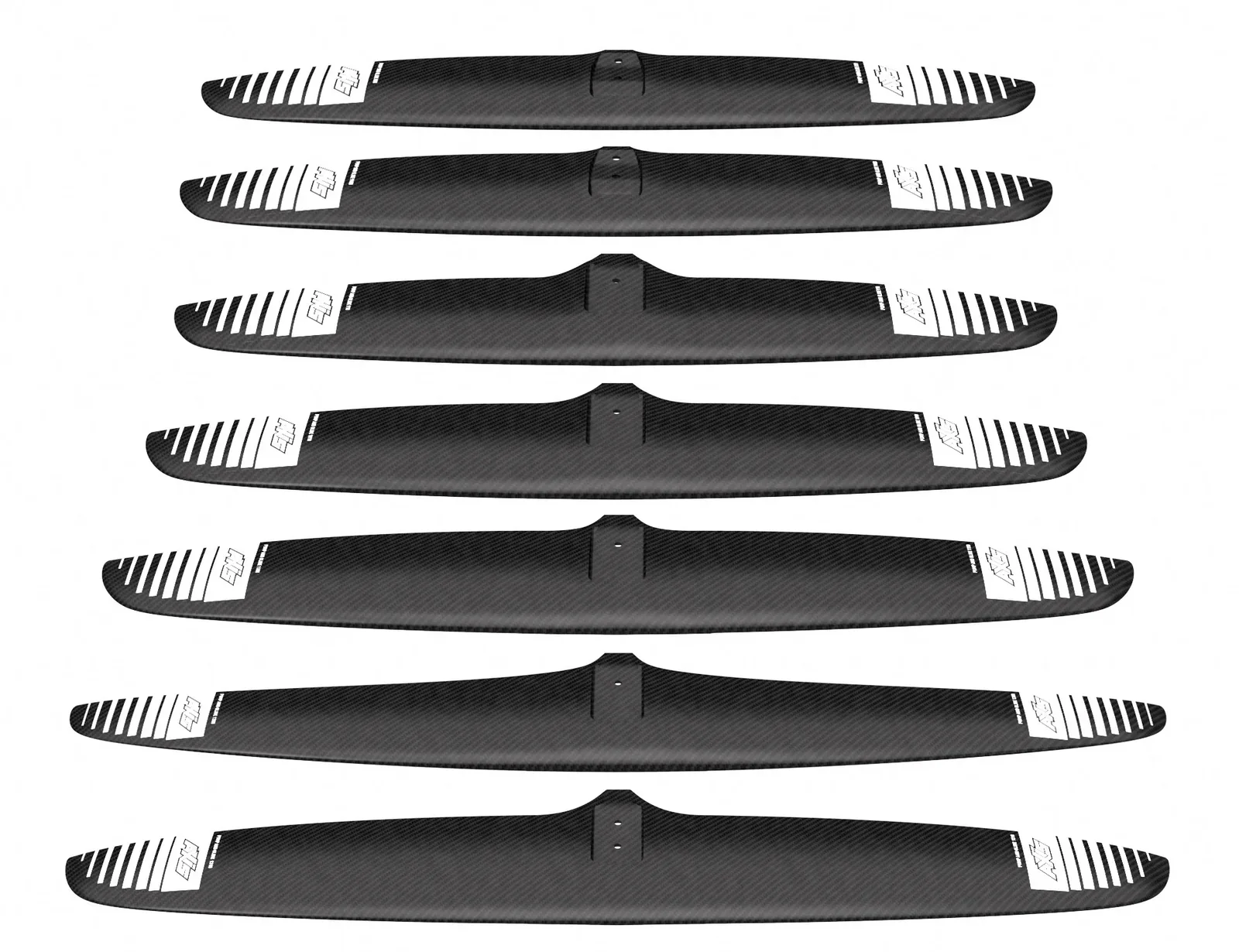
Seven black Axis PNG front wings stacked in a column, from smallest to largest, on a white background
The seven original PNGs, from the 850 to the 1310 · © Axis
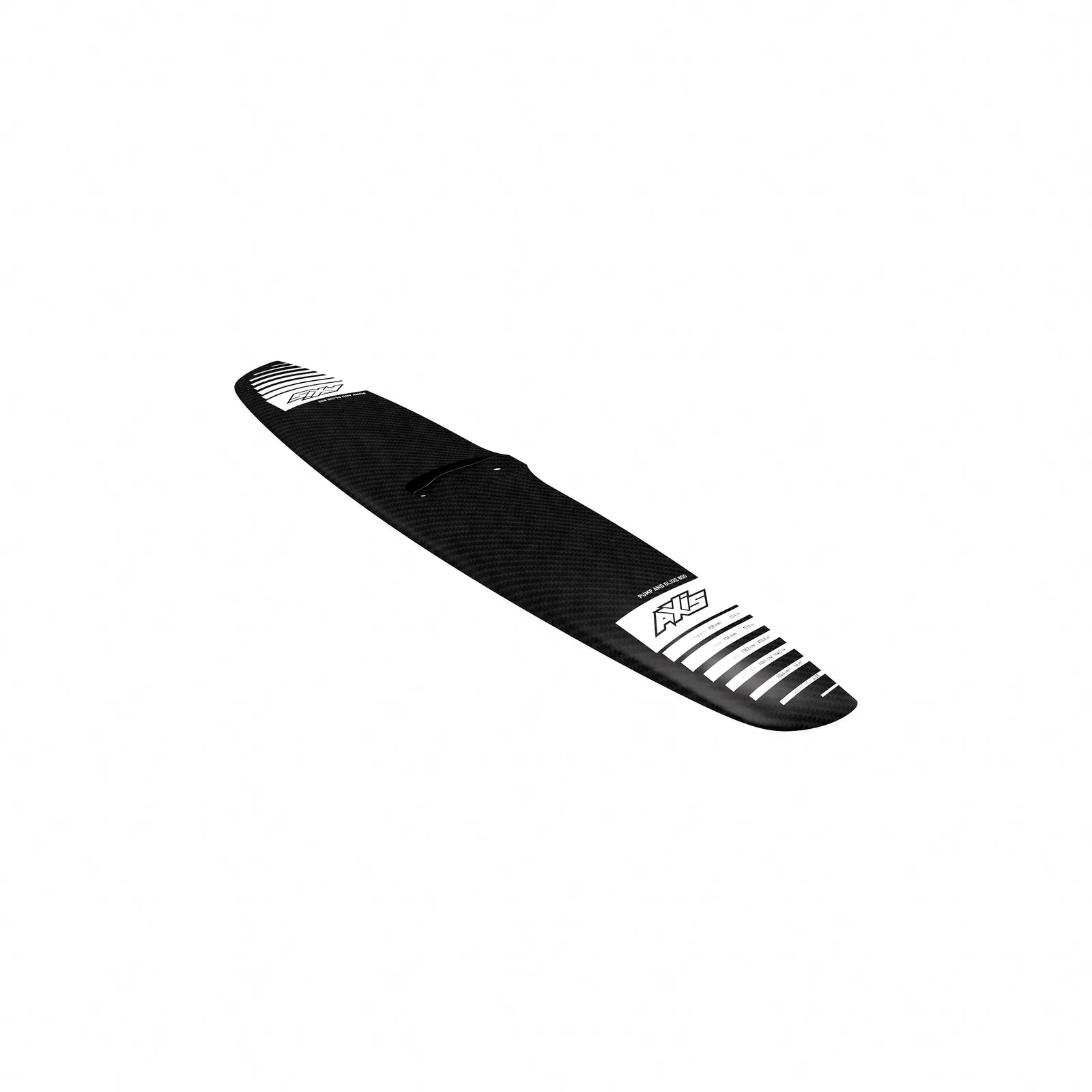
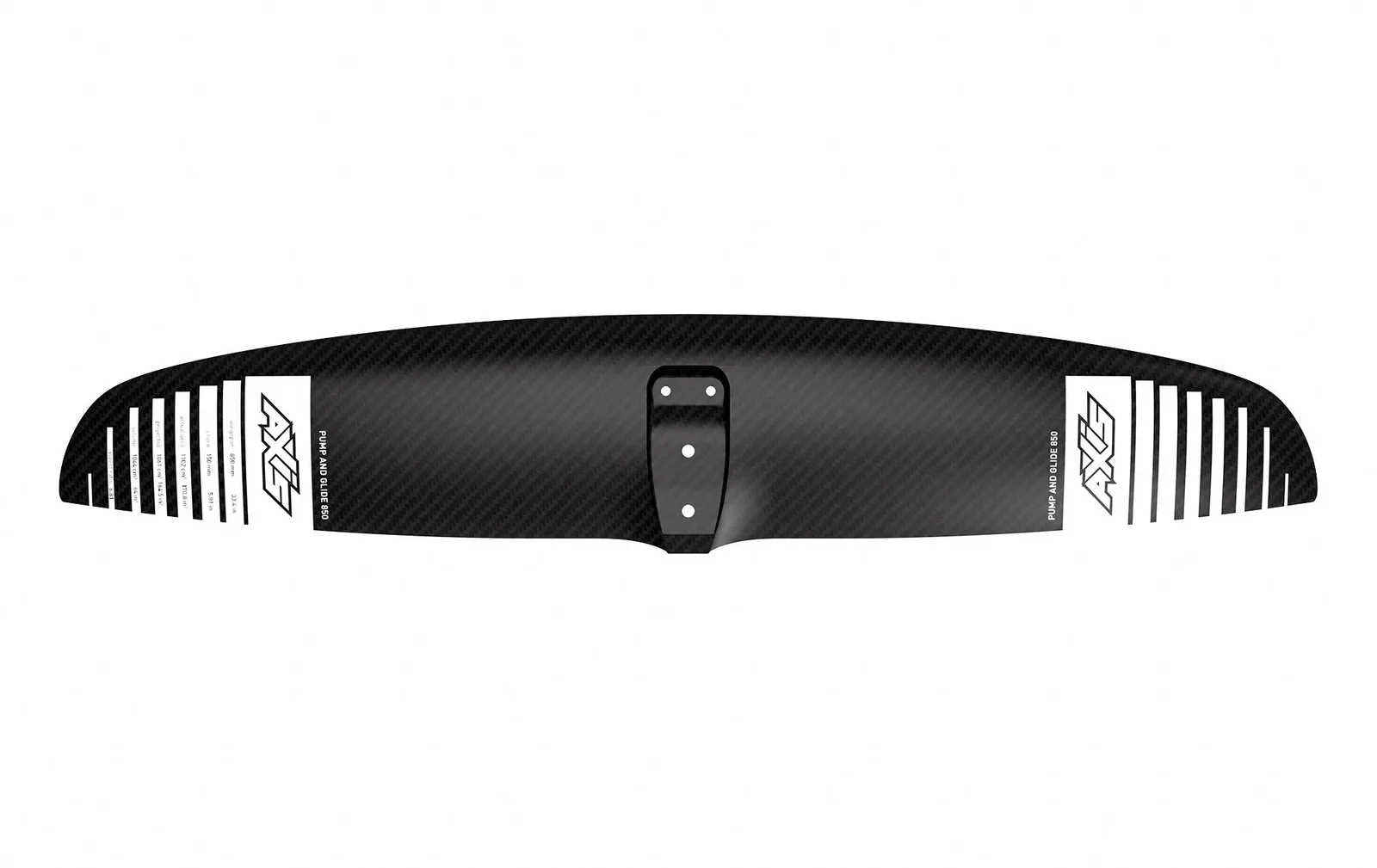
Black Axis PNG 850 front wing in perspective view, white Axis labels at the tips, on a white background
The PNG 850 in perspective · © Axis
Axis

Axis PNG test

  • Riding styleLight-wind, glide front wing: wing, SUP, downwind, pump, dock start, wake
  • Front wings850 (1 102 cm²) to 1400 V2 (1 786 cm²) cm²
  • Wingspan85 to 140 cm
  • YearModel 2026 · released Jan 2020

Verdict in brief

Axis’s Pump and Glide range, ten sizes from 850 to 1400 mm. Foiling Magazine finds the 1310 easy to pump, even for a heavy rider, with a much wider turn than the range’s surf wings. Axis says it aims for early lift and glide rather than speed. 25 years of kitesurfing have taught me that for a recreational rider, the wing that takes off early gives more sessions than the one that goes fast: I recommend it for the heavy rider or light wind, not for anyone who wants to turn tight. I found no test of the three V2s.

For you if

  • You go wing foiling in light wind or you are heavy: I recommend it, Foiling Magazine sees “a light wind enabler” in the 1150 and concludes “It is a session saver” for light wind and small waves
  • You want to learn to pump or to dock start: on the 1310, a gentle leg movement is enough, even for a heavy rider, and recovery from the bottom of the mast is easy (Foiling Magazine). The 1310 text calls it accessible to beginners and advanced riders alike
  • You want a pump wing that still turns: a forum rider uses the 850 for prone and calls it excellent in turns, with a “fantastic” low end (Progression Project, 2022)

Not for you if

  • You want to turn tight with a large size: I wouldn’t take it. Foiling Magazine finds the turning radius of the 1310 clearly larger than with the range’s surf wings, and two forum riders find the 1150 bad in turns (“terrible turning”, “doesn’t turn”)
  • You are after speed: Pump and Glide wings don’t aim to be the fastest on the market, “their focus is not to be the fastest wing on the market”
  • You want a PNG V2 and an independent test before buying: no published test of the 1200, 1300 and 1400 V2, only Axis’s text

Have you ridden this model? Leave the first review

What we know about this model

Our method
  • Specificationschecked early November 2026
  • 2 tests publishedFoiling Magazine (PNG 1310, March 9, 2023), Foiling Magazine (S-Series 1010 and 1150, September 29, 2020)
  • Rider reviewsgive yours, and it will appear here

Front wings: sizes and mounting

Front wings: area, span, aspect ratio, stabilizer and mounting
SizeWingspanAspect ratioRecommended stabilizerWing attachment
850 (1 102 cm²) cm² (170,8 in²)85 cm (33,5 in)6,81n.c.M6x14 (front) + M8x20 (middle, rear)
910 (1 268 cm²) cm² (196,5 in²)91 cm (35,8 in)6,8n.c.M8x20 (front, rear)
910B (1 268 cm²) cm² (196,5 in²)91 cm (35,8 in)6,8n.c.M6x14 (front) + M8x20 (middle, rear)
1010 (1 430 cm²) cm² (221,7 in²)101 cm (39,8 in)7,13n.c.M8x20 (front, rear)
1150 (1 778 cm²) cm² (275,6 in²)115 cm (45,3 in)7,72460 stabilizer with short fuselage (Foiling Magazine test)M8x20 (front, rear)
1200 V2 (1 803 cm²) cm² (279,5 in²)120 cm (47,2 in)8n.c.2 x M6 + 2 x M8 (Axis page)
1300 (1 712 cm²) cm² (265,4 in²)130 cm (51,2 in)9,94n.c.M8x20 (front, rear); the Axis page says 3 x M8 of 20 mm
1300 V2 (1 632 cm²) cm² (253 in²)130 cm (51,2 in)10,36n.c.n.c.
1310 (2 080 cm²) cm² (322,4 in²)131 cm (51,6 in)8,53Progressive 425 (Foiling Magazine test)M8x20 (front, middle, rear)
1400 V2 (1 786 cm²) cm² (276,8 in²)140 cm (55,1 in)10,99n.c.2 x M8 + 2 x M6 (Axis page)

Weight not yet published by Axis (verified on 08/11/2026). We’ll fill in the page as soon as the brand publishes them.

Size = wingspan in mm. True area, aspect ratio, max chord, volume (Axis). No published weight.

More details on these figures

Axis pages recorded on November 8, 2026: wingspan, true area, aspect ratio and max chord, except for the 910B. Its page shows a 910 in the black fuselage version and gives none of these values: wingspan, area, aspect ratio and max chord of the 910B are taken from the 910 (the table gives it the same values, with different screws). Volume, projected area and screws come from the “PNG Front wing tables” table on the 850 page, which covers the seven original PNGs, 910B included. The volume of the three V2s comes from the “PNG v2 sizes” table on their pages. The area of the 910 is 1,268 cm² on its page and 1,267 in the table: the WindUnity page keeps 1,268. The size is the name of the wing, that is, its wingspan in millimeters. Mean chord = area divided by wingspan, WindUnity calculation. Axis publishes neither weight nor stabilizer per size. Unavailable when recorded: 1150, 1300 and 1310.

Components and compatibility

Checked on 08/11/2026

Fuselage

Axis red fuselages (original PNG 1310 to 910) and black fuselages (910B, 850, V2) · not specified on the PNG pages · M6x14 (front) + M8x20 (middle, rear)

Axis red fuselages (original PNG 1310 to 910) and black fuselages (910B, 850, V2)
Longueur

Axis does not publish the weight of the front wings, fuselages or stabilizers. Neither of the two tests gives any.

Compatibility

Wing attachment
Axis publishes a screw table for the original PNGs: 20 mm M8 at the front and rear on the 1310 to 910 (the 1310 adds a central 20 mm M8 screw), 14 mm M6 at the front and 20 mm M8 in the middle and rear on the 910B and 850. Torques: 4 to 4.5 N·m at the front, 5.5 to 6 N·m in the middle and rear. The 1300 page says 3 x M8 of 20 mm, which the table does not show. The pages of the PNG V2 1200 and 1400 give 2 x M6 and 2 x M8; the 1300 V2 page says nothing about screws. Axis specifies that a set of screws must be added to the order.
Stabilisateurs
Axis does not give a stabilizer per size. Tests: Progressive 425 with the 1310 (Foiling Magazine); 400 and 460 stabilizers on the Glide series, including the flat, narrow 460 without winglets with the 1150 (Foiling Magazine, 2020).
Fuselage
Red fuselage for the original PNGs 1310, 1300, 1150, 1010 and 910; black fuselage for the 910B, 850 and the three V2s, with Black Advance+ recommended for the 1300 V2. Foiling Magazine mounted the 1310 on an Advanced fuselage and notes that the pumping cadence seems lower and the maneuverability better.
Masts
Axis recommends its Power Carbon and Power Carbon High Modulus masts for the 1310. Mast length not specified by size.

Stated riding styles

Front wing
Axis: the PNG is “the easiest high aspect wing that almost everyone can ride”. The 1300 is made for “the smallest foiling conditions”: wing in very light wind, small waves in SUP and surf, starting behind a boat. The 910B suits light riders, kids, SUP, boat and kite under 10 knots. The 850 is given for head-high waves with 15 knots of wind and more. The 1200 V2 is aimed at pump, dock start, wake, wing in light wind, SUP and micro bumps; the 1400 V2 at wing in very low wind, SUP and downwind in light wind, dock start and wake behind a boat.
Summary
wing in low wind · SUP · surf foil · light downwind · pump · dock start · wake · kite under 10 knots

Strong points, weak points

Strong points

  • Ten sizes from 850 to 1400 mm, from 1,102 to 2,080 cm² of true area: enough to cover lightweight to heavy riders
  • Pumps effortlessly: a gentle leg movement on the 1310 (Foiling Magazine), and the 850 “pumps so easy” for a forum rider
  • Early lift and gentle stall: Foiling Magazine describes a “surprisingly early and gentle” takeoff on the 1150 and a very gentle stall
  • At 1300 mm, the PNG 1300 is more than twice as stiff as the 1010, the Axis text says: a claim, not a measurement

Weak points

  • The large sizes turn wide: the 1310 for Foiling Magazine, the 1150 for two forum riders
  • No weight published, for wings, fuselages or stabilizers
  • Two fuselage families: red for the 1310 to 910, black for the 910B, 850 and the V2s. Check which one you have before ordering
  • On the 1150, the numbers don’t agree: aspect ratio of 7.72 on the Axis page, 7.4 in the Foiling Magazine test (2020)

The flaw to know about. My real complaint: the large original PNGs turn wide, the 1310 like the 1150, and if you want to turn tight you’ll have to switch families. The 1310 gives its best with an Advanced fuselage, which brings the mast 40 mm closer and seems to lower the pump cadence (Foiling Magazine).

Model evolution

Checked on 08/11/2026

  • Previous version Original PNG (850, 910, 910B, 1010, 1150, 1300, 1310)

Specifications

14 specs, sources at the bottom of the page

Riding style
Light-wind and glide front wing; wing foiling, SUP, surf foil, light downwind, pump, dock start, wake, kitesurfing under 10 knots depending on the size
Sizes (true area)
850 (1,102), 910 and 910B (1,268), 1010 (1,430), 1150 (1,778), 1200 V2 (1,803), 1300 (1,712), 1300 V2 (1,632), 1310 (2,080), 1400 V2 (1,786 cm²)
Wingspan
850 to 1400 mm, or 33.5 to 55.1 in
Aspect ratio
6.81 (850), 6.80 (910), 7.13 (1010), 7.72 (1150), 8.00 (1200 V2), 8.53 (1310), 9.94 (1300), 10.36 (1300 V2), 10.99 (1400 V2)
Chords
Max chord from 150 mm (850) to 195 mm (1200 V2); 168 and 169 mm on the 1300 and 1400 V2
Volume
1,044 cm³ (850), 1,458 (910), 1,732 (1010), 1,895 (1300), 2,116 (1150), 2,445 cm³ (1310); V2: 2,294 (1200), 1,773 (1300), 1,954 cm³ (1400)
Shape and profile
Original PNG: flat glide profile; the 1310 gets a fully redesigned PNG profile (Axis). 1300 V2: “High Camber (High-lift) / Low-drag” profile (Axis)
Material
Carbon; V2 in reinforced ultra-high-modulus carbon (Axis product names)
Stabilizers
Not specified by Axis; tested with a Progressive 425 (1310) and 400 and 460 stabilizers (Glide series)
Fuselage
Red for the 1310, 1300, 1150, 1010, 910; black for the 910B, 850 and the V2s (Black Advance+ recommended for the 1300 V2)
Mounting
20 mm M8 (1310 to 910) or 14 mm M6 + 20 mm M8 (910B, 850); 1200 and 1400 V2: 2 x M6 + 2 x M8; torques 4 to 4.5 and 5.5 to 6 N·m
Availability
1150, 1300 and 1310 unavailable on the Axis shop on November 8, 2026; the other sizes in stock
Weight
Not published by Axis or by the two tests
Axis release dates
1010 on January 21, 2020, 910 and 1150 on June 11, 2020, 1300 on January 7, 2021, 850 and 910B on September 6, 2021, 1310 on August 1, 2022, 1300 V2 on September 20, 2024, 1200 V2 and 1400 V2 on April 22, 2025

What the published tests say

2 tests published, checked early November 2026

Foiling Magazine, “AXIS PNG 1310” (Test Center, signed RB)

The tester presents the PNG range as the accessibility reference at Axis and the 1150 as a “pump foiler and lightwind winger secret weapon”. The 1310 has 160 mm more wingspan than the 1150, with a fully reworked and thicker profile, and bolts directly onto the red S-Series fuselage. With an Advanced fuselage, which brings the mast 40 mm closer, the pump cadence seems to drop (“it seems to reduce its pump cadence”) and maneuverability improves. Pumping: a gentle leg movement is enough, even for a heavy rider, and recovery from the bottom of the mast is easy, which helps with learning to pump. Turning: better than expected with a bit of management, but much wider than the range’s surf wings.

Read the test
Foiling Magazine, “AXIS S-Series 1010 and 1150” (Test Center, unsigned)

New profile, thinner and more elongated in planform, mounted on the same Axis masts and fuselages with shorter countersunk screws, so compatible with existing gear. 1150: very pronounced lift and roll stability, early and gentle takeoff, glide on small waves, and in wing foiling “a light wind enabler” whose early lift matches that of the old 102. Turning takes management but remains decent with the 460 stabilizer and a short fuselage. With a 6 m wing, the tester pumps up to takeoff then pumps small powerful waves, with good pitch control. Behind a boat, with complete beginners, several learn quickly thanks to the roll stability. 1010: for a medium-weight rider in wing foiling and SUP, “probably the sweet size in the range”, faster and livelier than the 1150, with fast arcing turns. The 910 aims at more wind, more powerful waves or lighter riders.

Read the test
Rider feedback collected from the web (4)

Messages in English summarized by WindUnity, with the exact quotes. None of this is published as a site review.

Progression Project, thread “Axis Foil Reviews”2022-07-28

Rad_Duke, 75 kg, prone and advanced wing foiling, small conditions in Florida

He finds the 1150 very good off the dock and at the low end, but no longer takes it out because of the turning. The 1010 turns clearly better and he uses it for wing foiling in light wind. On the 850, a single prone session: excellent low end, excellent turning, easy pumping, not very fast.

Progression Project, same thread2022-07-29

Matt; weight and level not specified

He finds the 1150 fine for learning but with no turning, useful only for progressing on beach starts.

Progression Project, same thread (reply)2022-07-29

Rad_Duke, 75 kg

He describes the 850 as a smaller and slightly thinner standard PNG, identical profile: it stays on the wave face, turns like a small wing and pumps effortlessly.

Seabreeze, thread “Axis Favourite and least Favourite Foils”2024-07-28

martyj4, experienced intermediate

In marginal wind he takes the 1010, which takes off early while keeping glide and maneuverability; the 1300 starts with a bit less wind but lacks looseness. At the start of his progression, the 910 was his favorite wing, good everywhere.

Riders’ reviews

No reviews

No reviews yet.

Nobody has reviewed this gear yet. Do you use it? Help other riders of your weight — 2 minutes.

Leave your review (2 minutes)

Three screens: you, the gear, your review. Your email will never be published; it is only used to confirm that the review comes from a real person.

1/3 You

Only used to confirm your review and to let you know if it is rejected. Never displayed, never resold.

Your weight *

10 kg ranges only, so that other riders of your build can relate. No exact weight is recorded.

Your level *

Beginner: I’m still taking lessons. Intermediate: I ride on my own. Advanced: transitions and jumps. Expert: freestyle, wave or competition.

Your riding

Optional. If checked, your review stays published with the label “Gear received or tied to a brand” and doesn’t count toward the average rating.

You must be at least 15 to post a review (“Your data” article of the policy).

2/3 Your gear and how you use it
Wind range actually used (knots)
How long you’ve been using it *
Number of sessions (optional)
Rate each criterion (at least 3) *
Low-end takeoff
Speed & glide
Maneuverability (turns)
Pump
Finish & durability

1 = very poor, 5 = excellent. Leave blank any criterion you couldn’t judge.

Do you recommend it? *
3/3 Your review

140 characters minimum — Takeoff, glide, pump, what disappointed you, who you’d recommend it to.

Rider reviews: confirmed email address, no compensation. “Brand-linked” and “loaned / received” reviews are labeled and excluded from the average. Each review shows its publication date, the date of the experience and, if it was edited, its update date. A review is published or rejected within 7 days at most; if it is rejected, you receive the reason by email and you can correct it. You can complete or delete your review at any time from the email address used to submit it. How do reviews work?

Alternatives to compare

Axis ART PRO

Very elongated sister of the PNG: from 518 to 1,647 cm², 751 to 1401 mm, aspect ratio from 11.1 to 12.2. Foiling Magazine places it between the HPS 1050 and the PNG 1300.

Axis ART

Axis intermediate range, between the Spitfire and the ART PRO: ART v2 from 674 to 1,197 cm², 819 to 1099 mm, aspect ratio from 9.9 to 10.3. Foiling Magazine says the v2 fills the gap between the Spitfire and the ART Pro.

Axis Spitfire

Axis surf front wing, ten sizes from 628 to 1,554 cm², aspect ratio from 6.1 to 9.1. To choose for waves and carving; the PNG aims at light wind and glide.

Axis Fireball

Another Axis range, from 880 to 1750 (name = wingspan in mm). A forum rider finds it clearly better than the ART 1099 in turning and in speed range, but harder to get going by paddle.

Frequently asked questions

Where can I check the current price?

See the current prices in the “Where to buy” section of this page.

What is the difference between the original PNG and the PNG V2?

The 1150 is replaced by the 1200 V2, and the 1300 V2 takes over from the 1300 with a new profile, an area reduced to 1,632 cm² and a black fuselage. The 1400 V2 is the largest, with an aspect ratio above 10. Everything comes from Axis’s text: no published test of the V2s.

Which stabilizer, fuselage and screws with the PNG?

Red fuselage for the original PNGs 1310 to 910, black for the 910B, 850 and V2s. M8 20 mm screws, or M6 14 mm at the front for the 910B and 850; 2 x M6 and 2 x M8 for the 1200 and 1400 V2. Foiling Magazine fitted a Progressive 425 on the 1310 and a 460 stabilizer on the 1150. Axis does not give a stabilizer per size.

What do the Axis PNG tests say?

Foiling Magazine tested the 1310 (March 9, 2023): easy pumping, even for a heavy rider, but a turn clearly wider than with the range’s surf wings. A 2020 test of the 1010 and 1150 of the Glide series describes an early and gentle takeoff, great roll stability and a turn that needs managing on the 1150. The other sizes and the V2s have no published test.

Which PNG to choose for wing foiling in light wind?

The 1300 aims at the smallest conditions and the 1400 V2 at wing foiling in very light wind. In tests, Foiling Magazine talks about the 1150 as a wing that saves the session in light wind, and about the 1010 as the most balanced size for a medium weight. A forum rider takes the 1010 for wing foiling in light wind and leaves the 1150 because of its turning. If you are of medium weight, I would look at the 1010 first.

Method and limitations of this page

This page brings together the technical specs, tests from the press and blogs, and rider feedback found on the web, without rewriting any of it. When WindUnity has ridden the gear itself, the page says so with the “WindUnity test” badge.

Rider reviews are published as is, with their date. Reviews tied to a brand or based on loaned gear are labeled and excluded from the average.

What’s still missing

  • Weight of the wings, fuselages and stabilizers: not published by Axis
  • V2 screws: stated on the 1200 and 1400 pages (2 x M6 and 2 x M8), not on the 1300 V2 page; the 1300 is given with 3 M8 screws on its page, with no center screw in the table; the 910B page does not give its own specs, taken from the 910
  • Recommended stabilizer per size: not published by Axis
  • Tests: only the 1310 and, in 2020, the 1010 and 1150 (Foiling Magazine); nothing on the 850, 910, 910B, 1300 and the three V2s
  • Aspect ratio of the 1150: 7.72 at Axis, 7.4 in the 2020 test
  • No reviews posted on the Axis shop pages on November 8, 2026
  • Reviews posted on WindUnity: none

Sources

Data collected early November 2026

Press and specialist sites : The Foiling Magazine

Forums and riders : Progression Project, Seabreeze

Others : Axis

See the details of the 8 sources

Press and specialist sites

  1. Foiling Magazine, PNG 1310 test
  2. Foiling Magazine, S-Series 1010 and 1150 test

Forums and riders

  1. Progression Project, thread Axis Foil Reviews
  2. Seabreeze, thread Axis Favourite and least Favourite Foils

Others

  1. Axis, official PNG 1310 page (EN)
  2. Axis, official PNG V2 1200 page (EN)
  3. Axis, official PNG V2 1300 page (EN)