
Skip to content
Deck of the JP Downwind seen from above: purple nose, marbled gray-blue center, orange logo, dark gray and white pads, orange tail
The Downwind’s deck, with no footstraps · © JP
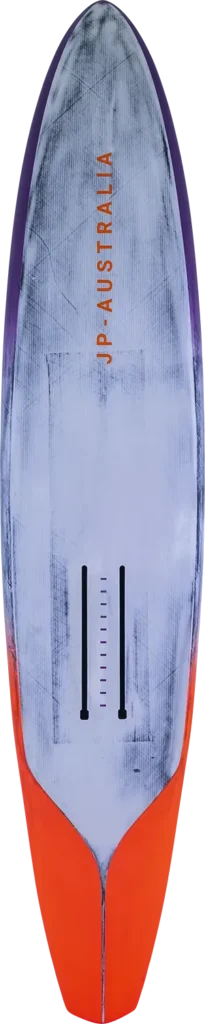
Bottom of the JP Downwind: purple nose, marbled gray-blue center, orange tail, two black foil rails, orange JP-AUSTRALIA
The Downwind’s bottom and its two foil rails · © JP
Rider standing in shallow water at dusk, long downwind board under the arm, black paddle in hand
The downwind board carried under the arm · © JP
JP

JP Downwind S-TEC 2026 test

  • Riding styleDownwind, light wind
  • Sizes248 cm
  • YearModel 2026 · released Dec 2024

Verdict in brief

A downwind SUP foil board that JP says can be used with a paddle or a wing: one size only, 130 l, 248 × 49.5 cm, 5.9 kg (± 6%), in S-TEC (PVC sandwich, biax carbon and a unidirectional patch). The Foiling Magazine tested it with the M-Winger PRO: it glides for a long time, stays stable when paddling and takes off in two or three paddle strokes on small rollers. For me, it’s a downwind board before it’s a wing board: I recommend it if you want to paddle or ride the bumps, but I wouldn’t take it as an everyday wing board.

A single test (The Foiling Magazine, September 16, 2025), against the M-Winger PRO; none in wing only, as of November 11, 2026.

For you if

  • You want a downwind board to paddle up to takeoff: 248 cm, flat bottom under the feet, rounded nose
  • You do downwind with a wing and want a 130 l volume that gets up on the foil in very light wind: wing use is intended on this board
  • You’re heading out on soft bumps or flat water: The Foiling Magazine’s tester finds it glides incredibly well on flat water or small bumps, linear and stable

Not for you if

  • You want an everyday wing board: at 248 cm long, it turns less tightly than the M-Winger PRO, which the tester finds more lively in turns
  • You’re looking for an intermediate size: there is only one size, 130 l
  • You want a safety board for rough weather: JP gives neither a wind range nor a rider weight, and the test covers light-wind conditions

Have you ridden this model? Leave the first review

What we know about this model

Our method
  • Specificationschecked mid-November 2026
  • 1 test published{'media': 'The Foiling Magazine', 'url': 'https://www.thefoilingmagazine.com/test-center/jp-australia-downwind-s-tec-m-winger-pro/', 'date': '2025-09-16'}
  • Rider reviewsgive yours, and it will appear here

Sizes, volume, weight and foil box

Sizes, volume, weight and recommended rider
SizeLength × widthThicknessVolumeBoard weightFoil box
8'2’’248 × 49.5 cm15.5 cm130 L5.9 kg2 longs rails US

“Sizes and specs” table from the JP Downwind S-TEC page (length, width, volume, estimated weight, thickness, box), read on November 11, 2026. The 5.9 kg weight is a JP estimate at ± 6%, not a weighing; The Foiling Magazine’s test also cites “about 5.9 kg”. Length in centimeters and feet, width and thickness in centimeters and inches.

Strong points, weak points

Strong points

  • 5.9 kg for 130 l, thanks to a PVC sandwich in biax carbon with a unidirectional patch under the feet
  • Glide and stability when paddling: flat bottom under the feet, rounded nose and beveled tail; The Foiling Magazine confirms the glide and stability
  • Two long US rails, four plate nuts supplied and a position scale repeated on the EVA pad
  • Fluorescent colors on the nose and tail to be seen at sea, sanded finish on the carbon to save weight
  • A tested board: The Foiling Magazine compares it to the M-Winger PRO and judges it very effective at gliding a long way, paddling stably and taking off early in open water or on flat water
Weak points

  • One size only, 130 l: nothing for smaller or larger riders
  • No wind range or rider weight from JP, and the test gives neither
  • One job only: downwind. The tester prefers the M-Winger PRO for tight turns
  • Volume discrepancy between shops: 130 l at JP and ZZ Surf, 135 l at Surfshop.fr

The flaw to know about. For me, its real flaw is that it only does one job: downwind. The Foiling Magazine’s tester prefers the M-Winger PRO as soon as you need to turn tight, and JP only offers one volume. If you want to wing most of the time, look elsewhere; if you dream of paddle downwind, the flaw becomes a quality.

Model evolution

Checked on 11/11/2026

  • Previous version JP Downwind S-Tec 2025

What changes vs Downwind S-Tec 2025

  • No change in dimensions, volume or weight: JP’s two tables are identical (130 l, 248 × 49.5 × 15.5 cm, 5.9 kg)
  • Page text rewritten, shorter on the bottom design and more detailed on construction; the “Test” tab appears on the 2026 page

Specifications

10 specs, sources at the bottom of the page

Program (manufacturer)
SUP foil board dedicated to downwind, for the paddle and/or the wing; “Wing foiling possible” (“Specific Lightwind/Downwind”)
Size and volume
8'2'' (130 l), one size
Dimensions (length × width)
248 × 49.5 cm
Thickness
15.5 cm
Weight (estimated by JP)
5.9 kg at ± 6%
Construction
S-TEC: CNC-cut core, full PVC sandwich with light biax carbon and a unidirectional carbon patch over the foot area and on the bottom, under the foil; sanded finishing layer to save weight
Shape
Flat bottom under the feet, sloped and slightly concave deck, rounded nose, pointed beveled tail, high-apex rail for stability, fluorescent colors on the nose and tail
Foil box
Two long US rails (“2x Long track box”), four plate nuts supplied; adapter for Glide Surf and Glide Wind foils
Pad
EVA pad with a fine corduroy pattern that repeats the foil’s position scale; kick pad at the back
Release date
Around December 2024: visuals of the JP “Downwind 2025” page uploaded in December 2024; The Foiling Magazine test on September 16, 2025; JP doesn’t display a release date

What the published tests say

1 test published, checked mid-November 2026

The Foiling Magazine (test of the JP-Australia Downwind S-TEC 130 l and the M-Winger PRO 105 l, page published on September 16, 2025)

Comparative test of the Downwind S-TEC in 130 l (8'2'' × 19.5'') and the M-Winger PRO in 105 l (6'8'' × 22''). The Downwind weighs about 5.9 kg, less than you’d expect at this volume, thanks to the carbon sandwich; you notice it mostly when paddling and carrying it under your arm. With this length and a flat rocker, it glides for a very long time: on soft rollers, two or three paddle strokes are enough to fly, in a linear and stable way. It is a little less agile than the M-Winger, more at ease drawing long turns on swell lines than linking tight turns. Tester’s conclusion: the Downwind is made for paddling, riding bumps or enjoying very light-wind days; the M-Winger PRO is more compact and more lively for wing in marginal wind.

Read the test

Riders’ reviews

No reviews

No reviews yet.

Nobody has reviewed this gear yet. Do you use it? Help other riders of your weight — 2 minutes.

Leave your review (2 minutes)

Three screens: you, the gear, your review. Your email will never be published; it is only used to confirm that the review comes from a real person.

1/3 You

Only used to confirm your review and to let you know if it is rejected. Never displayed, never resold.

Your weight *

10 kg ranges only, so that other riders of your build can relate. No exact weight is recorded.

Your level *

Beginner: I’m still taking lessons. Intermediate: I ride on my own. Advanced: transitions and jumps. Expert: freestyle, wave or competition.

Your riding

Optional. If checked, your review stays published with the label “Gear received or tied to a brand” and doesn’t count toward the average rating.

You must be at least 15 to post a review (“Your data” article of the policy).

2/3 Your gear and how you use it
Wind range actually used (knots)
How long you’ve been using it *
Number of sessions (optional)
Rate each criterion (at least 3) *
Takeoff / low-speed stability
Weight & maneuverability
Stiffness
Foot comfort
Finish & durability

1 = very poor, 5 = excellent. Leave blank any criterion you couldn’t judge.

Do you recommend it? *
3/3 Your review

140 characters minimum — Takeoff, low-speed stability, what disappointed you, who you’d recommend it to.

Rider reviews: confirmed email address, no compensation. “Brand-linked” and “loaned / received” reviews are labeled and excluded from the average. Each review shows its publication date, the date of the experience and, if it was edited, its update date. A review is published or rejected within 7 days at most; if it is rejected, you receive the reason by email and you can correct it. You can complete or delete your review at any time from the email address used to submit it. How do reviews work?

Alternatives to compare

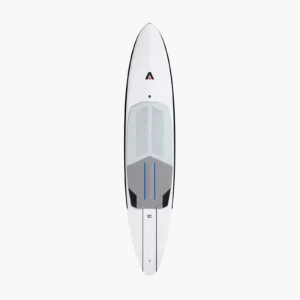
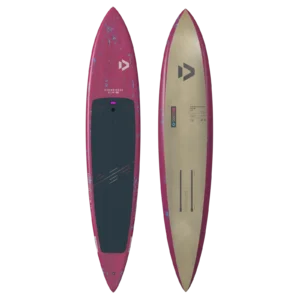
Duotone Downwinder Slim SLS 2026

Paddle downwind board in three sizes from 90 to 120 l, from 229 to 259 cm, from 5.38 to 6.23 kg. The 120 l measures 259 × 47 cm for 6.23 kg; the Downwind S-TEC is 248 × 49.5 cm for 5.9 kg at 130 l.

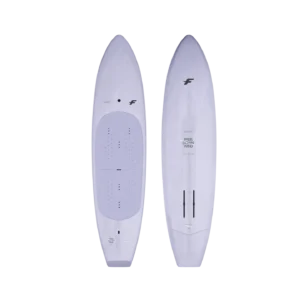
F-One Rocket Free Downwind 2026

Downwind board for paddle, wing and parawing, in five sizes from 85 to 124 l, from 193 to 234 cm, from 5.4 to 6.5 kg. Shorter, the largest (124 l, 234 × 53 cm) weighs 6.5 kg against 5.9 kg for the JP.

Armstrong Downwind MK III

Displacement-hull paddle downwind board, five sizes from 95 to 135 l. The 135 l measures 248.9 × 48.9 cm for 7.1 kg, against 248 × 49.5 cm for 5.9 kg for the JP: 1.2 kg less on the brands’ tables.

Frequently asked questions

JP Downwind S-TEC 2026 or Downwind 2025: what changes?

Nothing in the numbers: the two tables on the JP page give 130 l, 248 × 49.5 × 15.5 cm and 5.9 kg. The text of the 2026 page is shorter on the bottom design and adds the “Test” tab. It’s the same board in S-TEC.

Can the JP Downwind S-TEC be used for wing?

The JP page says “Wing foiling possible” and describes a board for the paddle and/or the wing. The Foiling Magazine recommends it first for paddling and riding bumps; for wing in marginal wind, it prefers the M-Winger PRO, which is more compact and more lively.

What is included with the JP Downwind S-TEC?

The board is supplied alone: the foil, paddle and leash are not included. For the price, see the “Where to buy” section of this page.

How much does the JP Downwind S-TEC weigh?

5.9 kg at ± 6%, a JP estimate. The Foiling Magazine also writes “about 5.9 kg” and finds it light for 130 l, thanks to the carbon sandwich.

Which foil should I mount on the JP Downwind S-TEC?

The JP page recommends the Glide Surf HP and the Glide Swift Carbon. The Downwind has two long US rails: any foil with a compatible plate fits. Ask the retailer about compatibility before you buy.

Is there a test of the JP Downwind S-TEC?

Yes, one: The Foiling Magazine, on September 16, 2025, against the M-Winger PRO. It finds the board light, stable and a very good glider. There is no other as of November 11, 2026, and none in wing only.

Method and limitations of this page

This page brings together the technical specs, tests from the press and blogs, and rider feedback found on the web, without rewriting any of it. When WindUnity has ridden the gear itself, the page says so with the “WindUnity test” badge.

Rider reviews are published as is, with their date. Reviews tied to a brand or based on loaned gear are labeled and excluded from the average.

What’s still missing

  • No wing-only test of the Downwind S-TEC
  • Recommended rider weight and wind range: JP publishes none
  • Volume: 130 l at JP and ZZ Surf, 135 l at Surfshop.fr
  • Exact release date: JP shows none
  • No rider feedback from outside the JP team
  • Rider reviews on WindUnity (N2): none

Sources

Data collected mid-November 2026

Shops : Surfshop.fr

Press and specialist sites : The Foiling Magazine

Others : JP-Australia, ZZ Surf, Duotone, F-One

See the details of the 8 sources

Shops

  1. Surfshop.fr, JP Downwind S-TEC

Press and specialist sites

  1. The Foiling Magazine, test of the JP Downwind S-TEC and M-Winger PRO
    16/09/2025

Others

  1. JP-Australia, 2026 wing foil boards
  2. ZZ Surf, JP Downwind S-TEC
  3. Duotone, Downwinder Slim SLS 2026
  4. F-One, Rocket Free Downwind