Skip to content
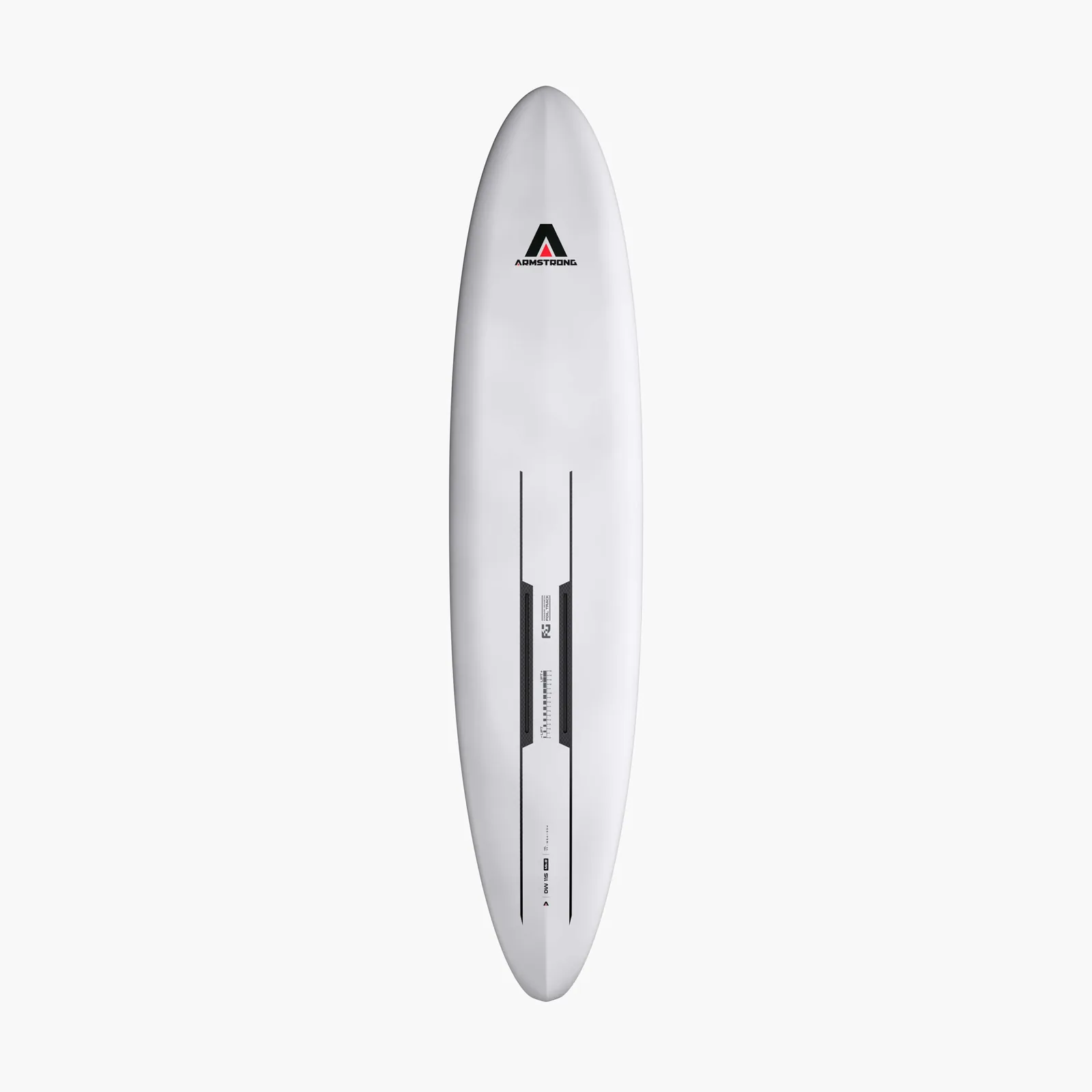
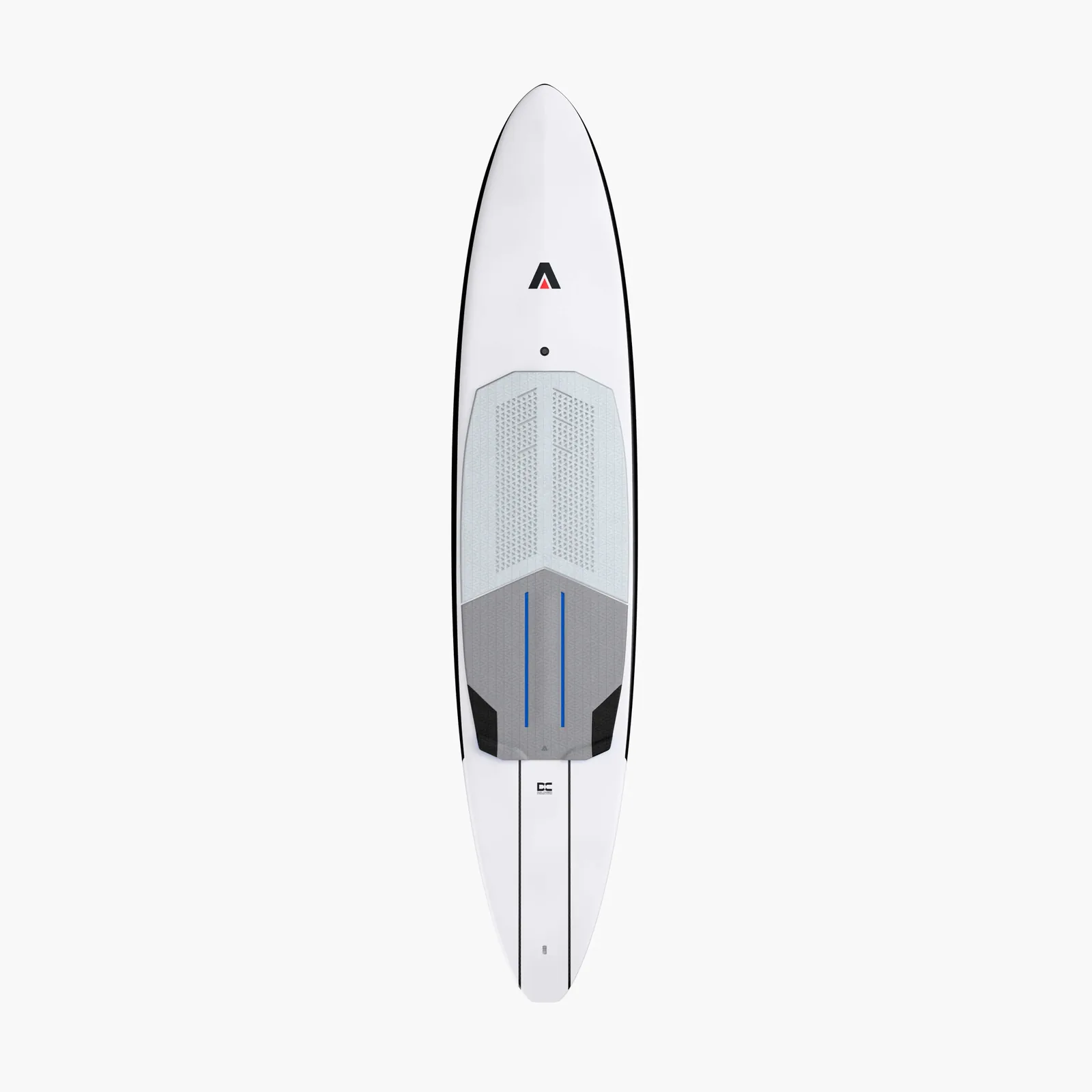
Deck of the Armstrong Downwind Mk III: white hull with black trim
Deck of the Downwind Mk III, 115 L size · © Armstrong
Underside of the Armstrong Downwind Mk III: pearly white hull, black and red Armstrong logo at the nose
Underside of the Downwind Mk III with its foil tracks, 115 L size · © Armstrong
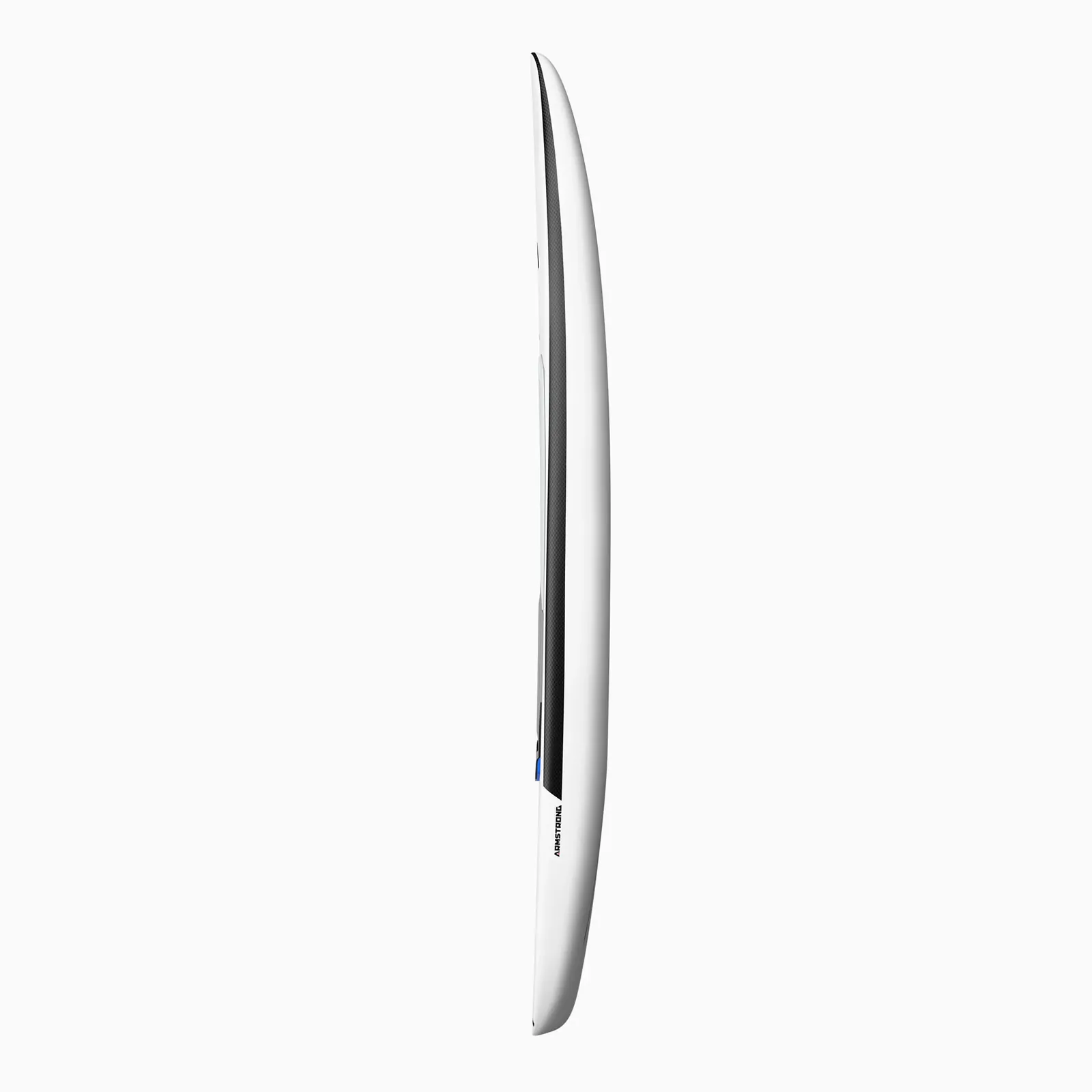
Profile of the Armstrong Mk III downwind board: very thin white edge, glossy black band on one side
Profile of the Downwind Mk III, 115 L size · © Armstrong
Armstrong

Armstrong Downwind Mk III Board test

  • Riding styleDownwind, wave
  • Sizes210,8 to 248,9 cm
  • YearReleased May 2025

Verdict in brief

A paddle-in downwind board in five sizes, from 95 to 135 L and 5.6 to 7.1 kg. Displacement hull, short tail, rounded rails. Two published tests, both against Armstrong’s Downwind Ocean: it paddles less fast, but turns tighter and feels smaller in flight. I recommend it for short, steep, slow bumps, or if you want a board that also does waves. I wouldn’t take it for long, fast bumps, nor for racing: take the Ocean.

Two tests (Tonic Mag on the 95 L, Foiling Magazine with no size given), no feedback from a rider who owns the Mk III and no wing test (checked on November 9, 2026).

For you if

  • You downwind in short, steep, slow bumps: the Foiling Magazine puts the Mk III in that case, with its short waterline and tight turning radius. I recommend it for that
  • You want a board that also does waves: the Foiling Magazine places it on the surf side, with its chopped pin tail; Tonic sees it for wind-against-tide conditions and light-wind days with a big foil
  • You want a short board for its volume: 211 cm for 95 L, 249 cm for 135 L, 46 to 49 cm wide

Not for you if

  • You want to get up on the foil with as little paddling as possible: Tonic counts 5 to 10 more strokes than with the Ocean, with the same foil, and the Foiling Magazine finds it less fast to paddle
  • You’re aiming at long, fast bumps, racing or the most modern very-high-aspect-ratio foils: the Foiling Magazine sends those conditions to the Ocean
  • You want to choose your size by your weight: Armstrong gives no rider weight

Have you ridden this model? Leave the first review

What we know about this model

Our method
  • Specificationschecked early November 2026
  • 2 tests publishedTonic Mag, test of the Armstrong Downwind Mk III in 95 L (6'11''), compared with the Downwind Ocean 95 L, by Jack Galloway (published May 7, 2025), Foiling Magazine, “Double Dip”: Downwind Mk III and Downwind Ocean, size not specified (published June 25, 2025)
  • Rider reviewsgive yours, and it will appear here

Sizes, volume, weight and foil box

Sizes, volume, weight and recommended rider
SizeLength × widthThicknessVolumeBoard weightRecommended rider
6'11’’210.8 × 46.4 cm14 cm95 L5.6 kgn.c.
7'3’’221 × 47 cm14.6 cm105 L5.9 kgn.c.
7'7’’231.1 × 48.3 cm14.6 cm115 L6.5 kgn.c.
7'11’’241.3 × 48.9 cm15.2 cm125 L6.7 kgn.c.
8'2’’248.9 × 48.9 cm15.2 cm135 L7.1 kgn.c.

Dimensions converted from inches to cm by WindUnity; volume and weight come from Armstrong. No rider weight published.

More details on these figures

Length in feet and inches, width and thickness in inches, volume in liters and board weight in kilos: specifications from the Armstrong page, read on November 9, 2026. The centimeters are converted by WindUnity (1 inch = 2.54 cm), rounded to the millimeter. Armstrong does not publish a rider weight.

Strong points, weak points

Strong points

  • Five sizes from 95 to 135 L, with length, width, thickness and weight published for each
  • From 5.6 kg (95 L) to 7.1 kg (135 L), within ±5%
  • Double carbon stringer and carbon foil boxes: the Foiling Magazine finds the construction very solid and the stiff feel very clear
  • Tonic Mag (95 L): easier to pump than the Ocean, smaller and more maneuverable underfoot, balanced even in choppy water
  • Bag included, with a Velcro opening for the mast (Foiling Magazine)

Weak points

  • Harder to get up on the foil than the Ocean: 5 to 10 more paddle strokes on the same foil (Tonic Mag, 95 L)
  • No recommended rider weight per size
  • Forward Geometry boxes: on older large foils, the mast sits a bit too far forward (Foiling Magazine)

The flaw to know about. For me, its real flaw is the paddling: Tonic counts 5 to 10 more strokes than on the Ocean to get up on the same foil, in flat water. On long, fast bumps, you paddle longer to take off, and the Foiling Magazine sends those conditions to the Ocean. It makes up for it in flight and in turns, not at the start.

Model evolution

Checked on 09/11/2026

  • Previous version Armstrong downwind board, previous generation

What changes versus the previous generation

  • Displacement hull to paddle faster and take off more easily, shorter and narrower outline, rounded rails, flatter deck with more room for the feet
  • Non-slip pad with micro-cuts, two central support bars and blocks at the rear corners to place your feet without looking
  • Integrated carbon foil tracks in Forward Geometry position, double carbon stringer, PVC wrap against paddle knocks

Specifications

10 specs, sources at the bottom of the page

Program (manufacturer)
Downwind board for progressing, from first runs to short, choppy bumps; displacement hull to paddle faster and get up on the foil more easily
Sizes and volumes
95, 105, 115, 125 and 135 L (6'11'' to 8'2'')
Dimensions (length × width × thickness)
95 L: 210.8 × 46.4 × 14.0 cm; 115 L: 231.1 × 48.3 × 14.6 cm; 135 L: 248.9 × 48.9 × 15.2 cm (all five sizes in the table)
Board weight
From 5.6 kg (95 L) to 7.1 kg (135 L), within ±5%
Recommended rider weight
n/a: not published by Armstrong
Foil and mast
Carbon foil tracks built into the stringers, in Forward Geometry (foil closer to the center, less swing weight in turns); long boxes: room for most foils, but older large foils sit a bit too far forward according to Foiling Magazine. Armstrong does not mention compatibility with other brands on this page
Construction
Carbon-PVC sandwich, double carbon stringer, PVC wrap against paddle knocks
Shape
Displacement hull, mini squash tail at Armstrong (“chopped pin” with high volume for the Foiling Magazine), flat deck, rounded rails, slight double concave at the nose, volume pushed into the front third, Gore-Tex vent plug
Package contents
Bag; pre-tied leash and vent plug mentioned by Foiling Magazine; paddle, foil and footpad: n/a
Release date
May 2025 (Armstrong page published on May 6, 2025, first Tonic Mag test on May 7, 2025); Armstrong shows no release date

What the published tests say

2 tests published, checked early November 2026

Tonic Mag, test of the Armstrong Downwind Mk III in 95 L, by Jack Galloway (published on May 7, 2025)

Test of the 95 L (6'11'') against the Downwind Ocean 95 L, with the same APF1350 foil. First try in flat water: 5 to 10 more paddle strokes than the Ocean to get up. Once flying, easier to pump and smaller underfoot. Harder to get up than the Ocean, but the tester finds the effort pays off on the good days: a more playful run, a board that stays balanced and reassuring even when the water gets messy. He sees it for the wind-against-tide conditions of the Solent or light-wind days with a big foil. No wing trial: he thinks it works, without having tried it. Finish judged impeccable, blue bag included. Tester’s weight not given.

Read the test
Foiling Magazine, “Double Dip”: Armstrong Downwind Mk III and Downwind Ocean (published on June 25, 2025)

Cross test of the two boards, tester’s size and weight not given. The Mk III is the more “surf” one: shorter waterline, wider outline than the Ocean, bulkier chopped tail; it gives its best in waves or in downwind on short, slow, steep bumps, with a tight turning radius, at the cost of paddling speed. The Ocean suits long, fast bumps and the most recent foils; it is narrower, so a bit less stable than the Mk III. Double carbon stringer and carbon box construction judged very solid, remarkable stiffness. Pad of the right thickness, rear arches to find your place without looking, Gore-Tex plug, pre-tied leash, quality bag but with no room for accessories. Long FG boxes: room for adjustment for most foils, a bit too far forward on older large foils.

Read the test
Rider feedback collected from the web (2)

Feedback found on the web, reworded, never published as the site’s reviews. Two Progression Project threads read on November 9, 2026. I found no Reddit feedback on this board.

Progression Project, thread “Switching to new Armstrong DW”2025-07-13

Four riders: one at 60 kg on the first-generation 7'2'' 107 L (HA880 and HA580), one at 72 to 75 kg who had a first-generation 98 L, one at 88 kg on the V1 107 L, and a last one with no weight given

The 60 kg rider hesitates between the 95 L and the 105 L of the Mk III. The 88 kg one tells him to take the 95 L: for surf downwind, the shorter the better. Another even finds 95 L a bit too much volume for 60 kg and would want an 80 L. The third first asks which bumps he rides. None of them has the Mk III: this is advice, not feedback.

Progression Project, thread “Armstrong MKIII Downwind board review?”2025-10-21

Rider looking for reviews

Asks whether anyone already rides the Mk III and notes that reviews only come from team riders. No reply as of November 9, 2026.

Riders’ reviews

No reviews

No reviews yet.

Nobody has reviewed this gear yet. Do you use it? Help other riders of your weight — 2 minutes.

Leave your review (2 minutes)

Three screens: you, the gear, your review. Your email will never be published; it is only used to confirm that the review comes from a real person.

1/3 You

Only used to confirm your review and to let you know if it is rejected. Never displayed, never resold.

Your weight *

10 kg ranges only, so that other riders of your build can relate. No exact weight is recorded.

Your level *

Beginner: I’m still taking lessons. Intermediate: I ride on my own. Advanced: transitions and jumps. Expert: freestyle, wave or competition.

Your riding

Optional. If checked, your review stays published with the label “Gear received or tied to a brand” and doesn’t count toward the average rating.

You must be at least 15 to post a review (“Your data” article of the policy).

2/3 Your gear and how you use it
Wind range actually used (knots)
How long you’ve been using it *
Number of sessions (optional)
Rate each criterion (at least 3) *
Takeoff / low-speed stability
Weight & maneuverability
Stiffness
Foot comfort
Finish & durability

1 = very poor, 5 = excellent. Leave blank any criterion you couldn’t judge.

Do you recommend it? *
3/3 Your review

140 characters minimum — Takeoff, low-speed stability, what disappointed you, who you’d recommend it to.

Rider reviews: confirmed email address, no compensation. “Brand-linked” and “loaned / received” reviews are labeled and excluded from the average. Each review shows its publication date, the date of the experience and, if it was edited, its update date. A review is published or rejected within 7 days at most; if it is rejected, you receive the reason by email and you can correct it. You can complete or delete your review at any time from the email address used to submit it. How do reviews work?

Alternatives to compare

Appletree Skipper Downwind V2

Appletree: 4 sizes from 94 to 118 L, from 213 to 244 cm weight n/a. At 95 L: 210.8 × 46.4 cm and 5.6 kg for the Mk III, against 94 L and 213.4 × 45.7 cm for the Skipper. Almost the same dimensions; the Mk III goes up to 135 L, the Skipper stops at 118 L.

Duotone Downwinder Slim SLS 2026

Duotone: 90, 105 and 120 L, 229 to 259 cm, 5.38 to 6.23 kg. At 105 L: 244 × 46 cm, 5.92 kg against 221 × 47 cm, 5.9 kg for the Mk III. The Slim is longer and narrower for the same weight, so closer to the Ocean than to the Mk III.

Other versions of this model

Armstrong Downwind Mk III Board

Frequently asked questions

Which sizes of the Downwind Mk III exist?

Five sizes: 95 L (6'11'', 5.6 kg), 105 L (7'3'', 5.9 kg), 115 L (7'7'', 6.5 kg), 125 L (7'11'', 6.7 kg) and 135 L (8'2'', 7.1 kg). All five are sold out on the Armstrong shop as of November 9, 2026.

Which Downwind Mk III size should I choose for my weight?

Armstrong publishes no rider weight. The only test with a known size is Tonic Mag’s on the 95 L, with no tester weight. On the Progression Project (July 2025), riders advise the 95 L to a 60 kg rider hesitating with the 105 L, but that is advice, not feedback. For the rest, ask a shop that has the board as a demo.

Downwind Mk III or Downwind Ocean?

The Foiling Magazine (June 25, 2025) and Tonic Mag (May 7, 2025) say the same thing. The Mk III is wider and shorter: more stable, more surf, a tighter turn, but more paddling (5 to 10 more strokes for Tonic). The Ocean is narrower and longer: the easiest to get up, made for long, fast bumps and for racing.

What is included with Armstrong’s Downwind Mk III?

The board only, from 95 L to 135 L. For the price, see the “Where to buy” section of this page.

Does the Downwind Mk III work with my foil, and with a wing?

The Armstrong page doesn’t mention other foil brands. The Foiling Magazine finds room for adjustment for most foils, but a bit too far forward with older large foils. With a wing, no test: Tonic Mag thinks it works without having tried it.

Method and limitations of this page

This page brings together the technical specs, tests from the press and blogs, and rider feedback found on the web, without rewriting any of it. When WindUnity has ridden the gear itself, the page says so with the “WindUnity test” badge.

Rider reviews are published as is, with their date. Reviews tied to a brand or based on loaned gear are labeled and excluded from the average.

What’s still missing

  • Recommended rider weight per size: not published by Armstrong
  • Size and weight of the Foiling Magazine tester: not given; Tonic Mag tester’s weight: not given
  • No wing test, and none on the 105 to 135 L sizes
  • No feedback from a rider who owns the Mk III
  • Model year: not published by Armstrong
  • Delivery contents: bag confirmed by Armstrong; footpad and hardware not specified
  • Rider reviews on WindUnity (N2): none

Sources

Data collected early November 2026

Press and specialist sites : Tonic Mag, The Foiling Magazine

Forums and riders : Progression Project

Others : Armstrong, Foilsurfing.nl, HoeNalu

See the details of the 7 sources

Press and specialist sites

  1. Tonic Mag, Downwind Mk III test 2025
  2. Foiling Magazine, Double Dip Downwind Mk III and Ocean

Forums and riders

  1. Progression Project, thread on choosing a size
  2. Progression Project, thread on Mk III reviews

Others

  1. Foilsurfing.nl, Downwind Mk III