Skip to content
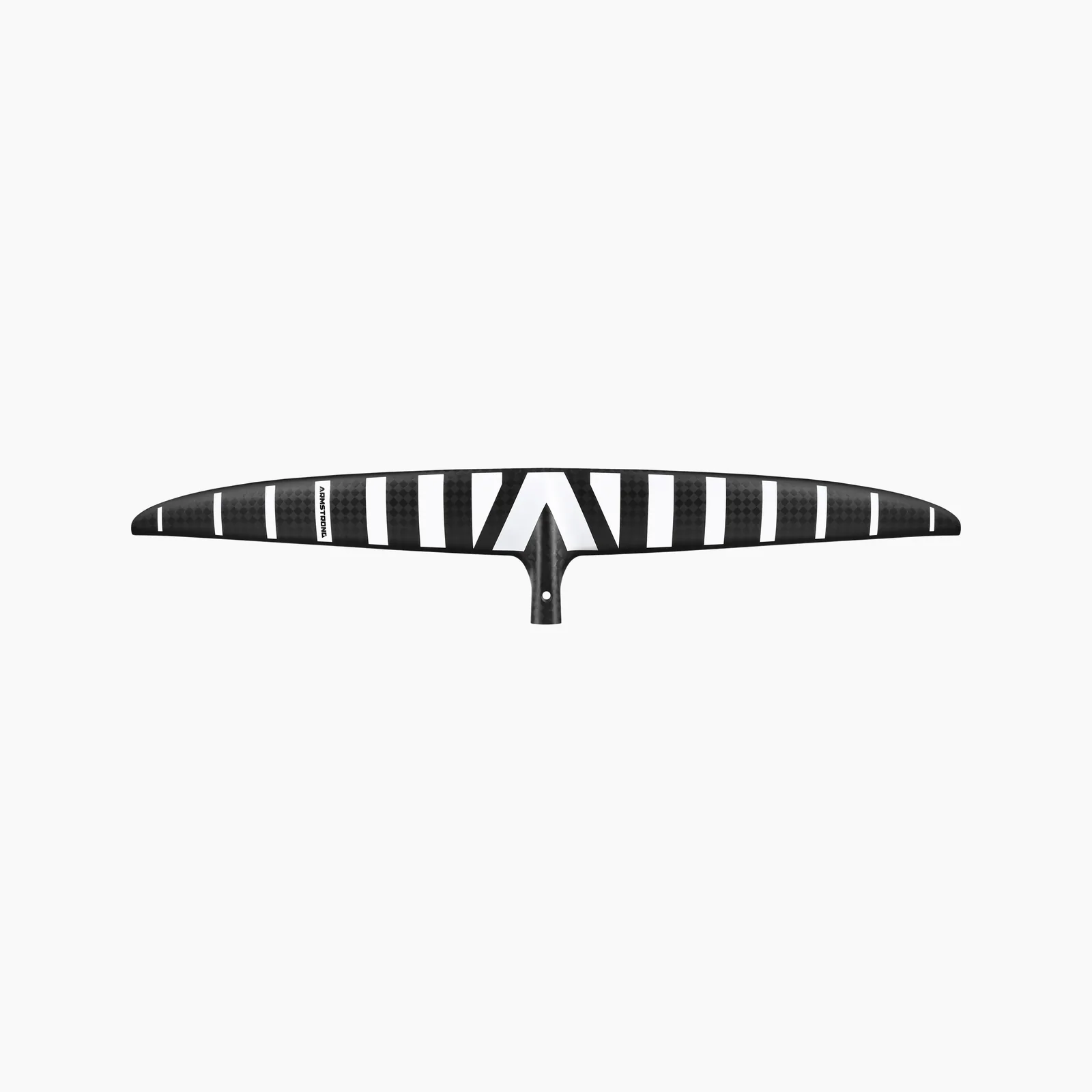
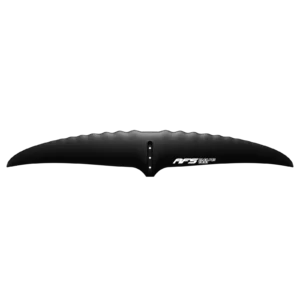
Armstrong UHA front wing, dark, very wide and thin, photographed on a light background
UHA front wing, size 770 cm² · © Armstrong
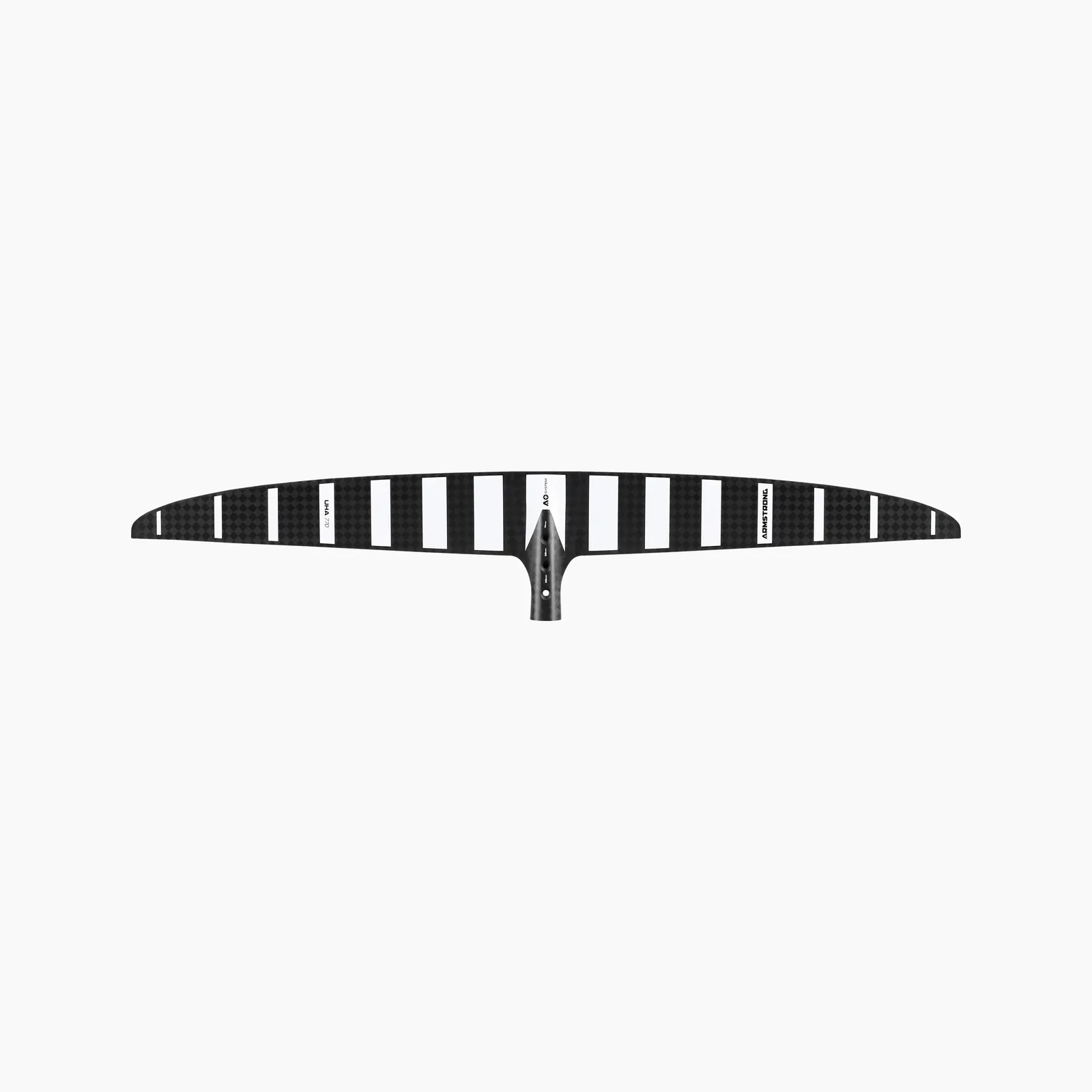
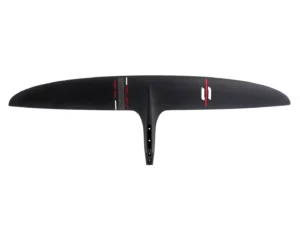
Armstrong UHA front wing in black carbon with vertical white stripes, flat view, central block at the bottom, plain light background
Second view of the UHA front wing · © Armstrong
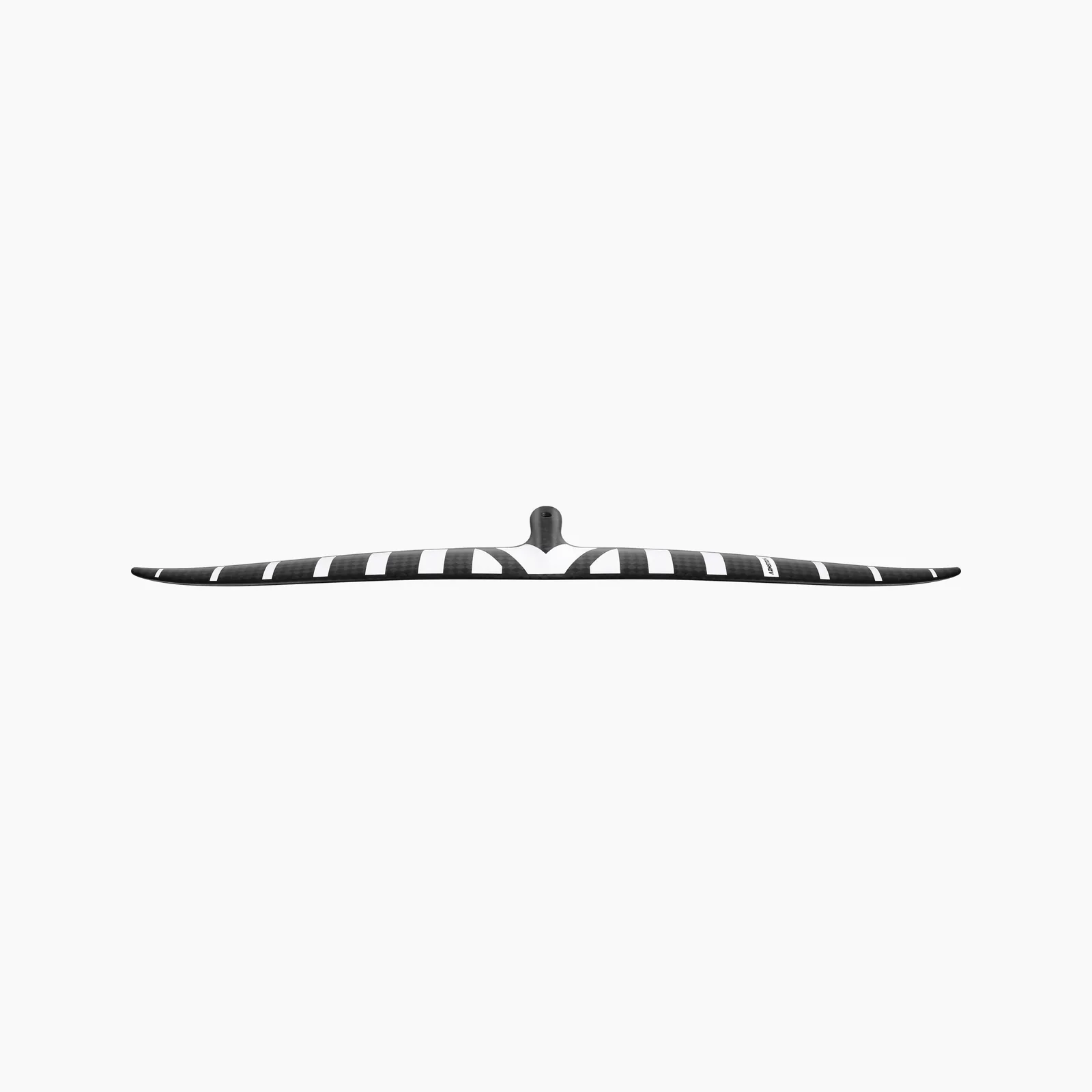
Armstrong UHA front wing in black carbon with white stripes, front view along the leading edge, slightly arched, light background
Third view of the UHA front wing · © Armstrong
Armstrong

Armstrong UHA Front Foil test

  • Riding styleGlide: downwind (wing and paddle), parawing, light-wind wing, assisted foil
  • Front wings570 to 1270 cm²
  • Wingspan84.7 to 126.5 cm
  • YearModel 2026 · released Jan 2026

Verdict in brief

A glide front wing with aspect ratio 12.6, in seven sizes (570 to 1270 cm²), that completes the HA series on the downwind, parawing and light-wind wing side. One published test (Foiling Magazine, size 870) finds a very soft stall, a huge speed range and pumping that takes little energy.

For you if

  • You do downwind on a wing, paddling or on a parawing and want to link bumps while pumping as little as possible
  • You are coming from an Armstrong HA and want more glide: go down one size from your HA to get the same lift
  • You ride assisted foil: two REAL buyers mount it on a Foil Drive and Foiling Magazine ran its comparative tests with a Foil Drive

Not for you if

  • You are mainly after turning, top speed and acceleration: Armstrong says the HA does better on all three
  • You do kitefoil or ride in strong wind: a REAL buyer finds it bad for kite, it “breaches easily at high lean angles because it is so wide”
  • You are new to foiling: no beginner feedback found, and a REAL buyer says it is good for an intermediate level or above

Have you ridden this model? Leave the first review

What we know about this model

Our method

Front wings: sizes and mounting

Front wings: area, span, aspect ratio, stabilizer and mounting
SizeWingspanAspect ratioRecommended stabilizerWing attachmentWing weight
570 cm²84,7 cm12,6not published by ArmstrongA+: 2 M6 × 28.5 mm screws, 2 M6 × 19.5 mm screws, 1 M6 barrel nut560 g
670 cm²91,9 cm12,6not published by ArmstrongA+: 2 M6 × 28.5 mm screws, 2 M6 × 19.5 mm screws, 1 M6 barrel nut625 g
770 cm²98,5 cm12,6not published by ArmstrongA+: 2 M6 × 28.5 mm screws, 2 M6 × 19.5 mm screws, 1 M6 barrel nut625 g
870 cm²104,7 cm12,6not published by ArmstrongA+: 2 M6 × 28.5 mm screws, 2 M6 × 19.5 mm screws, 1 M6 barrel nut685 g
970 cm²110,6 cm12,6not published by ArmstrongA+: 2 M6 × 28.5 mm screws, 2 M6 × 19.5 mm screws, 1 M6 barrel nut835 g
1070 cm²116,1 cm12,6not published by ArmstrongA+: 2 M6 × 28.5 mm screws, 2 M6 × 19.5 mm screws, 1 M6 barrel nut870 g
1270 cm²126,5 cm12,6not published by ArmstrongA+: 2 M6 × 28.5 mm screws, 2 M6 × 19.5 mm screws, 1 M6 barrel nut935 g

Surface area, span, aspect ratio A+ screws supplied. Armstrong figures taken on November 7, 2026.

More details on these figures

Screws: list supplied with the wing. The surface area in inches, the profile thickness, the tightening torque and the recommended stabilizer are not published.

Components and compatibility

Checked on 07/11/2026

Masts

Performance-X Carbon Mast

ultra-high-modulus carbon

Performance-X Carbon Mast
Longueur
72.5 cm
79.5 cm
86.5 cm
93.5 cm

Performance Mk II Carbon Mast

carbon · thickness 13.8 mm

Performance Mk II Carbon Mast
Longueur
72.5 cm
79.5 cm
86.5 cm
93.5 cm

Mk II Carbon Mast

carbon · thickness 15.8 mm

Mk II Carbon Mast
Longueur
65.5 cm
72.5 cm
79.5 cm
86.5 cm

Alloy Mast

aluminum

Alloy Mast
Longueur
58 cm
72 cm
85 cm

Fuselage

Titanium Core Fuselage (A+); also exists in Alloy, 65 and 75 cm · titanium core sheathed in carbon

Titanium Core Fuselage (A+); also exists in Alloy, 65 and 75 cm
Longueur
50 cm
60 cm
70 cm

Stabilisateurs

Surf Mk II

Surf Mk II
Surface
130 cm²
170 cm²
200 cm²

Dart 120

Dart 120
Surface
120 cm²

Dart 140

Dart 140
Surface
140 cm²

Speed 180

Speed 180
Surface
180 cm²

Glide 220

Glide 220
Surface
220 cm²

Flow 235

Flow 235
Surface
235 cm²

Pump 202

Pump 202
Surface
202 cm²

S1 300

S1 300
Surface
300 cm²

Weights of the front wing alone published by Armstrong (560 to 935 g). Masts, fuselages and stabilizers: lengths and sizes from the armstrongfoils.com catalog as of November 7, 2026; weights not recorded. The catalog does not say which ones are recommended for the UHA.

Compatibility

Wing attachment
Armstrong’s A+ system, which assembles mast, fuselage, front wing and stabilizer. Screws supplied with the wing: 2 M6 × 28.5 mm screws, 2 M6 × 19.5 mm screws and an 8 mm titanium M6 barrel nut, plus two protective covers. Tightening torque not published.
Stabilisateurs
Armstrong does not publish a stabilizer pairing per size for the UHA. Foiling Magazine rode the 870 with the Dart 120, Dart 140 and Speed 180 for downwind and parawing, and with the Surf Mk II 130 and 170 for more agility; a REAL buyer fits a 220 stabilizer on his 970. Armstrong catalog: Surf Mk II (130, 170, 200 cm²), Dart 120 and 140, Speed 180, Glide 220, Flow 235, Pump 202, S1 300.
Fuselage
Armstrong does not publish a list of fuselages for the UHA. A+ catalog: Titanium Core in 50, 60 and 70 cm, Alloy in 65 and 75 cm.
Masts
Armstrong does not publish a list of masts for the UHA. Foiling Magazine saw a “P865” mast flex slightly with the 1270 and recommends the P795. Armstrong catalog in A+: Performance-X (725 to 935 mm), Performance Mk II (725 to 935 mm), Mk II (655 to 865 mm) and Alloy (58, 72 and 85 cm).

Stated riding styles

Front wing
Armstrong page: glide, very low stall, intuitive turning the Armstrong way. Interview of April 2, 2026 (Foiling Magazine): downwind and parawing first, light-wind wing; large sizes for paddle starts, light wind and pumping, small ones for turning, fast runs and efficiency. Foiling Magazine test: downwind, parawing, wing, assisted foil.
Summary
downwind · parawing · light-wind wing · assisted foil; kitefoil not recommended by a buyer.

Strong points, weak points

Strong points

  • Seven sizes from 570 to 1270 cm² at the same aspect ratio of 12.6: the shape does not change, only the size does
  • Foiling Magazine finds the stall “almost impossibly smooth” and the speed range “massive” (size 870, April 20, 2026)
  • From 560 to 935 g for the front wing alone, with a span of 84.7 to 126.5 cm
  • High-modulus pre-preg Toray carbon, A+ system; 316 stainless steel screws with titanium coating and titanium nut included

Weak points

  • Only one test read (Foiling Magazine, size 870): nothing independent on the other six sizes
  • Figures to check: the 670 and 770 are listed at the same weight (625 g) and Foiling Magazine writes an aspect ratio of 12.8 where Armstrong says 12.6
  • No recommended wind range or rider weight per size from Armstrong
  • Very wide: the 1270 measures 126.5 cm and slightly flexes a “P865” mast according to Foiling Magazine, which recommends the P795

The flaw to know about. No series defect recorded. Two limits to know: Foiling Magazine saw a “P865” mast flex slightly with the 1270 and recommends the P795; a REAL buyer (Marks) finds it bad for kitefoil, because it comes out of the water at a high lean angle due to its width.

Specifications

9 specs, sources at the bottom of the page

Program (manufacturer)
Glide: downwind, parawing, light-wind wing
Sizes (area)
570, 670, 770, 870, 970, 1070 and 1270 cm²
Wingspan
84.7 cm (570), 91.9 (670), 98.5 (770), 104.7 (870), 110.6 (970), 116.1 (1070), 126.5 (1270)
Aspect ratio
12.6 for all sizes (12.8 in Foiling Magazine’s text)
Weight
560 g (570), 625 (670), 625 (770), 685 (870), 835 (970), 870 (1070), 935 (1270)
Construction
High-modulus pre-preg Toray carbon
Mounting system
A+: 2 M6 × 28.5 mm screws, 2 M6 × 19.5 mm screws, 1 M6 barrel nut (8 mm); two protective covers supplied
Armstrong availability
All sizes shown as “Sold out” on November 7, 2026
Official film
“UHA Front Foil / Product Overview” (January 19, 2026), Armstrong Foils channel

What the published tests say

1 test published, checked early November 2026

Foiling Magazine, “Armstrong UHA Front Foil”

For the tester, the UHA fills the gap in the range for pure downwind, where the HA series leans toward surf and waves. A shape close to a stretched HA, discreet camber, rounded nose. He confirms Armstrong’s rule: go down one size from the HA, which comparative tests with a Foil Drive confirmed. In the bumps, it likes to stay high on the mast; stall “almost impossibly smooth”, very high pitch stability, “massive” speed range. Pumping: it prefers soft, slow pressure. Solid enough, he says, to push hard on it despite the aspect ratio. His wife, an intermediate-level wing rider and a light one, learned to set up her turns with this extra glide without stalling, and the front wing still turns well enough for her weight. Good whitewater tolerance. Long stabilizers (Dart 120 and 140, Speed 180) for downwind and parawing, Surf Mk II 130 and 170 for a more playful turn. Conclusion: “If glide is your number one priority, the UHA is the choice from the Armstrong range”.

Read the test
Articles from shops and schools (2), not counted as tests

These articles come from sites that sell or rent gear: they are cited for information and kept separate from published tests.

REAL Watersports (US shop), Armstrong UHA product page and video “Armstrong UHA on water review” (January 15, 2026)checked on 07/11/2026

Product page with three customer reviews and a video from the shop’s YouTube channel, where Matt Nuzzo tries the range on a wing in Fiji (picked up by Tonic Mag on January 21, 2026). A shop sells the products it shows: neither the video nor the reviews are counted as a published test.

GlissEvolution (French shop), Armstrong UHA Front Foilchecked on 07/11/2026

Product page: front wing for downwind, parawing and light-wind wing, aspect ratio 12.6 several sizes in stock.

Rider feedback collected from the web (5)

Messages in English summarized by WindUnity, with the exact quotes. None of this is published as site reviews. The REAL reviews are from buyers at a shop that sells the UHA, published undated; the account kashkows says he has ridden Armstrong for five years without specifying any link with the brand.

Reddit r/wingfoil, thread on choosing an Armstrong front wing size, from beginner (S1 1550) to intermediate (account kashkows)2026-04-02

Says he has ridden Armstrong for more than five years, in several disciplines and in competition (post of June 1, 2026); possible link with the brand not specified; weight not specified

He likes the UHA, does not find it harder than the HA, with more pumping, projection and efficiency. He has ridden the 870 since receiving it and only takes out a race wing to go faster in Hawaii or Santa Cruz.

Reddit r/wingfoil, thread “Armstrong MA vs HA foils and tail combo questions” (account Bubba-NZ)2026-10-07

Says he weighs 75 kg and rides a 790 wing; writes from New Zealand (“locally”); talks about what riders in his area do

He notes that, where he is, most Armstrong riders are replacing their HA with the MA Mk II, better suited to chop, and that downwind riders are switching to the UHA.

REAL Watersports, customer review by Marks on the product page

Shop buyer, review published undated on the product page; switches from the HA to the UHA

The UHA replaced his HA: the 870 for light-wind wing and small waves in assisted foil, the 770 or 670 for bigger waves in assisted foil. Good takeoff and stall, quite maneuverable for a UHA, a little more pressure on the back foot than with the HA to level it out after a turn. Pumping and glide “amazing”. Bad for kitefoil. Good for an intermediate level or above, a “must buy” in assisted foil according to him. In wing in stronger wind, he keeps the MA Mk II.

REAL Watersports, customer review by Ricker G. on the product page

Shop buyer, review published undated on the product page; three sessions

Much softer takeoffs, never any stall, noticeably longer glide, easy and balanced pumping, better turning than expected. The 970 comes back under him easily after a hard turn. A slightly slippery feel, which he attributes to the thinner tips, with looser tracking. It has become his favorite in light wind.

REAL Watersports, customer review by Drew on the product page

Shop buyer, review published undated on the product page; first sessions

He finds the pumping and glide better than the standard HA in parawing and downwind: the UHA catches the back of the bumps and follows them. A very soft lift profile and easier turning than expected despite the span.

Riders’ reviews

No reviews

No reviews yet.

Nobody has reviewed this gear yet. Do you use it? Help other riders of your weight — 2 minutes.

Leave your review (2 minutes)

Three screens: you, the gear, your review. Your email will never be published; it is only used to confirm that the review comes from a real person.

1/3 You

Only used to confirm your review and to let you know if it is rejected. Never displayed, never resold.

Your weight *

10 kg ranges only, so that other riders of your build can relate. No exact weight is recorded.

Your level *

Beginner: I’m still taking lessons. Intermediate: I ride on my own. Advanced: transitions and jumps. Expert: freestyle, wave or competition.

Your riding

Optional. If checked, your review stays published with the label “Gear received or tied to a brand” and doesn’t count toward the average rating.

You must be at least 15 to post a review (“Your data” article of the policy).

2/3 Your gear and how you use it
Wind range actually used (knots)
How long you’ve been using it *
Number of sessions (optional)
Rate each criterion (at least 3) *
Low-end takeoff
Speed & glide
Maneuverability (turns)
Pump
Finish & durability

1 = very poor, 5 = excellent. Leave blank any criterion you couldn’t judge.

Do you recommend it? *
3/3 Your review

140 characters minimum — Takeoff, glide, pump, what disappointed you, who you’d recommend it to.

Rider reviews: confirmed email address, no compensation. “Brand-linked” and “loaned / received” reviews are labeled and excluded from the average. Each review shows its publication date, the date of the experience and, if it was edited, its update date. A review is published or rejected within 7 days at most; if it is rejected, you receive the reason by email and you can correct it. You can complete or delete your review at any time from the email address used to submit it. How do reviews work?

Alternatives to compare

F-One Eagle X

Same high-aspect-ratio downwind territory: one-piece F-One front wing at aspect ratio 12, from 500 to 1000 cm². The UHA goes up to 1270 cm² and is sold separately from the fuselage and stabilizer. No test puts them head to head.

AFS Enduro

The AFS front wing for glide, from 600 to 1300 cm², aspect ratio of 11. A lower aspect ratio than the UHA (12.6) and a lower price; no test compares them.

Sabfoil Leviathan

Four one-piece front wings from 1330 to 2140 cm² for pump foiling, dock start, downwind and very-light-wind wing; aspect ratio of 12.3 on the 1300 and 1400. No independent test either.

Frequently asked questions

Where can I check the current price?

See the current prices in the “Where to buy” section of this page.

UHA or HA: what is the difference at Armstrong?

The UHA maximizes glide, projection, low stall and efficiency, while the HA stays better in turning, top speed and acceleration (Armstrong interview, Foiling Magazine, April 2, 2026). Foiling Magazine’s test confirms that the HA leans toward surf and waves and that the UHA fills the gap for pure downwind. The rule for the two: go down one size from the HA to get the same lift.

Which UHA size to choose?

Armstrong publishes neither rider weight nor wind range per size. Its rule: go down one size from the HA; large sizes make paddle starts, light wind and pumping easier, small ones turning and fast runs. Foiling Magazine tested the 870; a REAL buyer rides the 870 in light wind and the 770 or 670 for bigger waves in assisted foil; Gleiten.tv tried the 670, 870 and 1270.

Which stabilizer and mast with the UHA?

Armstrong gives no pairing. Foiling Magazine rode the 870 with the Dart 120, Dart 140 and Speed 180 for downwind and parawing, and with the Surf Mk II 130 and 170 for more agility. On the mast side, a “P865” flexes slightly with the 1270: the tester recommends the P795. The A+ system assembles mast, fuselage, front wing and stabilizer.

Is the UHA made for parawing?

It was designed at the same time as the parawing was becoming popular (Foiling Magazine interview, April 2, 2026): glide, stability and a tall mast leave time to put the parawing away, then to set off again surfing the bumps. Foiling Magazine finds it good for downwind and parawing and open to other uses.

Method and limitations of this page

This page brings together the technical specs, tests from the press and blogs, and rider feedback found on the web, without rewriting any of it. When WindUnity has ridden the gear itself, the page says so with the “WindUnity test” badge.

Rider reviews are published as is, with their date. Reviews tied to a brand or based on loaned gear are labeled and excluded from the average.

What’s still missing

  • Only one test read (Foiling Magazine, size 870); the Gleiten.tv video (February 19, 2026) and the Tonic Mag review (issue 27) could not be read
  • Recommended rider weight and wind range per size, profile thickness, surface area in inches, tightening torque and recommended stabilizer: not published by Armstrong
  • Weights of the 670 and 770 identical (625 g) on the Armstrong page, and an aspect ratio of 12.8 in Foiling Magazine’s test versus 12.6 at Armstrong: to be checked
  • Reviews posted on WindUnity: none

Sources

Data collected early November 2026

Shops : Real Watersports, GlissEvolution

Press and specialist sites : The Foiling Magazine, Gleiten.tv, Tonic Mag

Forums and riders : Reddit

Others : Armstrong

See the details of the 9 sources

Shops

  1. REAL Watersports, Armstrong UHA front wing
  2. GlissEvolution, Armstrong UHA Front Foil

Press and specialist sites

  1. Foiling Magazine, Armstrong UHA Front Foil test
  2. Gleiten.tv, Armstrong UHA Foil Test 2026 (DE)
  3. Tonic Mag, Armstrong Foils UHA Front Foil Review 2026

Forums and riders

  1. Reddit r/wingfoil, thread on choosing an Armstrong size
  2. Reddit r/wingfoil, Armstrong MA vs HA foils

Others