Skip to content
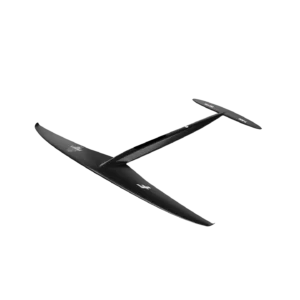
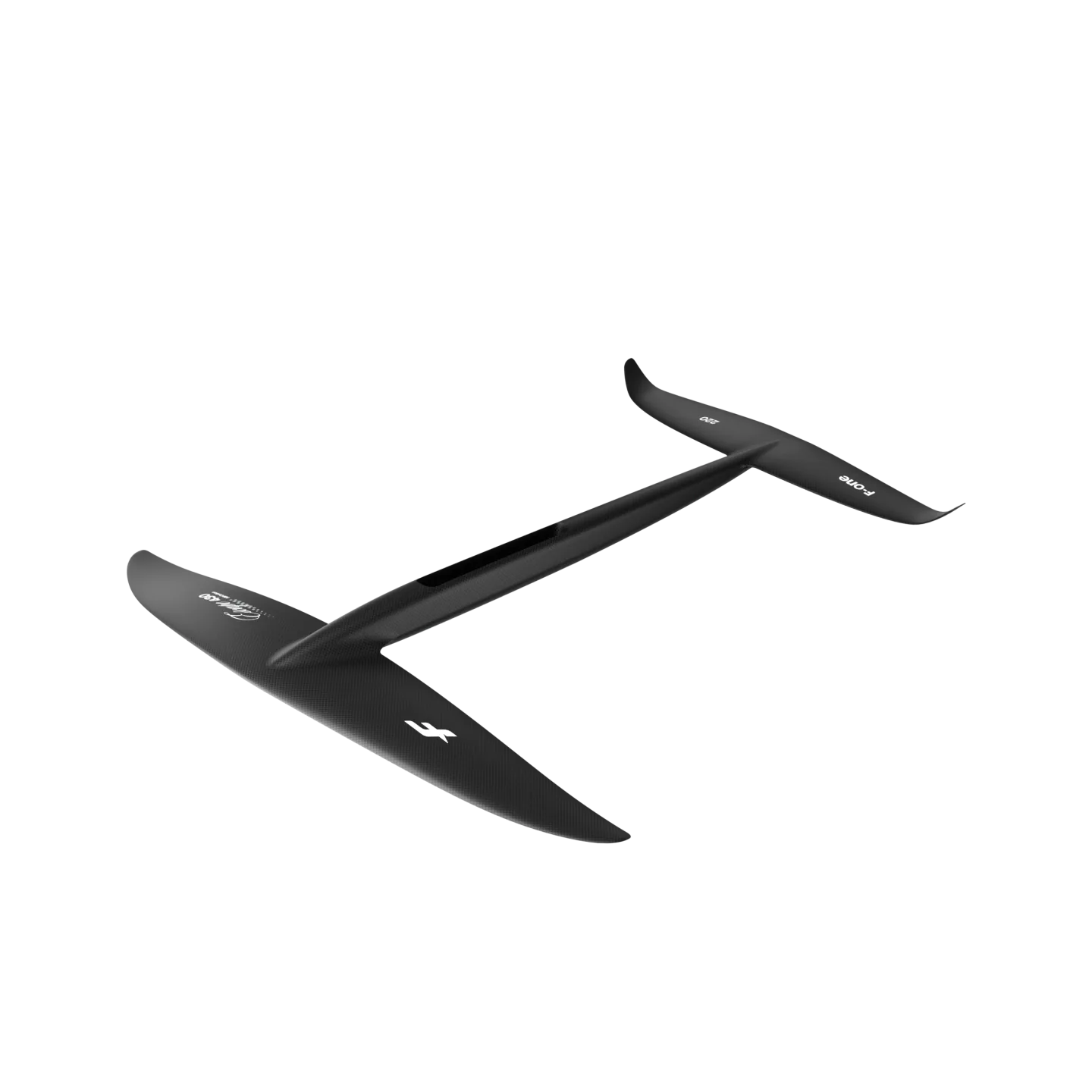
Dark F-One Escape foil seen in perspective: front wing, fuselage and stabilizer in one piece, transparent background
The Escape, one-piece front wing · © F-One
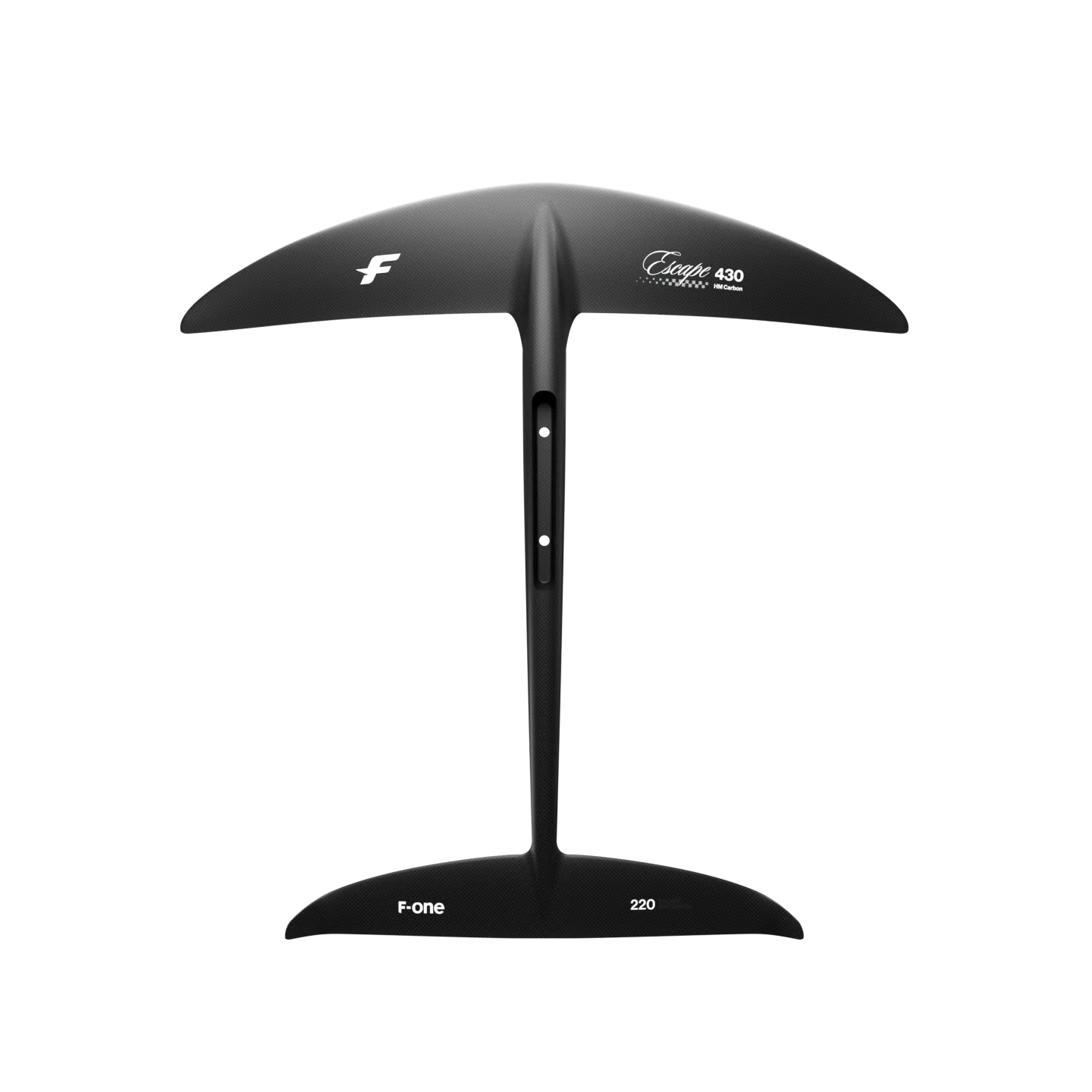
Dark F-One Escape foil seen from above: the wing at the top, the vertical fuselage and the stabilizer at the bottom, transparent background
The Escape seen from above · © F-One
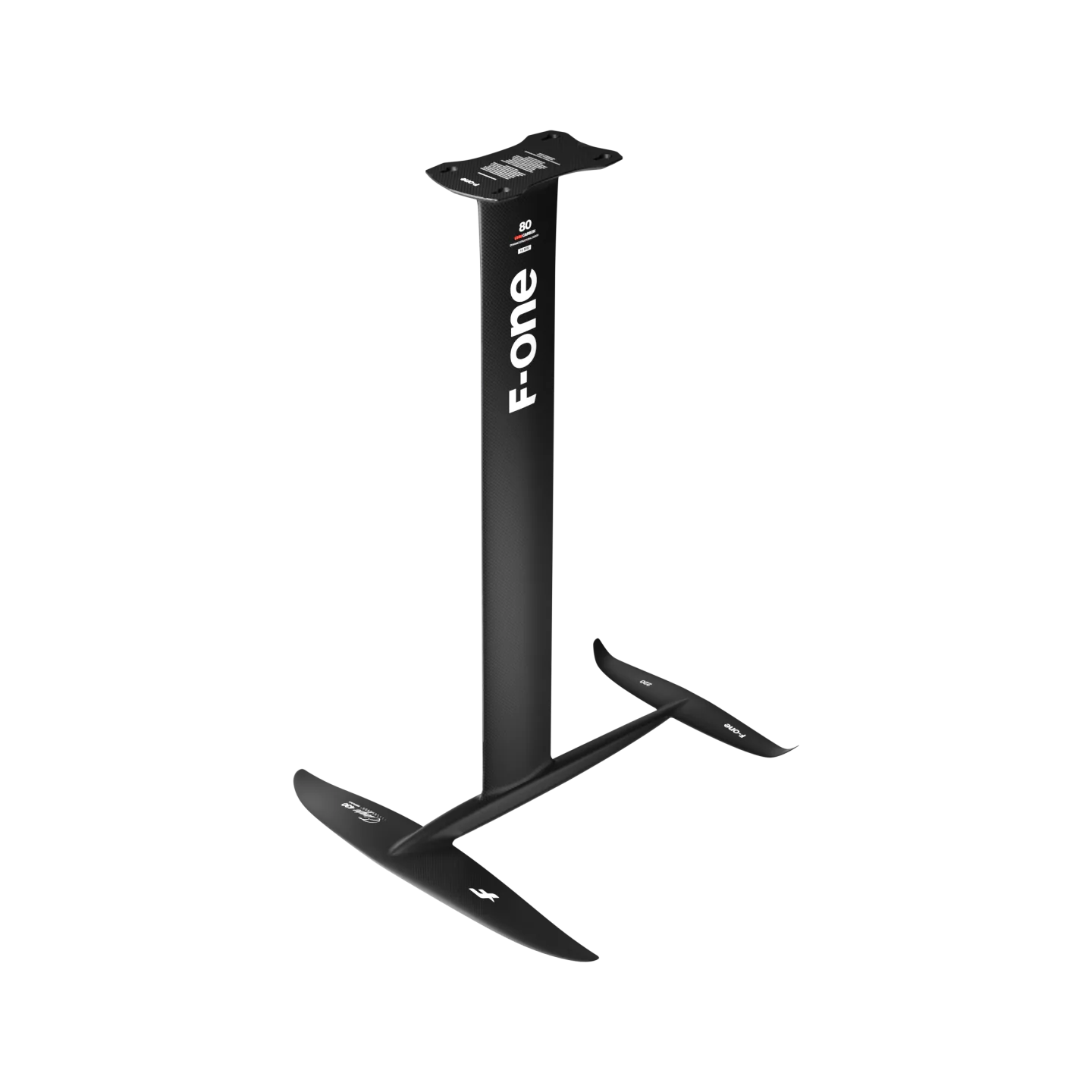
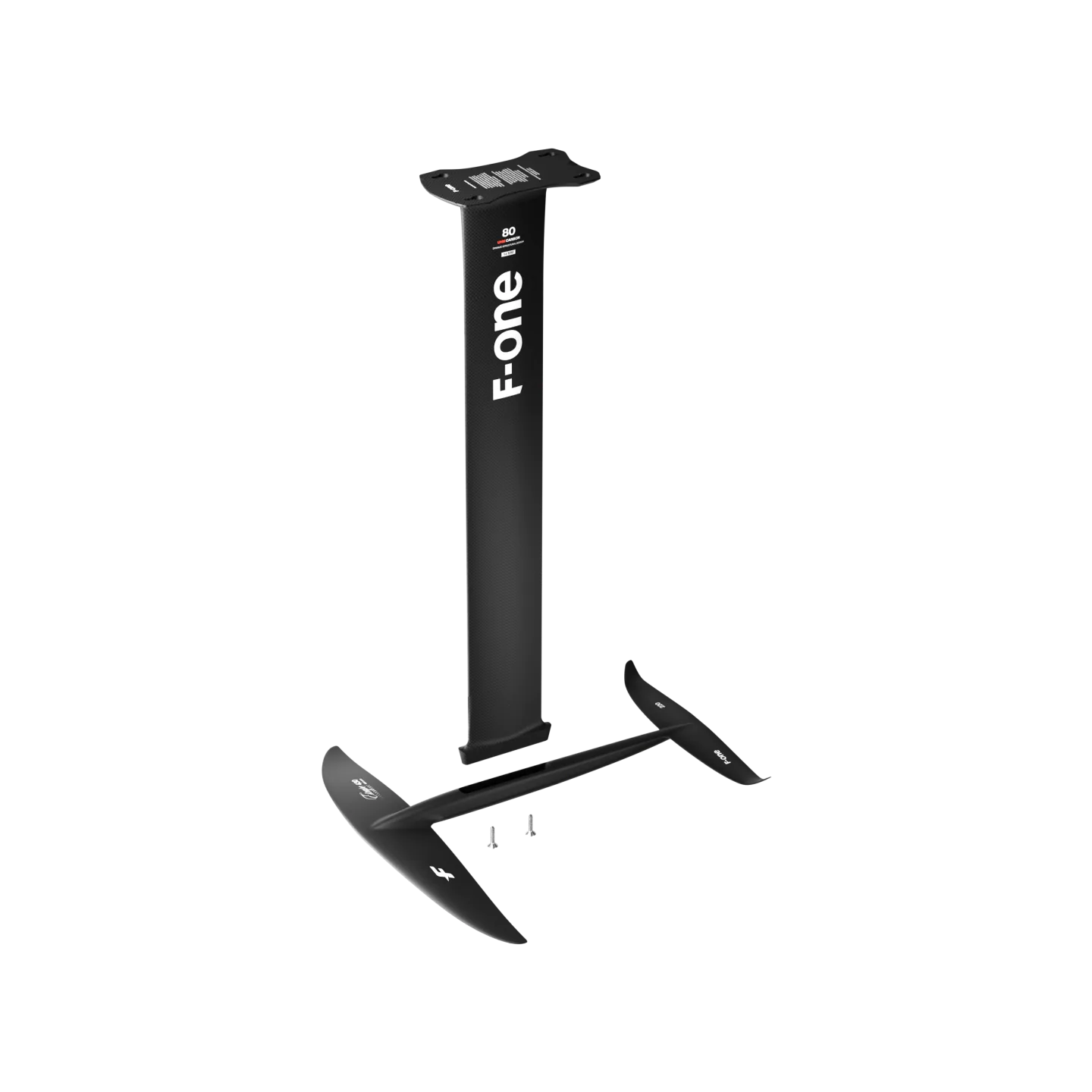
Assembled black F-One foil, perspective view: base plate, mast marked “F-one” and “80”, fuselage, front wing, stabilizer
The assembled foil as photographed on the Escape page · © F-One
Disassembled black F-One foil on a transparent background: base plate, “F-one” 80 mast, fuselage, front wing, stabilizer, two screws
The foil parts as a kit, on the Escape page · © F-One
F-One

F-One Escape 2026 test

  • Riding styleSpeed kitefoil; wing freestyle; big wave surfing
  • Front wings430 to 630 cm²
  • Wingspan58 to 64 cm
  • YearModel 2026 · released Mar 2026

Verdict in brief

A one-piece speed front wing in three sizes (430, 530 and 630 cm²), which F-One designs for kitefoil and also offers for wing freestyle and big waves. No published test, of either this 2026 version or the previous one: the feedback comes from forums and describes a fast foil, full of pop, but wide to transport.

For you if

  • You do kitefoil and want a speed foil: the Escape is designed for kite
  • You do wing freestyle: the 630 is the size designed for it, with an “excellent repop” according to the brand’s page
  • You ride big waves with a foil that runs fast: the 530, more compact (aspect ratio 6.3), keeps its maneuverability and roll

Not for you if

  • You are starting out in foil or want an easy foil: a Seabreeze rider only recommends the 530 and 630 to those who can ride them (“if you can ride them”, previous generation, June 8, 2024)
  • You are looking for a downwind front wing: the Escape is not presented for that, the F-One range has the Eagle and the Eagle X
  • You fly with a single kite bag: the one-piece front wing is wide, and the 630 does not fit in a narrow kite bag according to one rider (Reddit, September 12, 2024, previous generation)

Have you ridden this model? Leave the first review

What we know about this model

Our method

Front wings: sizes and mounting

Front wings: area, span, aspect ratio, stabilizer and mounting
SizeWingspanAspect ratioRecommended stabilizerWing attachmentWing weight
430 cm²58 cm7,8none to choose: stabilizer molded with the wing (one-piece)Titan 2: 2 M8x25 screws · 25 Nm900 g
530 cm²58 cm6,3none to choose: stabilizer molded with the wing (one-piece)Titan 2: 2 M8x25 screws · 25 Nm1000 g
630 cm²64 cm6,5none to choose: stabilizer molded with the wing (one-piece)Titan 2: 2 M8x25 screws · 25 Nm1100 g

F-One data read on November 7, 2026.

More details on these figures

Attachment: F-One 2026 manual. Area in square inches, profile thickness and a weight to the gram are not published. The stabilizer is molded with the front wing.

Components and compatibility

Checked on 07/11/2026

Masts

Carbon Mast 16

prepreg carbon · thickness 16 mm

Carbon Mast 16
LongueurWeight
80 cm1.54 kg
85 cm1.68 kg

HM Carbon Mast 14

high-modulus carbon · thickness 14 mm

HM Carbon Mast 14
LongueurWeight
75 cm1.5 kg
80 cm1.71 kg
85 cm1.81 kg
95 cm1.92 kg
105 cm2.01 kg

UHM Carbon Mast 14

ultra-high-modulus carbon · thickness 14 mm

UHM Carbon Mast 14
LongueurWeight
75 cm1.5 kg
80 cm1.71 kg
85 cm1.81 kg
95 cm1.92 kg
105 cm2.01 kg

UHM Carbon Mast 12

ultra-high-modulus carbon · thickness 12 mm

UHM Carbon Mast 12
LongueurWeight
75 cm1.5 kg
80 cm1.7 kg
85 cm1.8 kg
95 cm1.9 kg

Alu Mast (with Titan mast base, sold separately)

6063 aluminum

Alu Mast (with Titan mast base, sold separately)
LongueurWeight
30 cm0.5 kg
45 cm0.75 kg
55 cm0.9 kg
65 cm1.1 kg
75 cm1.32 kg
85 cm1.48 kg
95 cm1.64 kg

The front wing weight is published by F-One to the nearest tenth of a kilo (0.9 to 1.1 kg). Masts and mast base are sold separately: weight and price of the Titan 2 masts in the list above (F-One tables, November 7, 2026). F-One does not specify a recommended mast length for the Escape.

Compatibility

Wing attachment
Titan 2 connection: 2 M8x25 mm screws at 25 N.m between the mast and the front wing (F-One 2026 manual). No stabilizer screws: the front wing is one piece.
Stabilisateurs
No stabilizer to choose: it is molded with the wing and the fuselage (Full Monobloc).
Fuselage
No fuselage to choose: it is molded with the wing (one-piece).
Masts
F-One Titan 2 masts: Carbon Mast 16, HM Carbon Mast 14, UHM Carbon Mast 14 and UHM Carbon Mast 12. An F-One aluminum mast fits with the Titan 2 mast base (sold separately): this is GlissEvolution’s clarification, as F-One’s aluminum page only mentions a Titan mast base sold separately. GlissEvolution’s FAQ on the Jam (same Titan 2 connection) specifies that a Titan 1 carbon mast does not fit: F-One has not provided an adapter.

Stated riding styles

Front wing
F-One page: “Speed / Freestyle” program. The text says it is designed first for kitefoil and also offers wing freestyle and big wave surfing. 430: speed experts, kite freestyle and Big Air, smaller riders, wing in strong wind. 530: fast kite cruising and big waves. 630: taking off early in kite, bigger riders, wing freestyle. The description mentions neither downwind, nor parawing, nor pocket wing, nor prone (the site menu, for its part, files foils under these headings).
Summary
kitefoil (speed, freestyle, Big Air) · wing freestyle · big wave surfing; downwind and parawing not mentioned.

Strong points, weak points

Strong points

  • Three sizes from 430 to 630 cm², from 0.9 to 1.1 kg, with an aspect ratio of 6.3 to 7.8: enough to cover expert kite riding up to the 630 for taking off early
  • Wing, fuselage and stabilizer molded as a single piece in prepreg high-modulus carbon: fewer parts to assemble
  • Titan 2 with two M8 screws: F-One Titan 2 carbon masts accept it directly
  • Pop first: a Seabreeze rider says the 530 and 630 have “crazy pop” (previous generation, June 8, 2024)
Weak points

  • No published test of the 2026 version or the previous one: everything known about its behavior comes from four forum posts from 2024
  • Weights rounded to the nearest tenth of a kilo (0.9, 1.0 and 1.1 kg) and no recommended rider weight per size
  • One-piece front wing: bulky when traveling (wide bag or box for the 630), and if the stabilizer does not suit you, you cannot change it
  • Ventilation possible at high speed and hard angles: a Seabreeze rider often had it with his previous-generation 630 (December 29, 2024)

The flaw to know about. No serial defect recorded on the 2026 version. On the previous generation, a Seabreeze rider (630 strapless on a 14 mm F-One carbon mast, December 29, 2024) often ventilates, especially upwind above 25 knots; he thinks the wing is partly responsible, “at high speed and hard angles”, and reduced the problem by sanding the mast and the wing. It is not known whether the 2026 behaves the same way.

Model evolution

What changes vs the 2022 Escape HM Carbon

  • Titan 2 connection (“only two M8 screws”), replacing the original Titan: “better glide and more direct feel”
  • The 2026 page highlights the Dynamic Structural Design (carbon layup optimized for control and stability), which the description of the old version read at Surfpirates does not mention

Specifications

9 specs, sources at the bottom of the page

Program (manufacturer)
Speed / Freestyle; kitefoil first, wing freestyle and big wave surfing
Sizes (area)
430, 530 and 630 cm²
Wingspan
58 cm (430), 58 (530), 64 (630)
Aspect ratio
7.8 (430), 6.3 (530), 6.5 (630)
Weight
0.9 kg (430), 1.0 (530), 1.1 (630), rounded to the nearest tenth
Construction
Full Monobloc (wing, fuselage and stabilizer in one piece), prepreg M40J Toray high-modulus carbon announced as 1.5 times stiffer than conventional carbon, Dynamic Structural Design
Connection
Titan 2: 2 M8x25 mm screws, 25 N.m
Stabilizer
Molded with the front wing, not replaceable
Official films
“F-ONE / ESCAPE” (March 12, 2026) and “F-ONE / ESCAPE - Explained” (April 1, 2026), F-ONE channel

Riders’ reviews

No reviews

No reviews yet.

Nobody has reviewed this gear yet. Do you use it? Help other riders of your weight — 2 minutes.

Leave your review (2 minutes)

Three screens: you, the gear, your review. Your email will never be published; it is only used to confirm that the review comes from a real person.

1/3 You

Only used to confirm your review and to let you know if it is rejected. Never displayed, never resold.

Your weight *

10 kg ranges only, so that other riders of your build can relate. No exact weight is recorded.

Your level *

Beginner: I’m still taking lessons. Intermediate: I ride on my own. Advanced: transitions and jumps. Expert: freestyle, wave or competition.

Your riding

Optional. If checked, your review stays published with the label “Gear received or tied to a brand” and doesn’t count toward the average rating.

You must be at least 15 to post a review (“Your data” article of the policy).

2/3 Your gear and how you use it
Wind range actually used (knots)
How long you’ve been using it *
Number of sessions (optional)
Rate each criterion (at least 3) *
Low-end takeoff
Speed & glide
Maneuverability (turns)
Pump
Finish & durability

1 = very poor, 5 = excellent. Leave blank any criterion you couldn’t judge.

Do you recommend it? *
3/3 Your review

140 characters minimum — Takeoff, glide, pump, what disappointed you, who you’d recommend it to.

Rider reviews: confirmed email address, no compensation. “Brand-linked” and “loaned / received” reviews are labeled and excluded from the average. Each review shows its publication date, the date of the experience and, if it was edited, its update date. A review is published or rejected within 7 days at most; if it is rejected, you receive the reason by email and you can correct it. You can complete or delete your review at any time from the email address used to submit it. How do reviews work?

Alternatives to compare

AFS Pure

The other freestyle and speed front wing in wing foiling: AFS Pure in 600, 700 and 900 (880 cm²), aspect ratio from 8.4 to 9.6. Its stabilizer is chosen and can be set in two positions, while the Escape’s is molded with the wing. No test compares them head to head.

F-One SK8 V3 2026

F-One’s carving front wing: seven sizes from 550 to 1150 cm², aspect ratio 8.0 to 8.2, one-piece wing and fuselage, stabilizer to choose. Oriented toward carving and waves, with wing and parawing (GlissEvolution); it is not the speed front wing that the Escape aims to be.

F-One Eagle X

Glide rather than top speed: downwind front wing with an aspect ratio of 12, from 500 to 1000 cm². If you want to link bumps rather than jump, it is the Eagle X.

Frequently asked questions

F-One Escape 2026: which sizes and what weight?

Three sizes: 430 cm² (58 cm span, aspect ratio 7.8, 0.9 kg), 530 cm² (58 cm, 6.3, 1.0 kg) and 630 cm² (64 cm, 6.5, 1.1 kg), for the front wing alone. Wing, fuselage and stabilizer are molded in one piece. For the price, see the “Where to buy” section of this page.

Which Escape size should you choose?

F-One does not publish a rider weight per size. Its page lists the 430 for experts, light riders and wing in strong wind; the 530, the original size, for fast kite cruising and big waves; the 630 for those who want to take off earlier, bigger riders and wing freestyle. The feedback found (2024) concerns the 430, 530 and 630 of the previous generation.

Which mast for the Escape 2026?

A mast with a Titan 2 connection: Carbon Mast 16, HM Carbon Mast 14, UHM Carbon Mast 14 or 12, or an F-One aluminum mast with the Titan 2 mast base sold separately. According to GlissEvolution (Jam FAQ, same connection), an original Titan carbon mast does not fit and there is no adapter. The front wing is bolted on with 2 M8x25 screws at 25 N.m.

Escape 2026 or the previous Escape HM Carbon: what changes?

The three sizes, the spans and the aspect ratios stay the same. The connection goes from the Titan (three M6 screws) to the Titan 2 (two M8 screws) and the 2026 page cites the Dynamic Structural Design, absent from the old version’s text read at Surfpirates. No test compares the two generations. If you buy used, check the connection before buying.

Is the Escape made for wing?

Not first. F-One designs it for kitefoil and also offers it for wing freestyle (mainly the 630) and big waves. For downwind or glide, the F-One range has the Eagle and the Eagle X.

Method and limitations of this page

This page brings together the technical specs, tests from the press and blogs, and rider feedback found on the web, without rewriting any of it. When WindUnity has ridden the gear itself, the page says so with the “WindUnity test” badge.

Rider reviews are published as is, with their date. Reviews tied to a brand or based on loaned gear are labeled and excluded from the average.

What’s still missing

  • No published test of the Escape 2026 or the previous Escape HM Carbon as of November 7, 2026; the four pieces of feedback found date from 2024
  • Profile thickness, area in square inches, weight to the gram and stabilizer weight: not published by F-One
  • Recommended rider weight per size: F-One does not publish it
  • Weight of the old 430: not recorded (the Surfpirates shop page does not give it), so no comparison for this size
  • Reviews posted on WindUnity: none

Sources

Data collected early November 2026

F-One : 3 product pages

Shops : GlissEvolution, MACkite

Press and specialist sites : IKSURFMAG

Forums and riders : Seabreeze, Reddit

See the details of the 9 sources

F-One

  1. Official Escape page (EN)
  2. Titan 2 connection (EN)

Shops

  1. GlissEvolution, F-One Escape 2026
  2. MACkite, 2026 F-One Escape HM Carbon

Press and specialist sites

  1. IKSURFMAG, Escape HM Carbon explained (2022)

Forums and riders

  1. Seabreeze, Balance between glide, speed and agility
  2. Seabreeze, Mast ventilation on F-one 14mm carbon mast
  3. Reddit r/Kiteboarding, thread on traveling with an F-One Escape